The Orthodox Luermen Shengmu Temple is a Mazu temple in Tuchengzi, Annan District, Tainan City, whose principal deity is Tianshang Shengmu (Luermen Mazu), with the Wufu Qiansui enshrined in its front hall. The temple traces its origin to the Qing-period Mazu temple at Luermen, by one account built in 1719 and destroyed by flood in the nineteenth century (usually given as 1871, with another account giving 1831); Bao'an Temple was built around 1918, the Mazu image was brought back from Hai'an Temple in the prefectural city around 1921, the temple was renamed in 1960, and the third building began in 1975, with the deities installed in 1981. It hosts the triennial Tuchengzi Incense Procession, and it and Luermen Tianhou Temple hold competing claims to the heritage of the old temple.
Relationship map
Predecessor / successor11
Branch temples55
Fraternal ties (jiaopei)33
Participating temples and troupes11
Events here44
History
Main article: History of the Orthodox Luermen Shengmu Temple
The temple and most accounts trace its beginnings to the Qing-period Mazu temple at Luermen (see Ancient Luermen Mazu Temple), which by one account was built in Kangxi 58 (1719). The old temple was destroyed by flood in the nineteenth century, in 1871 (Tongzhi 10) according to most accounts, with another account giving 1831; its images were lodged at Hai'an Temple in the prefectural city R002Source《台江地區無形文化資產暨文獻資料蒐集計畫成果報告書》[Final Report of the Project to Collect Intangible Cultural Heritage and Documentary Materials of the Taijiang Area], commissioned by 臺江國家公園管理處 [Taijiang National Park Headquarters], 2020 (549 pages)Original URL—Retrieved2026-10-23Snapshot timestamp—Research report commissioned by the Taijiang National Park Headquarters, 2020.R003Source《臺灣地名辭書卷 21:臺南市》[Gazetteer of Taiwanese Place Names, vol. 21: Tainan City]Original URL—Retrieved2026-10-23Snapshot timestamp—A place-name reference work; years occasionally differ between entries in the book.R004SourceThis site's errata recordOriginal URL—Retrieved2026-10-27Snapshot timestamp—This site's record of source comparisons and corrections.R027Source正統鹿耳門聖母廟舊官網 [Former official website of the Orthodox Luermen Shengmu Temple] luermenma.org.tw〈關於我們:廟史略述、寺廟特色〉[About Us: Brief Temple History, Features of the Temple](2008-04-28 快照 [snapshot of 2008-04-28])(網頁時光機快照,原站已關閉 [Wayback Machine snapshot; the original site has closed])Original URLhttps://web.archive.org/web/20080428185853/http://www.luermenma.org.tw:80/about.asp?yecao=aboutRetrieved2026-10-30Snapshot timestamp—Website run by the temple itself (published by an interested party).. After the villagers of Tuchengzi found a drifting royal boat in 1913, they raised funds to build Bao'an Temple (Tucheng), completed around 1918, with the Wufu Qiansui as principal deities and Mazu as a secondary deity; around 1921 the Mazu image of the original Tianhou Temple was brought back from Hai'an Temple and enshrined together in the rear hall R002Source《台江地區無形文化資產暨文獻資料蒐集計畫成果報告書》[Final Report of the Project to Collect Intangible Cultural Heritage and Documentary Materials of the Taijiang Area], commissioned by 臺江國家公園管理處 [Taijiang National Park Headquarters], 2020 (549 pages)Original URL—Retrieved2026-10-23Snapshot timestamp—Research report commissioned by the Taijiang National Park Headquarters, 2020.R038Source《正統鹿耳門聖母廟 土城香:鹿耳門媽香・五府千歲醮》[Orthodox Luermen Shengmu Temple, Tucheng Xiang: Luermen Mazu Incense, Wufu Qiansui Jiao Rites](謝奇峰 [Hsieh Chi-feng]、吳明勳 [Wu Ming-hsun],晨星出版 [Morning Star Publishing],2024)頁 134–135Original URL—Retrieved2026-11-06Snapshot timestamp—SourceFrom 《Orthodox Luermen Shengmu Temple, Tucheng Xiang: Luermen Mazu Incense, Wufu Qiansui Jiao Rites (正統鹿耳門聖母廟 土城香:鹿耳門媽香・五府千歲醮)》p. 134–135Photographed from the physical book and transcribed by local OCR; a monograph co-published with the temple (subsidized by the Ministry of Culture).. In 1960 the temple was renamed Luermen Shengmu Temple; from 1975 it was built for the third time about 600 meters north of the old temple, and in 1981 the deities were installed, the temple recording that it was formally named the "Orthodox Luermen Shengmu Temple" in the same year R027Source正統鹿耳門聖母廟舊官網 [Former official website of the Orthodox Luermen Shengmu Temple] luermenma.org.tw〈關於我們:廟史略述、寺廟特色〉[About Us: Brief Temple History, Features of the Temple](2008-04-28 快照 [snapshot of 2008-04-28])(網頁時光機快照,原站已關閉 [Wayback Machine snapshot; the original site has closed])Original URLhttps://web.archive.org/web/20080428185853/http://www.luermenma.org.tw:80/about.asp?yecao=aboutRetrieved2026-10-30Snapshot timestamp—Website run by the temple itself (published by an interested party).R048SourceChou Tsung-yang (周宗楊) and Wu Ming-hsun (吳明勳), 《鹿耳門聖母廟土城仔香》[Luermen Shengmu Temple Tuchengzi Xiang] (大臺南文化資產叢書 3 [Greater Tainan Cultural Heritage Series 3], 臺南市政府文化局 [Cultural Affairs Bureau, Tainan City Government], 2016), pp. 32–33Original URL—Retrieved2026-11-09Snapshot timestamp—SourceFrom 《Luermen Shengmu Temple Tuchengzi Xiang (鹿耳門聖母廟土城仔香)》p. 32–33Official publication of the Tainan City Government; photographed from the physical book and proofread page by page by Claude (2026-11-09); personal names checked against the photographs..
Deities
- The principal deity is Tianshang Shengmu. The Hall-Guarding Dama at the upper center of the Mazu Hall is called 「鹿耳門媽祖」 ("Luermen Mazu"); CRGIS records the principal deity as 「鹿耳門媽」 ("Luermen Ma"), with the Jade Emperor, Xitian Fozu, and Yuexia Laoren as secondary deities R013Source內政部全國宗教資訊網寺廟登記 [Temple registration in the National Religion Information Network, Ministry of the Interior](2026-10 查 [consulted October 2026])與中研院 CRGIS 文化資源地理資訊系統 [and the Academia Sinica CRGIS Cultural Resources Geographic Information System](2011 田調,經 Wayback 取回 [2011 fieldwork, retrieved via the Wayback Machine])Original URL—Retrieved2026-10-28Snapshot timestamp—Temple registration: principal deity Tianshang Shengmu, formally registered, founding year 1918, person in charge Cheng Shen-chih; CRGIS calls the principal deity "Luermen Mazu," with the Jade Emperor, Xitian Fozu, and Yuexia Laoren as secondary deities.R015Source正統鹿耳門聖母廟官網 [Official website of the Orthodox Luermen Shengmu Temple]〈歷史沿革〉[History]Original URLhttps://luermen.org.tw/?act=menuinfo&ml_id=20231218002Retrieved2026-10-30Snapshot timestamp—The temple's official website (account of an interested party); the page says it is taken from a thesis, citing Liu Tsai-ni (劉采妮) 2013, Temple Gazetteer of the Orthodox Luermen Shengmu Temple, Tucheng, Tainan (《臺南土城正統鹿耳門聖母廟廟誌》). The hall-by-hall, floor-by-floor positions of the deities come from this page. Excerpt in this site's research file.. See Luermen Mazu.
- The front Hall of the Five Lords enshrines the Wufu Qiansui, Lords Li, Chi, Wu, Fan, and Zhu; the temple says their images were remade from the five lords who came with the royal boat in 1913 R015Source正統鹿耳門聖母廟官網 [Official website of the Orthodox Luermen Shengmu Temple]〈歷史沿革〉[History]Original URLhttps://luermen.org.tw/?act=menuinfo&ml_id=20231218002Retrieved2026-10-30Snapshot timestamp—The temple's official website (account of an interested party); the page says it is taken from a thesis, citing Liu Tsai-ni (劉采妮) 2013, Temple Gazetteer of the Orthodox Luermen Shengmu Temple, Tucheng, Tainan (《臺南土城正統鹿耳門聖母廟廟誌》). The hall-by-hall, floor-by-floor positions of the deities come from this page. Excerpt in this site's research file.. Accounts of the origin of the Wufu Qiansui differ; see History of the Orthodox Luermen Shengmu Temple.
- The official monograph (2016) records the secondary deities as the Wufu Qiansui (Lords Li, Chi, Wu, Fan, and Zhu), Shuixian Zunwang (the Water Immortal Kings), Guanchuan Dawang, Guanyin (觀音佛祖), Sanguan Dadi (the Three Officials), the Jade Emperor (玉皇上帝), and Yuexia Laoren (the Old Man under the Moon) R047SourceChou Tsung-yang (周宗楊) and Wu Ming-hsun (吳明勳), 《鹿耳門聖母廟土城仔香》[Luermen Shengmu Temple Tuchengzi Xiang] (大臺南文化資產叢書 3 [Greater Tainan Cultural Heritage Series 3], 臺南市政府文化局 [Cultural Affairs Bureau, Tainan City Government], 2016), p. 21Original URL—Retrieved2026-11-09Snapshot timestamp—SourceFrom 《Luermen Shengmu Temple Tuchengzi Xiang (鹿耳門聖母廟土城仔香)》p. 21Official publication of the Tainan City Government; photographed from the physical book and proofread page by page by Claude (2026-11-09); personal names checked against the photographs..
- The shrines to the left and right of the Mazu Hall enshrine the Civil Hall Third Mazu and the Martial Hall Third Mazu.
For the deities enshrined in each hall and their arrangement, see Architecture and relics of the Orthodox Luermen Shengmu Temple.
Organization and management
MoreLess
Each term of the management committee lasts three years. The chairperson of the 13th committee was Wang Tseng-jung (elected 2021-08-22, term ending at the end of May 2024); the chairperson of the 14th committee is Cheng Shen-chih (from 2024-06-15), matching the person in charge in the Ministry of the Interior temple registration of 2026. The chairperson also serves as president of the Taiwan Temple Jinlan Association (founded on the initiative of Fang Wen-ko (方文科), then chairperson of this temple, in 1991).
Registration: the Ministry of the Interior's temple registry lists the temple as formally registered (正式登記), with Cheng Shen-chih as the responsible person; the registry data transcribed by CRGIS around 2011 gives the organizational type as "management committee" (管理委員會) R013Source內政部全國宗教資訊網寺廟登記 [Temple registration in the National Religion Information Network, Ministry of the Interior](2026-10 查 [consulted October 2026])與中研院 CRGIS 文化資源地理資訊系統 [and the Academia Sinica CRGIS Cultural Resources Geographic Information System](2011 田調,經 Wayback 取回 [2011 fieldwork, retrieved via the Wayback Machine])Original URL—Retrieved2026-10-28Snapshot timestamp—Temple registration: principal deity Tianshang Shengmu, formally registered, founding year 1918, person in charge Cheng Shen-chih; CRGIS calls the principal deity "Luermen Mazu," with the Jade Emperor, Xitian Fozu, and Yuexia Laoren as secondary deities..Official record For an explanation of the system, see 3.9 How a temple is run.
For the successive heads and the rosters of each term, see History of the Orthodox Luermen Shengmu Temple.
Architecture and relics
First items: The present temple is the third building…The 1975 design drawings planned four co…It was designed by Kao Chung-hsin (高忠信),…MoreLess
Main article: Architecture and relics of the Orthodox Luermen Shengmu Temple
- The present temple is the third building on the site, with groundbreaking in 1975 and installation of the deities in 1981, about 600 meters north of the old temple R014Source正統鹿耳門聖母廟官網 [Official website of the Orthodox Luermen Shengmu Temple]〈本廟簡介〉[About the Temple]Original URLhttps://luermen.org.tw/?act=menuinfo&ml_id=20231218018Retrieved2026-10-30Snapshot timestamp—The temple's official website (account of an interested party). Excerpt in this site's research file (S1).R019Source正統鹿耳門聖母廟管理委員會 [Management Committee of the Orthodox Luermen Shengmu Temple]〈正統鹿耳門聖母廟沿革誌要〉[Summary History of the Orthodox Luermen Shengmu Temple](鹿耳門漁夫網站轉載 [republished on the Luermen Fisherman website])Original URLhttps://www.luerhmenfisher.com/introitem_detail.php?blockid=707Retrieved2026-10-29Snapshot timestamp—Written by the temple (account of an interested party); the page gives no year.R048SourceChou Tsung-yang (周宗楊) and Wu Ming-hsun (吳明勳), 《鹿耳門聖母廟土城仔香》[Luermen Shengmu Temple Tuchengzi Xiang] (大臺南文化資產叢書 3 [Greater Tainan Cultural Heritage Series 3], 臺南市政府文化局 [Cultural Affairs Bureau, Tainan City Government], 2016), pp. 32–33Original URL—Retrieved2026-11-09Snapshot timestamp—SourceFrom 《Luermen Shengmu Temple Tuchengzi Xiang (鹿耳門聖母廟土城仔香)》p. 32–33Official publication of the Tainan City Government; photographed from the physical book and proofread page by page by Claude (2026-11-09); personal names checked against the photographs..
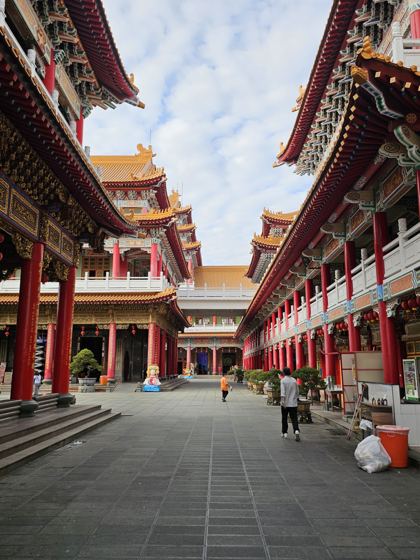
- The 1975 design drawings planned four courtyards from south to north, of which three have been built: the Hall of the Five Lords in the first courtyard, the Mazu Hall in the second, and the Buddha Hall in the third (with the Dashi Hall on the second floor and the Lingxiao Hall and Yuanchen Hall on the third); wing buildings on both sides are joined by covered corridors, and a moat surrounds the temple R015Source正統鹿耳門聖母廟官網 [Official website of the Orthodox Luermen Shengmu Temple]〈歷史沿革〉[History]Original URLhttps://luermen.org.tw/?act=menuinfo&ml_id=20231218002Retrieved2026-10-30Snapshot timestamp—The temple's official website (account of an interested party); the page says it is taken from a thesis, citing Liu Tsai-ni (劉采妮) 2013, Temple Gazetteer of the Orthodox Luermen Shengmu Temple, Tucheng, Tainan (《臺南土城正統鹿耳門聖母廟廟誌》). The hall-by-hall, floor-by-floor positions of the deities come from this page. Excerpt in this site's research file.R020Source內政部「臺灣宗教百景」[Ministry of the Interior, "100 Religious Sites of Taiwan"]〈臺南正統鹿耳門聖母廟〉[Orthodox Luermen Shengmu Temple, Tainan]Original URLhttps://taiwangods.moi.gov.tw/html/landscape/1_0011.aspx?i=76Retrieved2026-10-30Snapshot timestamp—Government website. Superlative claims about scale (site area, largest in the world, etc.) are treated by this site as secondhand and unverified. Excerpt in this site's research file..
- It was designed by Kao Chung-hsin (高忠信), taking the palace style of the Forbidden City in Beijing as its reference R015Source正統鹿耳門聖母廟官網 [Official website of the Orthodox Luermen Shengmu Temple]〈歷史沿革〉[History]Original URLhttps://luermen.org.tw/?act=menuinfo&ml_id=20231218002Retrieved2026-10-30Snapshot timestamp—The temple's official website (account of an interested party); the page says it is taken from a thesis, citing Liu Tsai-ni (劉采妮) 2013, Temple Gazetteer of the Orthodox Luermen Shengmu Temple, Tucheng, Tainan (《臺南土城正統鹿耳門聖母廟廟誌》). The hall-by-hall, floor-by-floor positions of the deities come from this page. Excerpt in this site's research file.R021Source臺南市政府觀光旅遊局「台南旅遊網」["Tainan Travel" website, Tourism Bureau, Tainan City Government]〈正統鹿耳門聖母廟〉[Orthodox Luermen Shengmu Temple]Original URLhttps://www.twtainan.net/zh-tw/attractions/detail/815/Retrieved2026-10-30Snapshot timestamp—Government tourism website. Excerpt in this site's research file..
- In front of the temple stand the giant statues of the generals Qianliyan and Shunfeng'er, made in 2015, and the Luermen Archway, completed and opened in 2020 R017Source正統鹿耳門聖母廟官網 [Official website of the Orthodox Luermen Shengmu Temple]〈廟殿藝術〉[Temple Art]Original URLhttps://luermen.org.tw/?act=menuinfo&ml_id=20231218020Retrieved2026-10-30Snapshot timestamp—The temple's official website (account of an interested party): the Jishuibao stone stele and the statues of the guardian generals Qianliyan and Shunfeng'er. Excerpt in this site's research file.R023Source臺南市政府全球資訊網新聞稿 [Tainan City Government website news release]〈正統鹿耳門聖母廟「鹿耳門牌樓」落成 黃偉哲祈願宗教觀光帶動地方發展〉[Orthodox Luermen Shengmu Temple's "Luermen Archway" completed; Huang Wei-che hopes religious tourism will drive local development](109-12-22 [2020-12-22 (ROC year 109)])Original URLhttps://www.tainan.gov.tw/News_Content.aspx?n=13370&s=7735333Retrieved2026-10-30Snapshot timestamp—Official news release. Excerpt in this site's research file.; the 1913 Permanently Enshrined Royal Boat is enshrined on the tiger side of the Hall of the Five Lords R015Source正統鹿耳門聖母廟官網 [Official website of the Orthodox Luermen Shengmu Temple]〈歷史沿革〉[History]Original URLhttps://luermen.org.tw/?act=menuinfo&ml_id=20231218002Retrieved2026-10-30Snapshot timestamp—The temple's official website (account of an interested party); the page says it is taken from a thesis, citing Liu Tsai-ni (劉采妮) 2013, Temple Gazetteer of the Orthodox Luermen Shengmu Temple, Tucheng, Tainan (《臺南土城正統鹿耳門聖母廟廟誌》). The hall-by-hall, floor-by-floor positions of the deities come from this page. Excerpt in this site's research file.; there are also relics such as the Jishuibao divine stele and the Luermen Guesthouse (pilgrim lodge), and ground was broken for the new Luermen Mazu Museum in 2025 R006Source臺南市政府全球資訊網新聞稿 [Tainan City Government website news release]〈正統鹿耳門聖母廟廟徽親子園區啟用〉[Orthodox Luermen Shengmu Temple Temple-Emblem Family Park opens](2024-06-03);〈黃偉哲出席鹿耳門媽文物館動土大典〉[Huang Wei-che attends the groundbreaking ceremony of the Luermen Mazu Museum](114-03-09 [2025-03-09 (ROC year 114)])Original URLhttps://www.tainan.gov.tw/news_content.aspx?n=13370&s=8641265Retrieved2026-10-27Snapshot timestamp—Official material. See also the museum news release: https://www.tainan.gov.tw/News_Content.aspx?n=13370&s=8727888 .R020Source內政部「臺灣宗教百景」[Ministry of the Interior, "100 Religious Sites of Taiwan"]〈臺南正統鹿耳門聖母廟〉[Orthodox Luermen Shengmu Temple, Tainan]Original URLhttps://taiwangods.moi.gov.tw/html/landscape/1_0011.aspx?i=76Retrieved2026-10-30Snapshot timestamp—Government website. Superlative claims about scale (site area, largest in the world, etc.) are treated by this site as secondhand and unverified. Excerpt in this site's research file..
Festivals and activities
First items: Regular festivals: Mazu's birthday on th…The temple hosts the Tuchengzi Incense P…The Permanently Enshrined Royal Boat is …MoreLess
- Regular festivals: Mazu's birthday on the 23rd day of the 3rd lunar month, and the installation anniversary on the 8th day of the 11th lunar month; at the Lunar New Year there are touching the spring ox, crossing the Seven Star Peace Bridge, borrowing "fortune money" (發財金), poe-throwing contests (跋桮), 「軁轎跤」 (crawling under the palanquins), welcoming the spring ox, and firing beehive rockets (炸蜂炮) R048SourceChou Tsung-yang (周宗楊) and Wu Ming-hsun (吳明勳), 《鹿耳門聖母廟土城仔香》[Luermen Shengmu Temple Tuchengzi Xiang] (大臺南文化資產叢書 3 [Greater Tainan Cultural Heritage Series 3], 臺南市政府文化局 [Cultural Affairs Bureau, Tainan City Government], 2016), pp. 32–33Original URL—Retrieved2026-11-09Snapshot timestamp—SourceFrom 《Luermen Shengmu Temple Tuchengzi Xiang (鹿耳門聖母廟土城仔香)》p. 32–33Official publication of the Tainan City Government; photographed from the physical book and proofread page by page by Claude (2026-11-09); personal names checked against the photographs..
- The temple hosts the Tuchengzi Incense Procession, held once every three years and one of The Five Great Incense Processions of Nanying; it was registered as a Tainan City Municipal Folk Custom in 2013 R036Source《正統鹿耳門聖母廟媽祖信仰脈絡研究》[A Study of the Context of Mazu Worship at the Orthodox Luermen Shengmu Temple](陸昕慈 [Lu Hsin-tzu],晨星出版 [Morning Star Publishing],2024)頁 174、180–183Original URL—Retrieved2026-11-06Snapshot timestamp—SourceFrom 《A Study of the Context of Mazu Worship at the Orthodox Luermen Shengmu Temple (正統鹿耳門聖母廟媽祖信仰脈絡研究)》p. 174、180–183Photographed from the physical book and transcribed by local OCR; a monograph co-published with the temple (a rewrite of the master's thesis).. The ruguan (入館, entering training) of the Eleven Jiaotou to welcome the Five Lords also centers on this temple (Huweiliao (虎尾寮) welcomes Lord Chi, Guocenliao (郭岑寮) welcomes Lord Wu (吳王), and Keliao (蚵寮) welcomes Lord Fan; Shalunjiao (砂崙腳), which built its own temple, does not have this custom). For recent cycles, see The 2015 Yiwei-cycle Tuchengzi Incense Procession and The Jiachen-Year Tucheng Incense Procession (2024).
- The Permanently Enshrined Royal Boat is normally enshrined on the tiger (right-hand) side of the Hall of the Five Lords, and in each cycle goes in order through clearing the hold, drawing water, consecration, leaving the dock, loading provisions, and inspecting the hold, to returning to the dock; see The Thirteen Holds of the Royal Boat and the Loading of Provisions.
- The New Year Lantern Festival Fireworks and the Spring Ox Welcoming was registered as a Municipal Folk Custom in 2017 under the name "Tuchengzi Spring Ox Welcoming"; the jiaotou troupe Keliaojiao Song Jiang White Crane Troupe was registered in 2019 R036Source《正統鹿耳門聖母廟媽祖信仰脈絡研究》[A Study of the Context of Mazu Worship at the Orthodox Luermen Shengmu Temple](陸昕慈 [Lu Hsin-tzu],晨星出版 [Morning Star Publishing],2024)頁 174、180–183Original URL—Retrieved2026-11-06Snapshot timestamp—SourceFrom 《A Study of the Context of Mazu Worship at the Orthodox Luermen Shengmu Temple (正統鹿耳門聖母廟媽祖信仰脈絡研究)》p. 174、180–183Photographed from the physical book and transcribed by local OCR; a monograph co-published with the temple (a rewrite of the master's thesis)..
- In recent years Taijiang National Park Headquarters has held conservation outreach on the temple plaza at the Lantern Festival in conjunction with the Spring Ox Welcoming; see Taijiang National Park Lunar New Year Outreach R043Source台江國家公園管理處 [Taijiang National Park Headquarters],2023–2026 年聖母廟場新春宣導新聞稿 [press releases on the New Year outreach events at the Shengmu Temple, 2023–2026]:〈台江國家公園管理處與正統鹿耳門聖母廟 邀您參加112年新春鬧元宵迎春牛〉["Taijiang National Park Headquarters and the Orthodox Luermen Shengmu Temple invite you to the 2023 (ROC year 112) New Year Lantern Festival and Spring Ox Welcoming"](2023-01-31)等 4 則 [and 3 others, 4 in all]Original URLhttps://www.tjnp.gov.tw/ch/titlelist/latest-news/2096Retrieved2026-11-07Snapshot timestamp—Official press releases (Taijiang National Park Headquarters; one party's account); see also https://www.tjnp.gov.tw/ch/titlelist/latest-news/2175 (2024-02-05), https://www.tjnp.gov.tw/ch/titlelist/latest-news/2253 (2025-01-21), https://www.tjnp.gov.tw/ch/titlelist/latest-news/4031 (2026-02-12).
- The temple's former official website (2008) gives the main festival day as the birthday of Tianshang Shengmu on the 23rd day of the third lunar month. Account by an involved partyR027Source正統鹿耳門聖母廟舊官網 [Former official website of the Orthodox Luermen Shengmu Temple] luermenma.org.tw〈關於我們:廟史略述、寺廟特色〉[About Us: Brief Temple History, Features of the Temple](2008-04-28 快照 [snapshot of 2008-04-28])(網頁時光機快照,原站已關閉 [Wayback Machine snapshot; the original site has closed])Original URLhttps://web.archive.org/web/20080428185853/http://www.luermenma.org.tw:80/about.asp?yecao=aboutRetrieved2026-10-30Snapshot timestamp—Website run by the temple itself (published by an interested party).
Records in academic theses
First items: Founding: when the old temple was destro…The royal boat: citing the temple's 《正統鹿…Three building phases (the thesis citing…MoreLess
The following is from Lin Su-mei's (林素梅) 《台南市媽祖信仰之研究》 [The Study on Mazu Worship in Tainan City] (c. 2004), whose temple history is largely cited from the temple's own history and the works of Tai Wen-feng and Kao Chih-pin R053SourceLin Su-mei (林素梅), 《台南市媽祖信仰之研究》[The Study on Mazu Worship in Tainan City], master's thesis, Graduate Institute of Taiwan Culture, National University of Tainan (國立臺南大學臺灣文化研究所), c. 2004, printed pp. 12–13, 18, 21, 28, 33, 84, 96, 115, 118, 123, 130–133Original URL—Retrieved—Snapshot timestamp—SourceFrom 《The Study on Mazu Worship in Tainan City (台南市媽祖信仰之研究)》p. 12–13、18、21、28、33、84、96、115、118、123、130–133Master's thesis; the temple history is largely cited from 《正統鹿耳門聖母廟沿革》 [History of the Orthodox Luermen Shengmu Temple] (1999), Tai Wen-feng's (戴文鋒) 《第三屆府城媽祖行腳》 [The Third Fucheng Mazu Walk] (2003), Lin Te-cheng's (林德政) 《安南區志》 [Annan District Gazetteer] (1999), and Kao Chih-pin (高志彬) (1997).. Scholarly view
- Founding: when the old temple was destroyed in the flood of Tongzhi 10 (1871), the faithful temporarily enshrined the Mazu and Eighteen Arhats images and other deity images they had rescued in the Hai'an Temple (海安宮), and the pudu ritual arena was set up at the Shuixian Temple (水仙宮); later a set-adrift royal boat of the Five Lords (五府千歲) drifted to Tucheng, and the faithful brought it ashore and worshipped it; in Taisho 2 (1913), at the proposal of the villagers Kuo Chang (郭長) and Kuo Wei-ang (郭尾昂), a temple called the Bao'an Temple (保安宮) was built in Chengbei Village (城北里); in Taisho 7 (1918) people of Tucheng brought back the Mazu images that had been lodged at the Hai'an Temple and the Shuixian Temple R053SourceLin Su-mei (林素梅), 《台南市媽祖信仰之研究》[The Study on Mazu Worship in Tainan City], master's thesis, Graduate Institute of Taiwan Culture, National University of Tainan (國立臺南大學臺灣文化研究所), c. 2004, printed pp. 12–13, 18, 21, 28, 33, 84, 96, 115, 118, 123, 130–133Original URL—Retrieved—Snapshot timestamp—SourceFrom 《The Study on Mazu Worship in Tainan City (台南市媽祖信仰之研究)》p. 12–13、18、21、28、33、84、96、115、118、123、130–133Master's thesis; the temple history is largely cited from 《正統鹿耳門聖母廟沿革》 [History of the Orthodox Luermen Shengmu Temple] (1999), Tai Wen-feng's (戴文鋒) 《第三屆府城媽祖行腳》 [The Third Fucheng Mazu Walk] (2003), Lin Te-cheng's (林德政) 《安南區志》 [Annan District Gazetteer] (1999), and Kao Chih-pin (高志彬) (1997)..
- The royal boat: citing the temple's 《正統鹿耳門聖母廟沿革》 [History of the Orthodox Luermen Shengmu Temple] (1999), the thesis says that in the 7th month of Taisho 2 a Five Lords royal boat set adrift from Meizhou Island drifted to a branch of Luermen Harbor and sailed into Xipinghuzi (西平湖仔) near Tucheng; on board were five deity images of Lords Li, Chi, Wu, Zhu, and Fan, three images of the Meizhou Holy Mother, one of the Tongbing Ye (統兵爺, the troop-commanding lord), and thirty-six of guards and soldiers, with a horizontal plaque reading 「代天府」 (Daitian Fu); the front hall of the Bao'an Temple enshrined the Five Lords as principal deities, and the rear hall Tianshang Shengmu R053SourceLin Su-mei (林素梅), 《台南市媽祖信仰之研究》[The Study on Mazu Worship in Tainan City], master's thesis, Graduate Institute of Taiwan Culture, National University of Tainan (國立臺南大學臺灣文化研究所), c. 2004, printed pp. 12–13, 18, 21, 28, 33, 84, 96, 115, 118, 123, 130–133Original URL—Retrieved—Snapshot timestamp—SourceFrom 《The Study on Mazu Worship in Tainan City (台南市媽祖信仰之研究)》p. 12–13、18、21、28、33、84、96、115、118、123、130–133Master's thesis; the temple history is largely cited from 《正統鹿耳門聖母廟沿革》 [History of the Orthodox Luermen Shengmu Temple] (1999), Tai Wen-feng's (戴文鋒) 《第三屆府城媽祖行腳》 [The Third Fucheng Mazu Walk] (2003), Lin Te-cheng's (林德政) 《安南區志》 [Annan District Gazetteer] (1999), and Kao Chih-pin (高志彬) (1997).. Account by an involved party
- Three building phases (the thesis citing Tai Wen-feng): the Bao'an Temple was founded in 1913; in 1960 it was rebuilt as a temple centered on the Shengmu Temple; in 1975 the site was moved 600 meters north for a new building in the palace style of the Forbidden City in Beijing, completed in 1981, with the Five Lords as principal deities of the front hall, Mazu of the middle hall, and the rear section divided into the Buddha Hall, the Dashi Hall, and the Jade Emperor Hall; the thesis records a site of 15 hectares and a temple 13 stories and 42 meters high; a management committee was formally set up in 1985 R053SourceLin Su-mei (林素梅), 《台南市媽祖信仰之研究》[The Study on Mazu Worship in Tainan City], master's thesis, Graduate Institute of Taiwan Culture, National University of Tainan (國立臺南大學臺灣文化研究所), c. 2004, printed pp. 12–13, 18, 21, 28, 33, 84, 96, 115, 118, 123, 130–133Original URL—Retrieved—Snapshot timestamp—SourceFrom 《The Study on Mazu Worship in Tainan City (台南市媽祖信仰之研究)》p. 12–13、18、21、28、33、84、96、115、118、123、130–133Master's thesis; the temple history is largely cited from 《正統鹿耳門聖母廟沿革》 [History of the Orthodox Luermen Shengmu Temple] (1999), Tai Wen-feng's (戴文鋒) 《第三屆府城媽祖行腳》 [The Third Fucheng Mazu Walk] (2003), Lin Te-cheng's (林德政) 《安南區志》 [Annan District Gazetteer] (1999), and Kao Chih-pin (高志彬) (1997)..
- Principal deity: the thesis lists this temple as one of five temples in Tainan City whose 「主祀神原非媽祖、後來異動為媽祖」 ("principal deity was originally not Mazu but was later changed to Mazu"), the Wangye temple Bao'an Temple having been renamed the Shengmu Temple R053SourceLin Su-mei (林素梅), 《台南市媽祖信仰之研究》[The Study on Mazu Worship in Tainan City], master's thesis, Graduate Institute of Taiwan Culture, National University of Tainan (國立臺南大學臺灣文化研究所), c. 2004, printed pp. 12–13, 18, 21, 28, 33, 84, 96, 115, 118, 123, 130–133Original URL—Retrieved—Snapshot timestamp—SourceFrom 《The Study on Mazu Worship in Tainan City (台南市媽祖信仰之研究)》p. 12–13、18、21、28、33、84、96、115、118、123、130–133Master's thesis; the temple history is largely cited from 《正統鹿耳門聖母廟沿革》 [History of the Orthodox Luermen Shengmu Temple] (1999), Tai Wen-feng's (戴文鋒) 《第三屆府城媽祖行腳》 [The Third Fucheng Mazu Walk] (2003), Lin Te-cheng's (林德政) 《安南區志》 [Annan District Gazetteer] (1999), and Kao Chih-pin (高志彬) (1997).. Scholarly view
- Deities (survey of around 2003): Fude Zhengshen and Zhusheng Niangniang are worshipped as secondary deities in the side bays to the left and right of the main hall, with Shakyamuni Buddha also enshrined R053SourceLin Su-mei (林素梅), 《台南市媽祖信仰之研究》[The Study on Mazu Worship in Tainan City], master's thesis, Graduate Institute of Taiwan Culture, National University of Tainan (國立臺南大學臺灣文化研究所), c. 2004, printed pp. 12–13, 18, 21, 28, 33, 84, 96, 115, 118, 123, 130–133Original URL—Retrieved—Snapshot timestamp—SourceFrom 《The Study on Mazu Worship in Tainan City (台南市媽祖信仰之研究)》p. 12–13、18、21、28、33、84、96、115、118、123、130–133Master's thesis; the temple history is largely cited from 《正統鹿耳門聖母廟沿革》 [History of the Orthodox Luermen Shengmu Temple] (1999), Tai Wen-feng's (戴文鋒) 《第三屆府城媽祖行腳》 [The Third Fucheng Mazu Walk] (2003), Lin Te-cheng's (林德政) 《安南區志》 [Annan District Gazetteer] (1999), and Kao Chih-pin (高志彬) (1997)..
- Worship territory: the thesis classes it as a village temple; the Tuchengzi Incense Procession (土城子香) was established in 1961, and its worship territory comprises the eleven jiaotou under Tuchengzi: Tuchengjiao (土城角), Gangzixi (港仔西), Zhengziliao (鄭仔寮), Shifenwen (十份塭, including Xipu 溪埔), Xiashifenwen (下十份塭), Keliaojiao (蚵寮角), Qingcaolun (青草崙), Guoyinliao (郭吟寮, the character as in the thesis; usually written Guocenliao 郭岑寮), Zhongzhoujiao (中洲角), Shalunjiao (砂崙角), and Huweiliao (虎尾寮) R053SourceLin Su-mei (林素梅), 《台南市媽祖信仰之研究》[The Study on Mazu Worship in Tainan City], master's thesis, Graduate Institute of Taiwan Culture, National University of Tainan (國立臺南大學臺灣文化研究所), c. 2004, printed pp. 12–13, 18, 21, 28, 33, 84, 96, 115, 118, 123, 130–133Original URL—Retrieved—Snapshot timestamp—SourceFrom 《The Study on Mazu Worship in Tainan City (台南市媽祖信仰之研究)》p. 12–13、18、21、28、33、84、96、115、118、123、130–133Master's thesis; the temple history is largely cited from 《正統鹿耳門聖母廟沿革》 [History of the Orthodox Luermen Shengmu Temple] (1999), Tai Wen-feng's (戴文鋒) 《第三屆府城媽祖行腳》 [The Third Fucheng Mazu Walk] (2003), Lin Te-cheng's (林德政) 《安南區志》 [Annan District Gazetteer] (1999), and Kao Chih-pin (高志彬) (1997)..
- With the Hai'an Temple: this temple's Mazu was lodged at the Hai'an Temple for 87 years, and the two temples have kept up continual exchanges ever since; at the time of the 921 earthquake in 1999 the Shengmu Temple visited the Hai'an Temple as a guest; at the Shengmu Temple's incense festivals the Hai'an Temple's Mazu is invited as a guest, and the Hai'an Temple also sends out its sedan chair, bringing up the rear of the procession R053SourceLin Su-mei (林素梅), 《台南市媽祖信仰之研究》[The Study on Mazu Worship in Tainan City], master's thesis, Graduate Institute of Taiwan Culture, National University of Tainan (國立臺南大學臺灣文化研究所), c. 2004, printed pp. 12–13, 18, 21, 28, 33, 84, 96, 115, 118, 123, 130–133Original URL—Retrieved—Snapshot timestamp—SourceFrom 《The Study on Mazu Worship in Tainan City (台南市媽祖信仰之研究)》p. 12–13、18、21、28、33、84、96、115、118、123、130–133Master's thesis; the temple history is largely cited from 《正統鹿耳門聖母廟沿革》 [History of the Orthodox Luermen Shengmu Temple] (1999), Tai Wen-feng's (戴文鋒) 《第三屆府城媽祖行腳》 [The Third Fucheng Mazu Walk] (2003), Lin Te-cheng's (林德政) 《安南區志》 [Annan District Gazetteer] (1999), and Kao Chih-pin (高志彬) (1997).. Elsewhere (printed p. 123) the thesis explains that the "87 years" follows the inscription on an altar table the Shengmu Temple presented to the Hai'an Temple, counting from the lodging in Daoguang 11 (1831) to Taisho 7 (1918); counted from Tongzhi 10 (1871), as in item 1, it would be only about 47 years. See Sanjiao Zhengang Hai'an Temple.
- Branch temples: the thesis records that the Taiming Temple (泰明宮) in North District, Tainan City, was divided from this temple, and that according to the temple it was among the first branch temples R053SourceLin Su-mei (林素梅), 《台南市媽祖信仰之研究》[The Study on Mazu Worship in Tainan City], master's thesis, Graduate Institute of Taiwan Culture, National University of Tainan (國立臺南大學臺灣文化研究所), c. 2004, printed pp. 12–13, 18, 21, 28, 33, 84, 96, 115, 118, 123, 130–133Original URL—Retrieved—Snapshot timestamp—SourceFrom 《The Study on Mazu Worship in Tainan City (台南市媽祖信仰之研究)》p. 12–13、18、21、28、33、84、96、115、118、123、130–133Master's thesis; the temple history is largely cited from 《正統鹿耳門聖母廟沿革》 [History of the Orthodox Luermen Shengmu Temple] (1999), Tai Wen-feng's (戴文鋒) 《第三屆府城媽祖行腳》 [The Third Fucheng Mazu Walk] (2003), Lin Te-cheng's (林德政) 《安南區志》 [Annan District Gazetteer] (1999), and Kao Chih-pin (高志彬) (1997).. Secondhand account
- Temple forecourt and relics: "Luermen Park" (鹿耳門公園) was laid out in front of the temple; a great rock inscribed 「鹿耳門古道遺址」 ("Site of the Ancient Luermen Road") stands in the forecourt, with a stele text written by Kao Chih-pin in 2001 on its back; beside the bases of the stone lions in front of the triple entrance gate stand four old Qing steles, including the 「鹿耳門界碑」 ("Luermen boundary stele") and the 「鹿耳門聖母廟界碑」 ("Luermen Shengmu Temple boundary stele") set up by the Three Guilds of Fucheng R053SourceLin Su-mei (林素梅), 《台南市媽祖信仰之研究》[The Study on Mazu Worship in Tainan City], master's thesis, Graduate Institute of Taiwan Culture, National University of Tainan (國立臺南大學臺灣文化研究所), c. 2004, printed pp. 12–13, 18, 21, 28, 33, 84, 96, 115, 118, 123, 130–133Original URL—Retrieved—Snapshot timestamp—SourceFrom 《The Study on Mazu Worship in Tainan City (台南市媽祖信仰之研究)》p. 12–13、18、21、28、33、84、96、115、118、123、130–133Master's thesis; the temple history is largely cited from 《正統鹿耳門聖母廟沿革》 [History of the Orthodox Luermen Shengmu Temple] (1999), Tai Wen-feng's (戴文鋒) 《第三屆府城媽祖行腳》 [The Third Fucheng Mazu Walk] (2003), Lin Te-cheng's (林德政) 《安南區志》 [Annan District Gazetteer] (1999), and Kao Chih-pin (高志彬) (1997)..
- Activities: since 1993 the 「聖母盃國際煙火大賽」 ("Shengmu Cup International Fireworks Competition") has been held every year; in the 1970s a 「鹿耳門史蹟研究委員會」 ("Committee for Research on Luermen Historic Sites") was formed; in 1993 a 「媽祖信仰文物展」 ("Exhibition of Mazu Worship Artifacts") was held; during the SARS epidemic of 2003 the royal boat went out on procession to drive away pestilence R053SourceLin Su-mei (林素梅), 《台南市媽祖信仰之研究》[The Study on Mazu Worship in Tainan City], master's thesis, Graduate Institute of Taiwan Culture, National University of Tainan (國立臺南大學臺灣文化研究所), c. 2004, printed pp. 12–13, 18, 21, 28, 33, 84, 96, 115, 118, 123, 130–133Original URL—Retrieved—Snapshot timestamp—SourceFrom 《The Study on Mazu Worship in Tainan City (台南市媽祖信仰之研究)》p. 12–13、18、21、28、33、84、96、115、118、123、130–133Master's thesis; the temple history is largely cited from 《正統鹿耳門聖母廟沿革》 [History of the Orthodox Luermen Shengmu Temple] (1999), Tai Wen-feng's (戴文鋒) 《第三屆府城媽祖行腳》 [The Third Fucheng Mazu Walk] (2003), Lin Te-cheng's (林德政) 《安南區志》 [Annan District Gazetteer] (1999), and Kao Chih-pin (高志彬) (1997)..
Tseng Li-chuan's (曾麗娟) 《戰後(1945~2007)台灣西南地區蜈蚣閣之發展》 [The Development of Centipede Floats in Southwestern Taiwan after the War (1945–2007)] (2008) introduces this temple when comparing centipede troupes, compiling its history from Chen An's (陳安) 《正統鹿耳門聖母廟沿革誌》 [History of the Orthodox Luermen Shengmu Temple] (2006) R054SourceTseng Li-chuan (曾麗娟), 《戰後(1945~2007)台灣西南地區蜈蚣閣之發展》[The Development of Centipede Floats in Southwestern Taiwan after the War (1945–2007)], master's thesis, Department of History, National Taiwan Normal University (國立臺灣師範大學), 2008, pp. 71–73, 156, 223Original URL—Retrieved2026-11-20Snapshot timestamp—SourceFrom 《The Development of Centipede Floats in Southwestern Taiwan after the War (1945–2007) (戰後(1945~2007)台灣西南地區蜈蚣閣之發展)》p. 71–73、156、223Page numbers are the thesis's printed pages (scan page = printed page + 1). The temple history in chapter 2 is compiled from Chen An's (陳安) 《正統鹿耳門聖母廟沿革誌》 [History of the Orthodox Luermen Shengmu Temple] (Luermen Historic Sites Research Society (鹿耳門史蹟研究會), 2006).: Scholarly view
- Table of construction and repairs: a thatched temple was first built in the early 17th century; in 1662 it was rebuilt on a large scale; in 1914 elders of the eight jiaotou of the Tucheng area launched a rebuilding; in 1917 civil and military officials serving in Taiwan donated their salaries to rebuild it on another site; in 1960 it was renamed the Luermen Shengmu Temple; in 1975 the residents of Tuchengzi raised several hundred million to build a new temple, with the plaque 「正統鹿耳門聖母廟」 ("Orthodox Luermen Shengmu Temple") (printed p. 72) R054SourceTseng Li-chuan (曾麗娟), 《戰後(1945~2007)台灣西南地區蜈蚣閣之發展》[The Development of Centipede Floats in Southwestern Taiwan after the War (1945–2007)], master's thesis, Department of History, National Taiwan Normal University (國立臺灣師範大學), 2008, pp. 71–73, 156, 223Original URL—Retrieved2026-11-20Snapshot timestamp—SourceFrom 《The Development of Centipede Floats in Southwestern Taiwan after the War (1945–2007) (戰後(1945~2007)台灣西南地區蜈蚣閣之發展)》p. 71–73、156、223Page numbers are the thesis's printed pages (scan page = printed page + 1). The temple history in chapter 2 is compiled from Chen An's (陳安) 《正統鹿耳門聖母廟沿革誌》 [History of the Orthodox Luermen Shengmu Temple] (Luermen Historic Sites Research Society (鹿耳門史蹟研究會), 2006)..
- The founding year is given inconsistently within the thesis: chapter 4 says 「創建於民國六十五年(1976)」 ("founded in ROC year 65 [1976]"), Appendix 2 gives Kangxi 58 (1719), and chapter 2 says it moved to the present site in 1975 (printed pp. 71, 156, 223) R054SourceTseng Li-chuan (曾麗娟), 《戰後(1945~2007)台灣西南地區蜈蚣閣之發展》[The Development of Centipede Floats in Southwestern Taiwan after the War (1945–2007)], master's thesis, Department of History, National Taiwan Normal University (國立臺灣師範大學), 2008, pp. 71–73, 156, 223Original URL—Retrieved2026-11-20Snapshot timestamp—SourceFrom 《The Development of Centipede Floats in Southwestern Taiwan after the War (1945–2007) (戰後(1945~2007)台灣西南地區蜈蚣閣之發展)》p. 71–73、156、223Page numbers are the thesis's printed pages (scan page = printed page + 1). The temple history in chapter 2 is compiled from Chen An's (陳安) 《正統鹿耳門聖母廟沿革誌》 [History of the Orthodox Luermen Shengmu Temple] (Luermen Historic Sites Research Society (鹿耳門史蹟研究會), 2006)..
- The division of incense in 1958: the thesis writes that from 1940 the Luermen Mazu was welcomed in every cycle to the Xigang Qing'an Temple to serve as commander-in-chief, in charge of receiving the incense tables; in the Wuxu cycle of 1958 the organizers of the Qing'an Temple instead welcomed the Beigang Mazu to occupy the commander's seat on the 「桌頂」 ("top table") and moved the Luermen Mazu to the 「下桌」 ("lower table"), whereupon there occurred the 「鹿耳門媽大鬧王府」 ("the Luermen Mazu's great uproar at the Wangfu"): the Luermen Mazu would not enter the Wangfu and called on the Tucheng troupes to return to Tucheng with her; thereafter it separated from the Xigang Incense Procession, holding its own incense procession from 1961 (printed p. 72; at one point in chapter 2 the thesis mistakenly gives the first cycle as 「民國五十年(1960)」 ["ROC year 50 (1960)"]) R054SourceTseng Li-chuan (曾麗娟), 《戰後(1945~2007)台灣西南地區蜈蚣閣之發展》[The Development of Centipede Floats in Southwestern Taiwan after the War (1945–2007)], master's thesis, Department of History, National Taiwan Normal University (國立臺灣師範大學), 2008, pp. 71–73, 156, 223Original URL—Retrieved2026-11-20Snapshot timestamp—SourceFrom 《The Development of Centipede Floats in Southwestern Taiwan after the War (1945–2007) (戰後(1945~2007)台灣西南地區蜈蚣閣之發展)》p. 71–73、156、223Page numbers are the thesis's printed pages (scan page = printed page + 1). The temple history in chapter 2 is compiled from Chen An's (陳安) 《正統鹿耳門聖母廟沿革誌》 [History of the Orthodox Luermen Shengmu Temple] (Luermen Historic Sites Research Society (鹿耳門史蹟研究會), 2006).. Secondhand account
- A note in the thesis lists the eleven jiaotou of Tucheng as Xipuzi (溪埔仔), Zhongzhoujiao, Tuchengjiao, Guoyinliao (郭吟寮), Shifenwen, Keliao (蚵寮), Huweiliao, Gangzixi, Shalunjiao (砂崙腳), Qingcaolun, and Zhengziliao (鄭子寮) (printed p. 71) R054SourceTseng Li-chuan (曾麗娟), 《戰後(1945~2007)台灣西南地區蜈蚣閣之發展》[The Development of Centipede Floats in Southwestern Taiwan after the War (1945–2007)], master's thesis, Department of History, National Taiwan Normal University (國立臺灣師範大學), 2008, pp. 71–73, 156, 223Original URL—Retrieved2026-11-20Snapshot timestamp—SourceFrom 《The Development of Centipede Floats in Southwestern Taiwan after the War (1945–2007) (戰後(1945~2007)台灣西南地區蜈蚣閣之發展)》p. 71–73、156、223Page numbers are the thesis's printed pages (scan page = printed page + 1). The temple history in chapter 2 is compiled from Chen An's (陳安) 《正統鹿耳門聖母廟沿革誌》 [History of the Orthodox Luermen Shengmu Temple] (Luermen Historic Sites Research Society (鹿耳門史蹟研究會), 2006)..
Controversies
Accounts differ as to whether this temple or Luermen Tianhou Temple continues the Qing-period Mazu temple at Luermen; see The Dispute over the Orthodoxy of the Luermen Mazu and the feature "The Orthodoxy Dispute: Sixty Years of Debate between Two Luermen Mazu Temples".
Where the sources disagree
The year the royal boat drifted ashore: 1909 or 1913
- Account 1Meiji 42 (1909): the Gazetteer of Taiwanese Place Names, vol. 21, entry "Chengdong Village · Luermen Shengmu Temple" (citing Chen Teng-feng 1990: 118), which also records that the royal boat drifted from Zhufagang and ran aground at GangzixiR003Source《臺灣地名辭書卷 21:臺南市》[Gazetteer of Taiwanese Place Names, vol. 21: Tainan City]Original URL—Retrieved2026-10-23Snapshot timestamp—A place-name reference work; years occasionally differ between entries in the book.
- Account 2Taishō 2 (1913): two other entries in the same book, "Chengbei Village · Old Temple Site" and "Chengxi Village · Wuwanggangzi"; the 2020 Intangible Cultural Heritage report of the Taijiang National Park Headquarters consistently uses 1913 throughoutR002Source《台江地區無形文化資產暨文獻資料蒐集計畫成果報告書》[Final Report of the Project to Collect Intangible Cultural Heritage and Documentary Materials of the Taijiang Area], commissioned by 臺江國家公園管理處 [Taijiang National Park Headquarters], 2020 (549 pages)Original URL—Retrieved2026-10-23Snapshot timestamp—Research report commissioned by the Taijiang National Park Headquarters, 2020.
Both accounts come from three different entries in the same Gazetteer of Taiwanese Place Names, vol. 21.
The year the old temple was finally destroyed: 1831 or 1871Handling on this site: Resolved
- Account 11831 (the Shengmu Temple's account): no primary-source support can be found in the government gazettes, the archival compilations, steles, standard place-name data, or the 899 pages of the Place-Name TrilogyR004SourceThis site's errata recordOriginal URL—Retrieved2026-10-27Snapshot timestamp—This site's record of source comparisons and corrections.
- Account 21871 (Tongzhi 10): three independent entries in the Ministry of the Interior's standard place-name data and three passages in the Place-Name Trilogy agreeR004SourceThis site's errata recordOriginal URL—Retrieved2026-10-27Snapshot timestamp—This site's record of source comparisons and corrections.
1871 (Tongzhi 10) flood adopted.
The orthodoxy dispute over the Luermen Mazu temple (Faith hall, 3.2)
- Account 1This temple holds the Stele Record of the Restoration of the Tianhou Temple (《重興天后宮碑記》, c. 1860–1862), recorded in the Illustrated Record of Extant Steles in Taiwan as "held in storage, not erected," with no dated inscriptionR001Source國家圖書館 [National Central Library]「臺灣記憶」[Taiwan Memory] stele rubbing〈重興天后宮碑記〉[Stele Record of the Restoration of the Tianhou Temple] (call no. 014_002_0000009799; compiled by 何培夫 [Ho Pei-fu],《台灣地區現存碑碣圖誌》[Illustrated Record of Extant Steles in Taiwan], 國立中央圖書館臺灣分館 [Taiwan Branch, National Central Library], 1999)Original URLhttps://tm.ncl.edu.tw/article?u=014_002_0000009799&lang=chnRetrieved2026-10-18Snapshot timestamp—The stele has no dated inscription; from the terms of office of the officials named it is dated to about Xianfeng 10 to Tongzhi 1 (1860–1862). Its present location is catalogued as the Luermen Shengmu Temple, with the status "kept, not erected" (收藏、未立).
- Account 2Luermen Tianhou Temple holds the Stele Record of the New Luermen Official Lodge (《新建鹿耳門公館碑記》, 1777); the stele was excavated from the Luer River and later re-erected on the riverbankR050Source國家圖書館 [National Central Library]「臺灣記憶」[Taiwan Memory] stele rubbing〈新建鹿耳門公館碑記〉[Stele Record of the New Luermen Official Lodge] (call no. 014_002_0000009798; compiled by 何培夫 [Ho Pei-fu],《台灣地區現存碑碣圖誌》[Illustrated Record of Extant Steles in Taiwan], 國立中央圖書館臺灣分館 [Taiwan Branch, National Central Library], 1999)Original URLhttps://tm.ncl.edu.tw/article?u=014_002_0000009798&lang=chnRetrieved2026-10-18Snapshot timestamp—Qianlong 42 (1777); now at the Luermen Tianhou Temple. The description reads 「碑自鹿耳溪中出土,移立溪畔天后宮」 ("the stele was dug out of the Luer River and moved to the Tianhou Temple on the riverbank").
- Account 3Chiang Chia-chin's "A Study of the Site of Old Luermen" records the survey of September 1956: 「據土城子人士所指示遺址地點,實與顯宮人士所指者相符」 ("the site indicated by the people of Tuchengzi in fact matched the one indicated by the people of Xiangong")R004SourceThis site's errata recordOriginal URL—Retrieved2026-10-27Snapshot timestamp—This site's record of source comparisons and corrections.
The scholarly position is to consider "orthodoxy of the incense lineage" and "ancient geographical location" separately (Kao Chih-pin 1997, cited secondhand).
The location of the pilgrim lodging buildings
- Account 1National Religious Information Network, "Architectural Features": the wing rooms on the left and right connect to the east and west pilgrim lodging buildingsR035Source全國宗教資訊網〈建築特色〉(廟方提供)[National Religious Information Network, "Architectural Features" (provided by the temple)];中華日報 2023-01-03 [China Daily News, 2023-01-03];視傳媒 2025-07-16 [Vision Media, 2025-07-16]Original URLhttps://religion.moi.gov.tw/Religion/GetUploadFile?UploadFileID=71397&IndexID=3&_t=0Retrieved2026-11-06Snapshot timestamp—Submitted by the temple; news reports.
- Account 2Official website, "Historical Development": pilgrim lodging buildings are built outside the moatR035Source全國宗教資訊網〈建築特色〉(廟方提供)[National Religious Information Network, "Architectural Features" (provided by the temple)];中華日報 2023-01-03 [China Daily News, 2023-01-03];視傳媒 2025-07-16 [Vision Media, 2025-07-16]Original URLhttps://religion.moi.gov.tw/Religion/GetUploadFile?UploadFileID=71397&IndexID=3&_t=0Retrieved2026-11-06Snapshot timestamp—Submitted by the temple; news reports.
- Account 3The temple's "Summary of Historical Development": the pilgrim lodging buildings stand on the east and west sides of the temple hallR035Source全國宗教資訊網〈建築特色〉(廟方提供)[National Religious Information Network, "Architectural Features" (provided by the temple)];中華日報 2023-01-03 [China Daily News, 2023-01-03];視傳媒 2025-07-16 [Vision Media, 2025-07-16]Original URLhttps://religion.moi.gov.tw/Religion/GetUploadFile?UploadFileID=71397&IndexID=3&_t=0Retrieved2026-11-06Snapshot timestamp—Submitted by the temple; news reports.
The three descriptions come from different documents of the temple; no construction year or layout plan has been found.
The completion year of the Luermen paifang gateway
- Account 1City government press release and Presidential Office news: completed and opened on 2020-12-22, the 39th anniversary of the installation of the deitiesR036Source《正統鹿耳門聖母廟媽祖信仰脈絡研究》[A Study of the Context of Mazu Worship at the Orthodox Luermen Shengmu Temple](陸昕慈 [Lu Hsin-tzu],晨星出版 [Morning Star Publishing],2024)頁 174、180–183Original URL—Retrieved2026-11-06Snapshot timestamp—Photographed from the physical book and transcribed by local OCR; a monograph co-published with the temple (a rewrite of the master's thesis).
- Account 2Lu Hsin-tzu's 2024 monograph: the paifang was completed in 2021; the official website's "Historical Development" also records 2021R036Source《正統鹿耳門聖母廟媽祖信仰脈絡研究》[A Study of the Context of Mazu Worship at the Orthodox Luermen Shengmu Temple](陸昕慈 [Lu Hsin-tzu],晨星出版 [Morning Star Publishing],2024)頁 174、180–183Original URL—Retrieved2026-11-06Snapshot timestamp—Photographed from the physical book and transcribed by local OCR; a monograph co-published with the temple (a rewrite of the master's thesis).
This may be the gap between opening and full completion; no explanation has been found.
See also
- Luermen Tianhou Temple⚖︎Mazu temple of Mazugong Village, Annan DistrictContains 17 items
- Tuchengzi Incense Procession (Tuchengzi Xiang)⚖︎The triennial incense procession and jiao of the Orthodox Luermen Shengmu TempleContains 49 items
- Permanently Enshrined Royal Boats⚖︎The royal boat that is worshipped but never sent away
- Lantern Festival Fireworks and the Spring Ox Welcoming⚖︎New Year folk events at the Orthodox Luermen Shengmu Temple
- Woozland Amusement Park⚖︎Former water park behind the Shengmu TempleContains 1 items
- Shengmu Temple Night Market⚖︎The night market in the Orthodox Luermen Shengmu Temple square
- 2024 Jiachen-Cycle Tucheng Incense Procession⚖︎The 2024 Jiachen-cycle Tuchengzi Incense ProcessionContains 3 items
- Sanjiao Inviting-the-Deities Jiao RitualThe rite of inviting friendly temples' deities before the Tuchengzi Incense Procession
- The Thirteen Holds of the Royal Boat and the Loading of ProvisionsHold-clearing and loading system of the Orthodox Luermen Shengmu Temple's royal boat
- Entering the Gate Fire Division and Sending Off the Fire KingThe fire-jiao ritual before the Tuchengzi jiao
- Taiwan Temple Sworn Fellowship⚖︎A fellowship of allied temples started by the Orthodox Luermen Shengmu Temple
- 1987 to present・Temple leadersHu Shih-tseSecretary-general of the Jiachen-cycle Tucheng incense and jiao rites
- 1987 to present・Temple leadersWu Kuo-shan⚖︎Principal officiant of the Tucheng Xiang Wangfu
- 1987 to present・Temple leadersLin Kuo-wei⚖︎Grand principal sponsor of the Jiachen cycle of the Tucheng Incense Procession
- Taijiang National Park HeadquartersGovernment agency managing Taijiang National ParkContains 8 items
- Taijiang National Park Lunar New Year OutreachThe Taijiang National Park Headquarters' Lunar New Year conservation outreach
- Wenguan Sanma and Wuguan SanmaThe two Third Mazu images of the Orthodox Luermen Shengmu Temple
- 2015 Yiwei-Cycle Tuchengzi Incense ProcessionThe 19th cycle of the Tuchengzi Incense Procession, 2015
- Royal Boat WaterHoly water of the Tuchengzi royal boat rites
- Taiming Temple⚖︎A Mazu temple in North District, Tainan
- Qingcaolun Centipede Procession⚖︎The Hundred-Legged Perfected One of the Qingcaolun jiaotou, Tucheng
- 1987 to present・Journalists and mediaA-taoPhotographer of the Shengmu Temple images
- Anding Changxing Temple (安定長興宮)Temple of the Twelve Plague Kings in Sucuo, Anding DistrictContains 1 items
- Sucuo Diyidai Tianfu Zhenhu TempleThe Wufu Qiansui temple of Sucuo, Anding District
- Anzhong Road Section 6The westernmost section of Anzhong Road, the main road into Tucheng
- Bao'an Temple (Tucheng)⚖︎The Orthodox Luermen Shengmu Temple's name before 1960
- BeimenThe northern end of the Taijiang–Tucheng Area
- Beishanwei⚖︎A historical sandbar island on the west side of the Taijiang Inland SeaContains 3 items
- RhizophoraceaeLarge-leafed orange mangroveTrue mangrove of the family Rhizophoraceae
- 1987 to present・Temple leadersTsai Ho-cheng (head of divine affairs, Shengmu Temple)Head of divine affairs at the Shengmu Temple
- Postwar to 1987・Temple leadersTsai Hung-shaEarly manager and board chairman of Luermen Shengmu Temple
- 1987 to present・Community groupsTsai Chia-hsingLocal elder of Huweiliao
- 1987 to present・Temple leadersTsai Ming-chuanSecretary of the Orthodox Luermen Shengmu Temple (2015)
- Qing era・Military figuresCai Qian⚖︎Pirate leader of the Jiaqing era
- Cai Qian's Raids on Luermen⚖︎The pirate Cai Qian's incursions into Luermen in the Jiaqing reign
- Postwar to 1987・Scholars and local historiansTsai Chi-lanTaiwanese-language poet from Tuchengzi
- Postwar to 1987・Scholars and local historiansTsai Chi-nanAuthor of Luermen Past and Present
- Postwar to 1987・Temple leadersTsai ChiuTsai Chiu was a director of the Orthodox Luermen Shengmu Temple during its third construction; Tsai worked for the Chianan Irrigation Association and consolidated the temple land chosen by "walking the temple ground."
- Japanese era・Fishers, fish farmers and farmersTsai Jan (蔡然)Xipinghuzi fisher, eyewitness of the 1913 royal boat
- 1987 to present・Temple leadersTsai Jui-yuanGeneral manager, 13th committee
- Japanese era・Temple leadersTsai Shih (Huweiliao)A jiaotou elder of Huweiliao in Tuchengzi who, after the royal boat came ashore in 1913, joined the elders of seven other jiaotou in initiating the building of a new temple, the Bao'an Temple completed in 1918.
- Postwar to 1987・Interviewees and oral sourcesTsai Shun-chih⚖︎Interviewed by Chen Teng-feng in 1999 at the age of 64, Tsai Shun-chih passed on what the father, Tsai Jan, and five uncles saw with their own eyes when a royal boat came into Xipinghuzi in 1913.
- Postwar to 1987・Temple leadersTsai Wen-chiaoLongtime chairman of the Orthodox Luermen Shengmu Temple
- Postwar to 1987・Journalists and mediaTsai Hsien-chungGrassroots photographer of the Shengmu Temple
- Japanese era・Artisans and craftsTsai HsinImage-maker who carved the Touring Dama
- Caijie (Street Parade)Lantern Festival street parade
- 1987 to present・Temple leadersChen An (eighth-term chairman, Shengmu Temple)Eighth-term chairman of the Shengmu Temple
- 1987 to present・Temple leadersChen Chun-fuGeneral manager of the Orthodox Luermen Shengmu Temple (2015)
- Postwar to 1987・Scholars and local historiansChen Teng-fengLocal historian who recorded the oral accounts of Tucheng's elders
- 1987 to present・Interviewees and oral sourcesChen Feng-yiChen Feng-yi (陳豐億) is a Tucheng local knowledgeable about the deity images of the Orthodox Luermen Shengmu Temple, one of the interviewees on the classification of its Mazu images in Lu Hsin-tzu's 2021 master's thesis.
- Postwar to 1987・People in major eventsChen Chiang-yuZhongzhou Jiao narrator of the 1958 severing of the incense
- 1987 to present・Artisans and craftsChen Kuei-kuangCarver of the Luermen Archway
- Postwar to 1987・Spirit mediums, ritual masters and Taoist priestsChen Lao-chu⚖︎Zheng'an of the Wangfu in the first Tucheng cycle
- Japanese era・Temple leadersChen LiaoChen Liao was an elder of Zhongzhoujiao in Tuchengzi who, after the royal boat came ashore, joined elders of the other jiaotou in initiating the building of a new temple, later the Bao'an Temple of Tucheng.
- Japanese era・Temple leadersChen LoA jiaotou elder of Zhengziliao in Tuchengzi who, after the royal boat came ashore in 1913, joined the elders of seven other jiaotou in initiating the building of a new temple, the Bao'an Temple completed in 1918.
- Postwar to 1987・Interviewees and oral sourcesChen Nan-shengChen Nan-sheng is a grandson of Chen Yang, who dug up the stone censer of the old Luermen temple; at the age of 9 in 1975 Chen Nan-sheng took part in the "walking the temple ground" for the third building of the Shengmu Temple, and is the oral source for many passages in Lu Hsin-tzu's 2021 master's thesis.
- Postwar to 1987・Temple leadersChen Jih-tienZhuotou of the Shengmu Temple
- Postwar to 1987・Spirit mediums, ritual masters and Taoist priestsChen Jung-sheng (Taoist master) (陳榮盛(道長))Taoist master of the Yingchuan altar, Tainan
- Postwar to 1987・Temple leadersChen Shan-ssuChen Shan-ssu (1940–1991), originally named Tien-tzu and popularly known as A-sia, first proposed the Seven Star Peace Bridge during the third building of the Orthodox Luermen Shengmu Temple, originating the temple's New Year custom of "crossing the Seven Star Bridge."
- 1987 to present・Temple leadersChen Sheng-paoChen Sheng-pao (陳聖寶) of Zhengziliao was the chief censer master of the 2021 Xinchou-cycle Tuchengzi Incense Procession.
- 1987 to present・Elected representatives and officialsChen Shui-bian⚖︎10th and 11th President of the Republic of China
- Postwar to 1987・Temple leadersChen Shui-lienFormer manager of Bao'an Temple, Tucheng
- 1987 to present・Elected representatives and officialsChen Ting-feiLegislator for Tainan City
- Japanese era・Temple leadersChen Wu-liA jiaotou elder of Shalunjiao in Tuchengzi who, after the royal boat came ashore in 1913, joined the elders of seven other jiaotou in initiating the building of a new temple, the Bao'an Temple completed in 1918.
- Japanese era・Temple leadersChen HsiangA jiaotou elder of Qingcaolun in Tuchengzi who, after the royal boat came ashore in 1913, joined the elders of seven other jiaotou in initiating the building of a new temple, the Bao'an Temple completed in 1918.
- Scholars and local historiansChen Hsi-chengAuthor of the Tianhou Temple side's essay in the dispute
- Japanese era・Fishers, fish farmers and farmersChen Yang (mohai fisherman)A Tuchengzi fisherman who made a living by "mohai" (groping for catch by hand in shallow water); near the site of the old temple Chen Yang groped up a stone incense burner inscribed "Luermen Tianshang Shengmu," regarded as the first antiquity unearthed from the old temple.
- Postwar to 1987・Community groupsChen Yu-tao (陳友道)Chen Yu-tao ("Iú-tō-á") was a villager of Keliaojiao, Tucheng, whose bulldozer overturned onto a person while leveling ground for the third construction of the Orthodox Luermen Shengmu Temple in 1975; the person was unhurt, and a thesis records it as a miracle.
- Cheng'an RoadStreet in Tucheng, Annan District, in front of the Shengmu Temple
- Chengdong VillageA village on the east side of Tuchengzi, Annan District
- Chengxi StreetLong street from Tuchengzi to Chengxi and the coast
- Chenqingliao Baoshan TempleA temple in Chenqingliao, Annan District
- Stele Record of the Restoration of the Tianhou Temple⚖︎The stele recording the Xianfeng-era restoration of the old Luermen Mazu Temple
- The Touring Dama⚖︎The substitute Mazu of the Shengmu Temple's Mazu hall
- 1987 to present・Temple leadersTai Lai-fuTai Lai-fu was chairman of the Kaohsiung Shengmu Temple (as of 2021); the father, a Kaohsiung builder surnamed Tai, donated sand and gravel for the third construction of the Orthodox Luermen Shengmu Temple.
- Dongxiang Taiwanese Seafood RestaurantA Taiwanese seafood restaurant in Tucheng
- 1987 to present・Scholars and local historiansFan Sheng-hsiungChairman of the Tainan City Cultural Heritage Protection Association who, in 2005, inspected with the Tainan City Cultural Affairs Bureau and Ho Pei-fu old brick walls dug up in a Tucheng fishpond, judged them possibly the remains of a Qing-era temple, and recommended backfilling them for protection.
- Postwar to 1987・Temple leadersFang Wen-koZhuotou and former chairman of the Shengmu Temple
- 1987 to present・Temple leadersFang Ying-shihDeputy general secretary, 2015 Tuchengzi Incense Procession committee
- Gangzixi Chongsheng TempleThe Mazu jiaotou temple of Gangzixi, Annan District
- 1987 to present・Scholars and local historiansKao Chih-pinAuthor of the 1997 review of the orthodoxy dispute
- Postwar to 1987・Temple leadersKao Chung-hsinDesigner of the Shengmu Temple's third building
- 1987 to present・Spirit mediums, ritual masters and Taoist priestsKu Kun-chengTaoist priest of the 2021 Tucheng Xiang jiao
- GuanyinA bodhisattva of Buddhism and folk religionContains 16 items
- 1987 to present・Temple leadersKuo Po-yuVice chairman of the Shengmu Temple
- Japanese era・Qing and Japanese-era officialsKuo Tsai-fuInside man at the town office in the rescue of the Luermen Mazu
- Japanese era・Temple leadersKuo ChangTucheng villager who led the 1913 temple rebuilding
- Japanese era・Interviewees and oral sourcesKuo Ta-shuElder of Tuchengzi
- Postwar to 1987・Temple leadersKuo Te-yi (郭德義)Headman of Guocenliao, leader of the Golden Lion Troupe
- Japanese era・Temple leadersKuo Chin-kueiKuo Chin-kuei was an elder of the Tuchengzi jiaotou who, after the royal boat came ashore, joined elders of the other jiaotou in initiating the building of a new temple, later the Bao'an Temple of Tucheng.
- Postwar to 1987・Shops and businessesKuo Chin-laiCivil-engineering contractor
- Postwar to 1987・Temple leadersKuo Chin-tienOral source for the "great disturbance at the Wangfu"
- Postwar to 1987・Procession troupesKuo Lu-huaGuocenliao representative and retired Golden Lion Troupe member
- Japanese era・Interviewees and oral sourcesKuo Mao-hsiangOral source of the legend "Lord Fan finds a master builder"
- Qing era・Local gentry and familiesGuo MushiGuo-surnamed reclamation head of Tuchengliao
- 1987 to present・Elected representatives and officialsKuo Ching-hua⚖︎Tainan City councilor
- Postwar to 1987・Scholars and local historiansKuo Ching-linTucheng-side figure in the Luermen debate, author of the Shengmu Temple history
- Japanese era・Temple leadersKuo ChuKuo Chu (郭曲) was an elder of Guocenliao who was asked to name Tucheng's new temple the Bao'an Temple.
- Japanese era・People in major eventsKuo Shih-teNative of Tuchengzi
- 1987 to present・Temple leadersKuo Tai-hsiungKuo Tai-hsiung is the son of "Uncle Tshing-á" of the Guo family of Tuchengjiao and a committee member of the Orthodox Luermen Shengmu Temple; during the Kominka period the Hall-Guarding Dama was hidden in Kuo's family's storehouse.
- Postwar to 1987・Local gentry and familiesKuo Tu-niuSheweijiao villager of Sucuo who privately worshiped the Wufu Qiansui
- Japanese era・Local gentry and familiesKuo Wei-angA Tucheng man of the early Japanese era; the 1933 Directory of Shrines and Temples of Tainan Prefecture records that in Taishō 2 (1913) Kuo Chang and Kuo Wei-ang took the initiative, with the villagers, of first building a temporary temple to house the Wufu Wangye images that had been found.
- 1987 to present・Elected representatives and officialsKuo Hsin-liang⚖︎Tainan city councilor and former council speaker
- Public Statements on the Kuo Hsin-liang CasesPublic reactions to the four criminal cases of Kuo Hsin-liang
- Japanese era・Temple leadersKuo Chih (Guoyinliao elder)A jiaotou elder of Guoyinliao in Tuchengzi who, after the royal boat came ashore in 1913, joined the elders of seven other jiaotou in initiating the building of a new temple, the Bao'an Temple completed in 1918.
- 1987 to present・Temple leadersKuo Chih-huiDeputy chairman of the Shengmu Temple
- Koxinga's Mazu⚖︎The Shengmu Temple's name for the Mazu that came on Koxinga's ships
- Japanese era・Spirit mediums, ritual masters and Taoist priestsHam Kian-aVillager who went into trance when the royal boat landed in 1913
- 1987 to present・Scholars and local historiansHung Ying-faScholar of Taiwanese folk religion
- 1987 to present・Artisans and craftsHou Fu-anNanjun Engineering, which built the Luermen Archway with Hsieh Chin-cheng and Chen Kuei-kuang
- Postwar to 1987・Scholars and local historiansHuang Tien-chuanMember of the Tainan City Historical Commission
- Postwar to 1987・Scholars and local historiansHuang Tien-hengMember of the Tainan City Historical Commission
- 1987 to present・Scholars and local historiansHuang Wei-chanA Tucheng local familiar with the origins of more than a hundred deities in the Orthodox Luermen Shengmu Temple; one of the oral sources for the Bao'an Temple, Third Rebuilding and Mazu classification sections of Lu Hsin-tzu's 2021 master's thesis.
- Rescue of the Luermen Mazu during the Kominka periodTucheng villagers recover their principal Dama image under Japanese ruleContains 5 items
- Postwar to 1987・Scholars and local historiansChiang Chia-chin⚖︎Tainan City historical commissioner and amateur prehistoric archaeologist
- Jishuibao Stele⚖︎A stele that subdues floods with a lunar mansion
- 1987 to present・Temple leadersKang Feng-shanDeputy group leader, 2015 Tuchengzi Incense Procession committee
- Kaohsiung Shengmu TempleA Kaohsiung Mazu temple with a deity lineage tied to the Orthodox Luermen Shengmu Temple
- Koxinga, Prince of Yanping (as a deity)Koxinga worshipped as a deityContains 1 items
- Kunshan Tucheng Non-Profit Preschool⚖︎A non-profit preschool in Tucheng
- Postwar to 1987・Scholars and local historiansLai Chien-mingTucheng-school author in the Luermen debate
- Japanese era・People in major eventsLi Wan-shengRickshaw puller in the rescue of the Luermen Mazu
- Postwar to 1987・Postwar officialsLin Heng-taoScholar of the Taiwan Provincial Historical Commission
- Postwar to 1987・Scholars and local historiansLin Ho-tingAuthor of "On the Location of Luermen"
- Postwar to 1987・Temple leadersLin Jung-muLin Jung-mu was a Taipei businessman nicknamed "Hong-tau" or "Uncle Hong-tau" who served without pay as chair of the rebuilding committee during the third building of the Orthodox Luermen Shengmu Temple.
- Postwar to 1987・People in major eventsLin Shih-chuXiangong-side figure in the 1961 Luermen debate
- 1987 to present・Scholars and local historiansLin Su-meiResearcher of Mazu temples in Tainan City
- Postwar to 1987・Scholars and local historiansLin Tiao-chunAuthor of "A Short Study of the Luermen Tianhou Temple and the Sicao Dazhong Temple"
- 1987 to present・Artisans and craftsLin Tseng-tungCraftsman
- Lingxing TempleA Lord Wu temple in Zhengziliao, North District, Tainan
- 1987 to present・Scholars and local historiansLiu Tsai-niAuthor of the Orthodox Luermen Shengmu Temple gazetteer
- Postwar to 1987・Temple leadersLiu Nai-jung⚖︎Committee member of the Hai'an Temple in Tainan
- Longyu BridgeBicycle and motorcycle bridge across the Luermen River
- Postwar to 1987・Scholars and local historiansLu Chia-hsingTainan local historian
- 1987 to present・Temple leadersLu Hsin-tzuAuthor of a master's thesis on the lineage of Luermen Mazu belief
- Ancient Luermen Mazu Temple⚖︎A Qing-era Mazu temple beside Luermen HarborContains 1 items
- Boundary Steles of the Three Merchant Guilds at LuermenSanjiao boundary steles of the Luermen incense fields
- Luermen Embroidery ShopEmbroidery shop making deity robes, palanquin cloths and lead banners
- Luermen jipuA lodged pudu after the old Luermen temple was destroyed
- Luermen Mazu⚖︎The name used around Luermen for MazuContains 8 items
- Memorial Stele to the Relics of Tianshang Shengmu at the Original Site of Luermen⚖︎The memorial stele at the site of the Old Luermen Mazu Temple
- Luermen Park⚖︎A park in Chengzhong Village, Annan District
- Luermen⚖︎An old harbor channel and sandbar at the northern mouth of the Taijiang Inland SeaContains 6 items
- History of LuermenLuermen from the Dutch period to the Qing dynasty
- Excavations at the Site of the Ancient Luermen Mazu Temple⚖︎Finds and inspections at the old temple site, 1980–2005
- Architecture and relics of the Luermen Tianhou TempleHalls, deities, facilities, steles and couplets of the Luermen Tianhou Temple
- History of the Luermen Tianhou TempleHow the Luermen Tianhou Temple developed from the old temple to the present one
- Luermen Zhenmen TempleA Koxinga temple at the mouth of the Luermen River
- Nankunshen Daitian TempleHead temple of the Wufu Qiansui in Beimen DistrictContains 19 items
- Tainan City District Fishermen's AssociationOne of Tainan City's district fishermen's associations
- Dutch and Zheng eras・ForeignersPhilip MeijLand surveyor of the Dutch East India Company
- VespertilionidaeJapanese house bat (Pipistrellus abramus)Small bat of the family Vespertilionidae
- Guimao-Year Jiao of the Longshan Temple (2023)The 2023 jiao of the Xiashanziliao Longshan TempleContains 3 items
- Cingcao Elementary School Diabolo TeamIn-school diabolo team of Cingcao Elementary School
- Cingcao Elementary School Drum-Leaping TroupeDrum-leaping troupe of Cingcao Elementary School in Annan
- Qingkunshen Chaotian TempleThe Mazu temple of Qingkunshen, Jiangjun District
- Qingsha StreetStreet linking Tucheng, Shalun and Qingcao
- Postwar to 1987・Temple leadersChiu Fu-shouChiu Fu-shou is head of the reception section of the Orthodox Luermen Shengmu Temple and a local historian of Tucheng who organized a cultural association and is one of the oral sources on the temple's third construction.
- Seven Star Peace BridgeA Lunar New Year bridge for dispelling misfortune
- Qing era・Qing and Japanese-era officialsShao Lianke⚖︎Brigade general of Taiwan in the Xianfeng reign
- 1987 to present・Temple leadersShen Chiang-lung (沈江龍)Shen Chiang-lung was the Gangzixi representative of the Orthodox Luermen Shengmu Temple (2011) who offered the account that the Beigang Mazu came to the 1958 Xigang procession because "Beigang paid thirty thousand yuan."
- Postwar to 1987・Temple leadersShih Tung-yu⚖︎Hai'an Temple chair who testified on the housing of the Luermen Mazu
- Japanese era・Scholars and local historiansShih Yang-suiTainan local historian
- Incense-Exchange Temples of the Sicao Dazhong TempleTemples and shrines that exchange incense at the Sicao Dazhong Temple
- Temple Management CommitteeManagement body of a registered temple
- Taijiang Boulevard⚖︎Tainan City Road 2-7
- 2021 Taijiang Prayer-for-Peace Roadside RiteRoadside rite on the second day of the Xinchou-cycle procession
- Tang'an TempleA Marshal Zhenshan temple in Tainan's North District
- The Dispute over the Orthodoxy of the Luermen Mazu⚖︎The dispute over the succession of the two Luermen Mazu temples
- Tucheng Bus RoutesGreater Tainan Bus routes serving Tucheng
- Tucheng Elementary School⚖︎Elementary school in Tuchengzi, Annan District, Tainan
- History of Tucheng Elementary SchoolHow Tucheng Elementary School grew from a branch school into a century-old school
- Tuchengjiao Seven Fairies TroupeTuchengjiao's discontinued Seven Fairies Troupe
- Tucheng Branch, Tainan Public Library⚖︎The Tainan Public Library's branch in Tucheng
- Tucheng Police SubstationA police substation in Chengzhong Village, Annan
- Polling Stations Around TuchengPolling stations in the 2020 and 2024 elections
- 1961 Xinchou-Cycle Tuchengzi Incense ProcessionThe first cycle of the Tuchengzi Incense Procession
- 1982 Renxu-Cycle Tuchengzi Incense ProcessionThe first cycle after the great temple of the third building was completed
- 2021 Xinchou-Cycle Tuchengzi Incense Procession⚖︎The Orthodox Luermen Shengmu Temple's 2021 incense cycleContains 1 items
- History of the Tuchengzi Incense ProcessionOrigins, route changes and cycle-by-cycle records of the Tuchengzi Incense Procession
- The Qingwang Ceremony (Shengmu Temple)The Tuchengzi Xiang rite of welcoming the Five Royal Lords as Daitian Xunshou
- The Five Principal Huishou and the Da Luzhu of the Tuchengzi XiangThe huishou system of the Tuchengzi Xiang jiao
- Tuchengzi⚖︎Settlement of eleven jiaotou in Annan District, TainanContains 5 items
- 1987 to present・Temple leadersWang Te-liAn elder of Keliaozi; formerly a member of the Keliaozi White Crane Troupe and the Keliaozi committee member of the Orthodox Luermen Shengmu Temple; Wang Te-li recounted that Keliao formed its Song Jiang Troupe for self-defense.
- Postwar to 1987・Artisans and craftsWang Teng-kueiTucheng's master embroiderer
- Postwar to 1987・Temple leadersWang FuDirector of the Orthodox Luermen Shengmu Temple during its third building
- Postwar to 1987・Elected representatives and officialsWang Kuo-ching⚖︎Former legislator
- 1987 to present・Scholars and local historiansWang Ching-hsingAuthor of a master's thesis on the Orthodox Luermen Shengmu Temple
- Postwar to 1987・Writers, poets and artistsWang Kun-shanMan of letters from Tucheng
- Japanese era・People in major eventsWang Lao-hsiTucheng villager who helped rescue deity statues during the Kominka period
- Postwar to 1987・Scholars and local historiansWang Peng-chengA co-author of the Luermen location study
- 1987 to present・Temple leadersWang Ping-hoElder of Keliaojiao
- 1987 to present・Temple leadersWang Sheng-chungHead of the publicity section of the Orthodox Luermen Shengmu Temple (2015)
- 1987 to present・Journalists and mediaWang Shu-hsiuTainan reporter for the Liberty Times
- Japanese era・Temple leadersWang TingWang Ting was an elder of Keliaojiao in Tuchengzi who, after the royal boat came ashore, joined elders of the other jiaotou in initiating the building of a new temple, later the Bao'an Temple of Tucheng.
- 1987 to present・Scholars and local historiansWang Yi-hanLocal researcher in Tucheng
- 1987 to present・Temple leadersWang Tseng-jungFormer chairman of the Orthodox Luermen Shengmu Temple
- Qing era・Temple leadersWang Chung-yuehQing-era xiucai of Tuchengzi and initiator of the 1918 rebuilding
- The Royal Boat's Sea TourSea tour of Tuchengzi's permanently enshrined royal boat
- Roll Call (Dianmao) (Shengmu Temple Wangfu)The roll call at the morning court on the second day of the Wangfu rituals
- Wanggong (1913 temporary gongcuo)Temporary shrine for the royal boat, 1913
- 1987 to present・Temple leadersWu Chin-chih⚖︎Former chairperson of the Haiwei Chaohuang Temple
- Postwar to 1987・Temple leadersWu Chin-chia (吳進家)⚖︎Former board chairman of the Orthodox Luermen Shengmu Temple
- Japanese era・Interviewees and oral sourcesWu Lien-yangBorn in 1916 and originally from Shalunjiao, Wu moved to Sicao at about thirty and described to Chen Teng-feng how, under Japanese rule, Bao'an Temple engaged gezaixi opera troupes to thank the gods on deities' birthdays.
- Japanese era・Interviewees and oral sourcesWu San-fu⚖︎Oral narrator of the royal boat landing
- 1987 to present・Temple leadersWu Shui-shu⚖︎Keeper of the Shengmu Temple's royal boat
- 1987 to present・Journalists and mediaWu Shun-yungThe reporter who covered the Tucheng sponsorship bidding
- Japanese era・Interviewees and oral sourcesWu Tien-fu⚖︎Eyewitness to the return of the Luermen Mazu
- Japanese era・Scholars and local historiansWu Hsin-jung⚖︎Jiali physician and Salt Belt writer
- 1987 to present・Journalists and mediaWu Chih-chungOperator of a local-media YouTube channel
- 1987 to present・Scholars and local historiansWu Tsung-hsunCo-author of a book on the Tucheng procession troupes
- Wufu Qiansui (Lords of the Five Palaces)Collective name for the five Wangye Li, Chi, Wu, Zhu, and FanContains 14 items
- Xiashanziliao Longshan Temple⚖︎Village temple of Xiashanziliao, with Qiansui carved from Shengmu Temple ashContains 3 items
- 1987 to present・Scholars and local historiansHsieh Kuo-hsingResearch fellow, Institute of Taiwan History, Academia Sinica
- 1987 to present・Artisans and craftsHsieh Chin-chengArchitect of the Shengmu Temple archway
- XigangNorth bank of the Zengwen River, home of the Xigang guaxiang
- Xinjizhuang Tangming TempleCoastal City God temple of Xinjizhuang, Qigu
- XibianhuziWaters on the west side of Tuchengzi
- Xitian Fozu (Buddha of the Western Heaven)A deity worshipped at Qingcaolun Zijin TempleContains 1 items
- Postwar to 1987・Journalists and mediaHsu Chen-jen (許真人)Author of the 1961 report on the break in incense ties
- 1987 to present・Scholars and local historiansHsu Chih-shunResearcher on Koxinga's landing site
- 1987 to present・Scholars and local historiansYen Ta-yiWriter on the troupes of the Tucheng Incense Procession
- Postwar to 1987・Procession troupesYen Chin-hsiungMartial arts hall and Golden Lion Troupe master
- 1987 to present・Interviewees and oral sourcesYang Min-langCommittee member of the Orthodox Luermen Shengmu Temple
- Dutch and Zheng eras・Military figuresYang YingKoxinga's revenue officer, author of the Veritable Record of the Campaigns
- Japanese era・Postwar officialsYeh Ting-kueiMayor of Tainan (1st, 3rd and 5th terms)
- Postwar to 1987・Temple leadersYou Hai-lienThe director who won Qingcaolun the right to stage the centipede procession
- Koxinga Memorial Park⚖︎The memorial park at Koxinga's traditional landing site
- Qing era・Qing and Japanese-era officialsZheng Jiancai⚖︎Qing-dynasty director of studies of Taiwan County; Zheng Jiancai's Liuting Wenji (六亭文集) records Cai Qian's attack on Luermen and that "the military office survived because it stood close to the Tianhou Temple," and Zheng ghostwrote the colophon of the "Divine Tides Aid Fair Sailing" plaque.
- 1987 to present・Temple leadersCheng Jui-minDescendant of the Cheng family of Zhengziliao
- 1987 to present・Temple leadersCheng Shen-chihChairman of the Orthodox Luermen Shengmu Temple
- Architecture and relics of the Orthodox Luermen Shengmu TempleHalls, deities and relics of the Orthodox Luermen Shengmu Temple
- History of the Orthodox Luermen Shengmu TempleThe Orthodox Luermen Shengmu Temple from the old temple and Bao'an Temple to the present temple
- Zhengziliao North CampThe camp on the north side of the Zhengziliao settlement
- Zhongzhoujiao Huye PagodaAn evil-warding pagoda in Zhongzhoujiao, Tucheng
- 1987 to present・Scholars and local historiansChou Tsung-yangLocal history writer
- Japanese era・Qing and Japanese-era officialsChu Fu-shengVillage-office technician who rescued the Huye Gong
- 1987 to present・Scholars and local historiansChu Ting-weiTucheng elder and local historian
- 1987 to present・Interviewees and oral sourcesChu Yu-huaChu Yu-hua (朱昱華) of Tuchengzi, daughter of Chu Fu-sheng, gave a 2021 oral account of her father's part in rescuing the Luermen Mazu images during the Kominka period.
- Japanese era・Qing and Japanese-era officialsChu Cheng-yi (朱正義)Village-office clerk in the Japanese era


Video
Videos were uploaded by their respective channels; titles and channel names follow the video pages. This site quotes only short excerpts with timecodes; the videos themselves are authoritative.
Photos on site
Taken on site by the author of this website (52 photos). Click a thumbnail to enlarge; use the arrow keys to browse.
Inside the temple
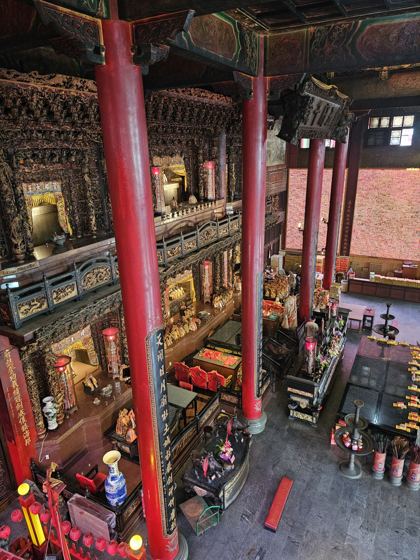
Looking down into the Hall of the Five Lords from the second floor
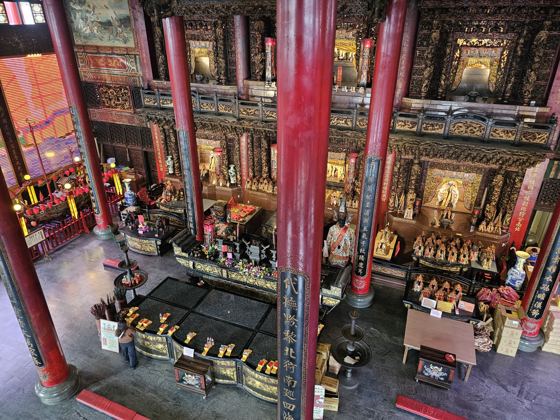
Looking down into the Hall of the Five Lords from the second floor
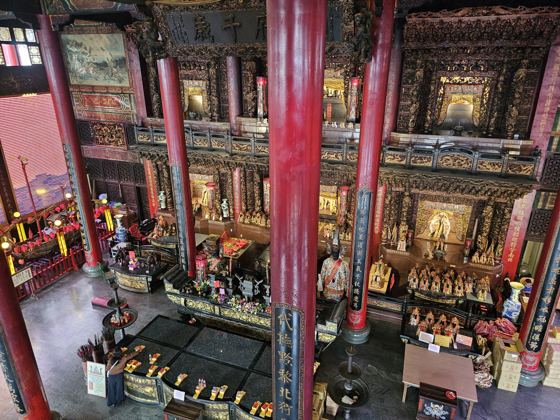
Looking down into the Hall of the Five Lords from the second floor
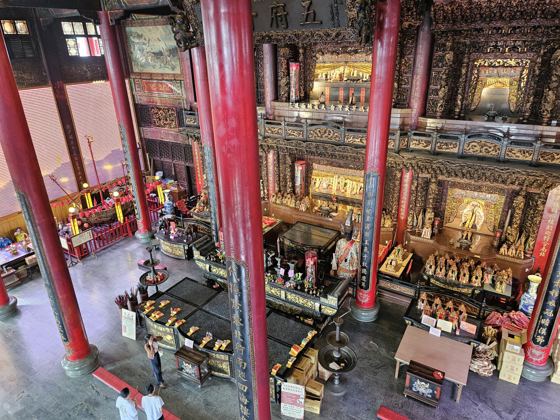
Looking down into the Hall of the Five Lords from the second floor
Inside the temple
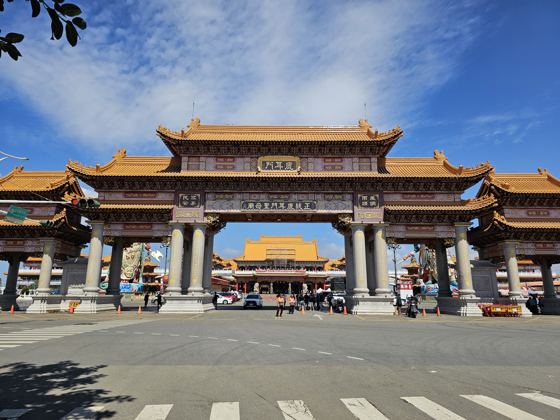
Main gate of the Shengmu Temple
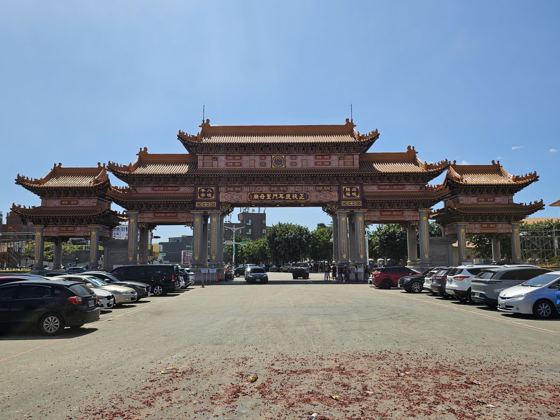
Main gate of the Shengmu Temple
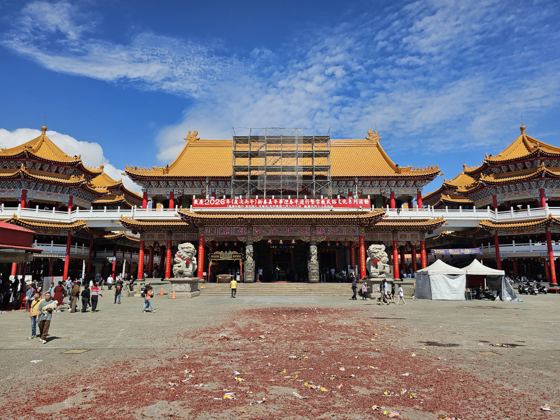
Main gate of the Shengmu Temple
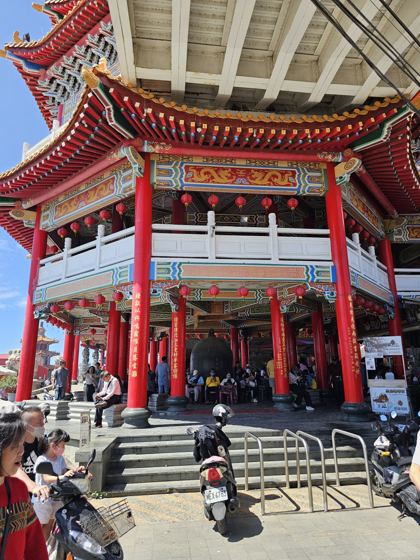
Rest and dining area for worshippers
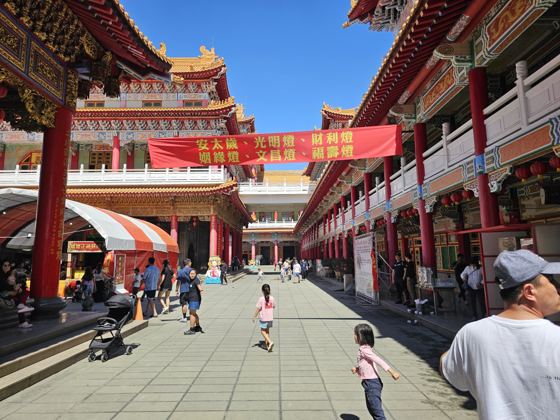
"Replenishing the treasury" offerings set up only at Lunar New Year
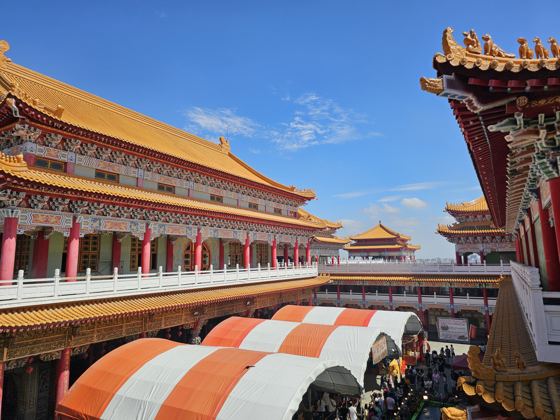
Tent area for lighting blessing lamps and replenishing the treasury
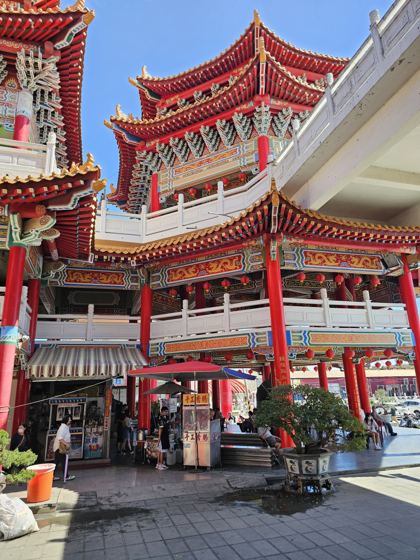
Inside the temple
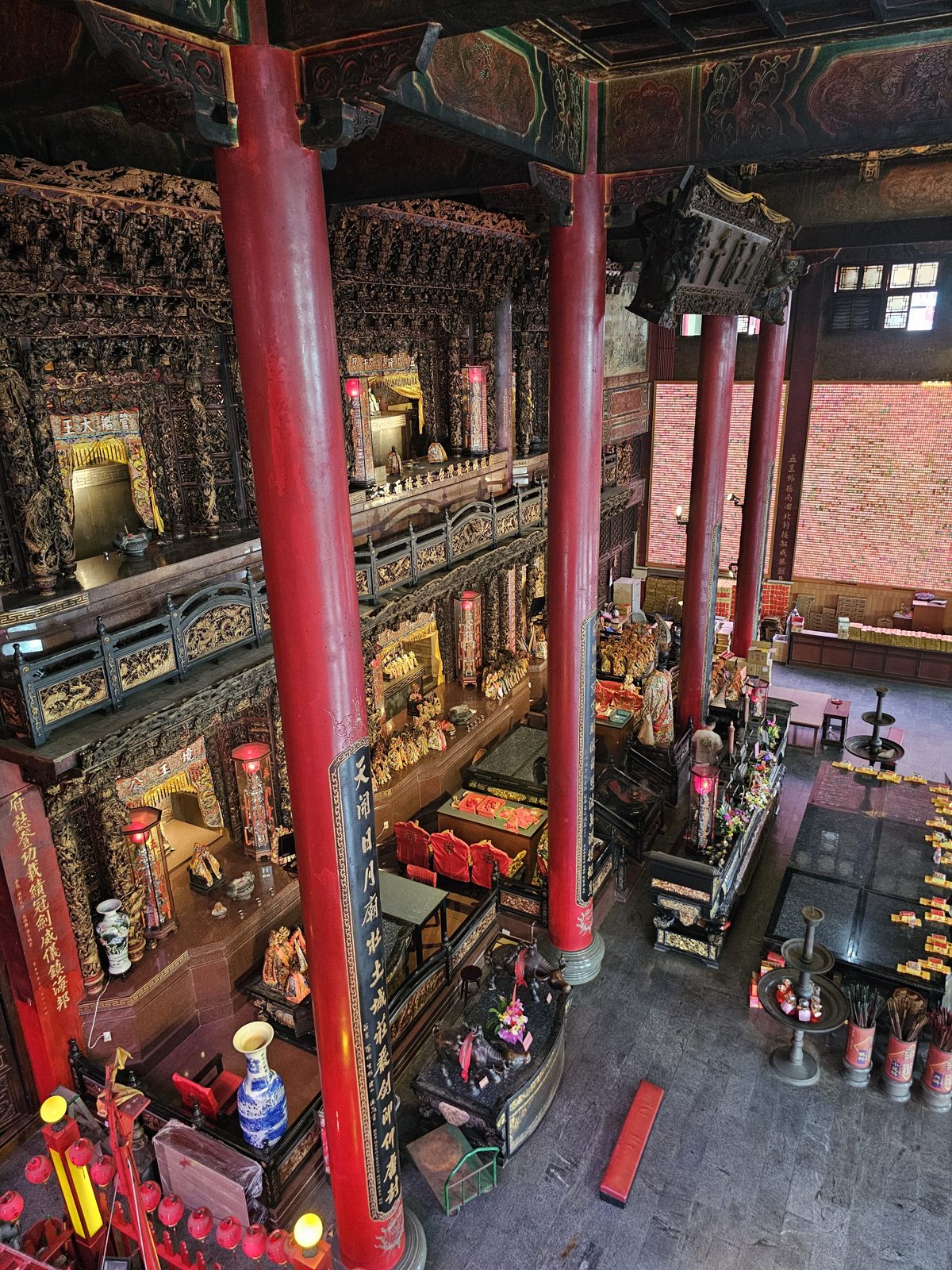
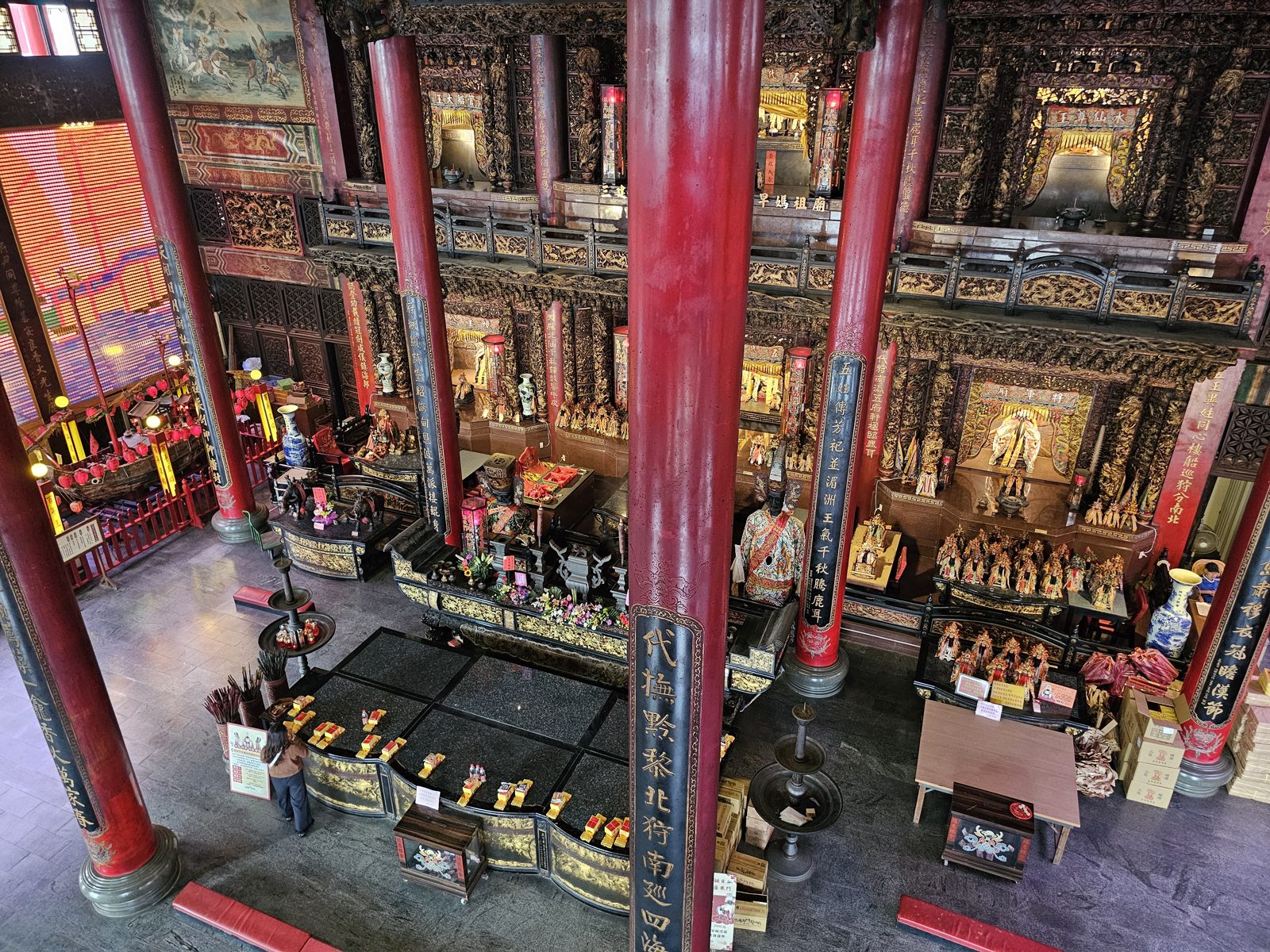
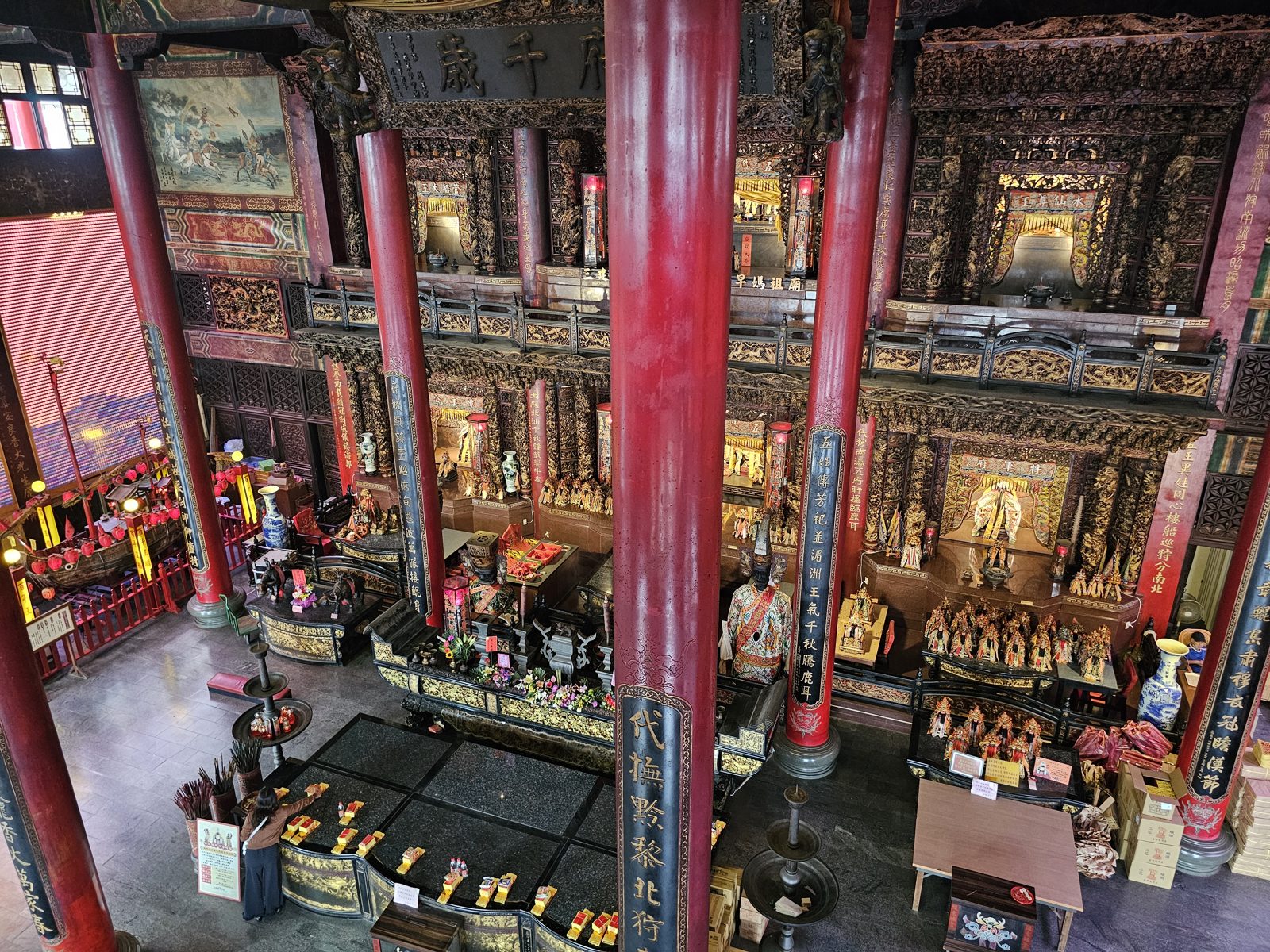
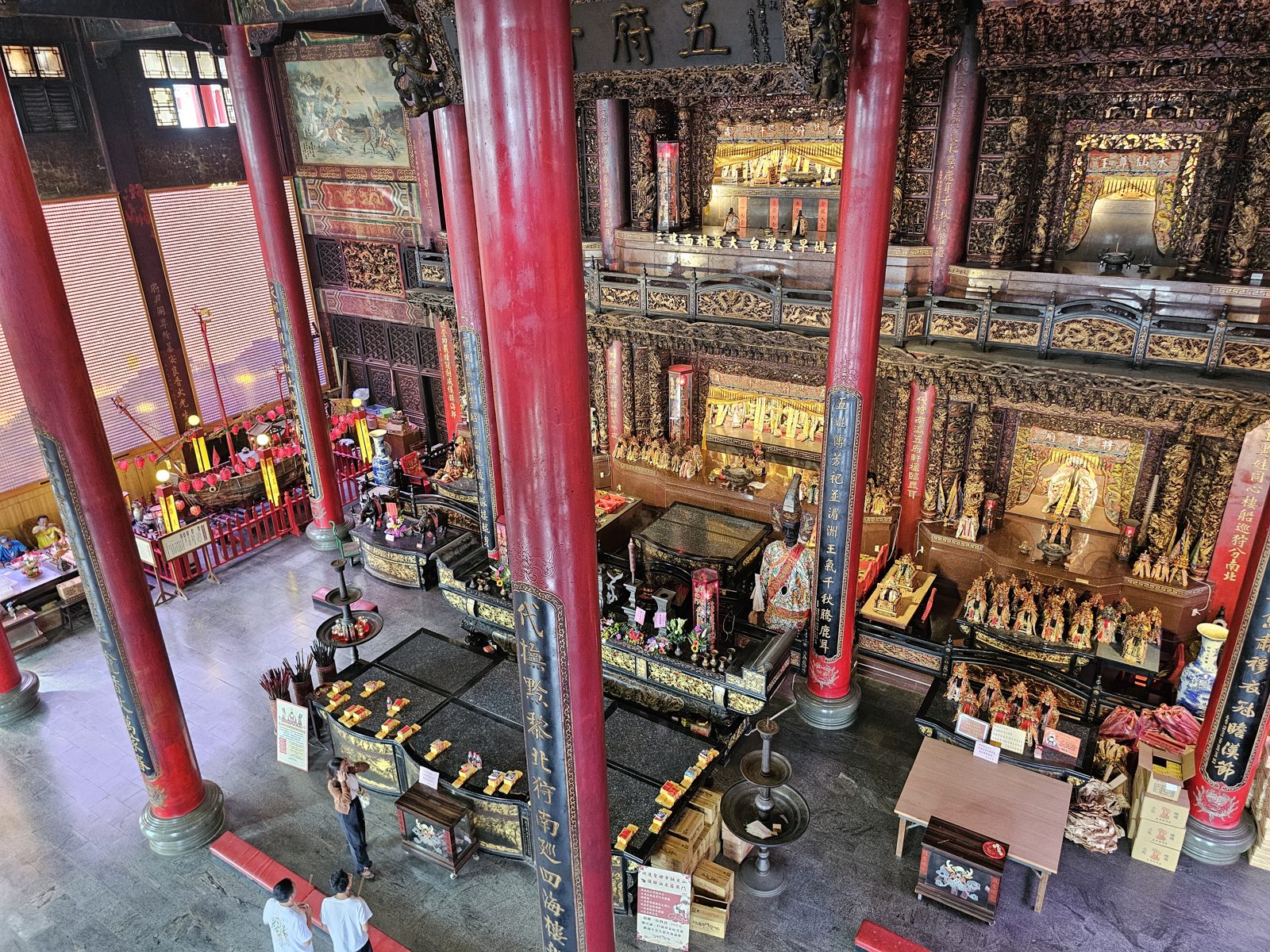
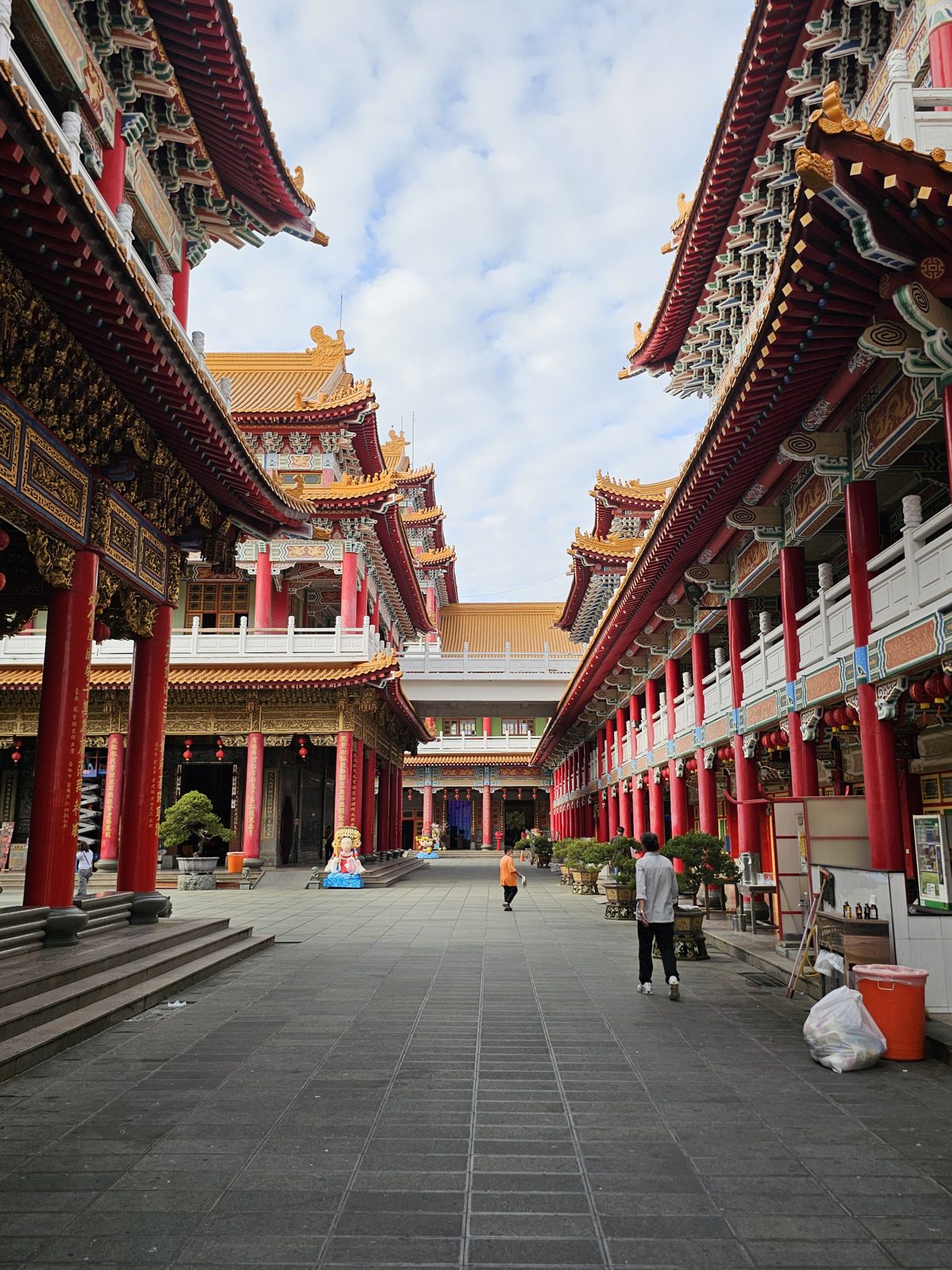
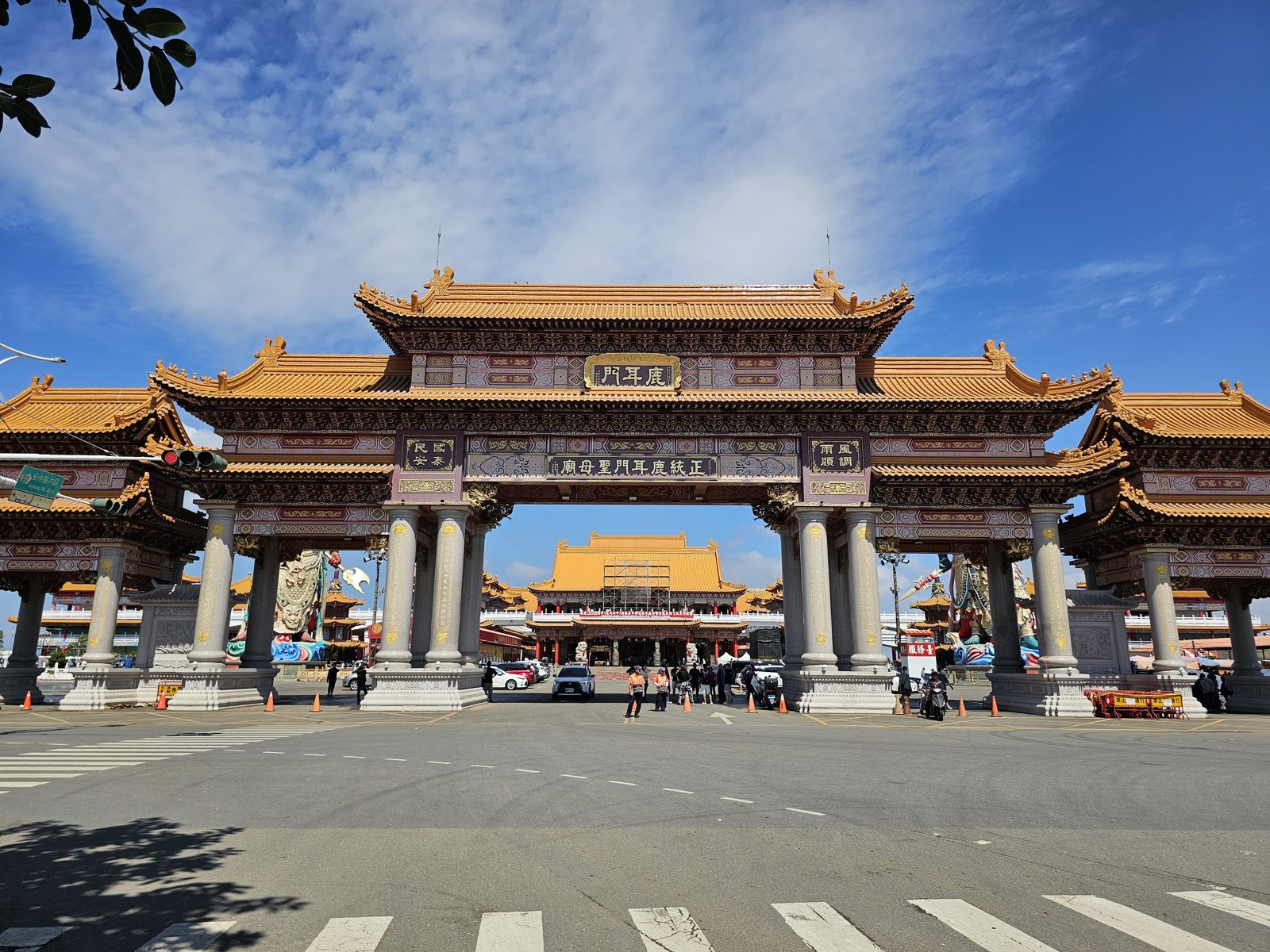
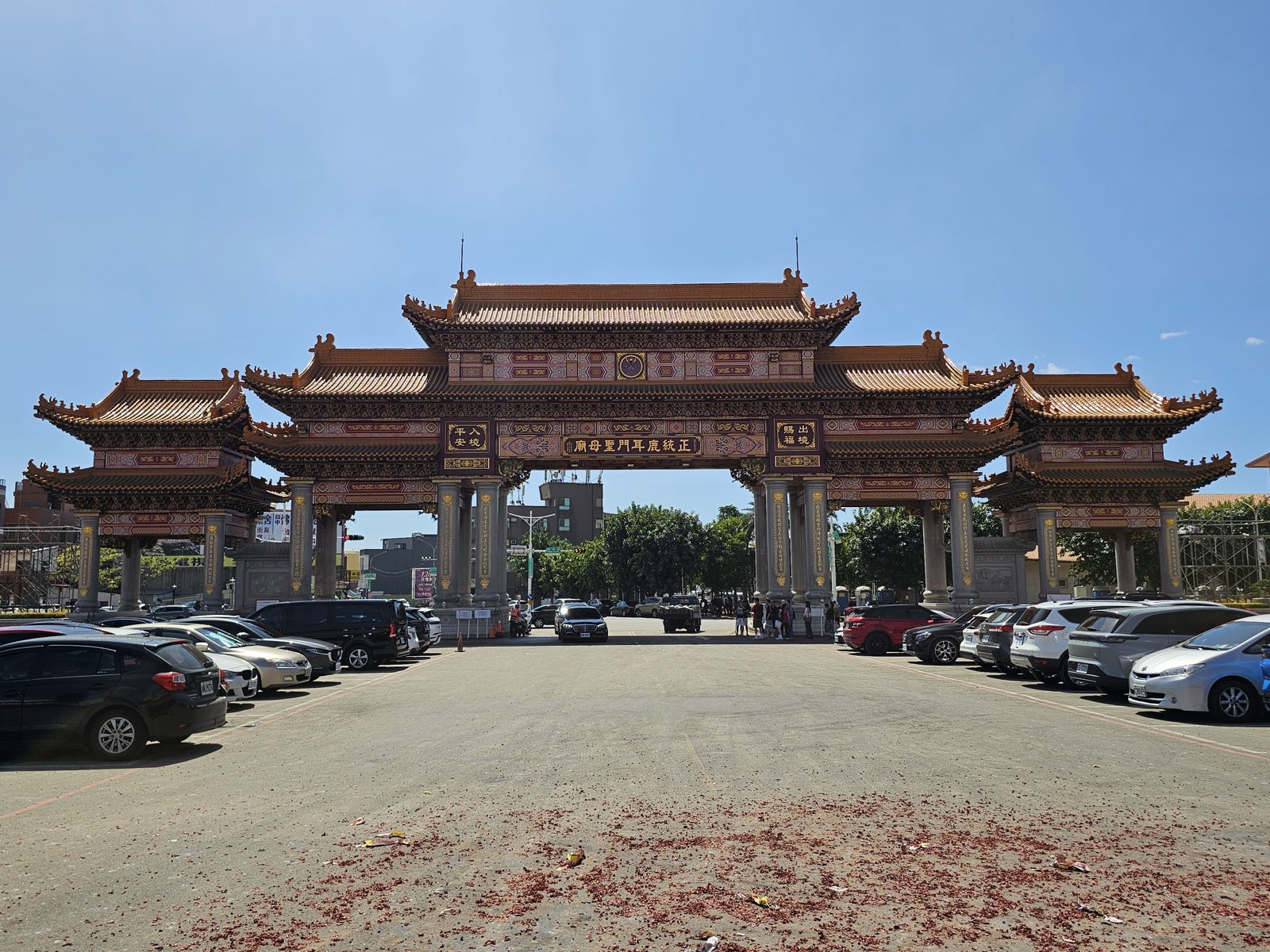
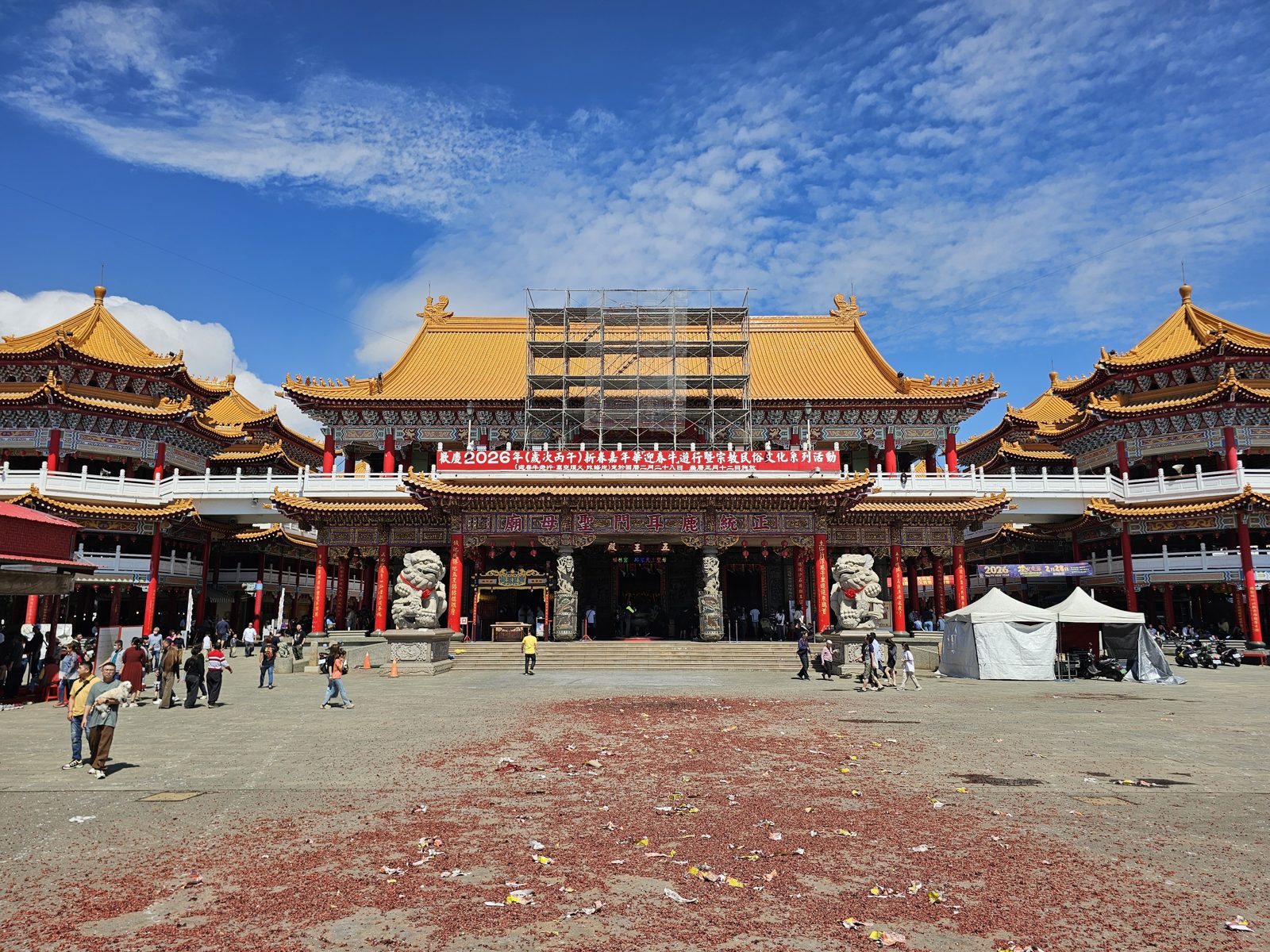
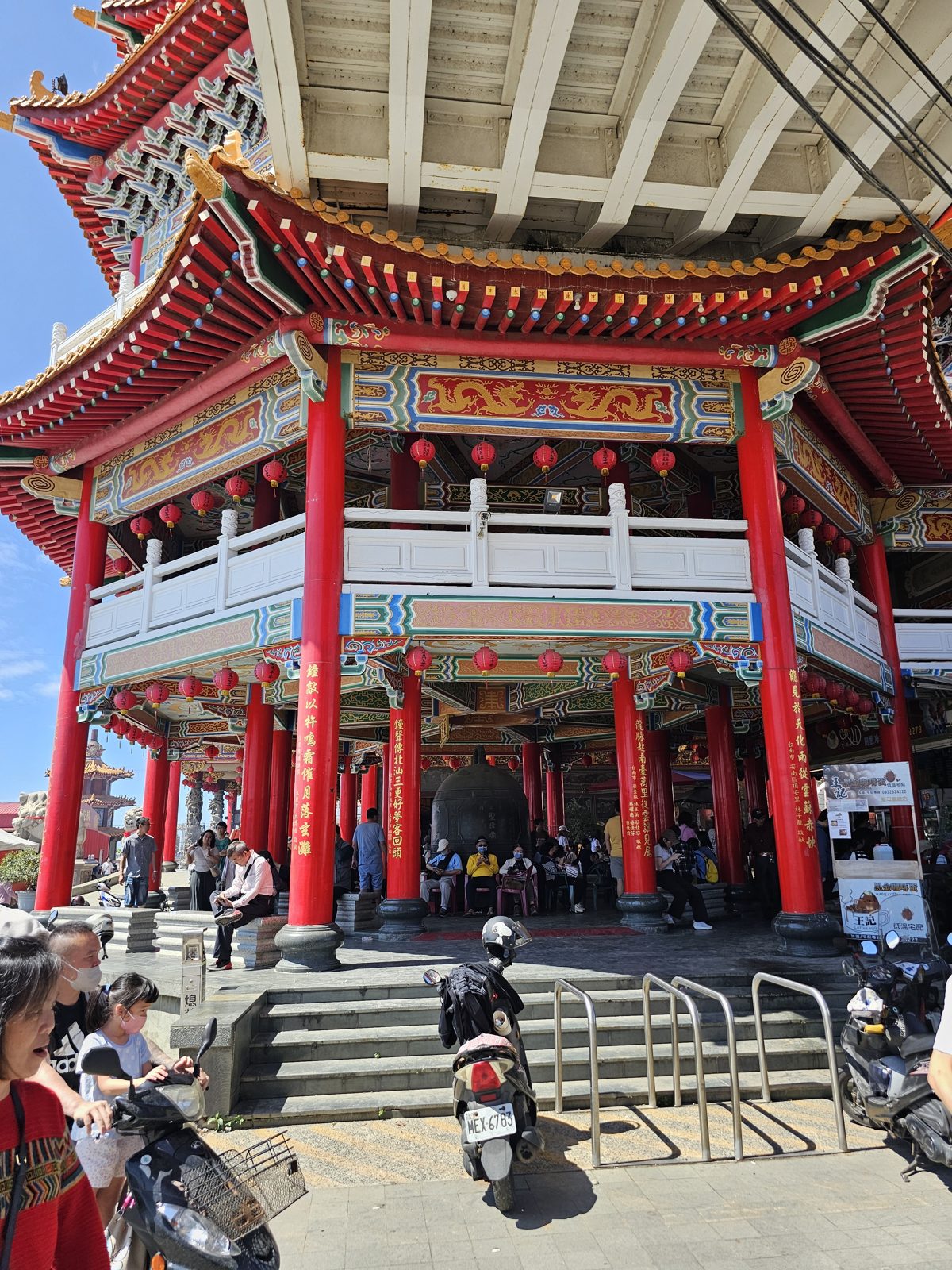
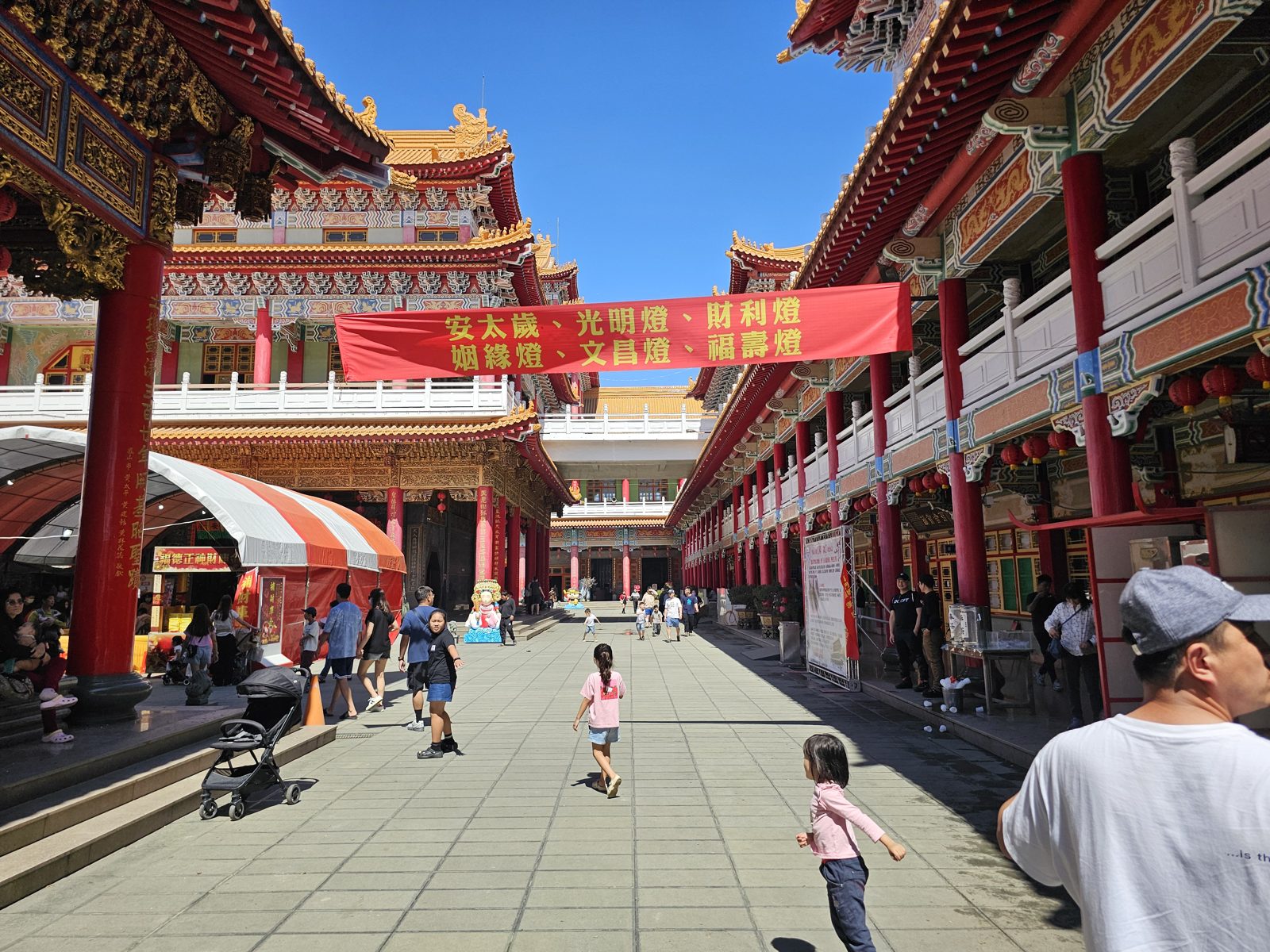
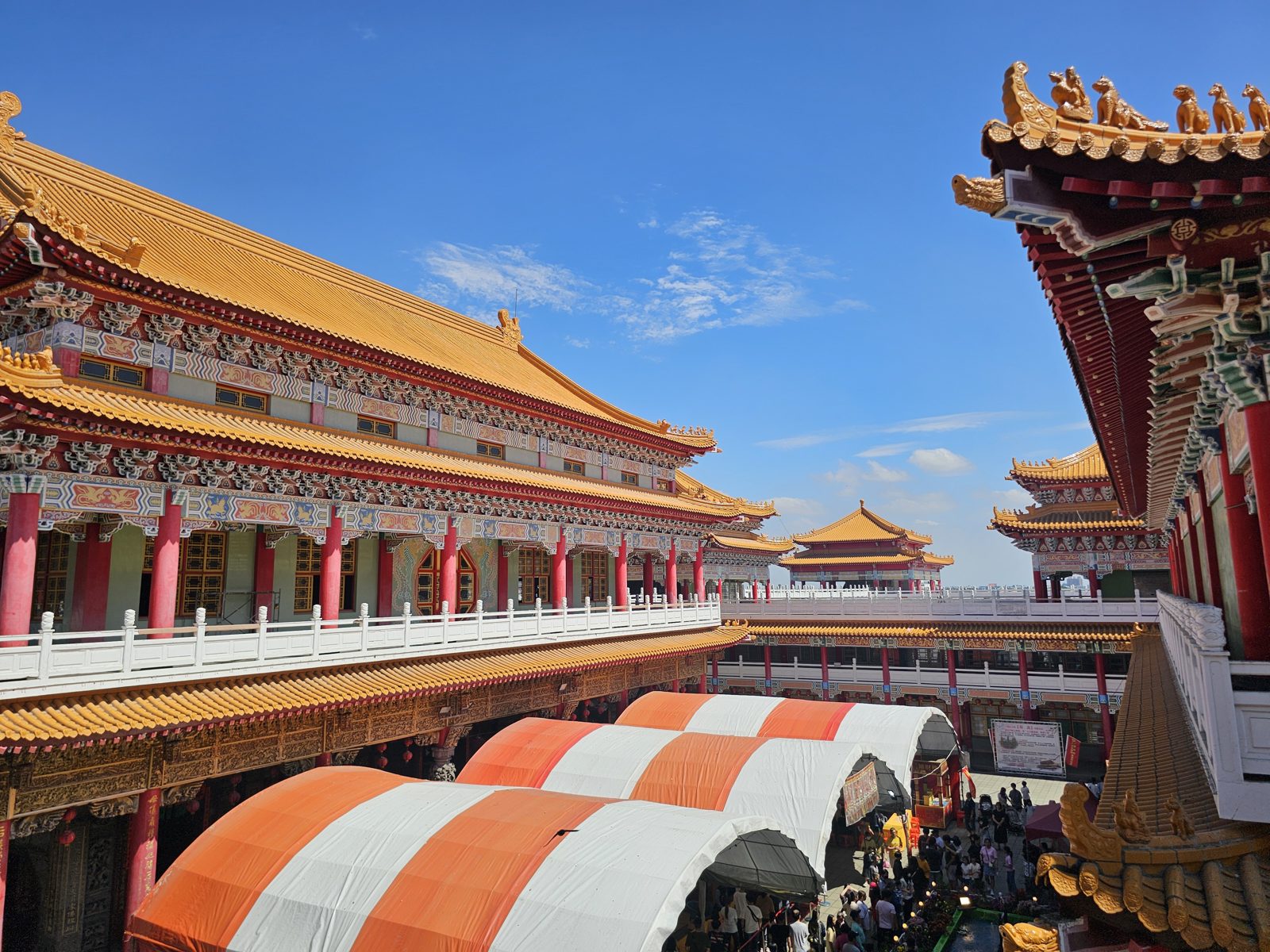
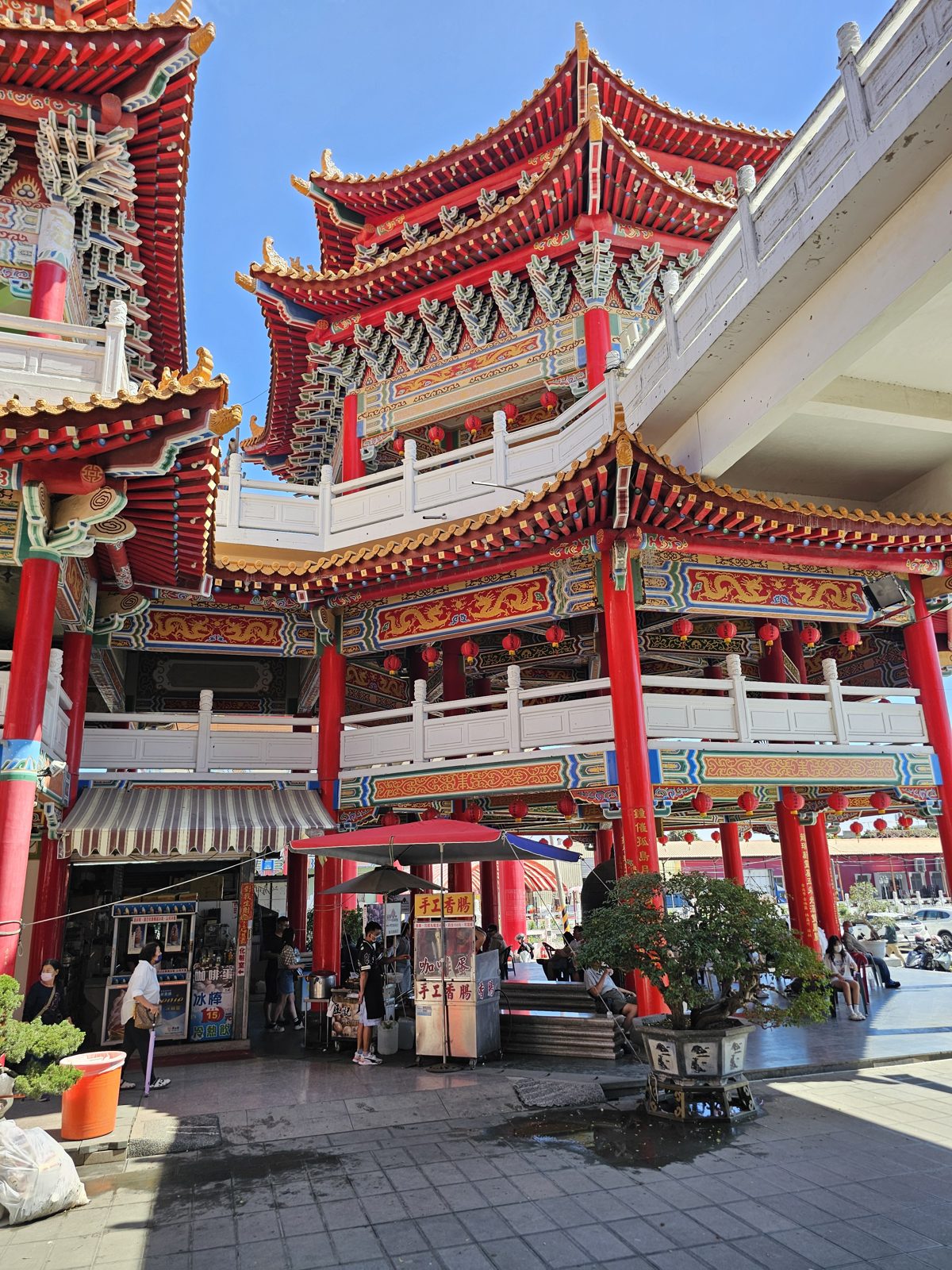
Ground floor and temple plaza
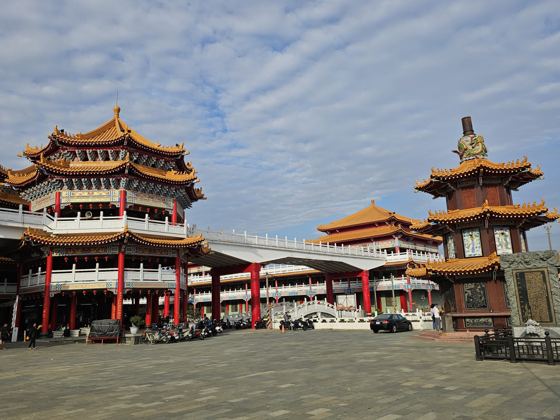
Temple plaza
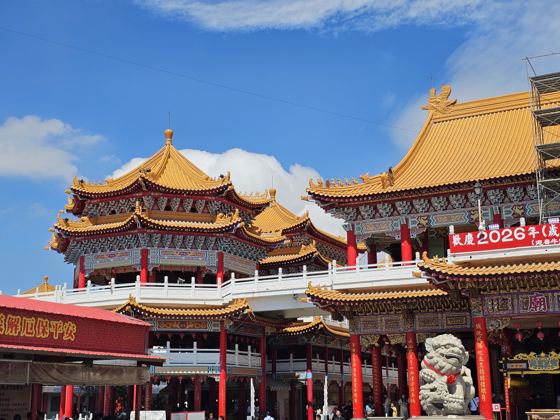
Ground floor and temple plaza
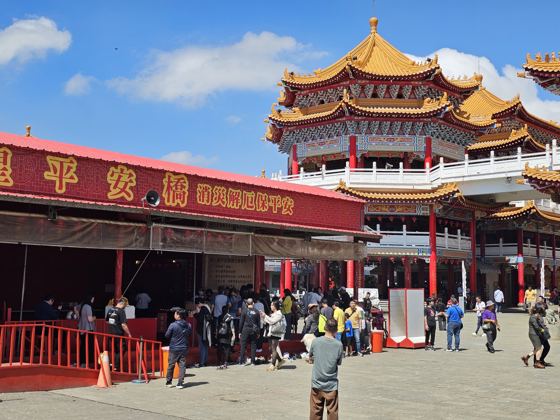
Seven Stars Peace Bridge
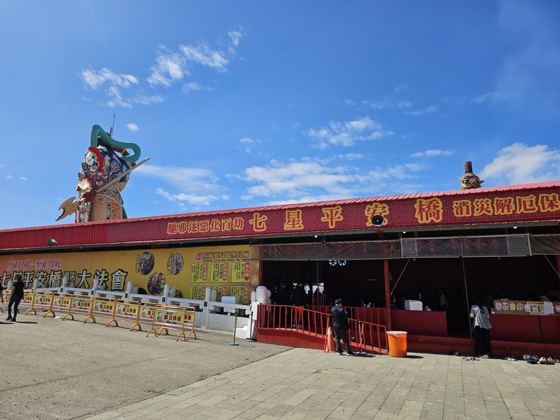
Seven Stars Peace Bridge
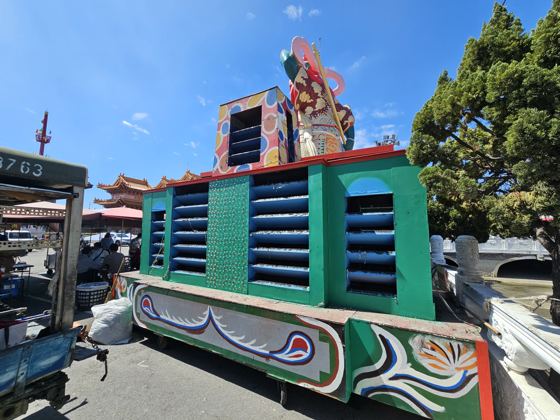
Beehive-firework rack still standing after the Lantern Festival
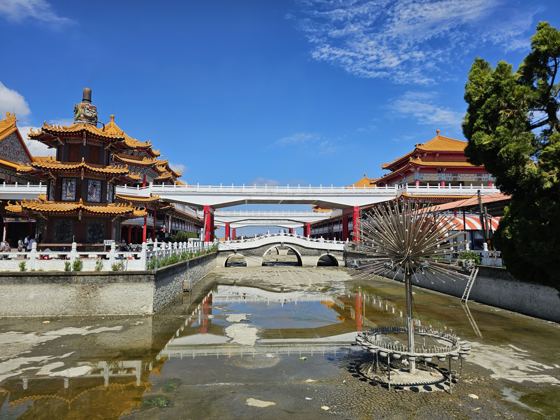
Moat
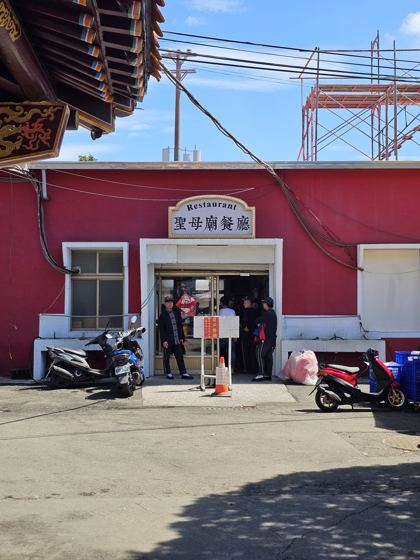
Shengmu Temple dining hall
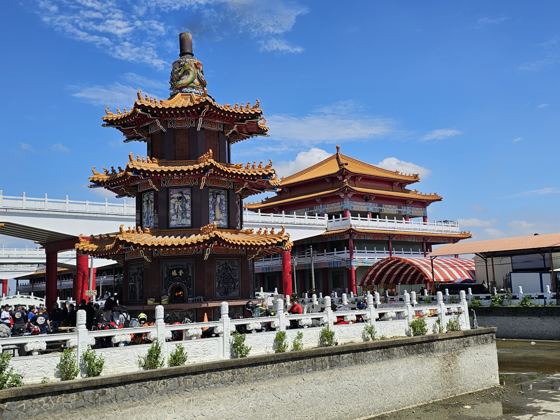
Ground floor and temple plaza
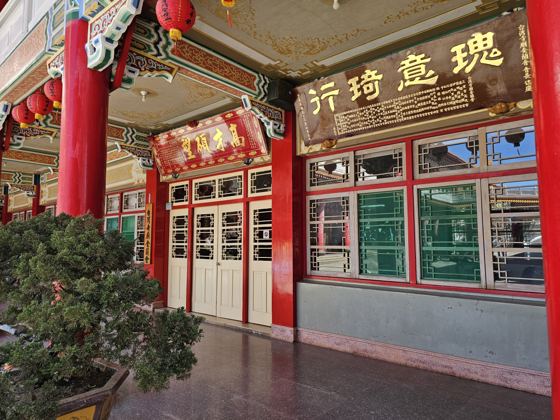
Ground floor and temple plaza
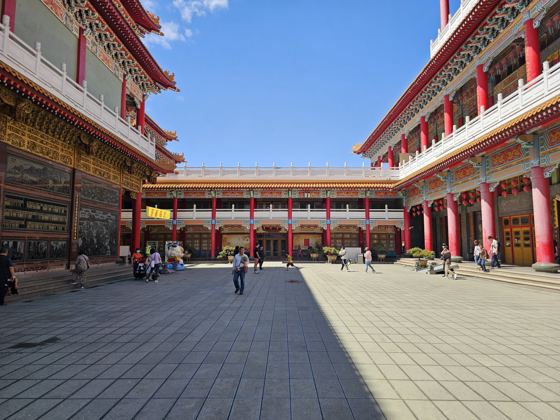
(0)
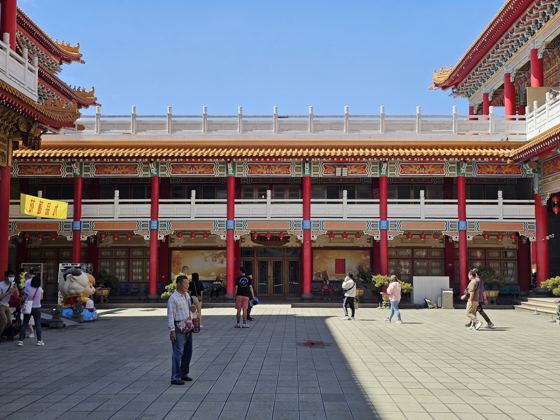
Ground floor and temple plaza
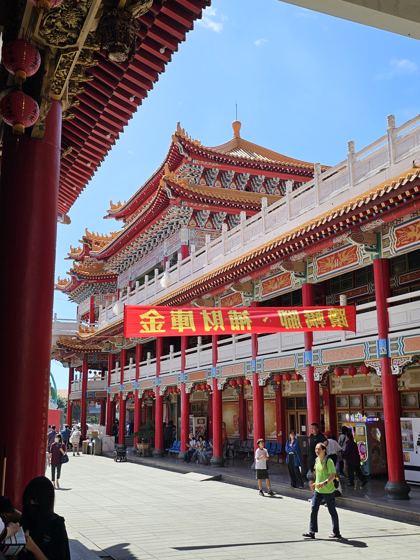
Ground floor and temple plaza
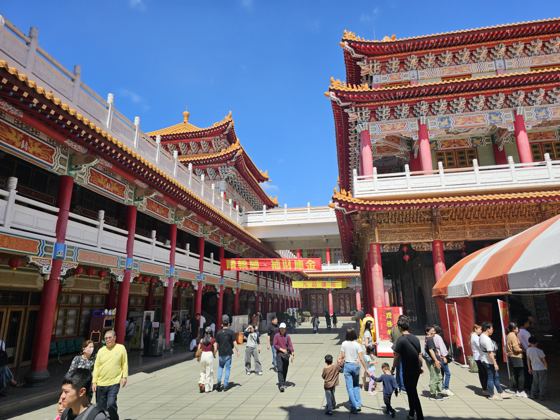
Ground floor and temple plaza
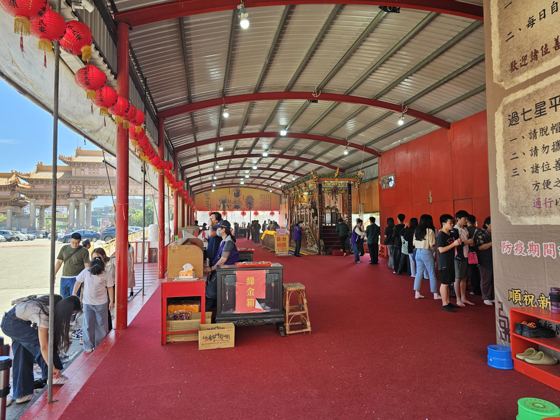
Inside the Seven Stars Peace Bridge
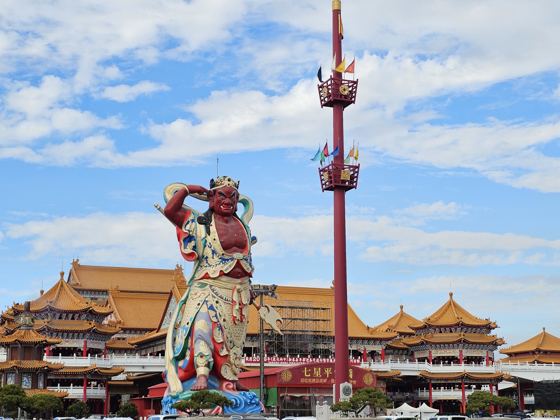
Ground floor and temple plaza
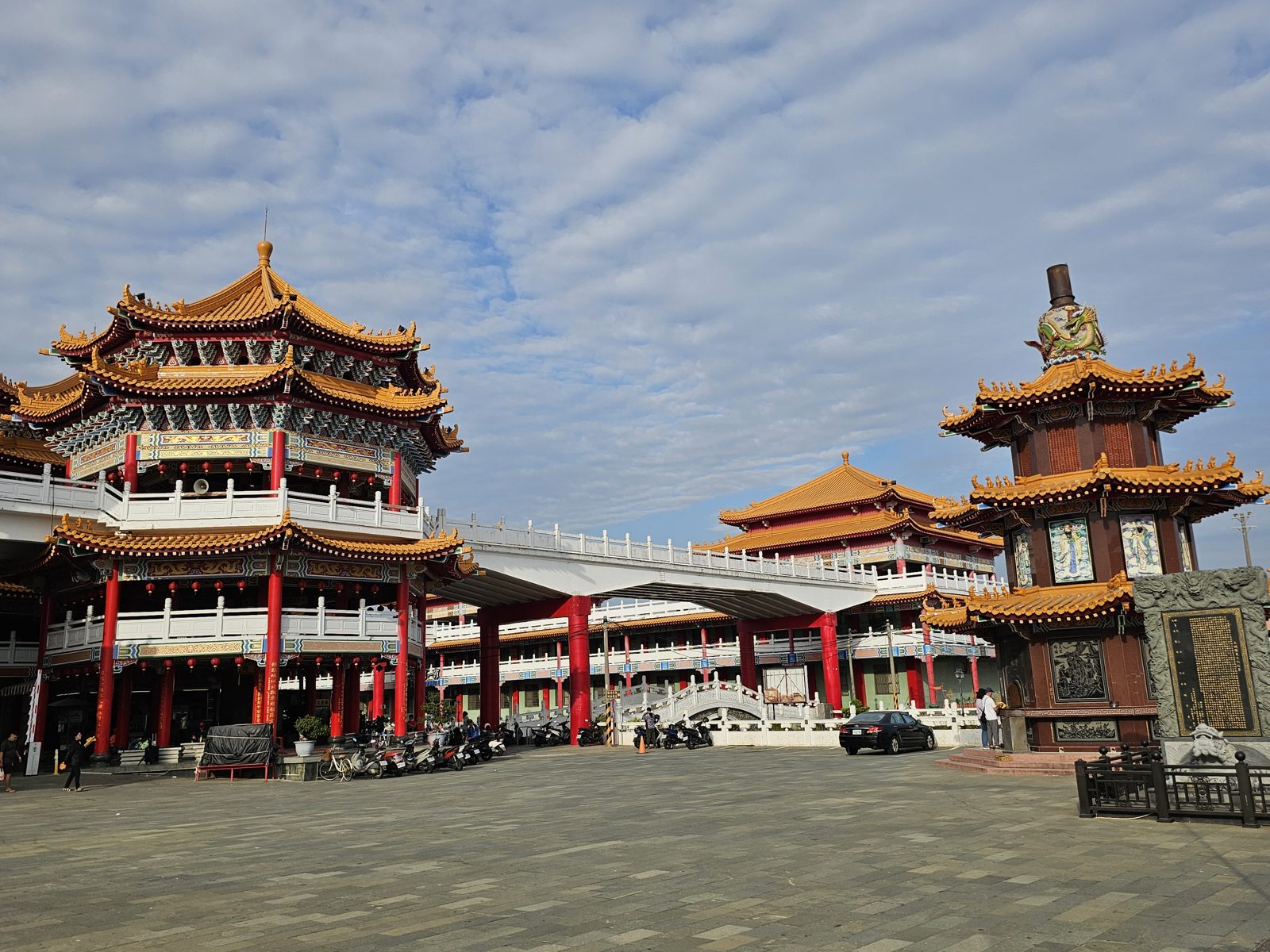
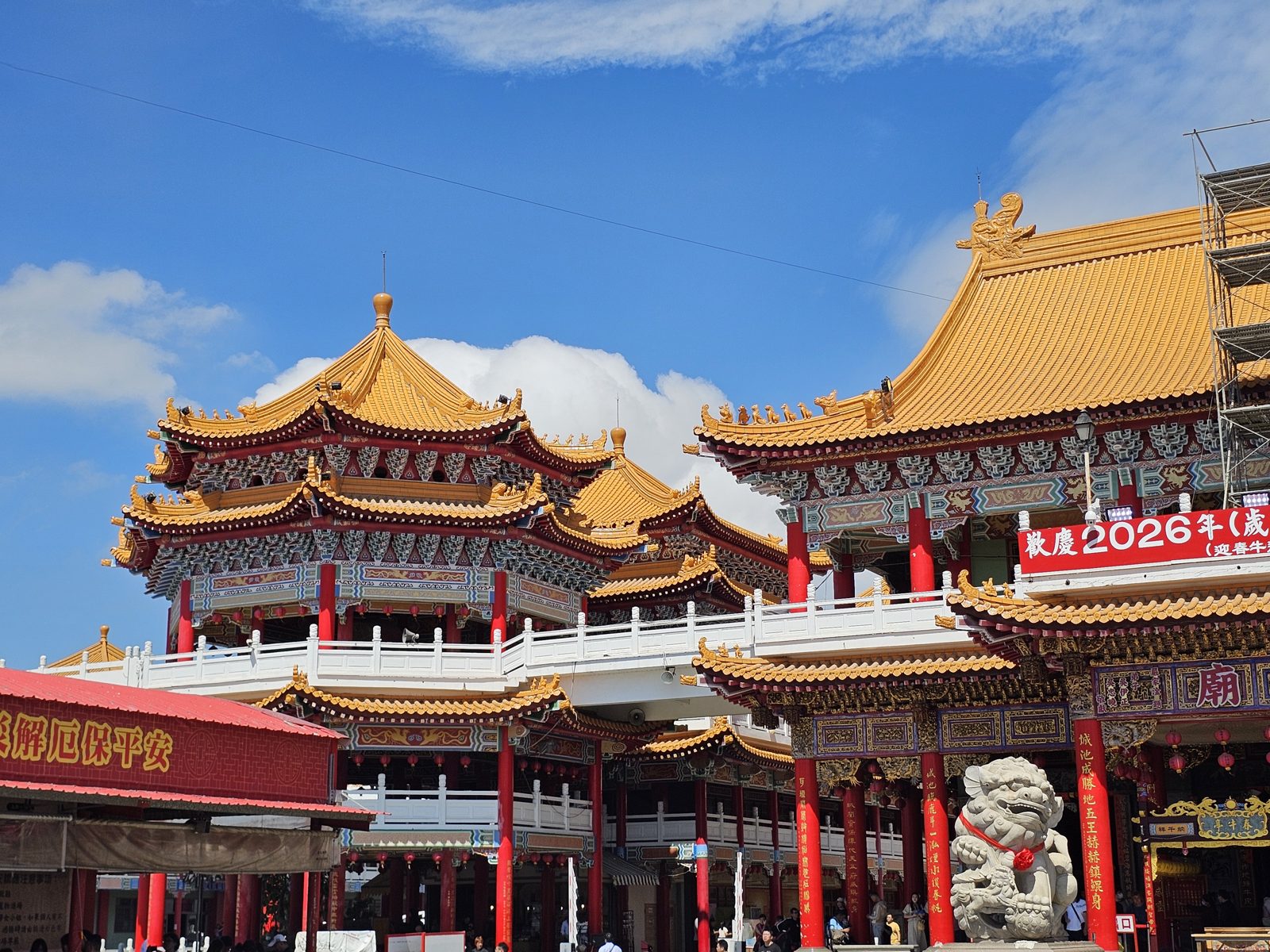
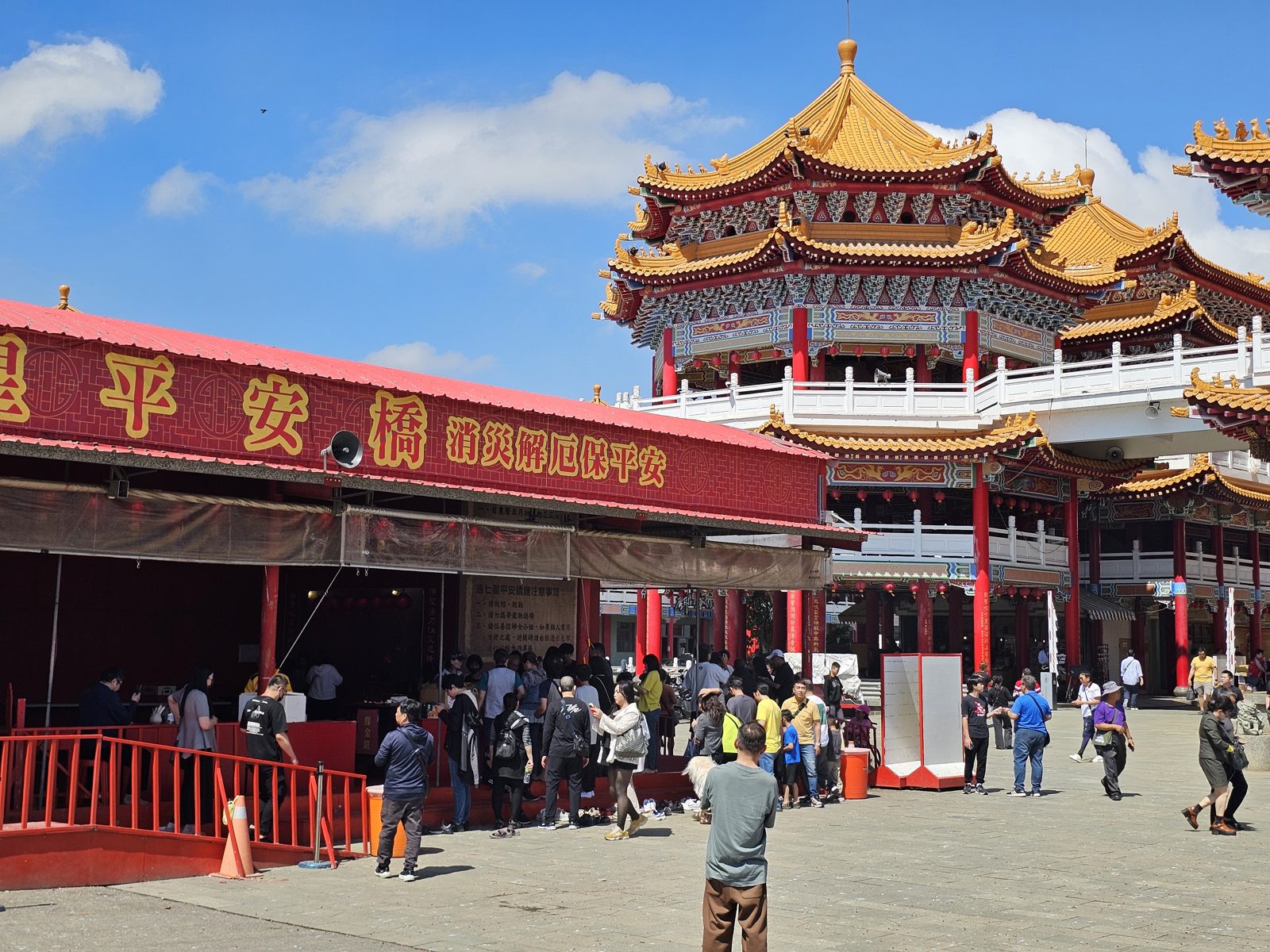
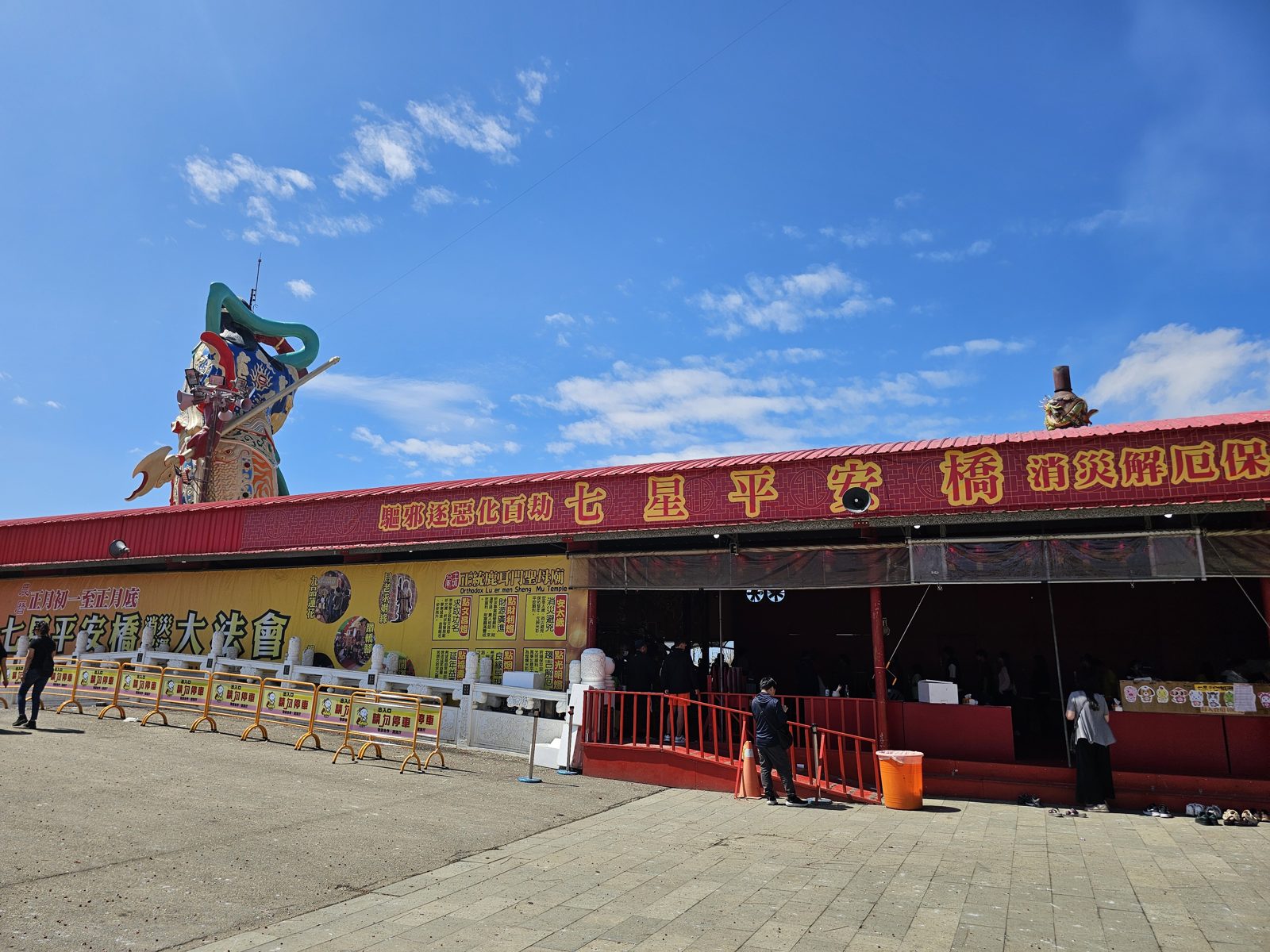
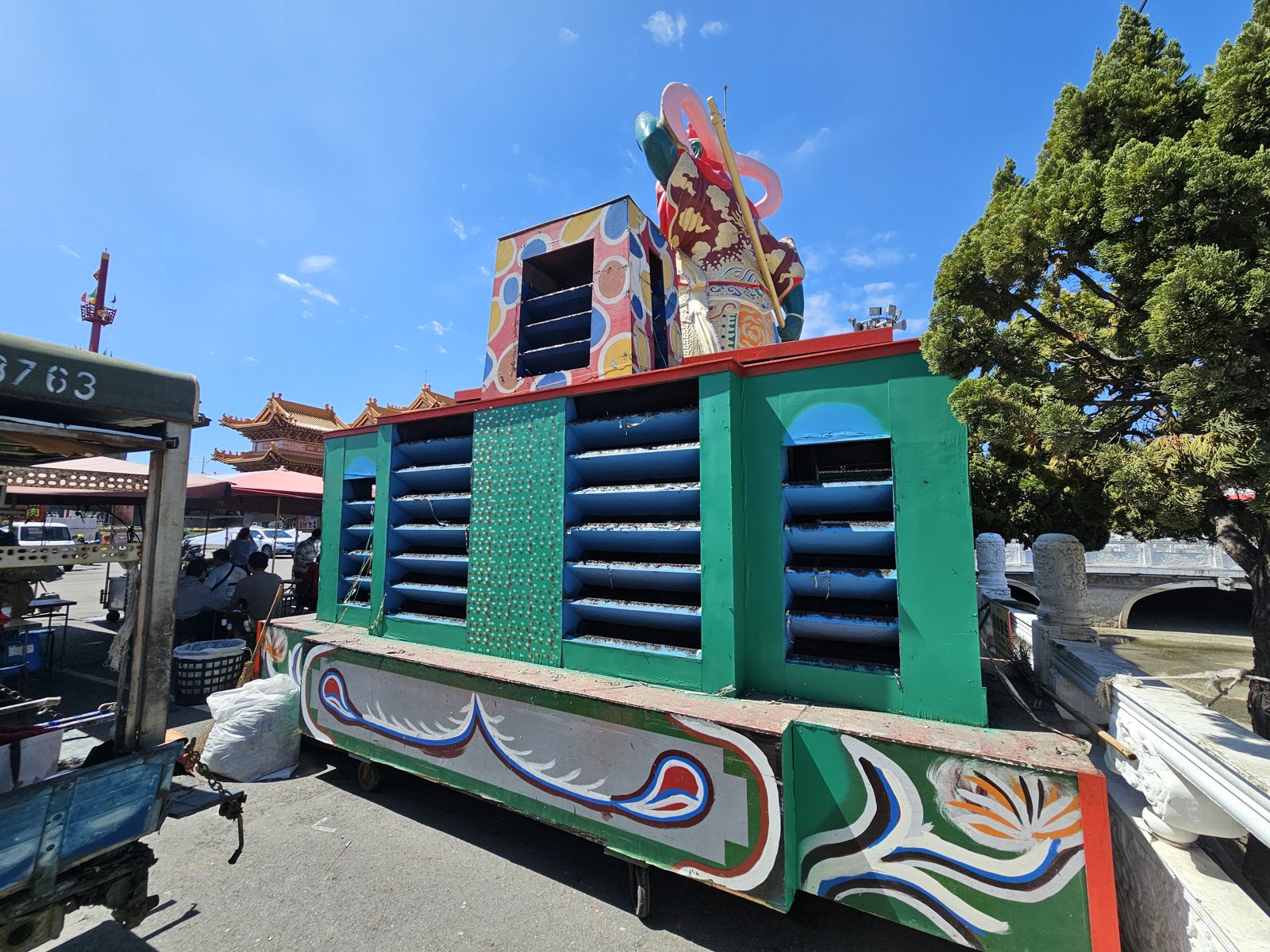
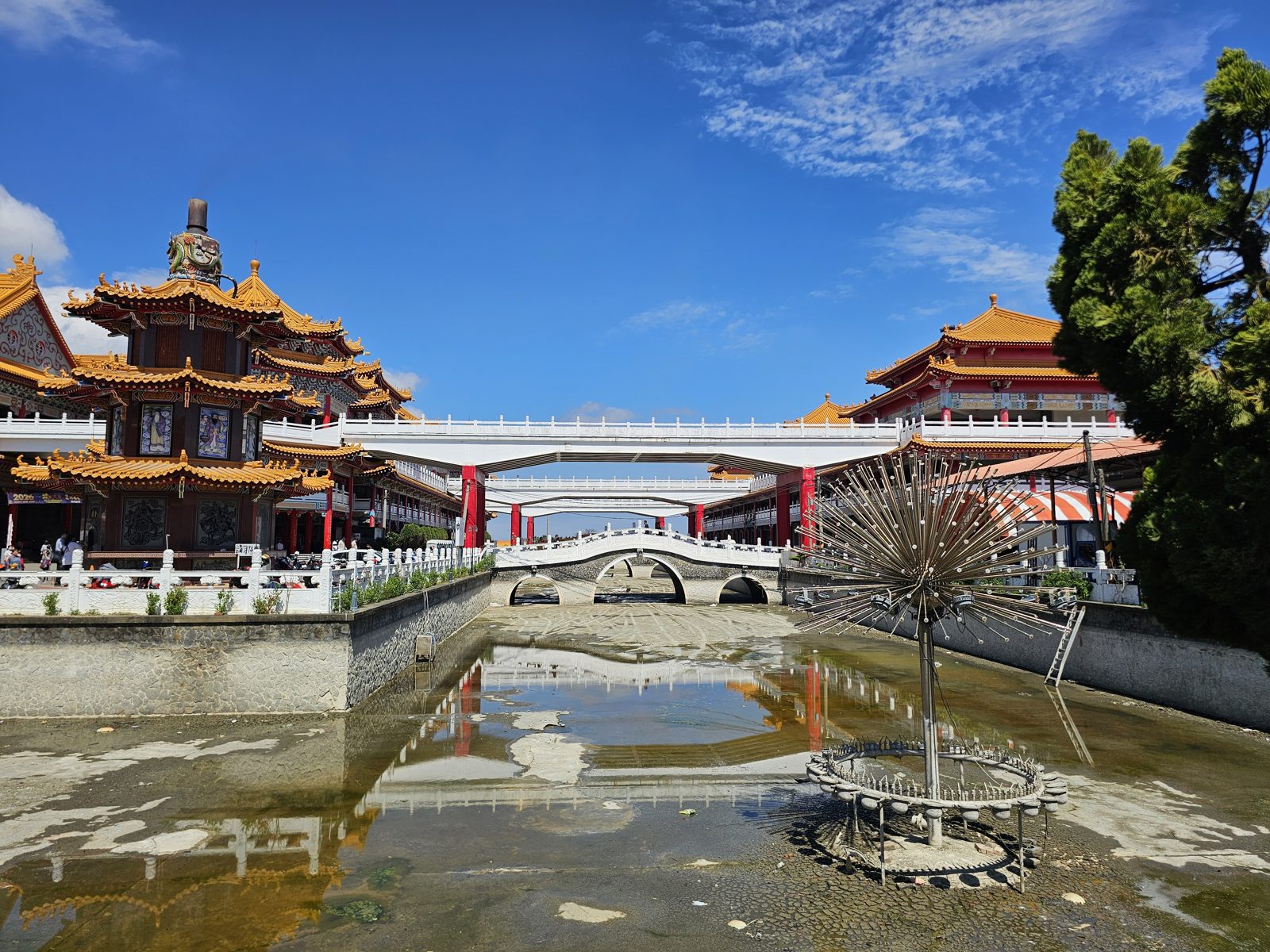
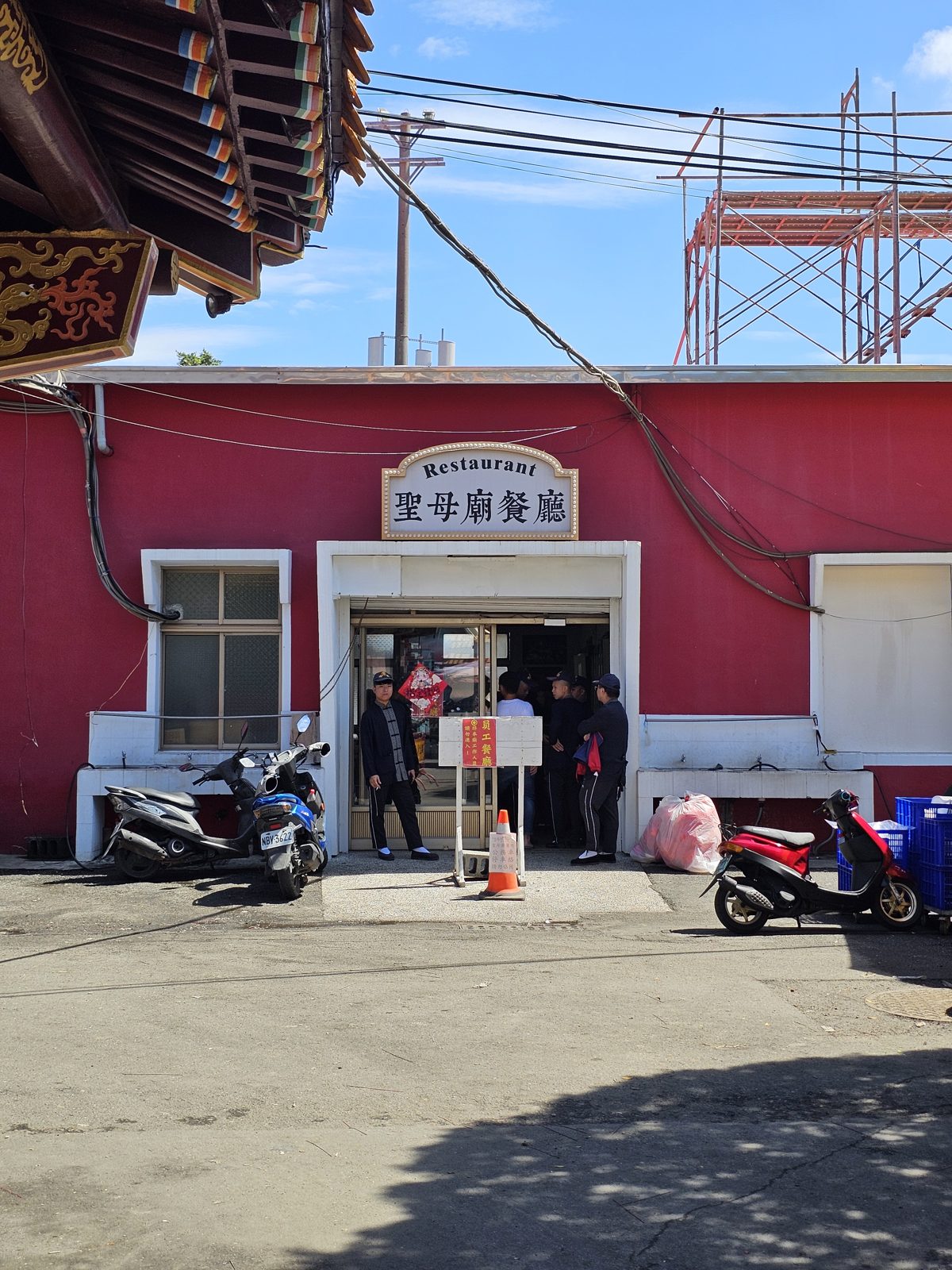
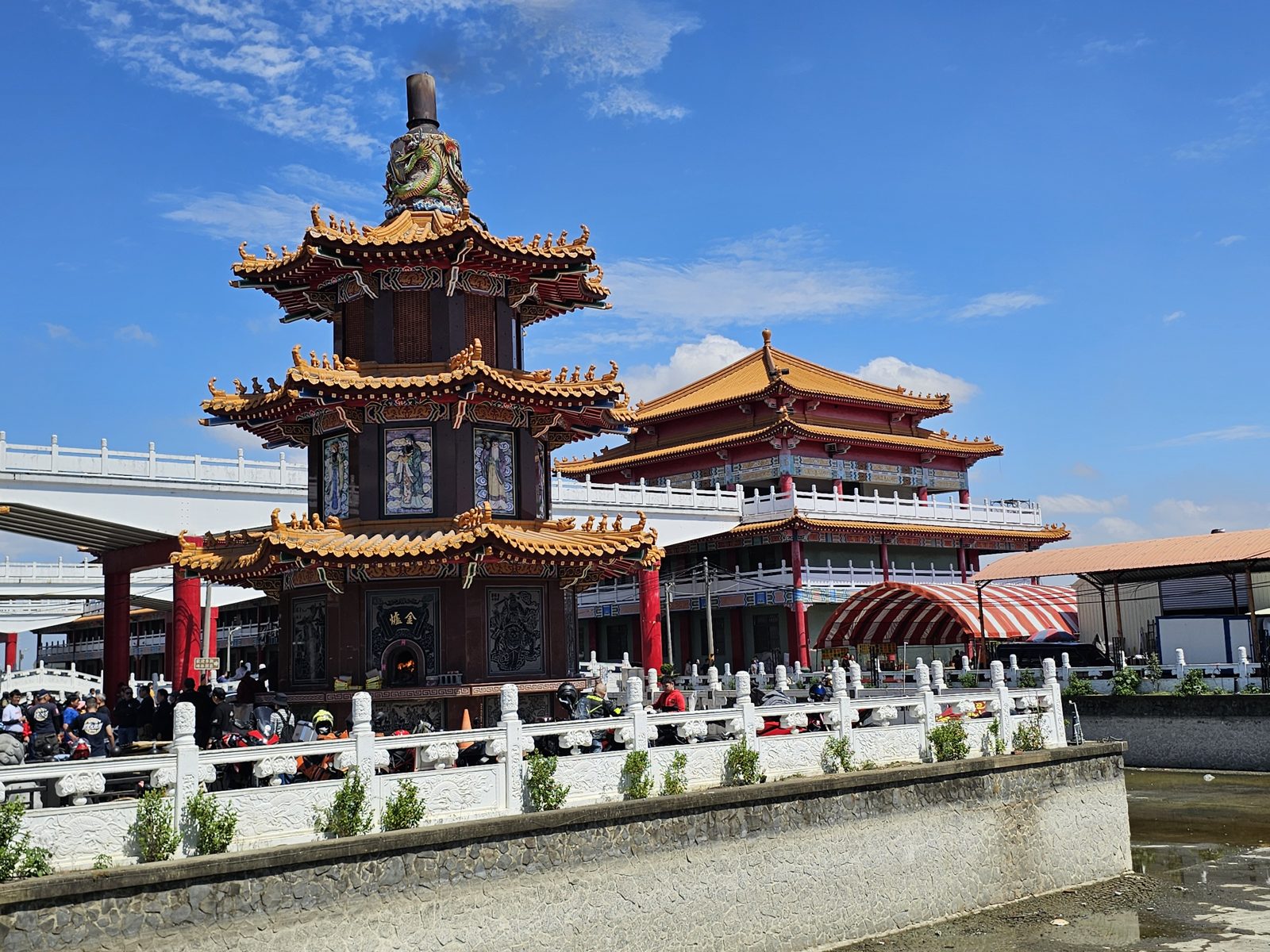
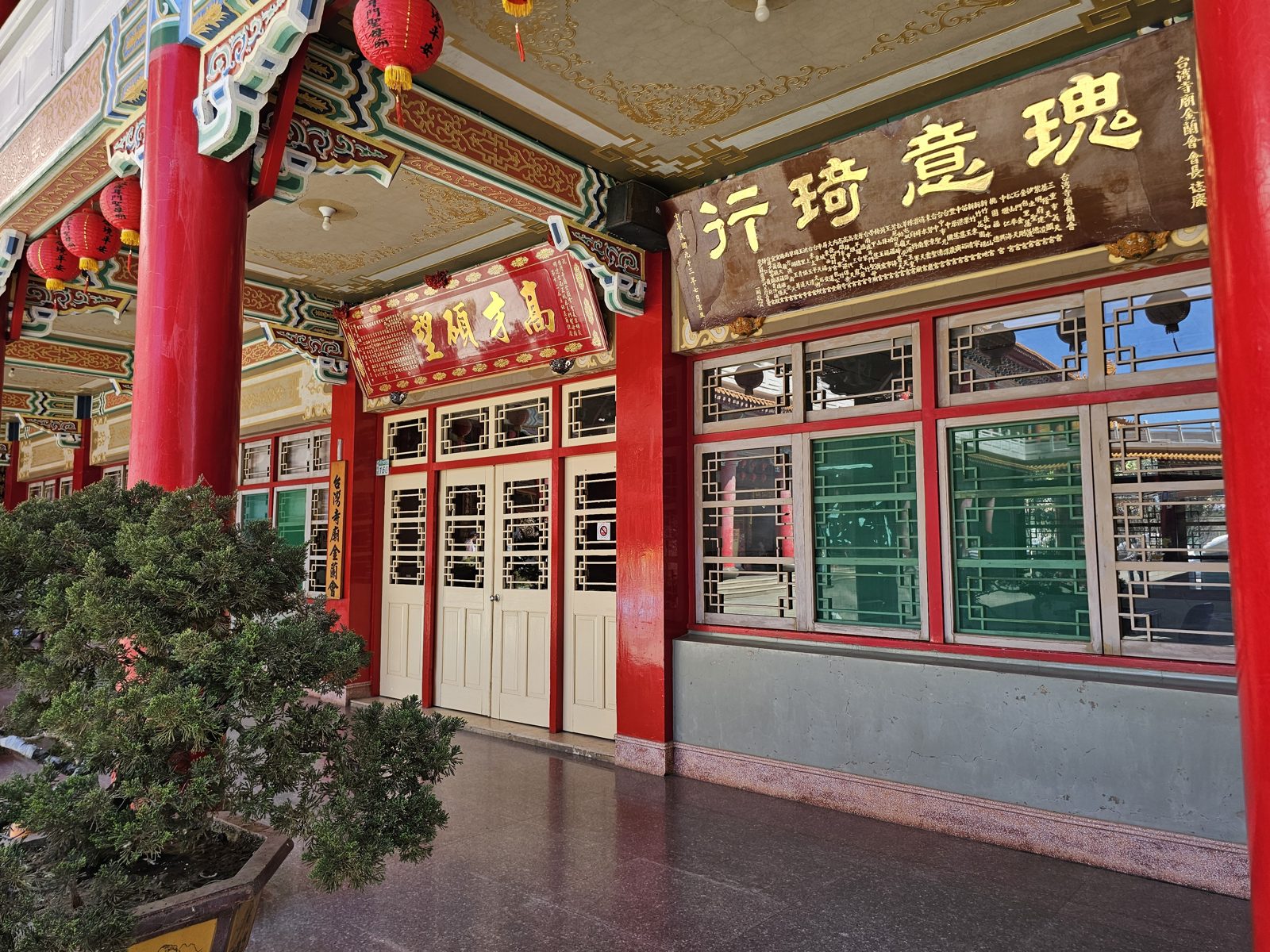
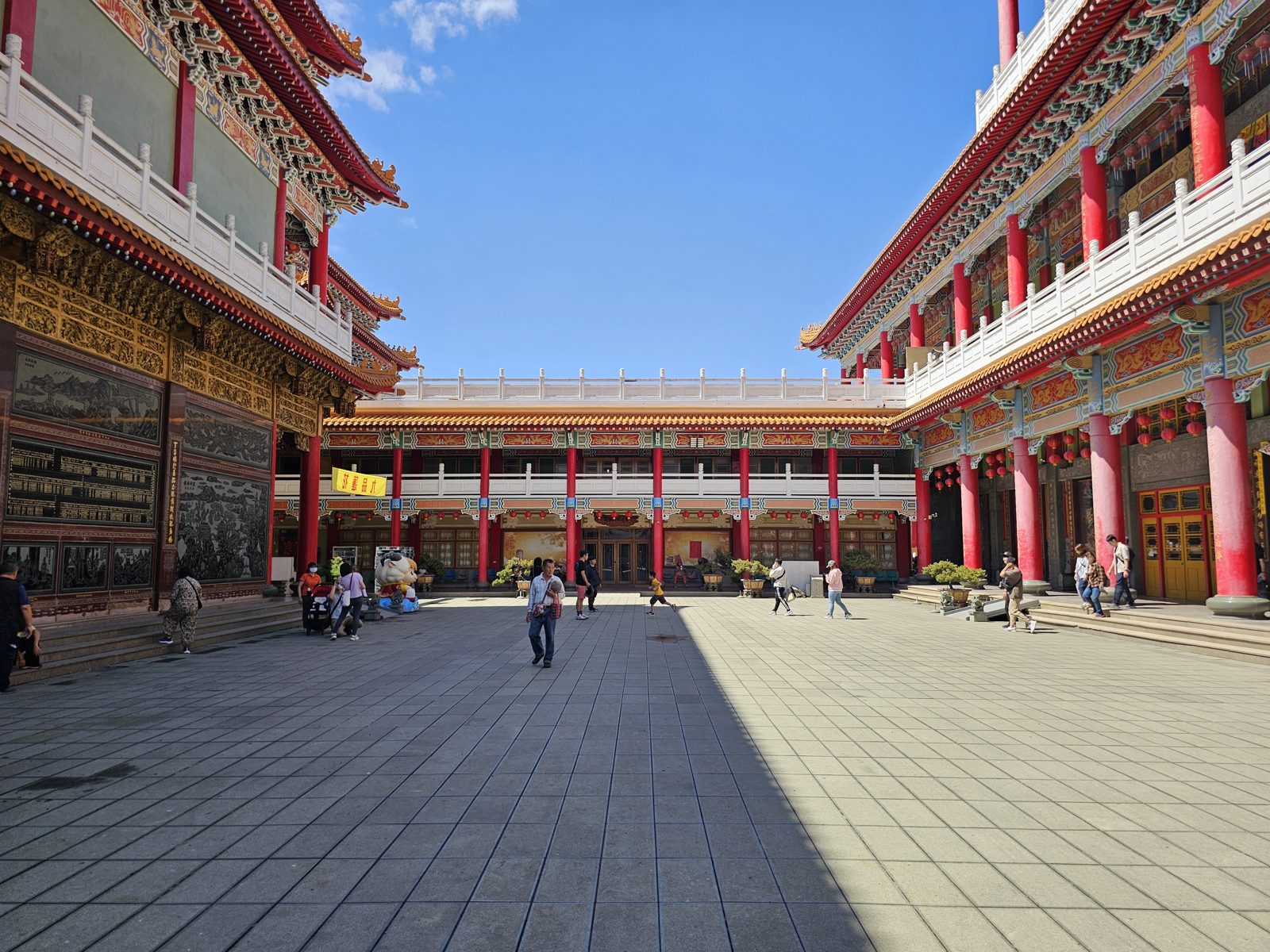
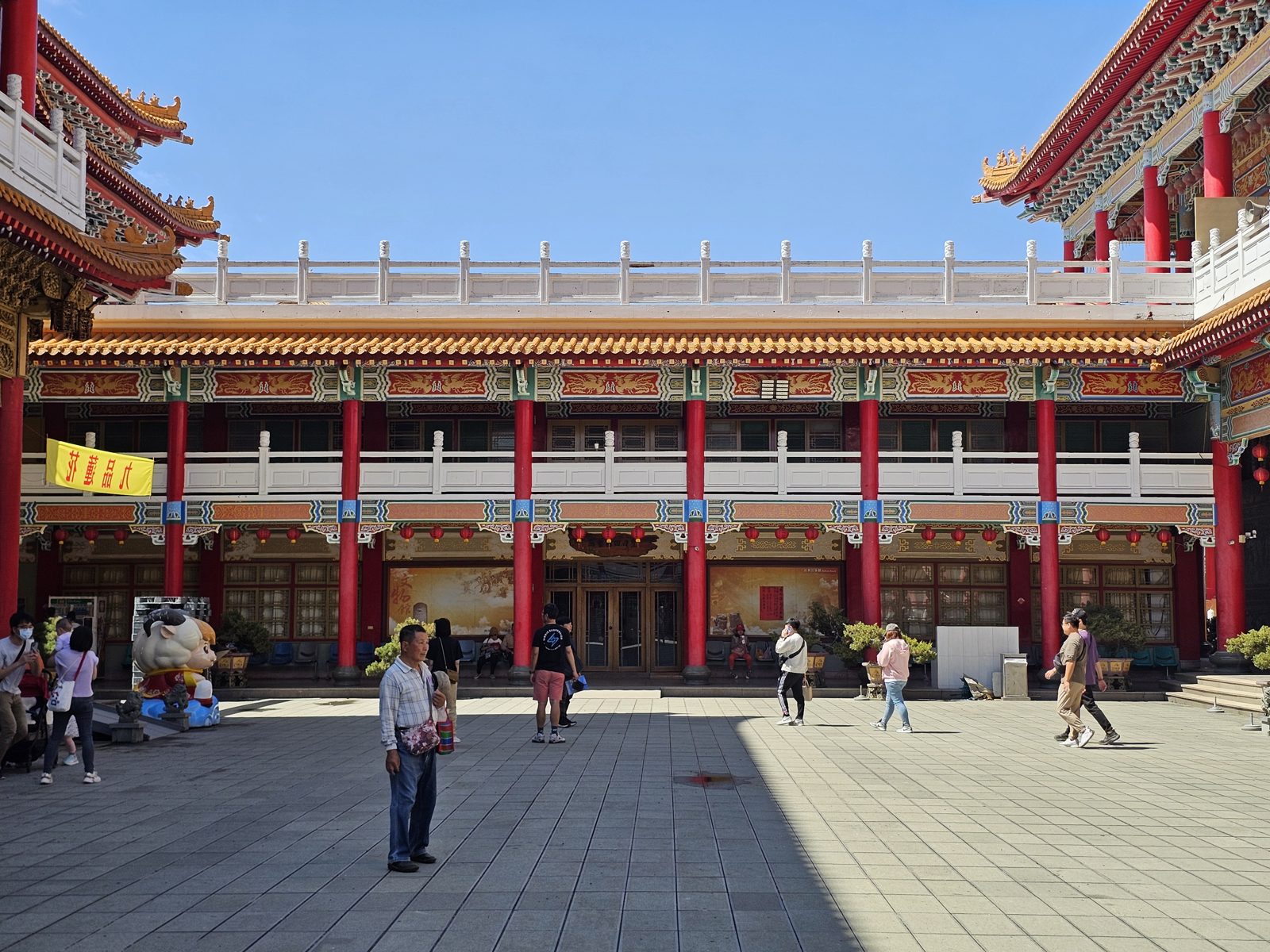
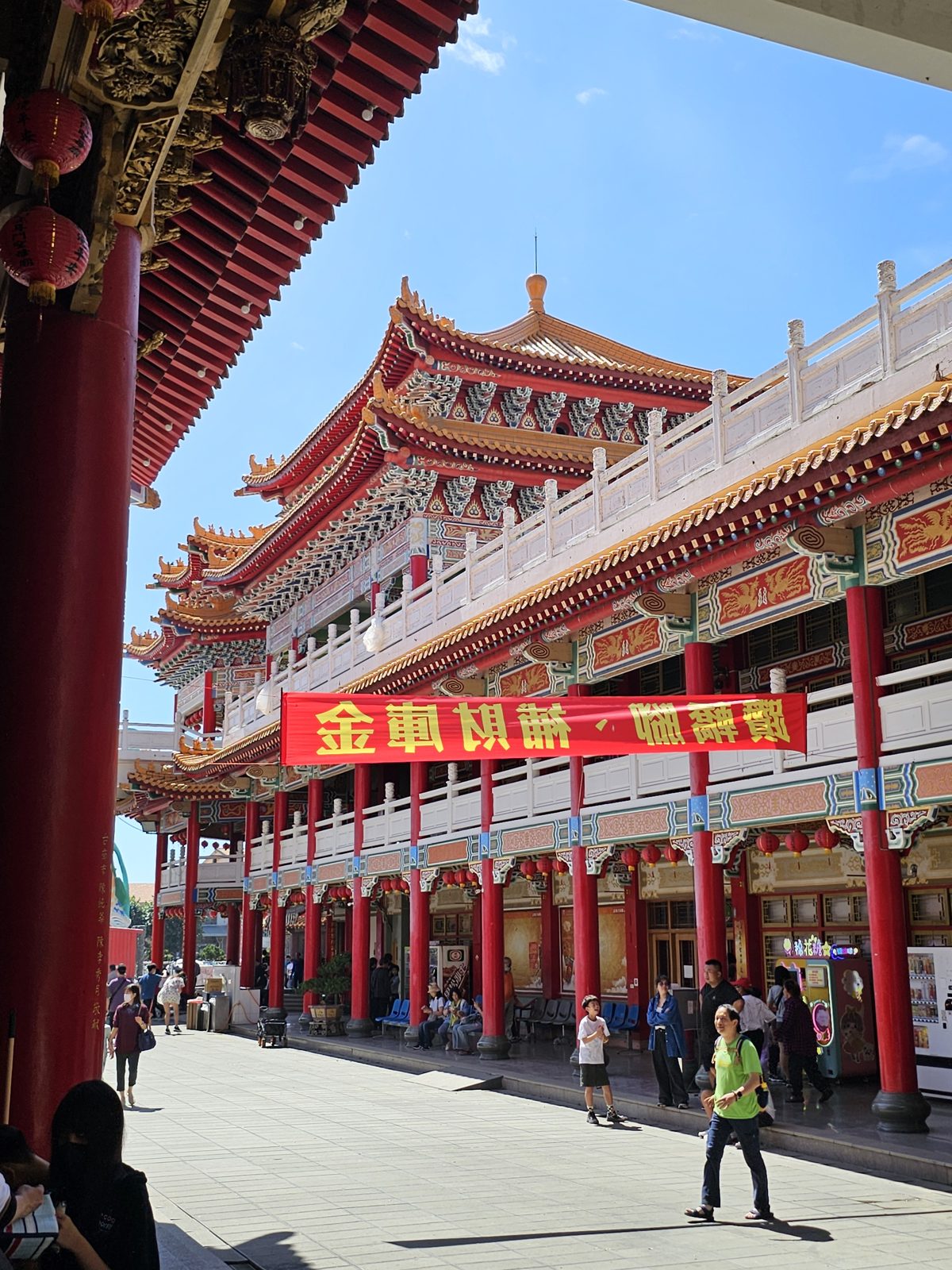
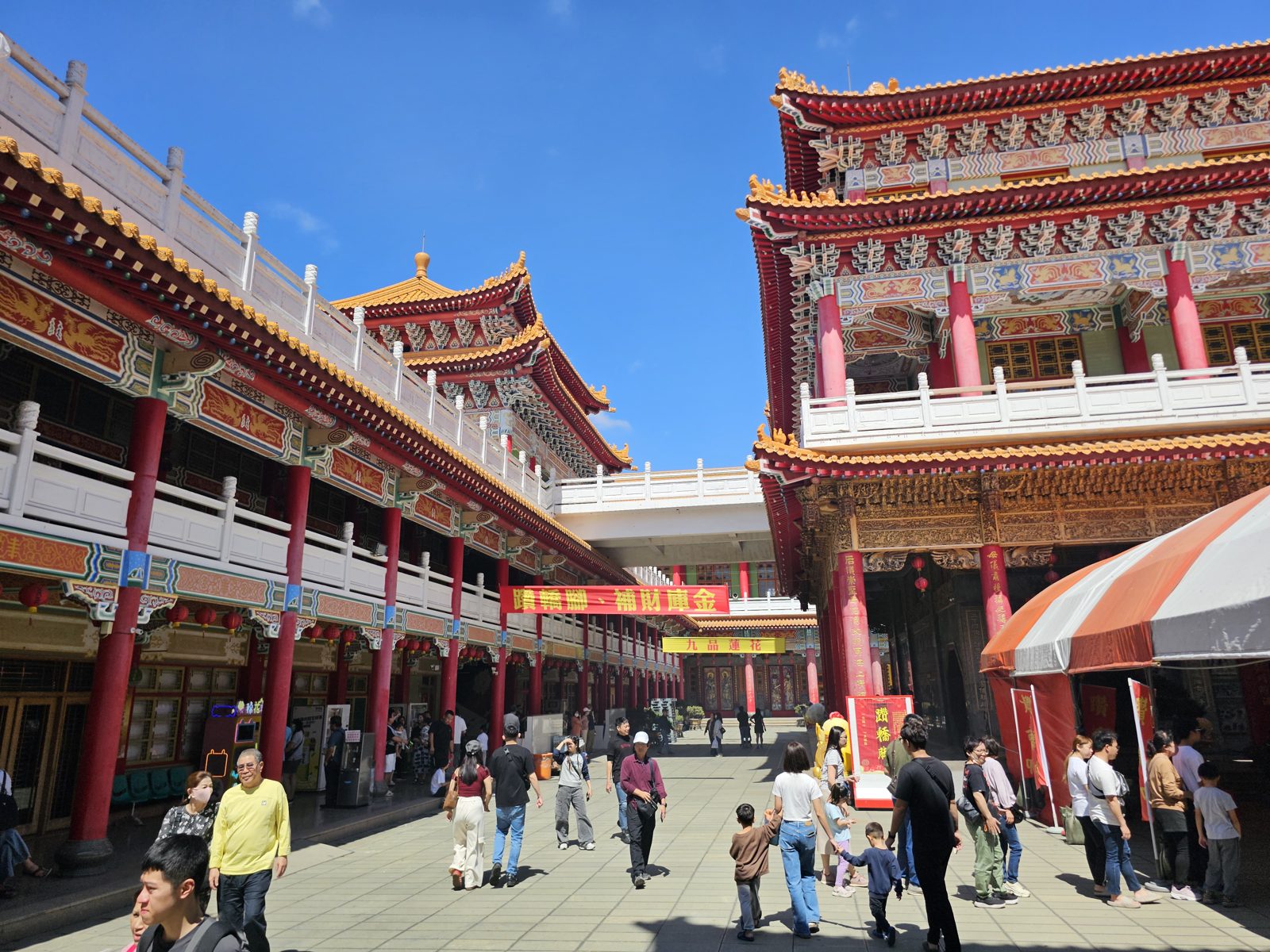
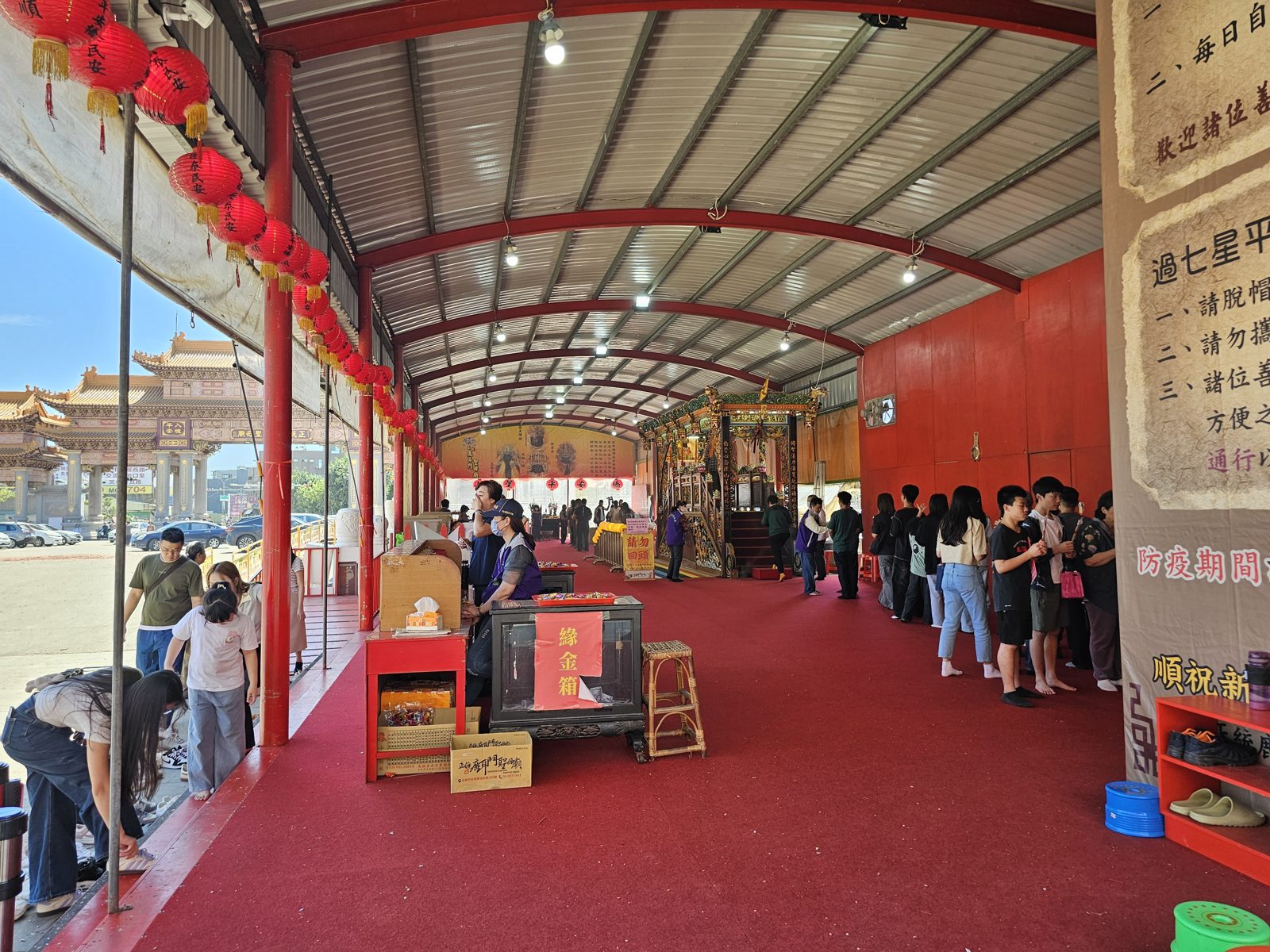
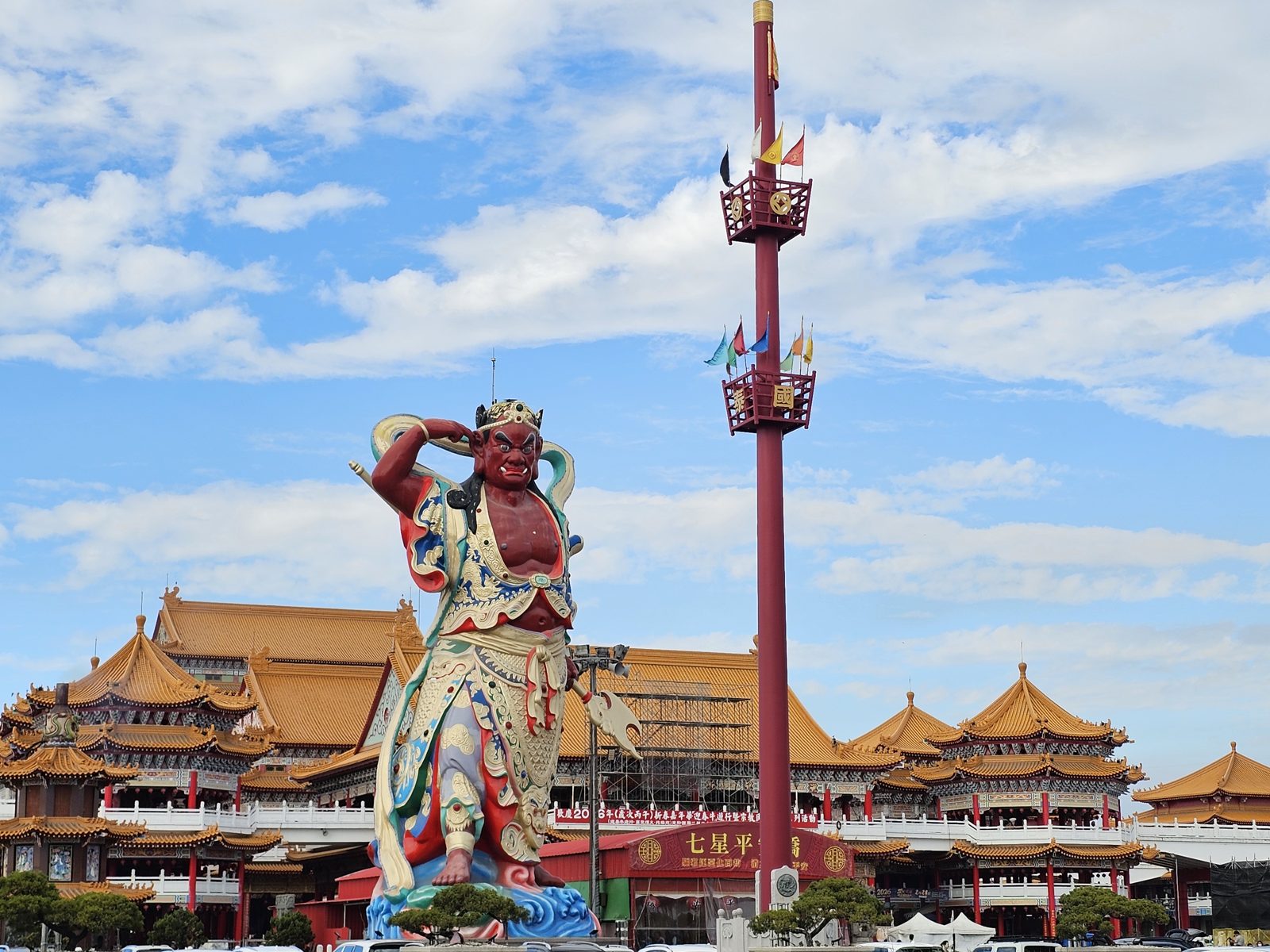
Views from the upper floors
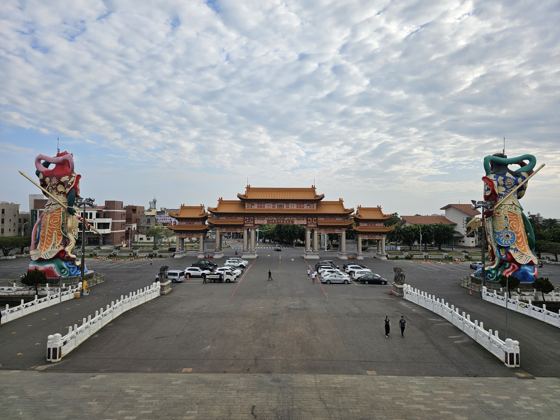
Looking toward the main gate from above the Hall of the Five Lords
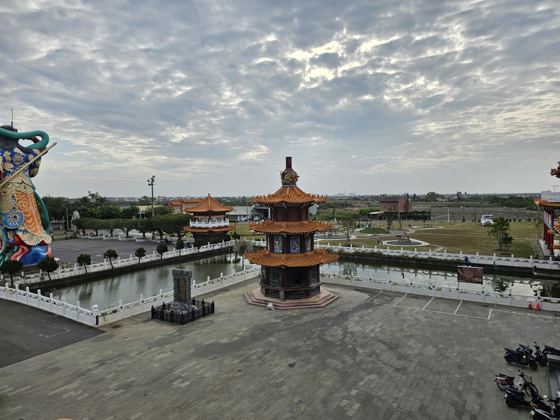
Upper floor of the Hall of the Five Lords
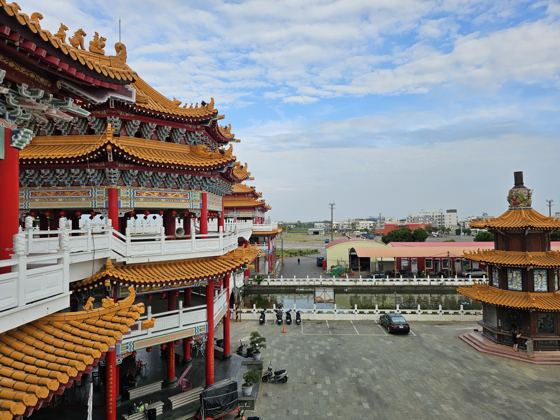
Upper floor of the Hall of the Five Lords
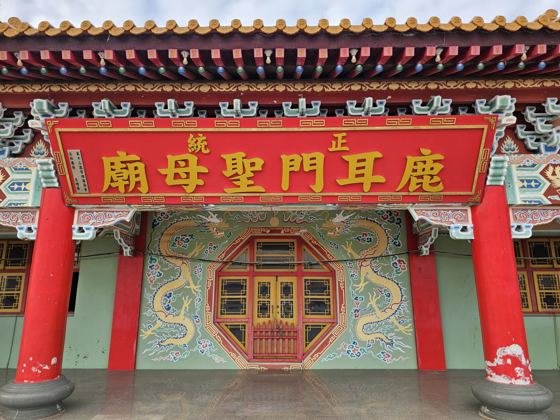
Upper floor of the Hall of the Five Lords
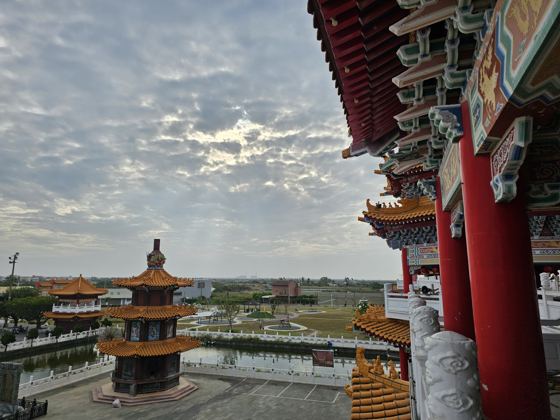
Views from the upper floors
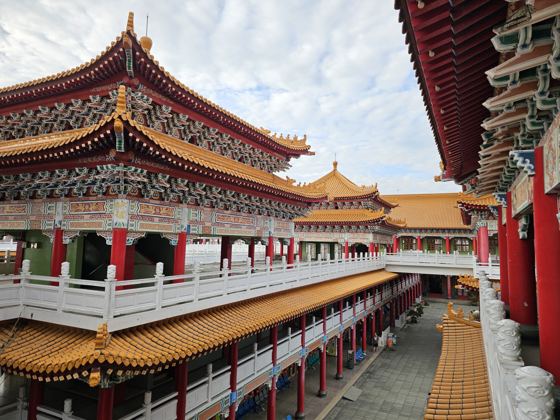
Views from the upper floors
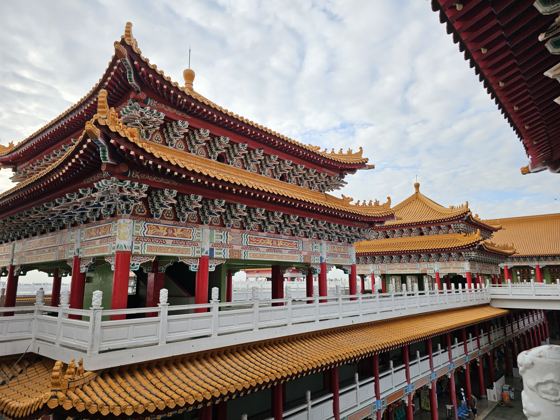
Views from the upper floors
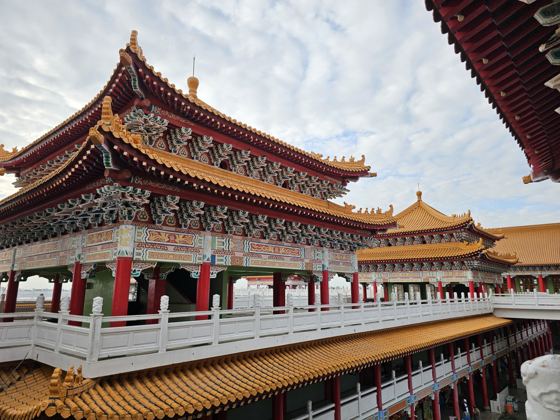
Views from the upper floors
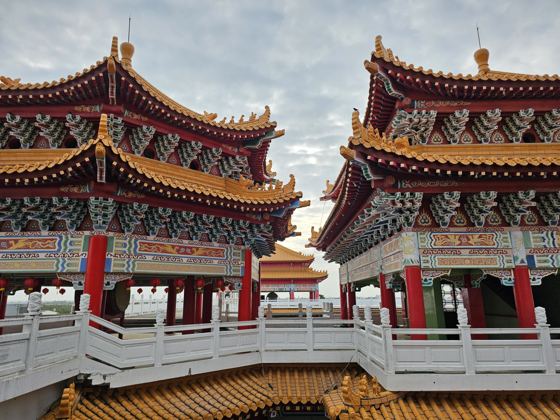
Views from the upper floors
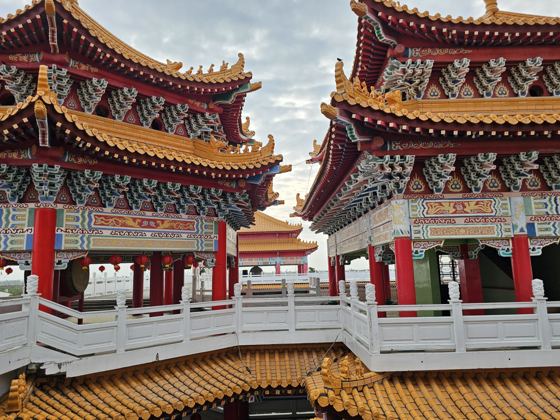
Views from the upper floors
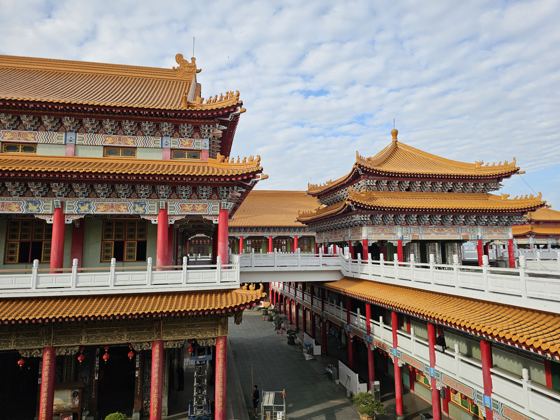
Views from the upper floors
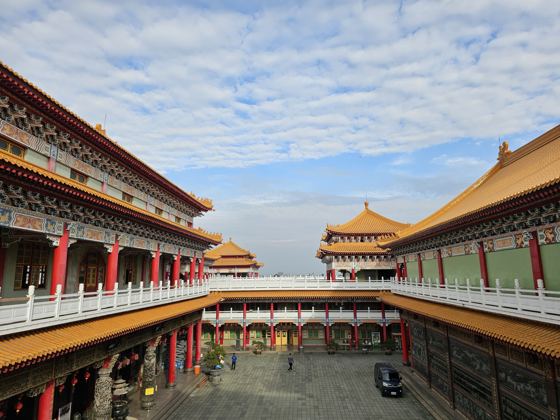
Views from the upper floors
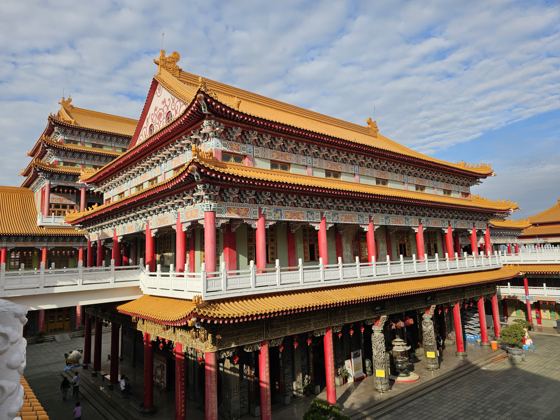
Views from the upper floors
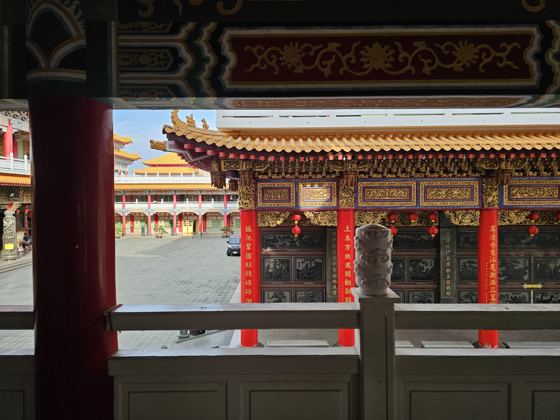
Views from the upper floors
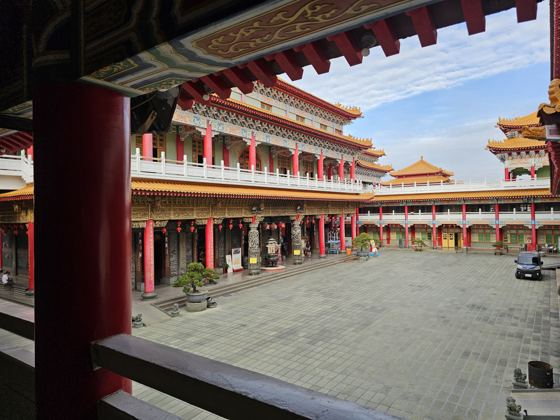
Views from the upper floors
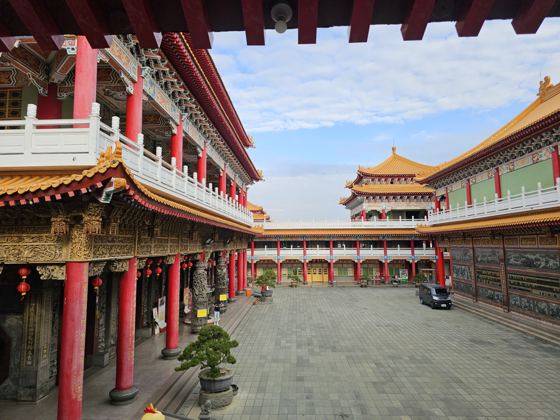
Views from the upper floors
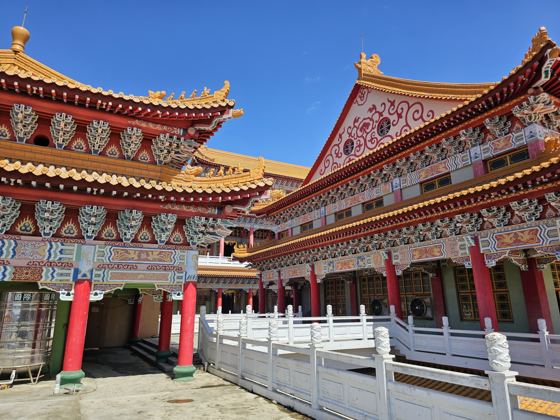
Views from the upper floors
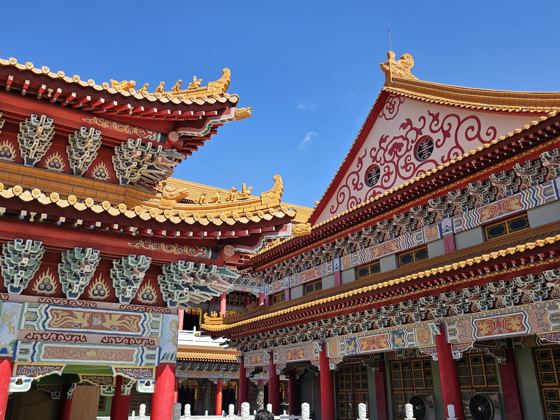
Views from the upper floors
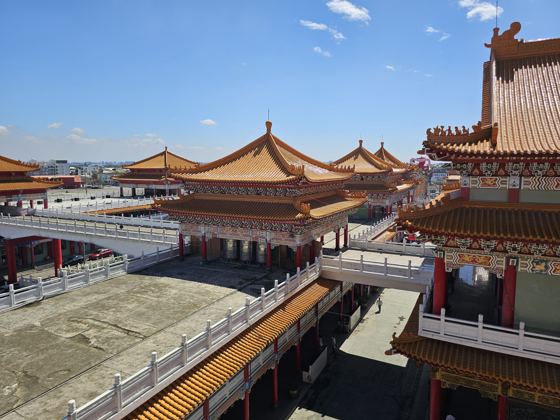
Views from the upper floors
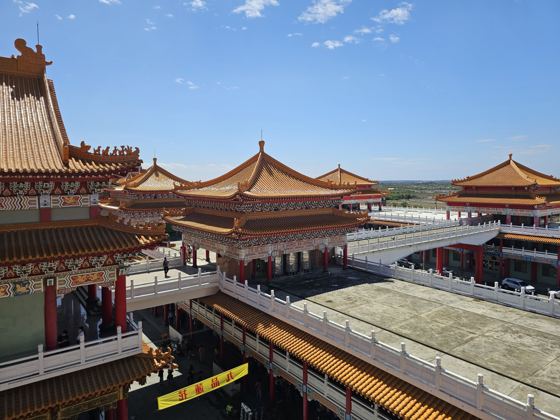
Views from the upper floors
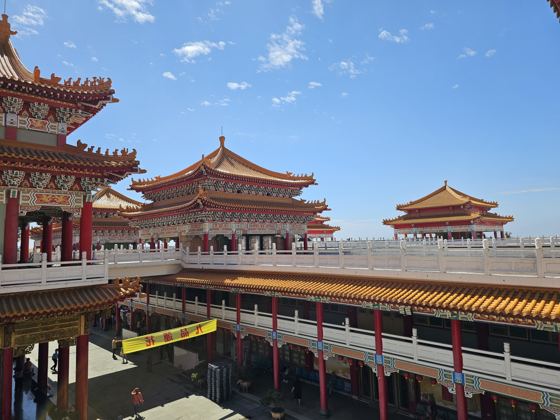
Views from the upper floors
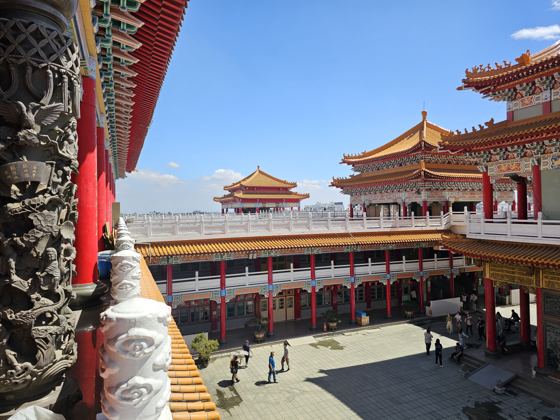
Views from the upper floors
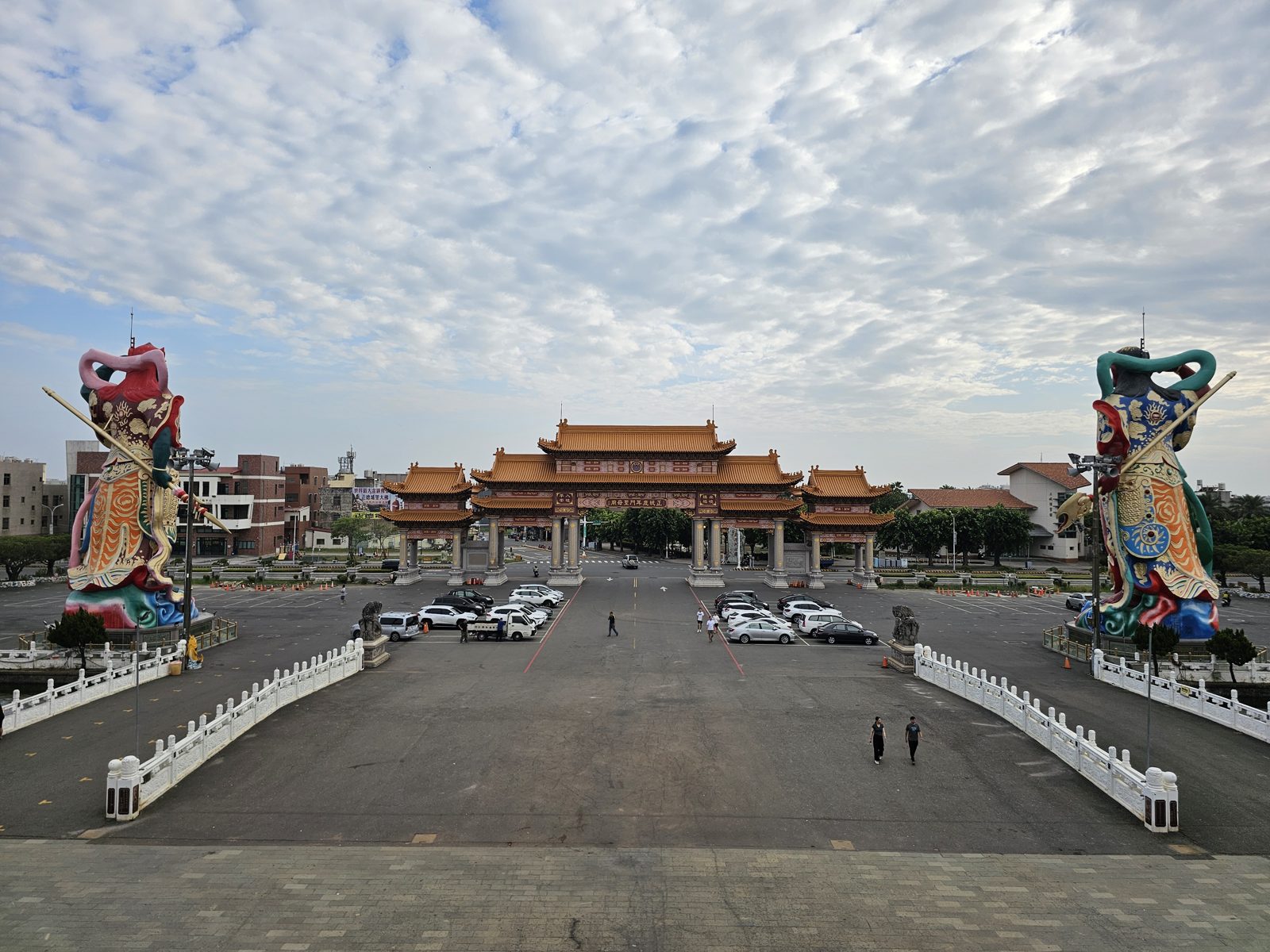
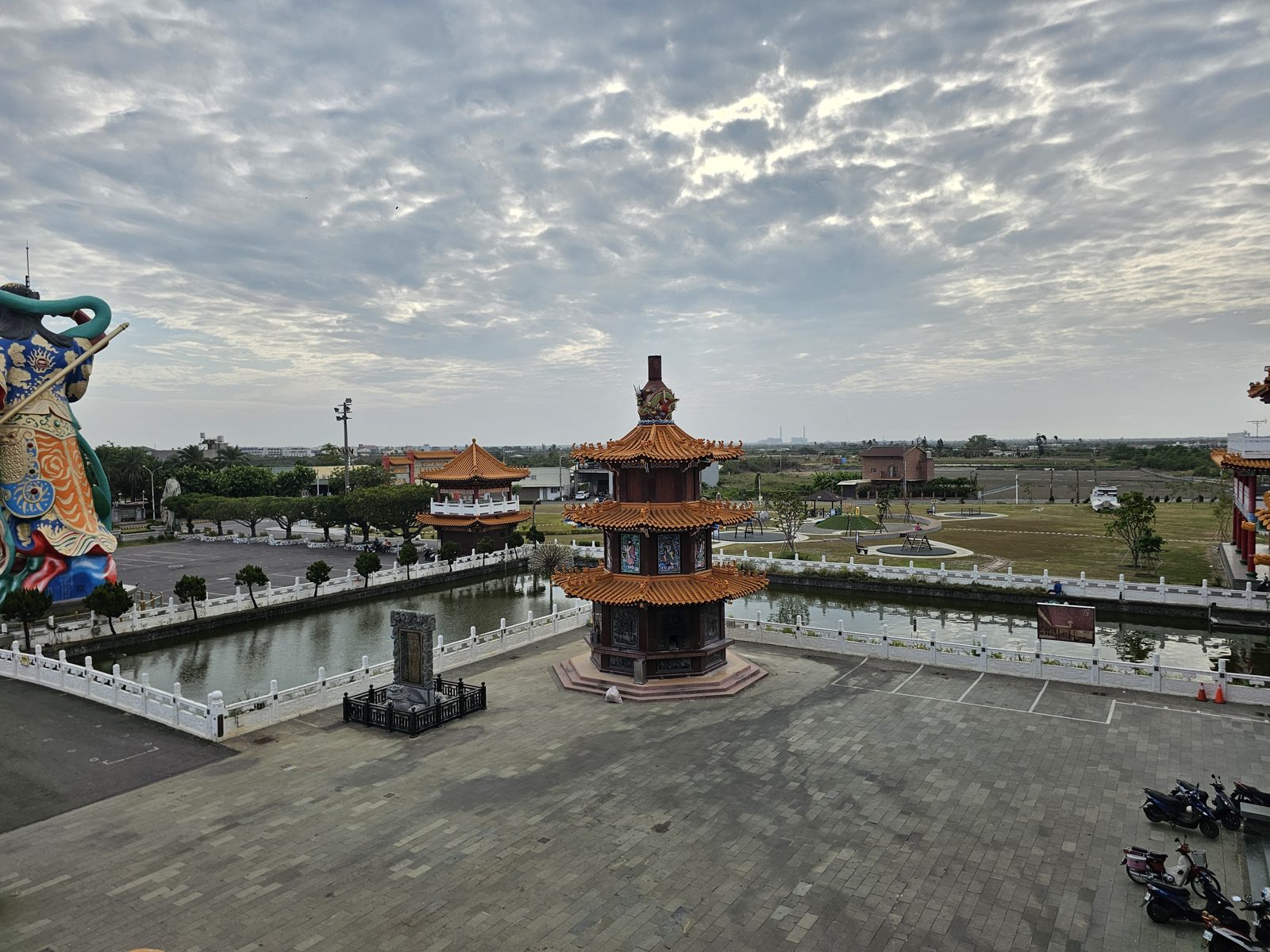
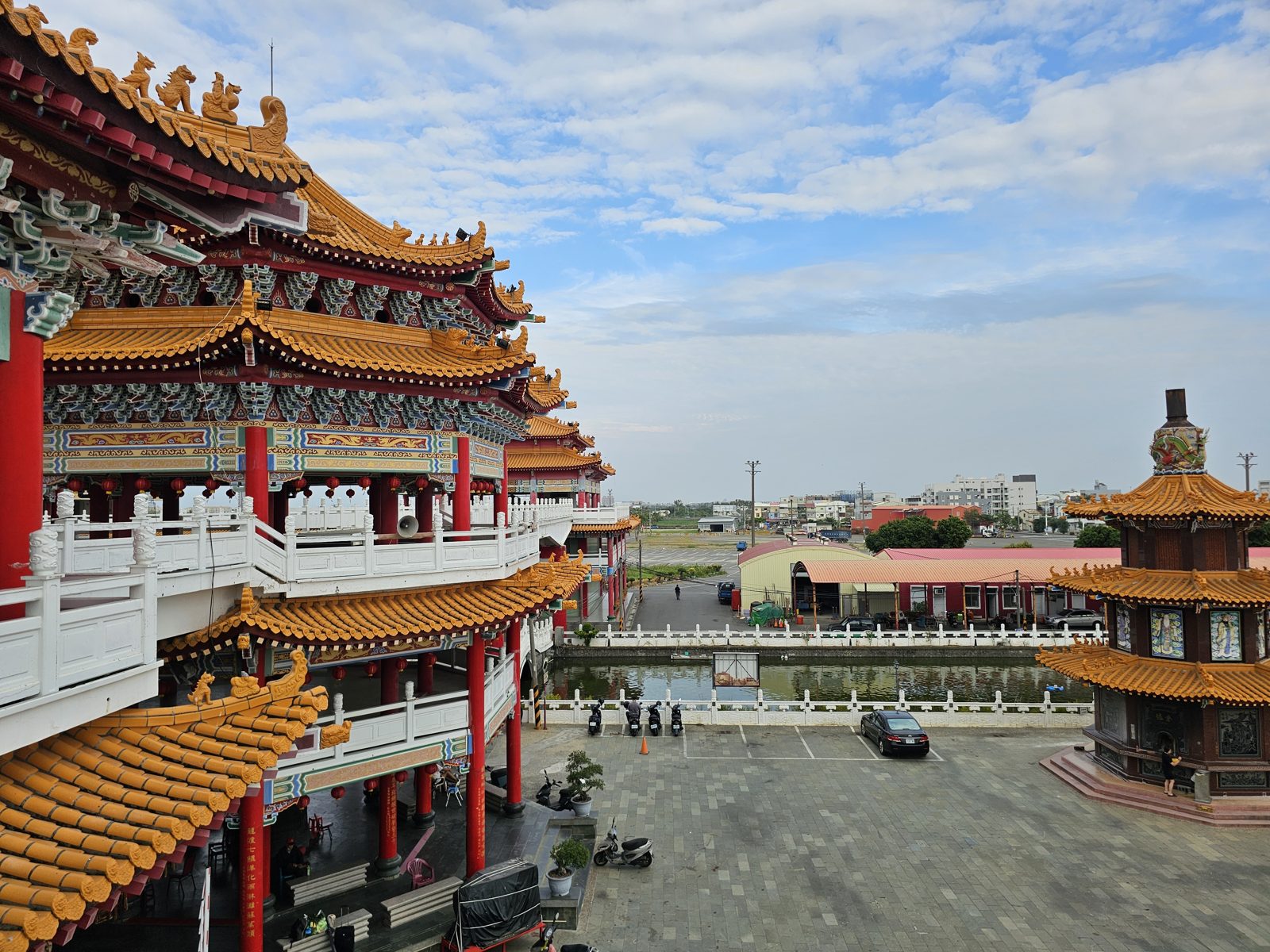
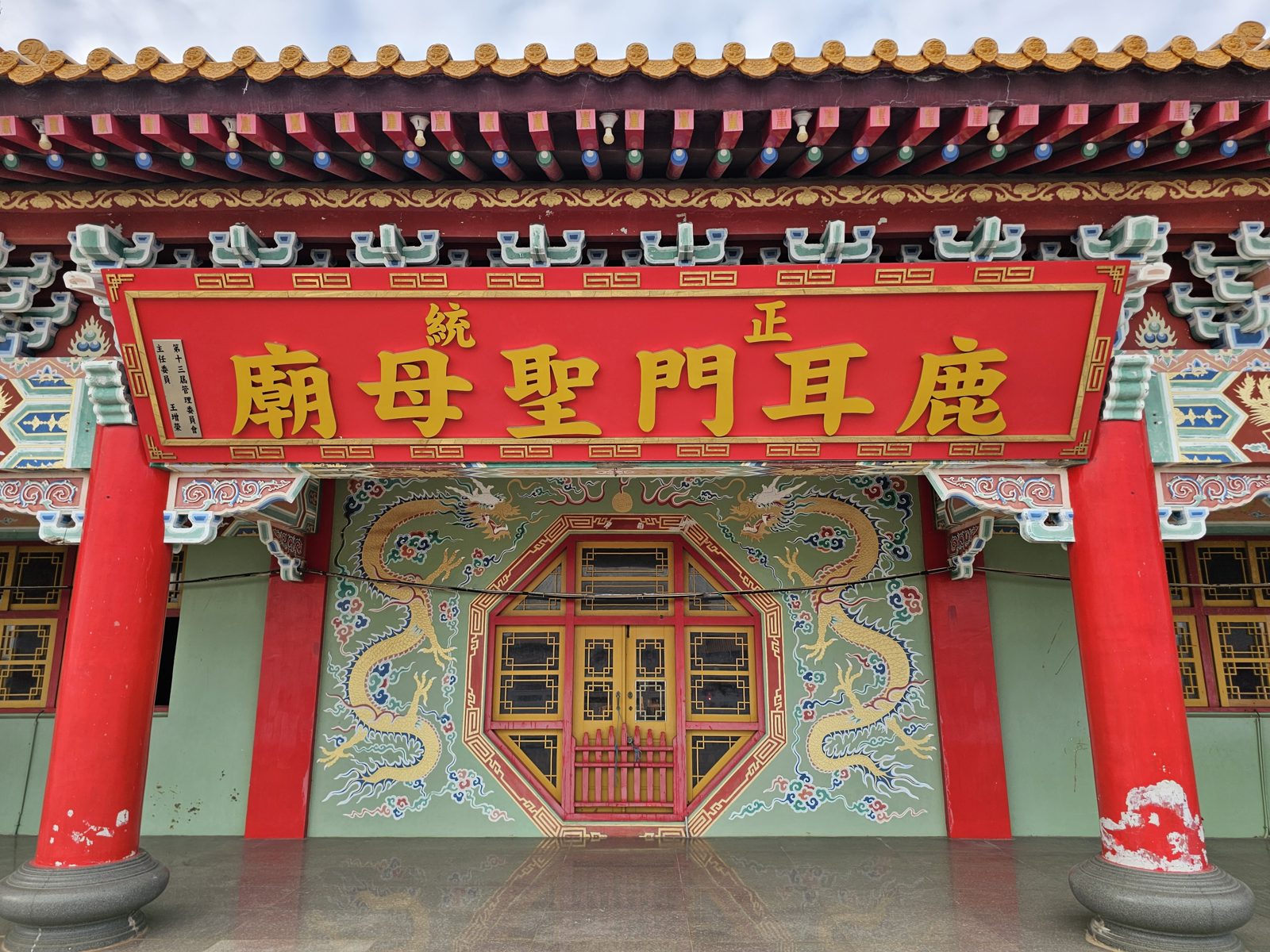
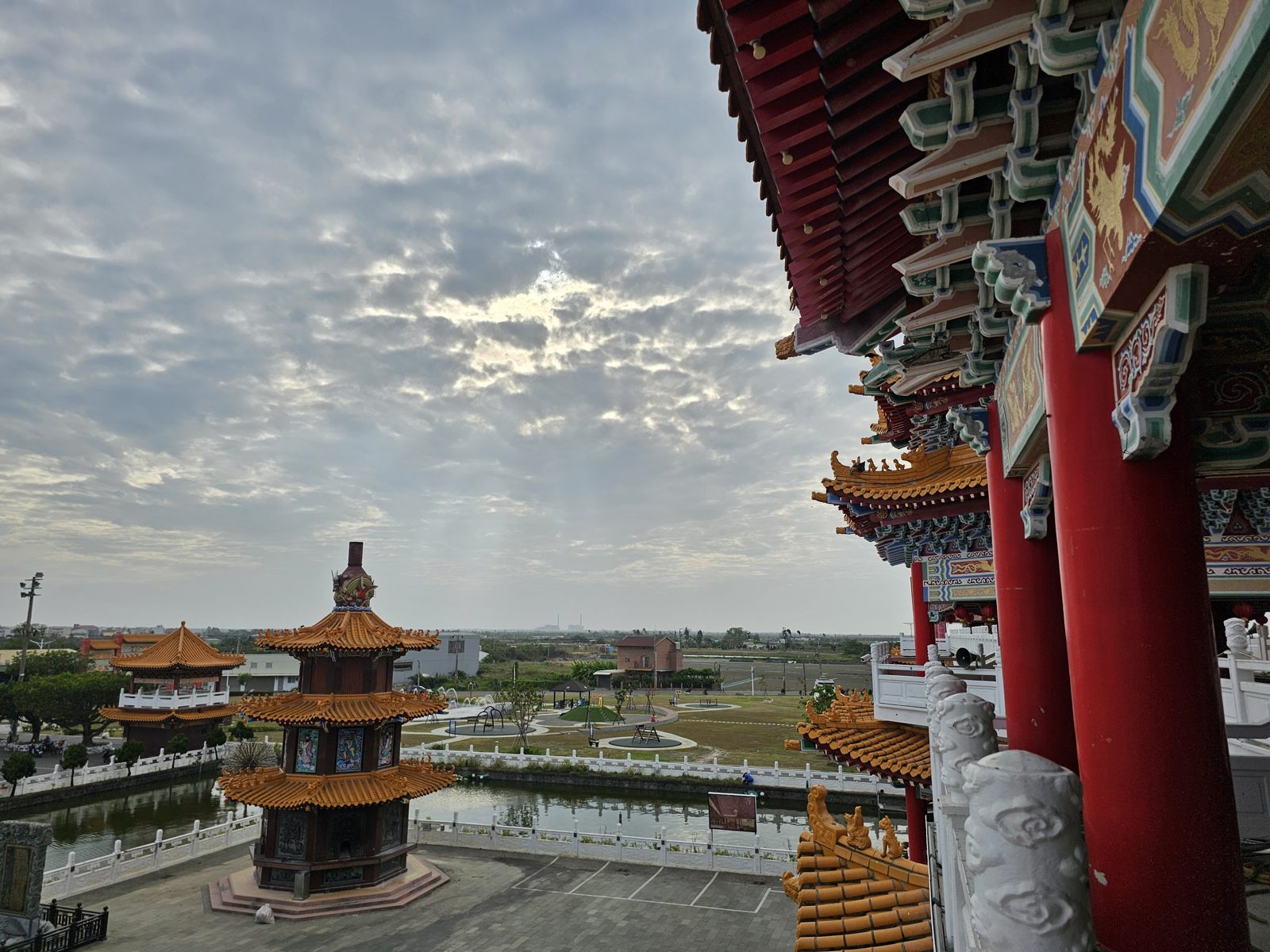
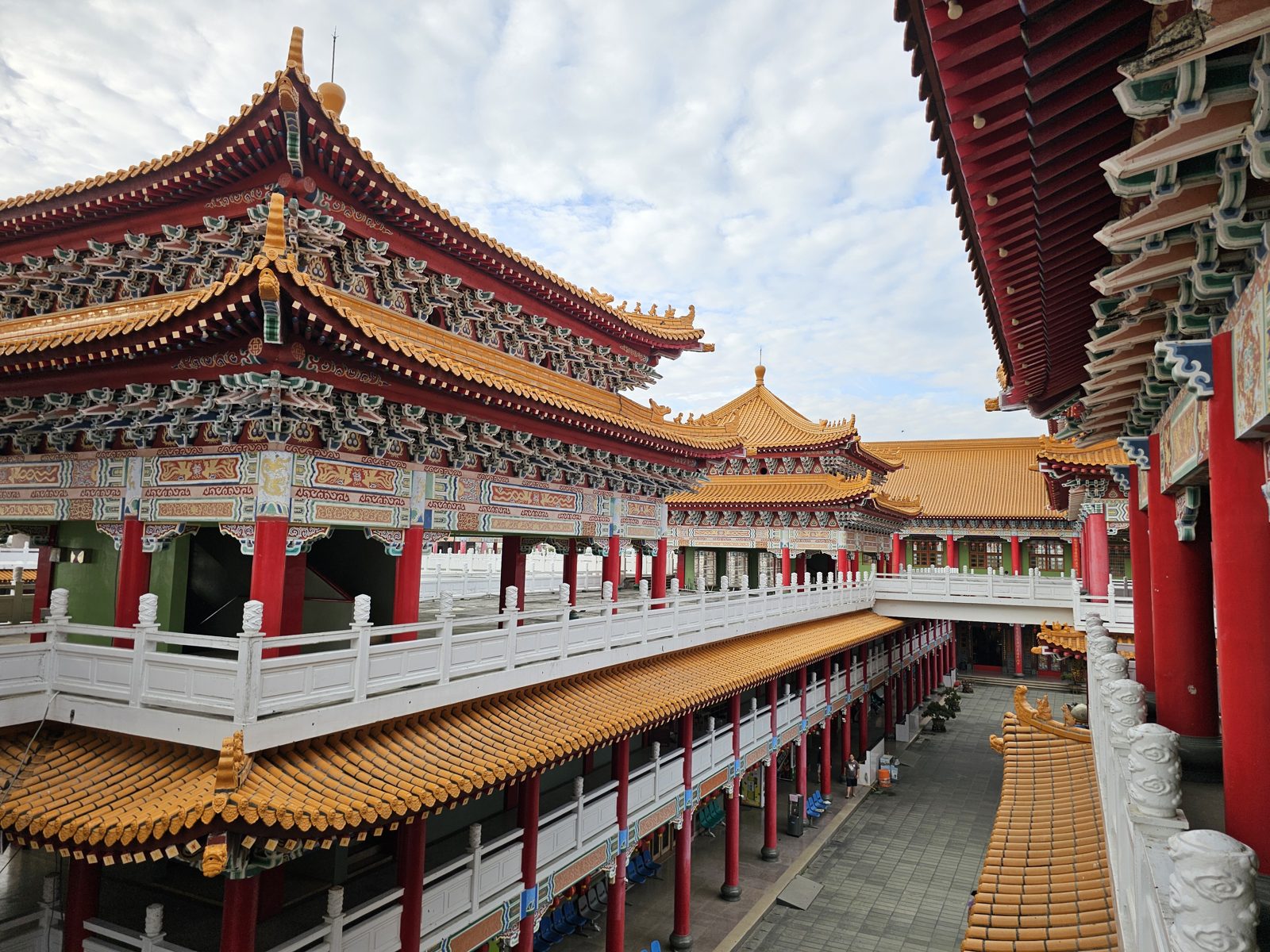
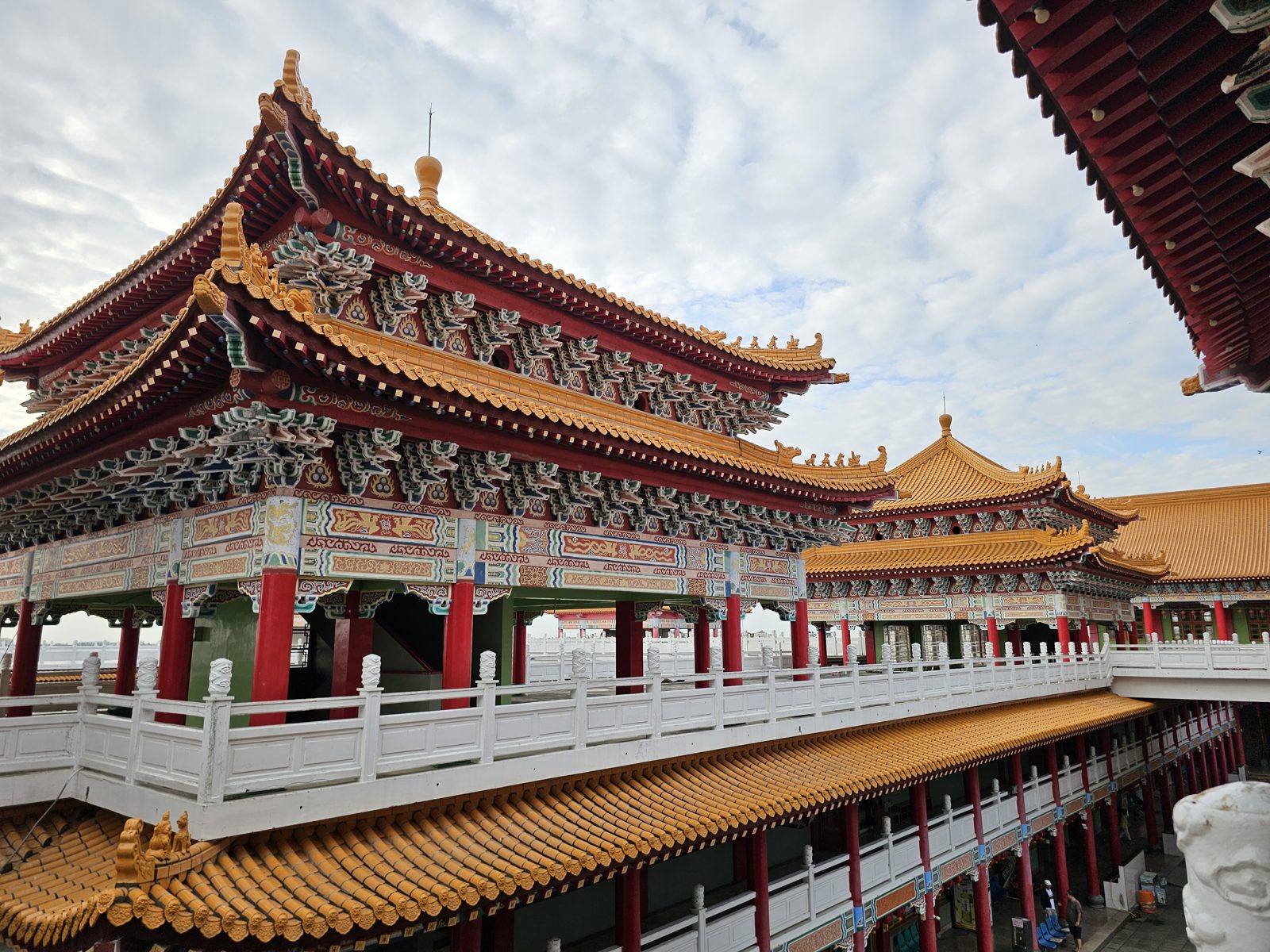
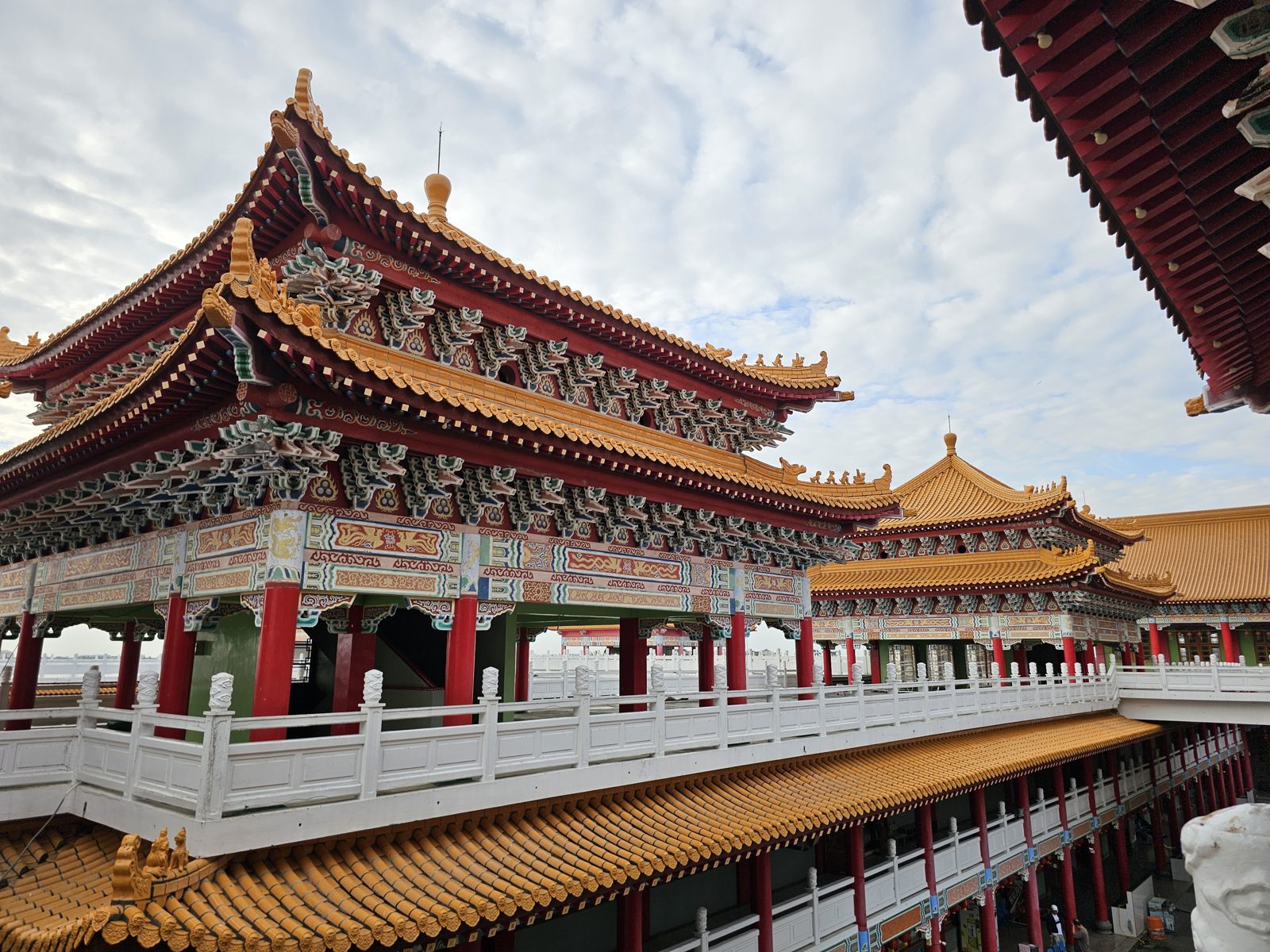
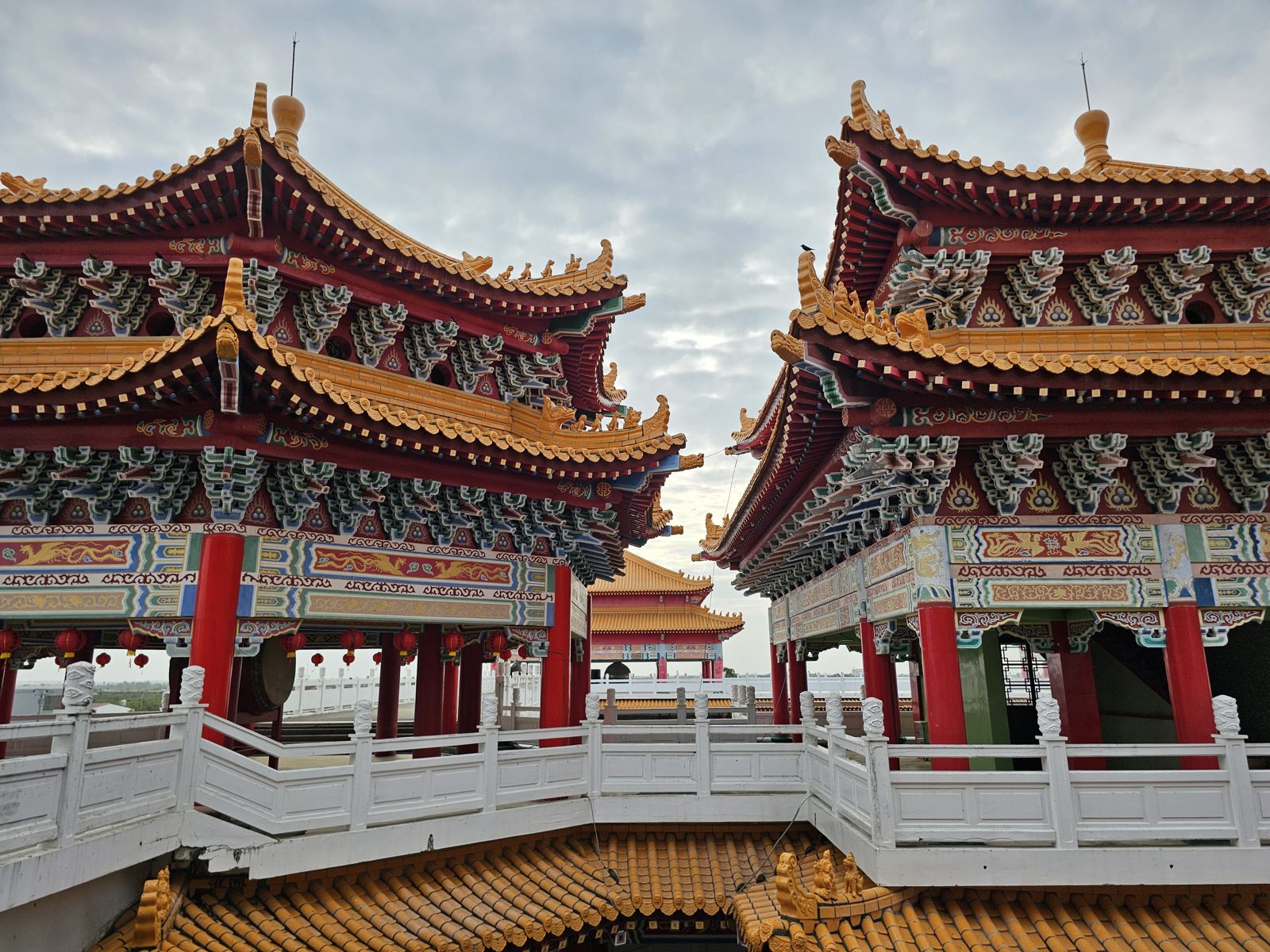
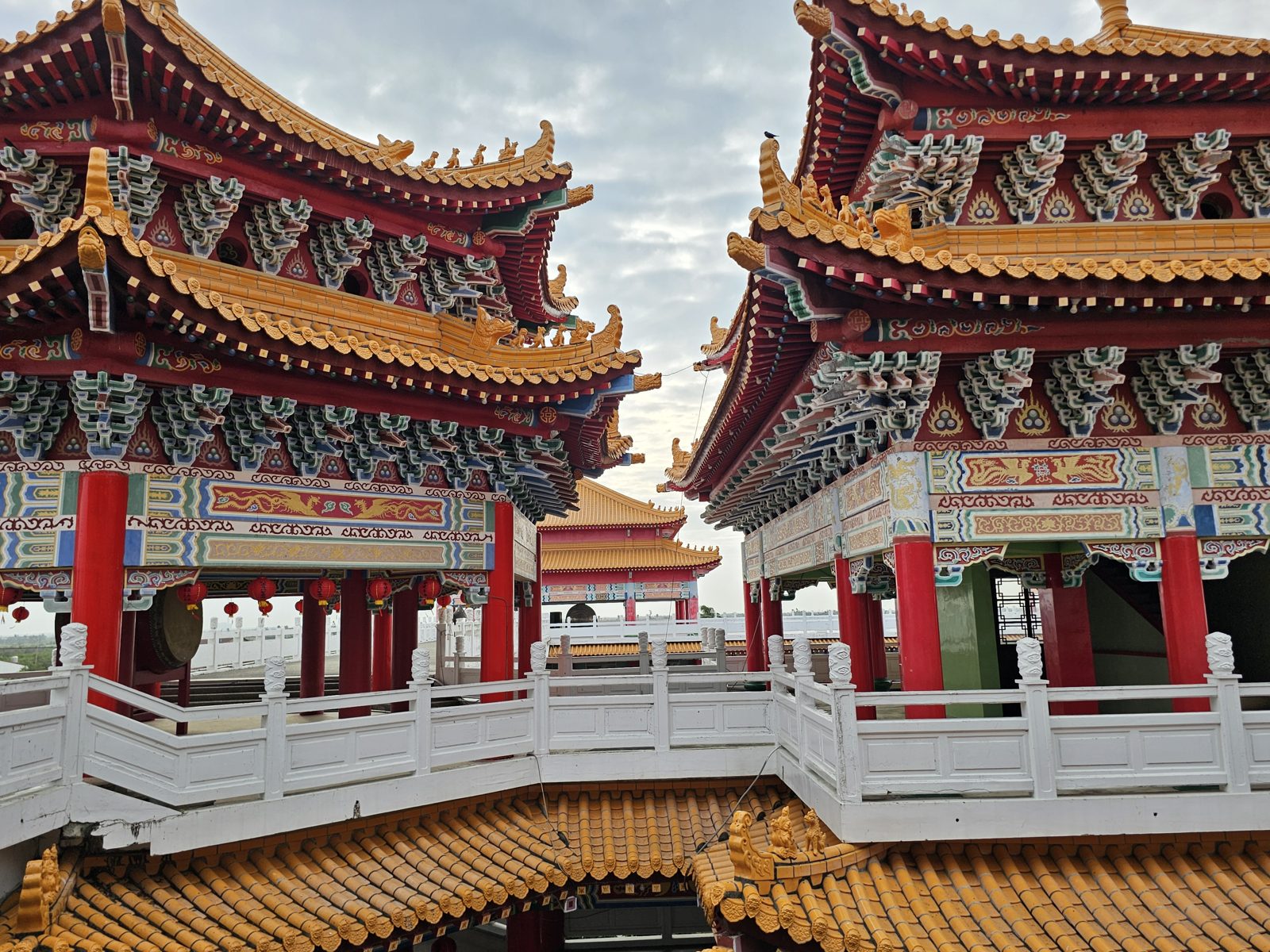
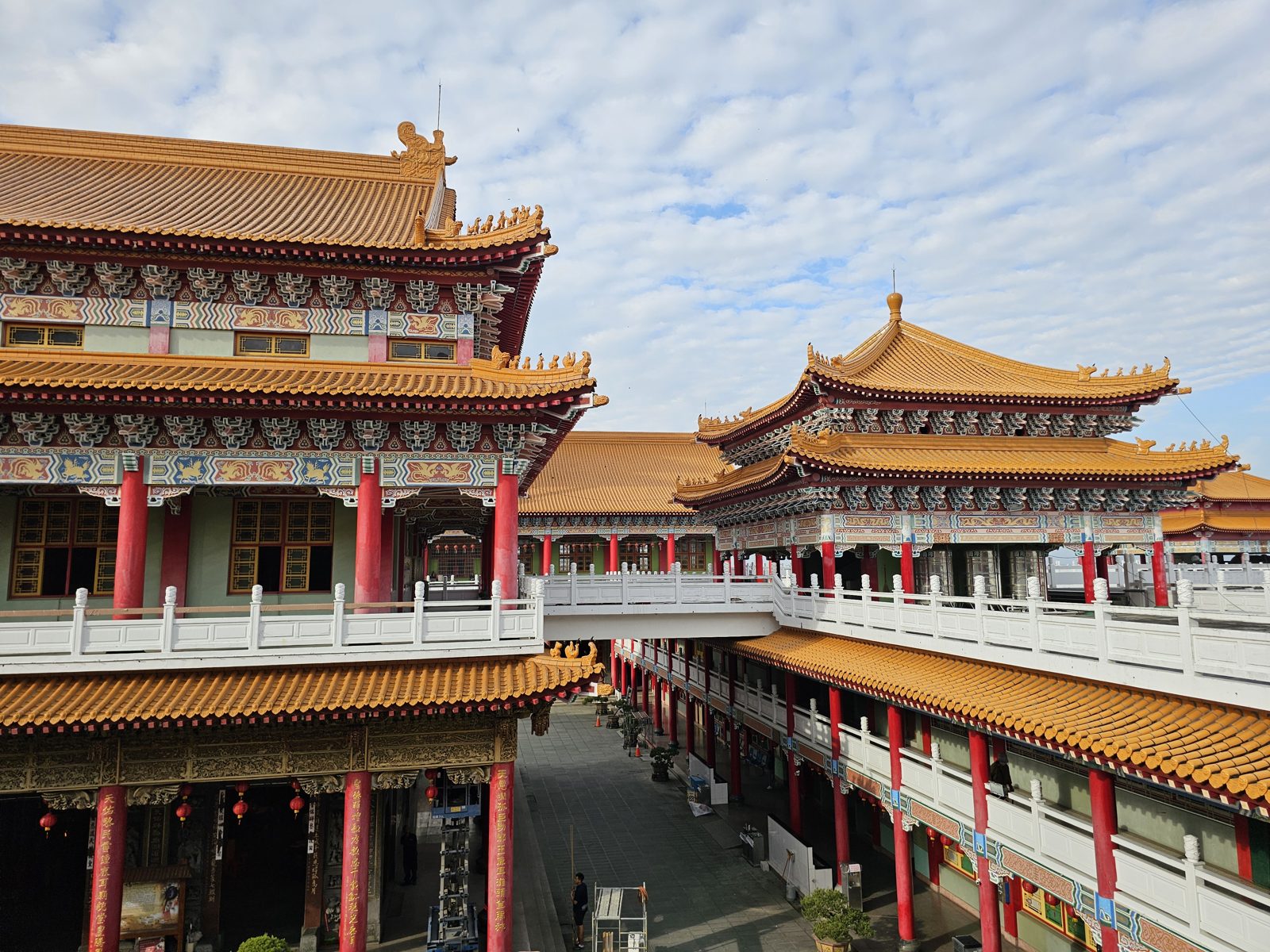
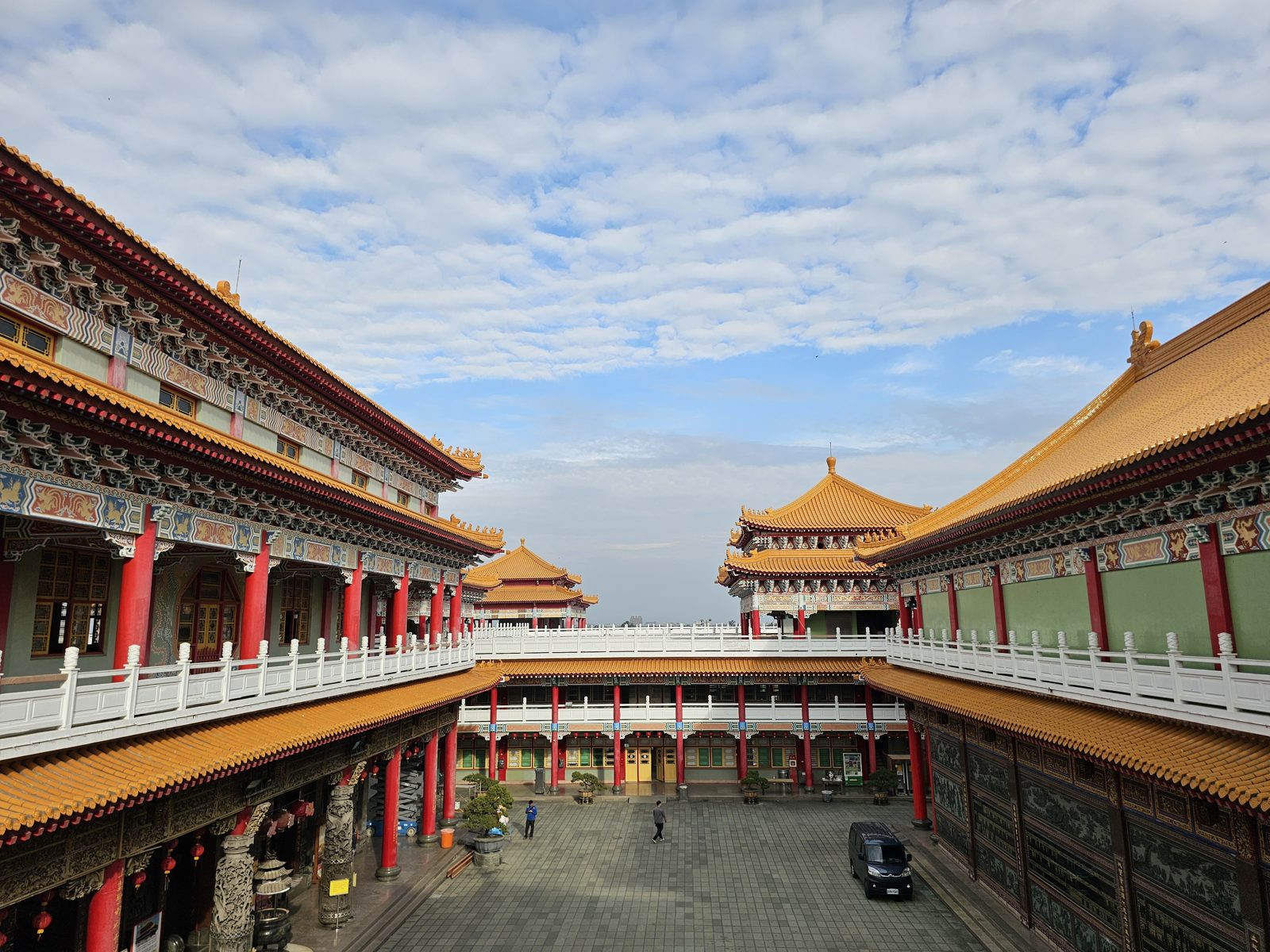
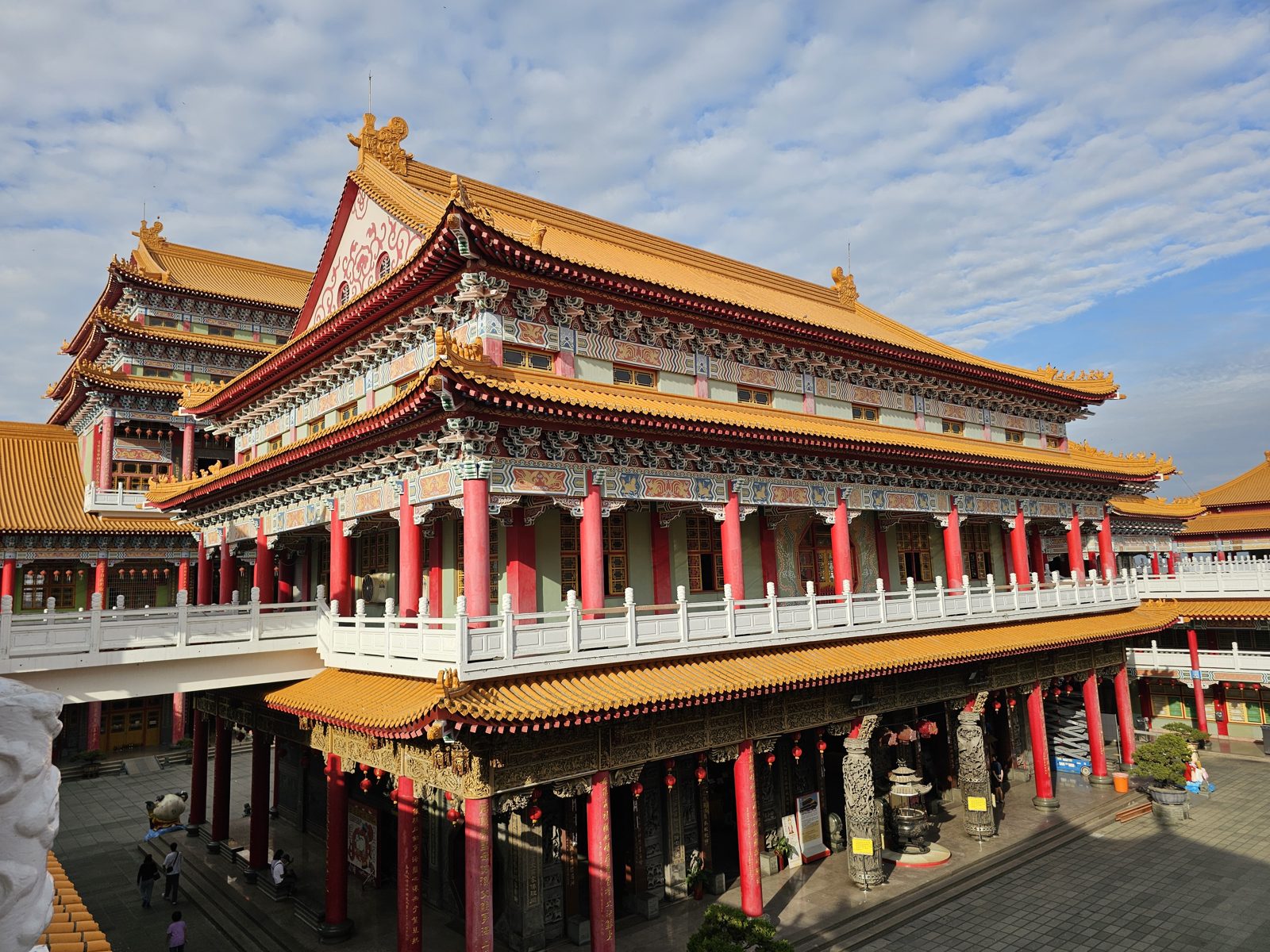
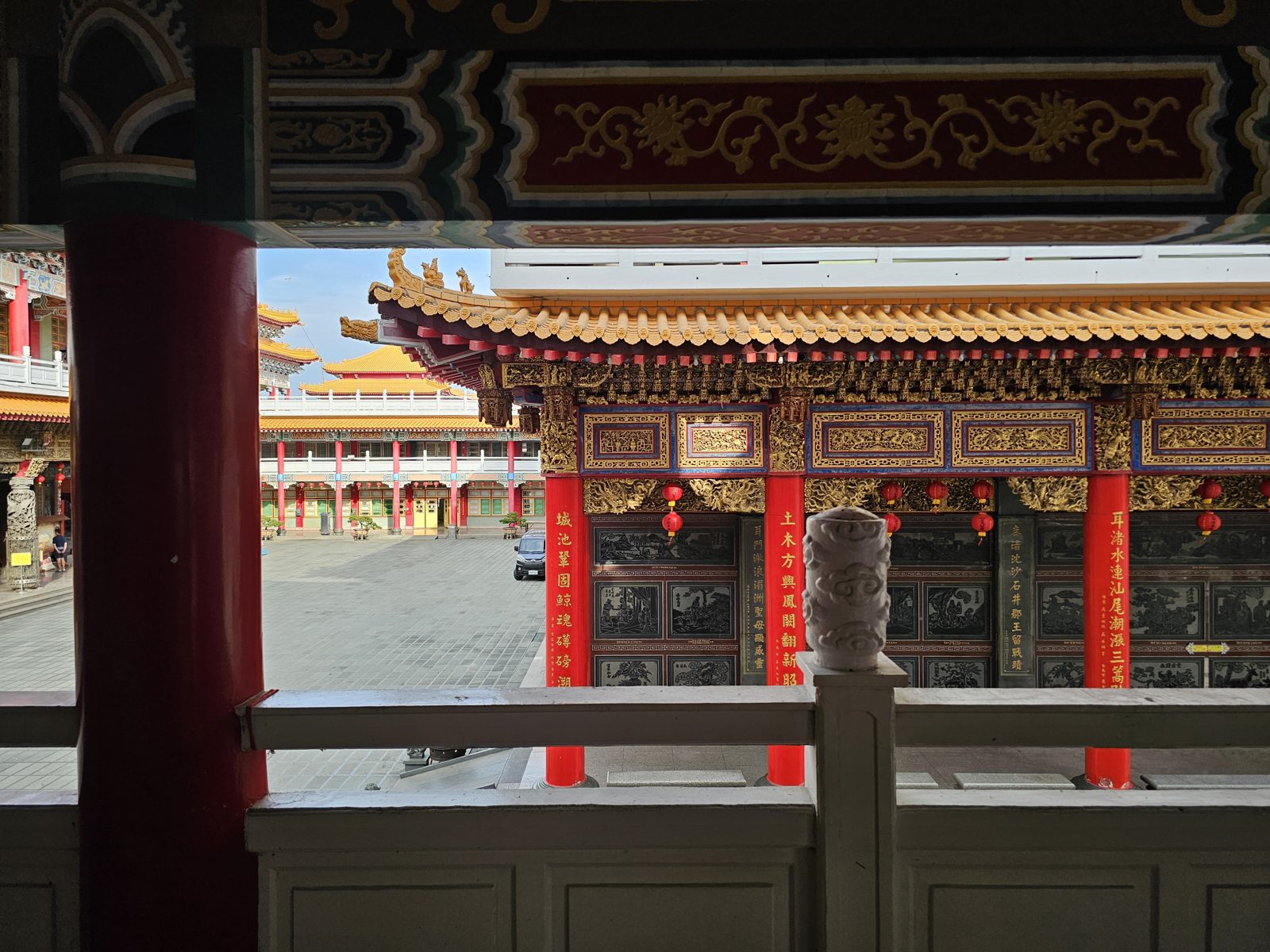
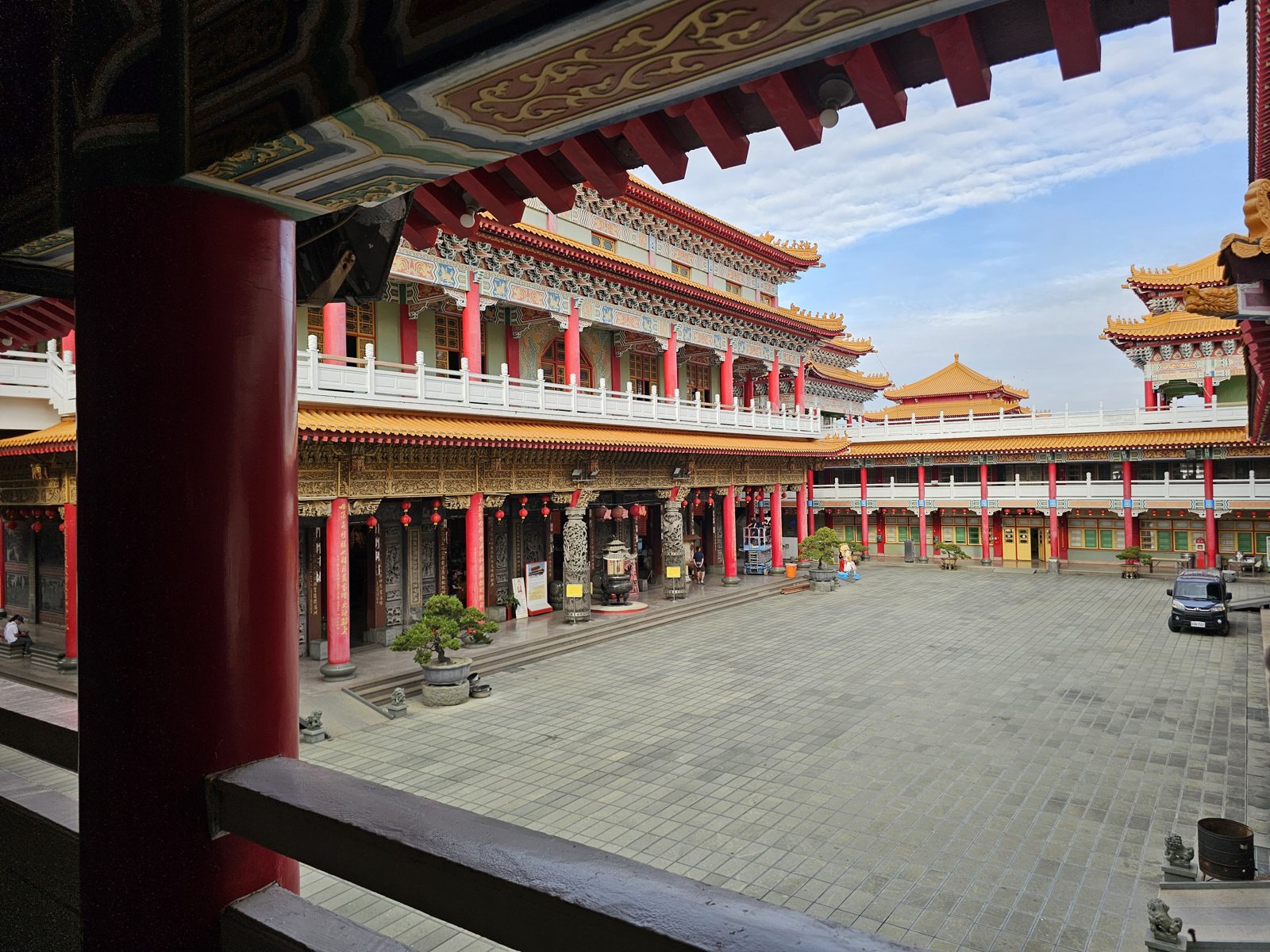
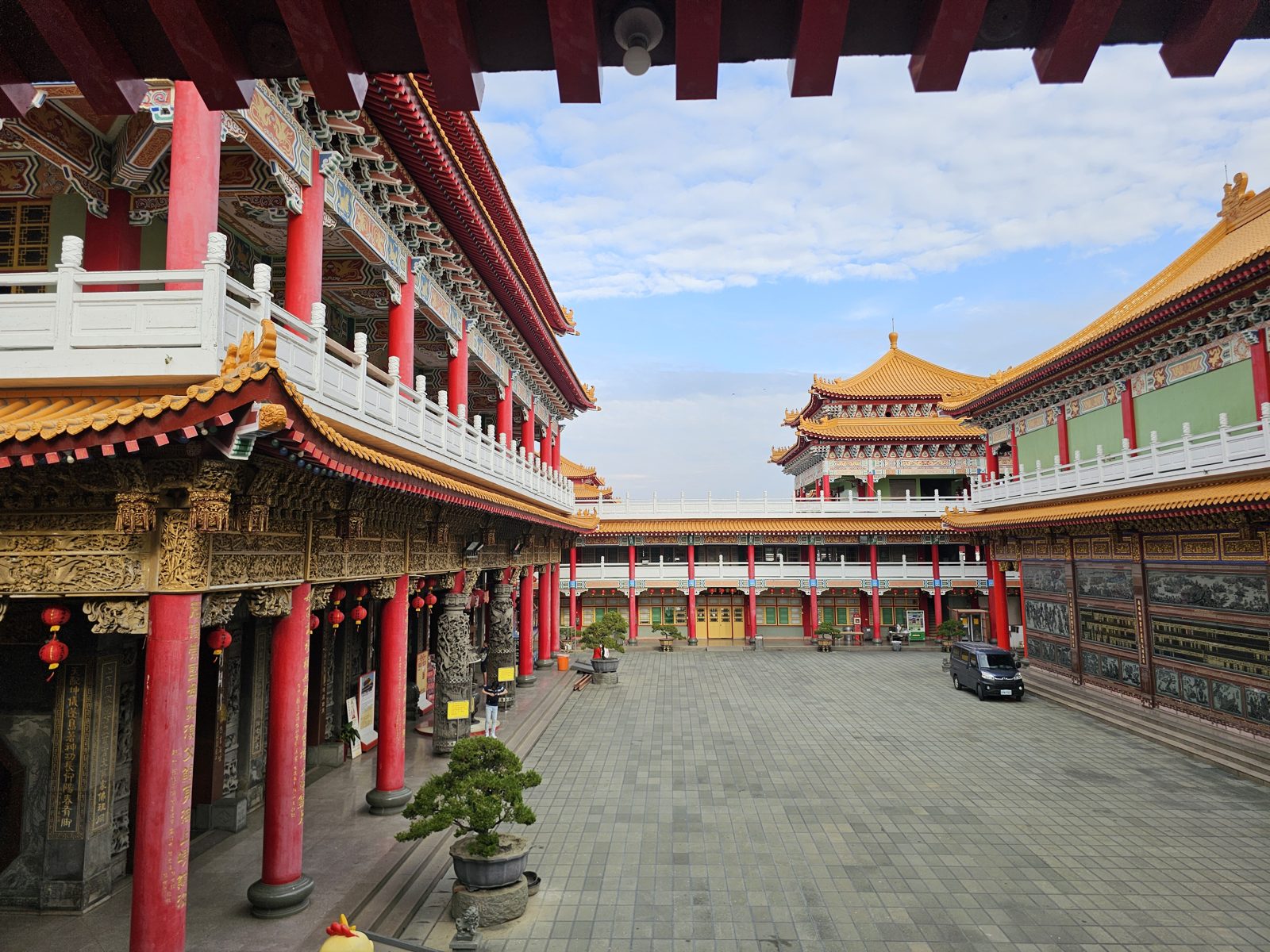
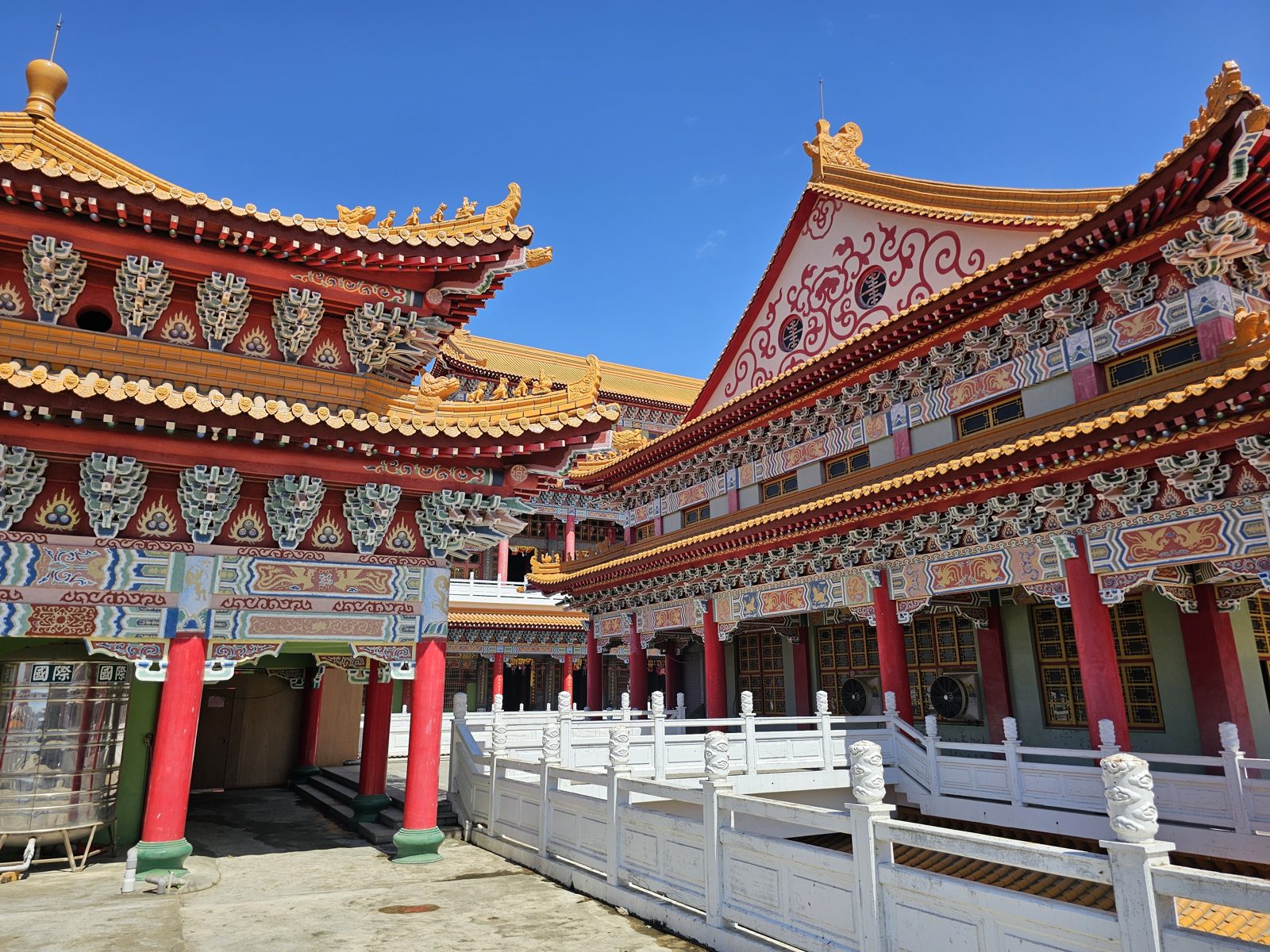
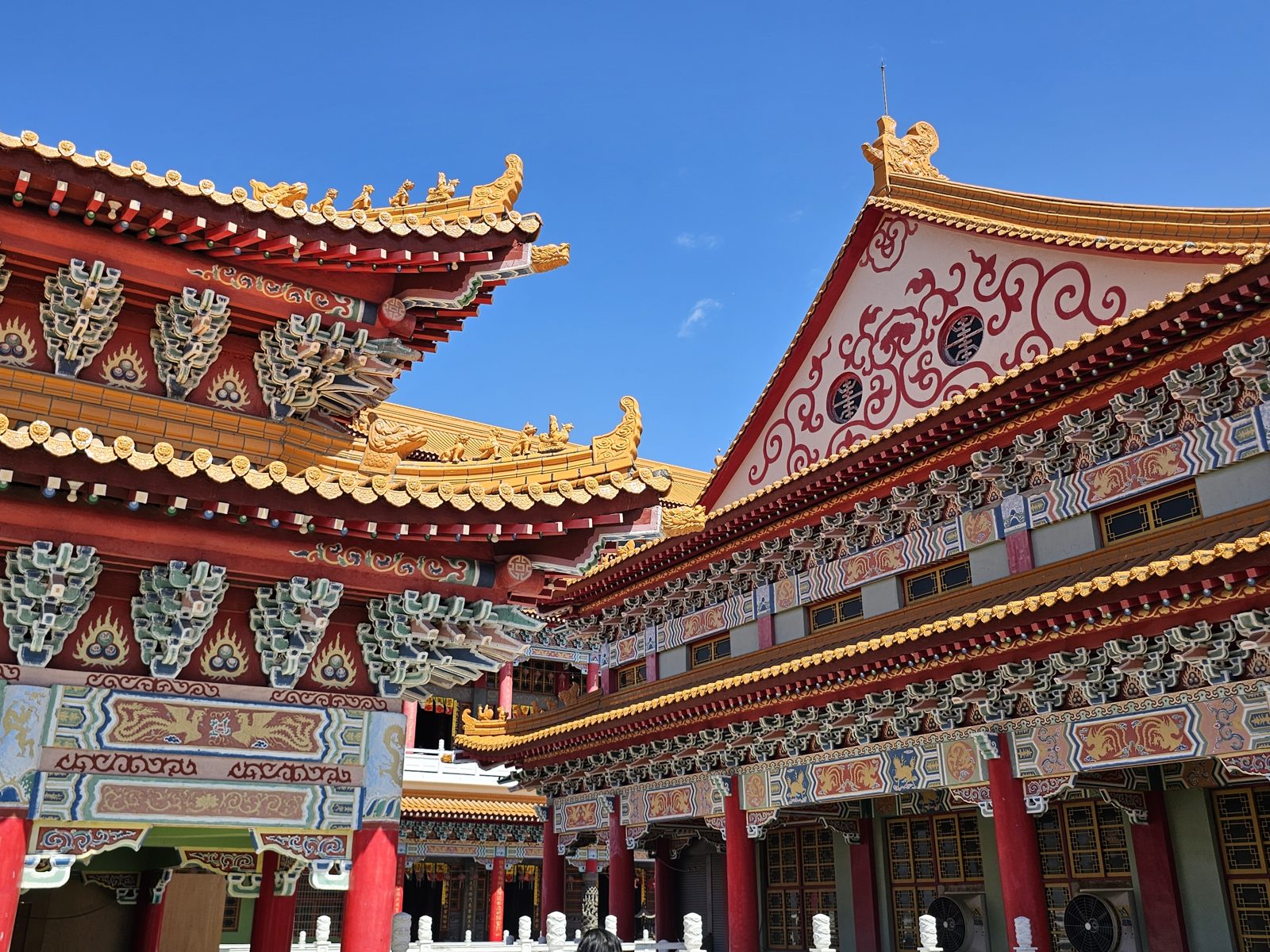
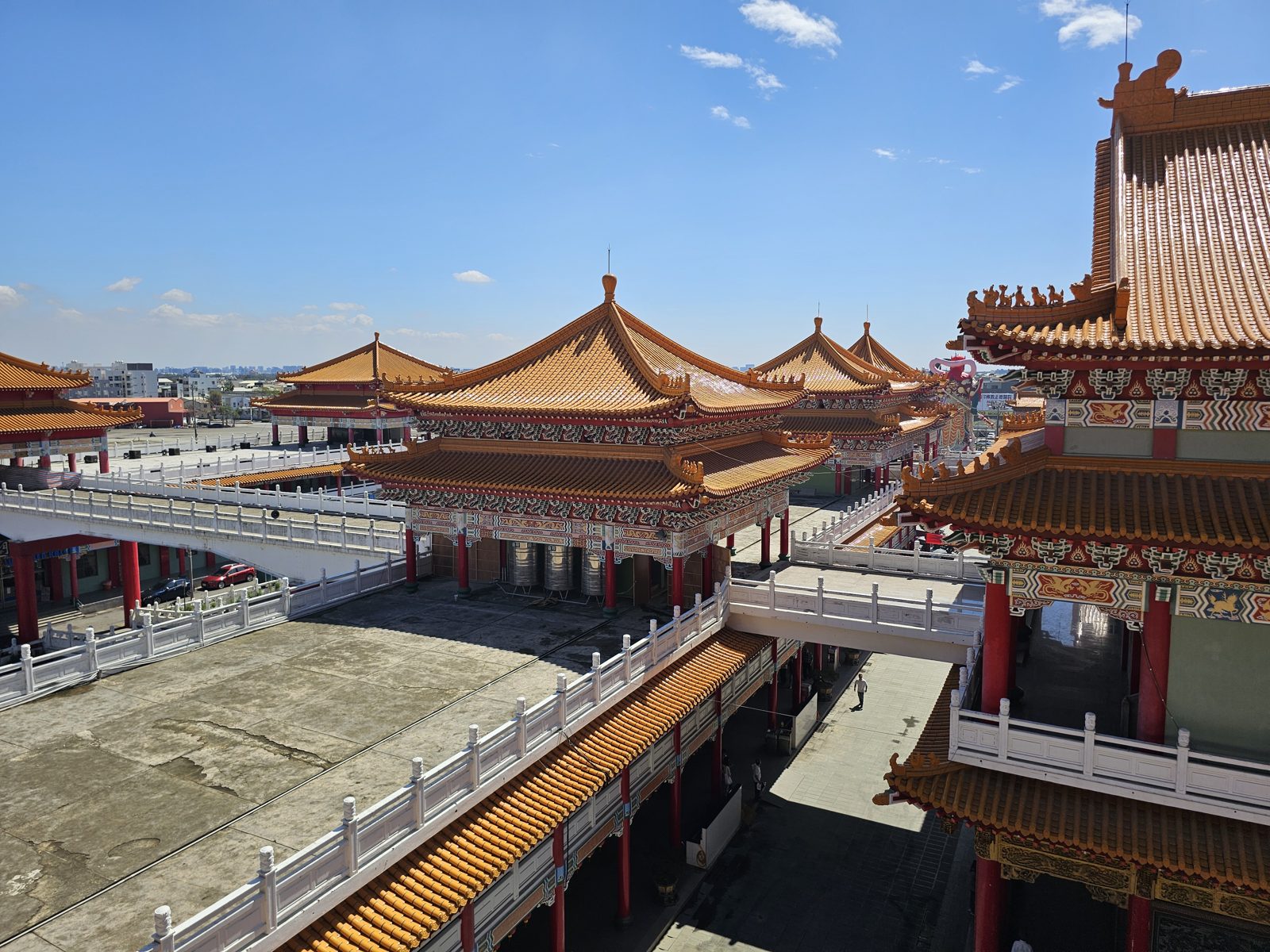
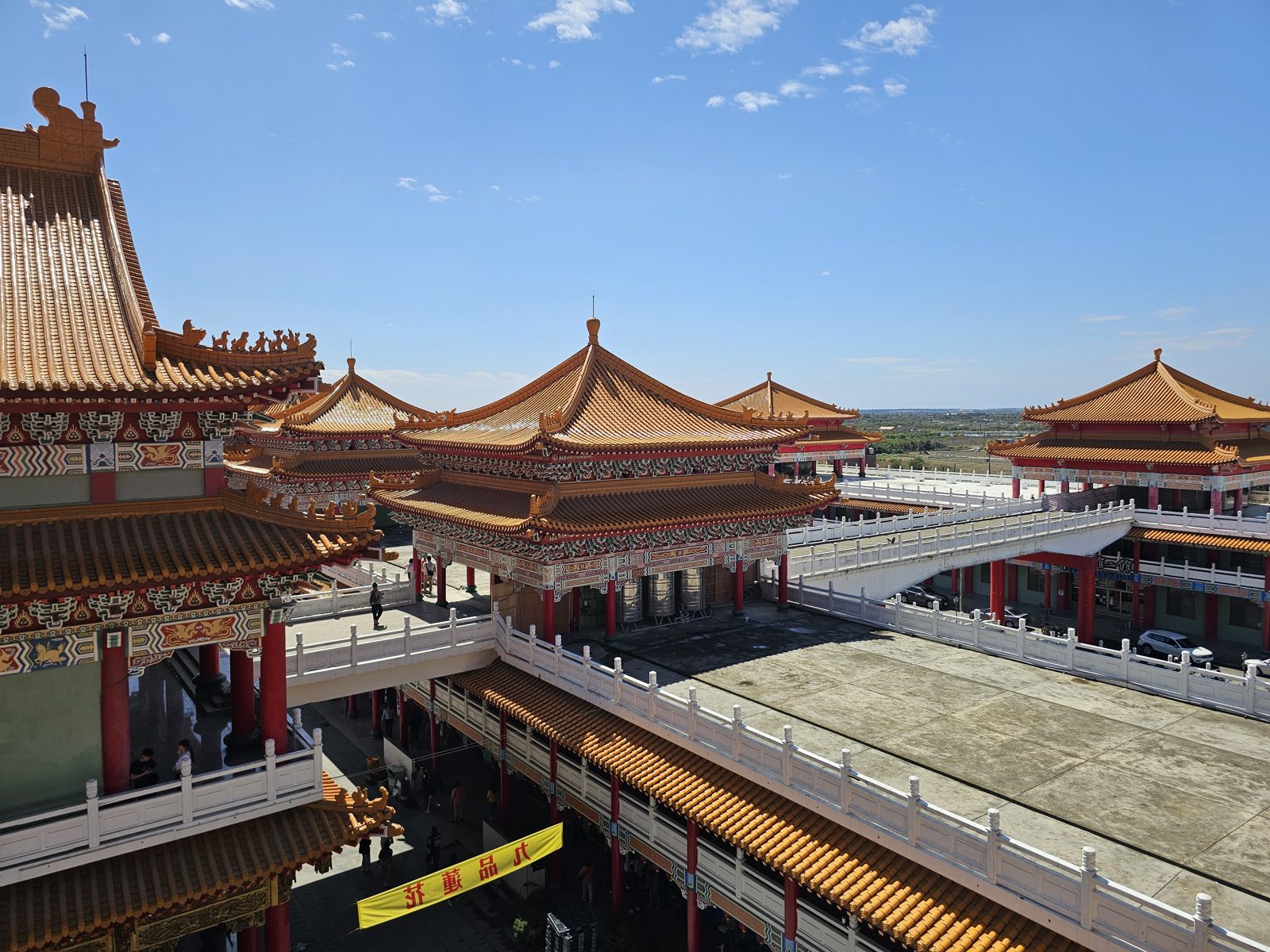
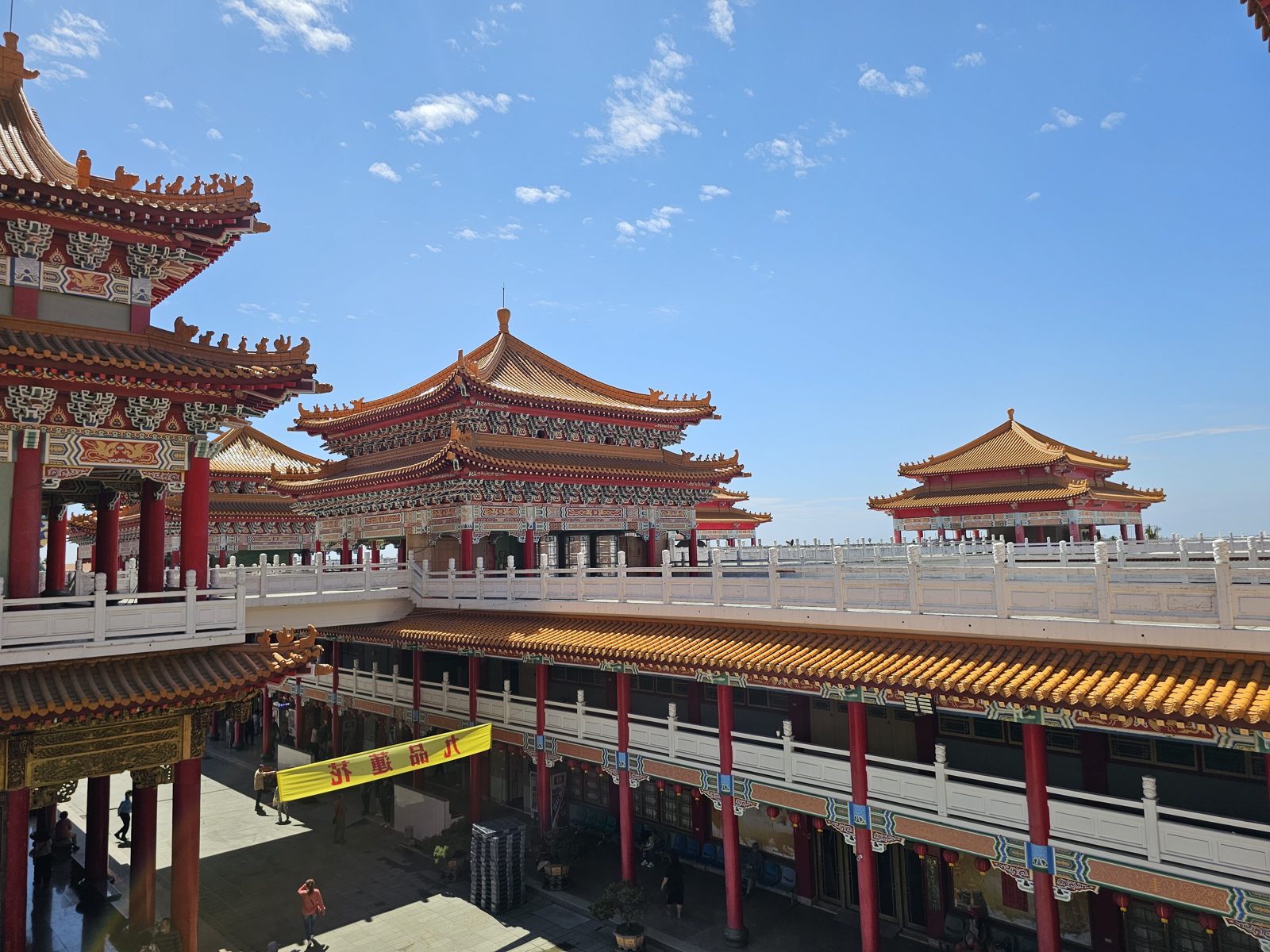
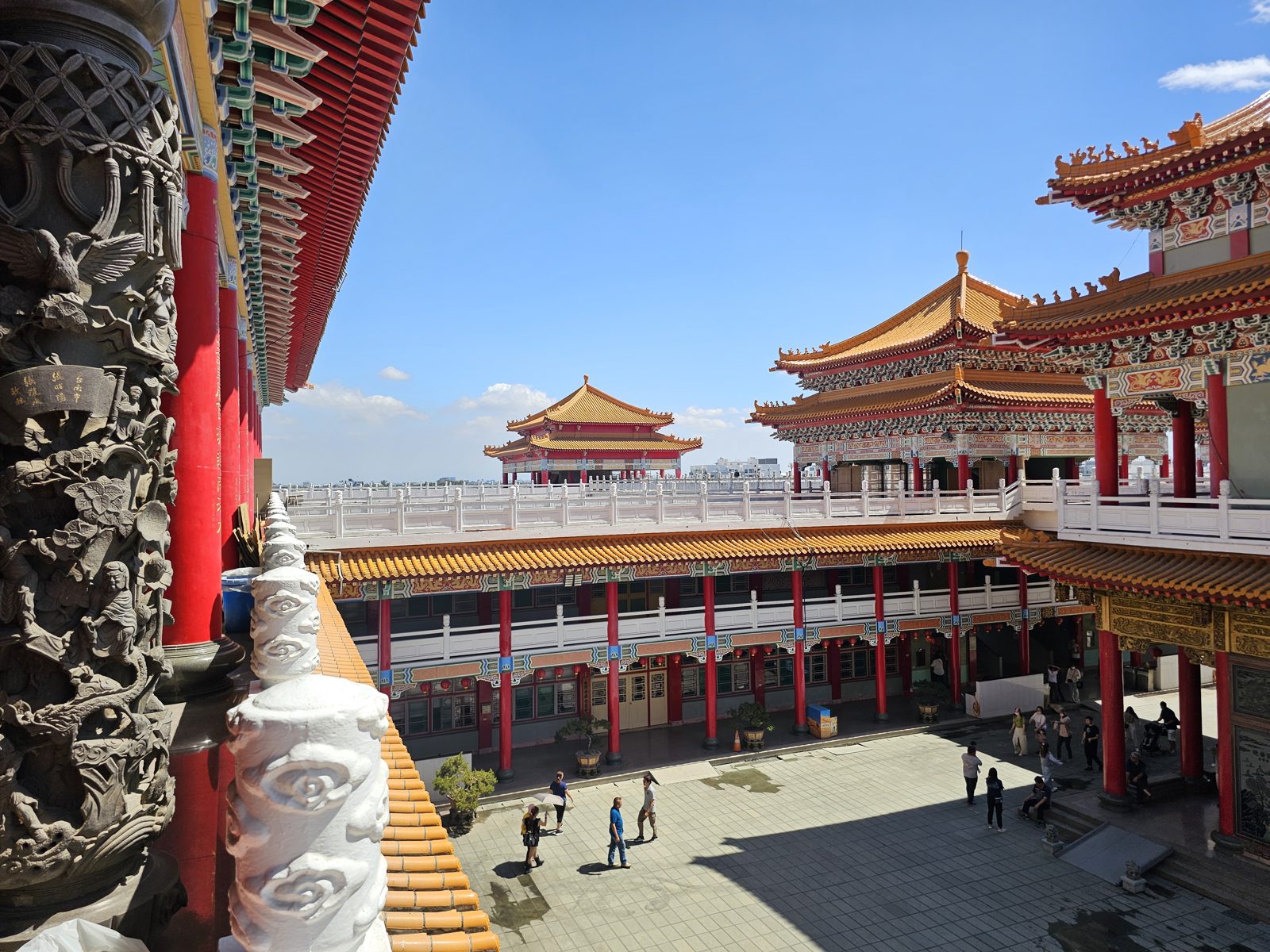
Qianliyan and Shunfeng'er
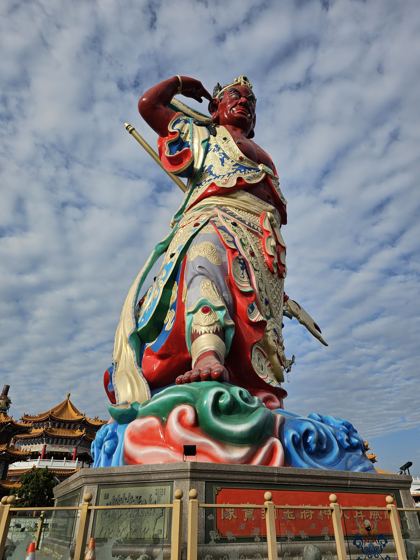
Qianliyan and Shunfeng'er
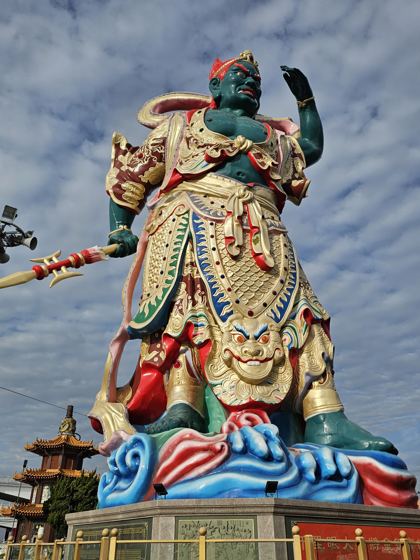
Qianliyan and Shunfeng'er
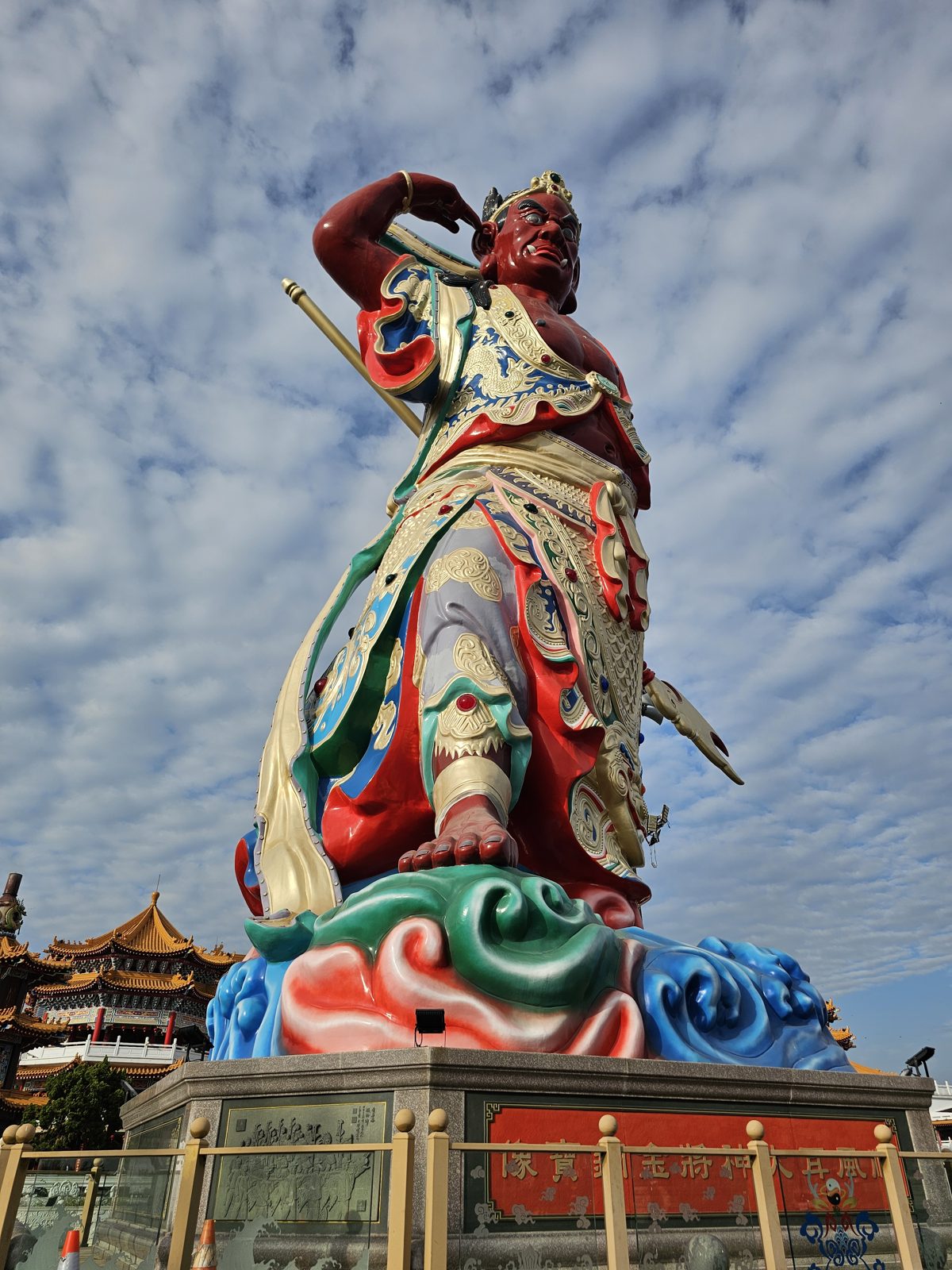
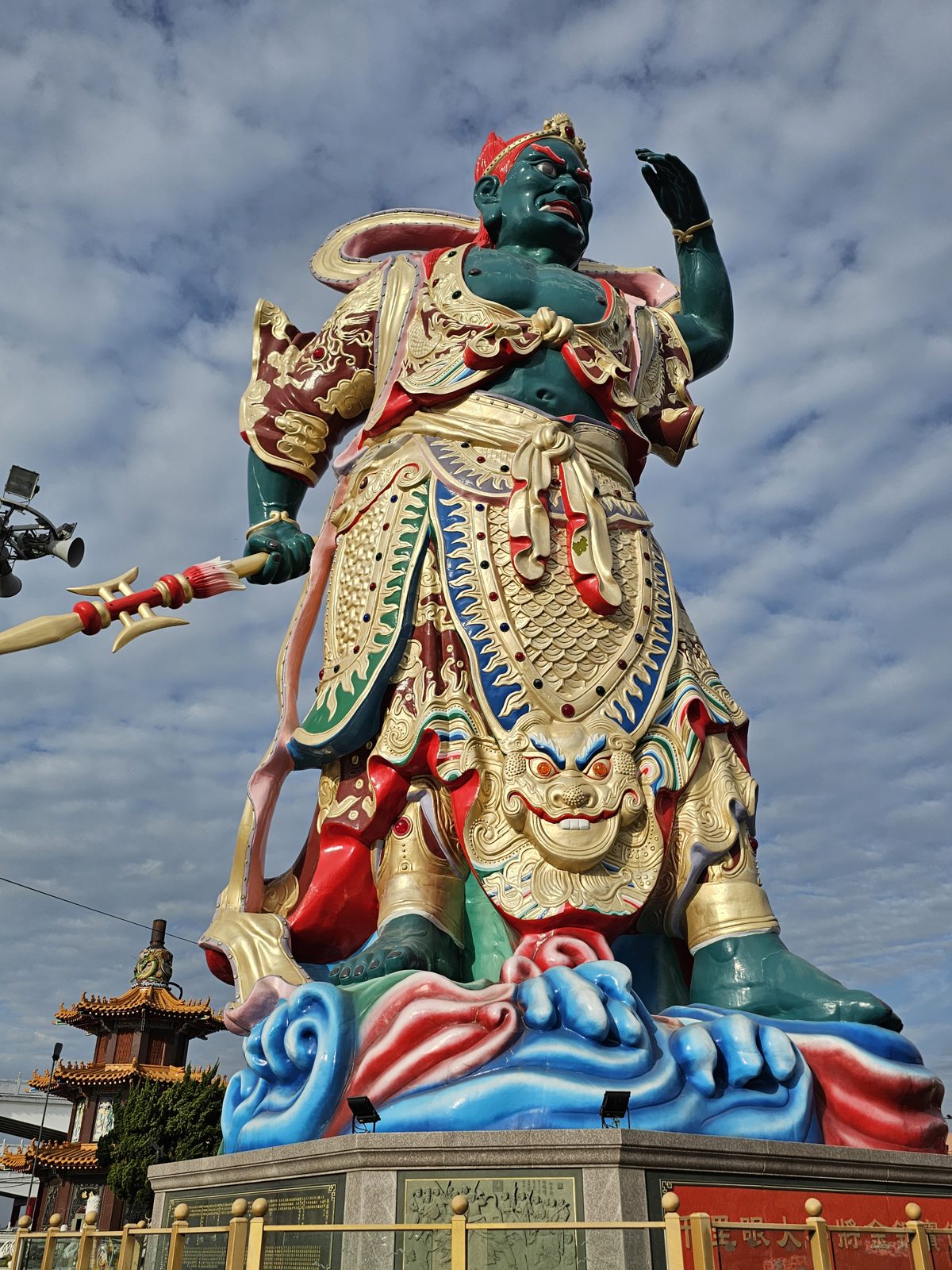
History stele
History stele
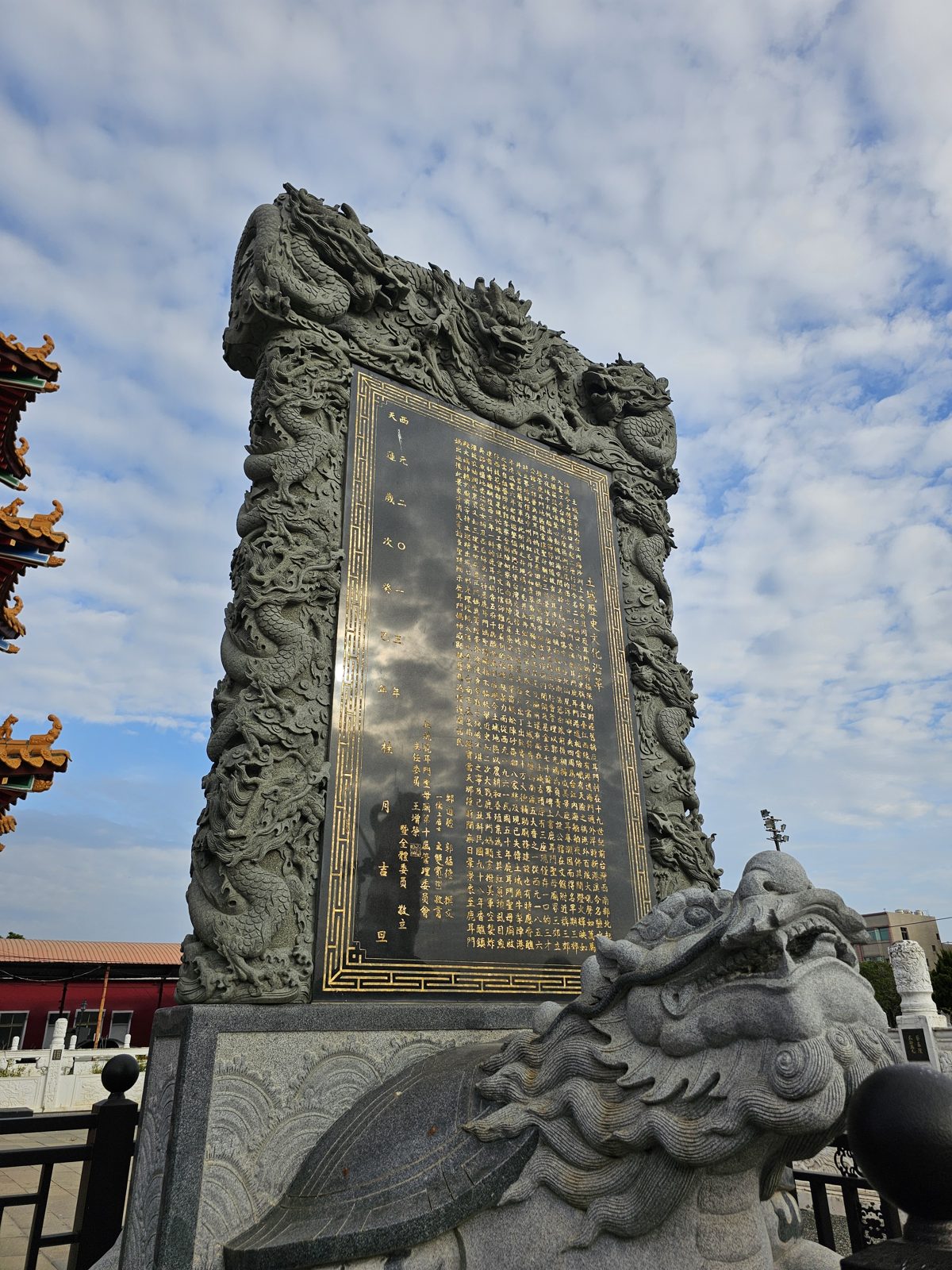
Events that happened here
- 1958The 1958 Break in Incense Ties⚖︎The 1958 Break in Incense Ties refers to the rift between Tucheng and Xigang during the 1958 Wuxu cycle of the Xigang incense procession, after which Tucheng's Bao'an Temple and its neighborhoods withdrew from the Xigang procession and held their own Tuchengzi procession from 1961; six versions of the cause circulate.
- 2017Lantern Festival Fireworks and the Spring Ox Welcoming⚖︎The Lantern Festival Fireworks and the Spring Ox Welcoming are folk events held each year from the New Year to the Lantern Festival by the Orthodox Luermen Shengmu Temple, comprising the spring ox parade, the whipping and touching of the spring ox, and high-altitude fireworks and beehive fireworks around the temple; the "Tuchengzi Spring Ox Welcoming" was registered in 2017 as a Tainan intangible cultural heritage folk custom.
- 2024Sanjiao Inviting-the-Deities Jiao RitualThe Sanjiao Inviting-the-Deities Jiao Ritual is a preliminary rite of the Tuchengzi Incense Procession of the Orthodox Luermen Shengmu Temple, in which friendly temples are visited before the xiangke and their deities invited to witness the jiao; at the Jiachen-year invitation on April 6, 2024, the temple's Zhendian Second Mazu entered the prefectural city and gathered with the Sanjiao temples of Tainan as the "five Sanjiao temples."
- Rescue of the Luermen Mazu during the Kominka periodThe rescue of the Luermen Mazu in the Kominka period was the event, late in Japanese rule, in which Tucheng villagers carved a stand-in Mazu and, with insiders at the town office, swapped back on a rainy night the Bao'an Temple's principal Dama image that had been confiscated for burning, hiding it until after the war.
- The Dispute over the Orthodoxy of the Luermen Mazu⚖︎The dispute over the orthodoxy of the Luermen Mazu is the long-running debate in which the Orthodox Luermen Shengmu Temple of Tucheng and the Luermen Tianhou Temple of Xiangong each claim to have inherited the incense lineage of the Qing-period Old Luermen Mazu Temple.
Troupes from here
- Tuchengzi Shengmu Temple Qianshun Generals Orthodox Luermen Shengmu Temple・Active
- Table 6-05 of the report (religious civil troupes) lists 「土城仔聖母廟 千順將軍 安南區」 ("Tuchengzi Shengmu Temple / Qianshun Generals / Annan District"), classified as divine generals.Official record臺江國家公園管理處 [Taijiang National Park Headquarters] (commissioning body), 《台江地區無形文化資產暨文獻資料蒐集計畫成果報告書》[Final Report on the Collection of Intangible Cultural Heritage and Documentary Materials in the Taijiang Area], 2020, printed p. 437
- The main text names, among the divine generals within the Taijiang homeland guardian circle, 「土城仔聖母廟天上聖母千順將軍」 ("the Qianshun Generals of Tianshang Shengmu of the Tuchengzi Shengmu Temple").Official recordCommissioned by 臺江國家公園管理處 [Taijiang National Park Headquarters], 《台江地區無形文化資產暨文獻資料蒐集計畫成果報告書》 [Final Report on the Collection of Intangible Cultural Heritage and Documentary Materials in the Taijiang Area], 2020, printed p. 438
- A divine general figure is about 1.5 to 2 times the height of an adult and hollow inside; one person inside carries it on the shoulders, escorting the deity and clearing the way.Official recordCommissioned by 臺江國家公園管理處 [Taijiang National Park Headquarters], 《台江地區無形文化資產暨文獻資料蒐集計畫成果報告書》 [Final Report on the Collection of Intangible Cultural Heritage and Documentary Materials in the Taijiang Area], 2020, printed p. 438
Spirit-division and incense network
Linked to Orthodox Luermen Shengmu Temple by spirit division, incense division, incense lineage, or incense festival ties: 50 temples in all, listed by city/county and district in Luermen Mazu's branch temples and incense network.
Reports that mention it
Hall of Faith3.1Faith / Temple historiesMain
Orthodox Luermen Shengmu Temple
The temple's own account divides its history into four stages: a thatched temple in the Song dynasty, official construction in 1719, the royal boat that drifted ashore in 1913 and the second building of 1918, and the third building of 1975; yet official-grade sources disagree with one another on the year the old temple was destroyed and on the origin of the royal boat.
Hall of Faith3.2Faith / The orthodoxy disputeMain
The Orthodoxy Dispute
A survey in 1956 opened nearly a decade of debate; and the most even-handed piece of evidence today is that the two sides' Qing-dynasty stele inscriptions are preserved, one each, in the two temples that now stand opposed.
Hall of Faith3.2bFaith / The orthodoxy disputeMain
The Orthodoxy Dispute: Sixty Years of Debate between Two Luermen Mazu Temples
On the north bank of the Luermen River stands the Orthodox Luermen Shengmu Temple, and on the south bank the Luermen Tianhou Temple; both say they carry on the incense lineage of the Qing-dynasty old Luermen Mazu Temple. Beginning with a survey in 1956, press conferences, petitions, official documents and special newspaper issues followed one after another. The two sides' own words are quoted as they were and set alongside scholars and official documents; this site does not adjudicate.
Hall of Faith3.8Faith / Temple eventsMain
Who Comes to the Shengmu Temple, and What They Do There
Looking at the Shengmu Temple as a place in use: pilgrims and procession troupes, fireworks watchers, night-market goers, people staying in the pilgrim lodges (pilgrims, a film crew, disaster evacuees, race participants, reservist training units), and people exercising on the temple plaza; voters, however, have never come here — in the official lists for both 2008 and 2016, the polling stations of the five villages of Tucheng were in activity centers.
Hall of the Present6.8Settlement / Villages and populationMain
Temple Positions in Local Representatives' Official Biographies
Locals say that "Tuchengzi turns out a lot of politicians." In Annan District, temple-affairs positions and the status of local elected representative appear side by side, publicly, in official biographies.
Hall of Education7.7Settlement / SchoolsMain
Resources and Contacts
What schools can apply for, and whom to approach; plus a comparison: fifteen village temples on the south bank of the Zengwen River host thirty classes each semester, while the temples of Tucheng's five villages host none.
Hall of Origins1.5Settlement / Place names and jiaotou
Poems and Steles of Tucheng
As early as the Qianlong era, four officials and literati wrote poems on Luermen, and these poems are now carved on walls in Tucheng; there are also several little-documented steles scattered around Zhongzhoujiao, Qingcaolun and the banks of Zhufagang.
Hall of Faith3.7Faith / Deities and fenling (spirit division)
The Temples of Anping and the Luermen Mazu
In the Qing period, Anping and Luermen were the southern and northern wings of the same Taijiang Inland Sea, and on both sides the Mazu is said to have been brought by Koxinga; and in the temples on both sides there rests a royal boat that is never sent away.
Hall of Incense Festivals4.1Incense Festivals / Tucheng Incense Procession
Tuchengzi Incense Procession
Incense procession and jiao combined, held once every three years (in Chou, Chen, Wei, and Xu years), with a three-day procession circuit of more than 100 kilometers, registered as a Municipal Folk Custom in 2013; permanently enshrined royal boats are a regional custom of the Taijiang–Anping sandbar belt, and Tucheng's is the largest example; there are six versions of the 1958 break in incense ties.
Hall of Incense Festivals4.6Faith / Temple events
The Lantern Festival: Fireworks, the Spring Ox, and the Street Parade
Tucheng's Lantern Festival has two sets of protagonists: one is the aerial fireworks and beehive fireworks encircling the temple that officials and the media report on every year; the other is something only local people remember — schoolchildren led by their teachers to parade in front of the temple, and, after the fireworks, being unable to squeeze out of the crowds.
Hall of the Present6.9Faith / Temple property and facilities
Woozland: Temple Land Turned Water Park, Water Park Turned Temple Park
In 1986 the temple leased three hectares of land behind it to a company jointly owned by Japanese and overseas Chinese investors; two years later southern Taiwan's first water park opened there. It closed in 2002, the ruins caught fire in 2008, and in 2009 the temple itself put out a tender for demolition. On 2023-12-13 construction began on the "Orthodox Luermen Shengmu Temple Temple-Emblem Family Park," built jointly by the temple and the city's Public Works Bureau, which opened on 2024-06-03.
Hall of the Present6.10Settlement / Roads and transportation
Getting Around Tucheng: Six Bus Routes and a Park Shuttle That Never Ran
On the official 2011 timetable Tucheng appears as "Tuchengzi"; the national park once planned a 45-kilometer park shuttle route that never went into service. Six bus routes serve Tucheng today, and the Thursday night-market traffic control has moved from the timetable's remarks column to the list of dynamic traffic controls, where only one route, Blue 24, remains.
Hall of Local Memory9.5Ecology / Species
The Bats of the Settlement and That Banyan Grove
On the road home from the Shengmu Temple, great numbers of bats come out at night to eat mosquitoes. They live in the banyan grove behind the temple, a grove that was later cut in two by Taijiang Boulevard (2014–2015) and partly felled, though the woods are still there.
Hall of Local Memory9.9Everyday memories / Old trees
The Old Trees of Tucheng
Tainan City's register of protected old trees lists only 6 in Annan District, and only 2 in the five villages of Tucheng, both on Chengxi Street Section 2 in Chengnan Village. Yet a two-day walk around Tucheng on October 26 and 27, 2026 recorded more than thirty old-tree sites, numbered T1–T28, S1–S6, and C1, the great majority of them on no register at all.
Hall of Faith3.2cFaith / The orthodoxy dispute
1661: Koxinga Enters Taijiang through Luermen
On a foggy morning at the end of April 1661, several hundred junks appeared outside the Luermen channel. Koxinga went ashore first by small boat to survey the ground, the fleet sailed into Taijiang on the tide, and that evening the main force landed at Heliao Harbor north of Chikan. This page compares, passage by passage, the campaign record of Yang Ying on the Zheng side with the day-by-day journal kept in the Dutch castle, and explains where these places are today and which matters the historical sources cannot settle.
Hall of Faith3.9Faith / Temple governance
How a Temple Is Run: The Legal Status, Organization and Money of Temples
What a temple is in law, who manages it, where its money comes from, who sees its accounts, and how it relates to city councilors. From the 1929 Act Governing the Supervision of Temples and the Temple Registration Regulations abolished in 2018 to the three organizational types in use today, set beside the public records and organization charts of the Shengmu Temple, the Tianhou Temple, the Sicao Dazhong Temple and the Xuejia Ciji Temple; and finally, the records readers can look up for themselves.
Hall of Origins1.1Settlement / Place names and jiaotou
Place Names and Land Formation
Tuchengzi stands on land that only emerged from the water in 1823; and where the name "Tucheng" (土城, "earthen fort") comes from is still the subject of four parallel accounts today.
Hall of Origins1.2Settlement / Place names and jiaotou
The Eleven Jiaotou and the Upper and Lower Bao
The difference between ten jiaotou and eleven is the single jiaotou of Xiashifenwen; the lists of four jiaotou in the Upper Bao and seven in the Lower Bao come from two independent sources, and all eleven jiaotou are named on the "Sanzhao Xiangjiao Fuzhang" of the jiao festival.
Hall of Time2.1Settlement / Place names and jiaotou
The Rise and Fall of Luermen
In the Dutch period, Luermen was only a secondary channel north of the Tayouan harbor channel. In 1661 Koxinga's fleet entered Taijiang through it, and from 1684 it became the sole official port for crossings between Taiwan and Xiamen: officials, migrants, troops and merchant ships all passed through this gate. A century later Lukang and Baliben opened in turn; in 1823 silt from the Zengwen River filled Taijiang into land; in 1840 the Qing court blocked the abandoned channel with stones; and in 1871 floodwaters swept even the Mazu temple beside the gate into the riverbed. The gate closed, but its name and its incense lineage remained on the new land.
Hall of Faith3.5Faith / Temple histories
Other Temples in Annan District
Beyond the Ministry of the Interior's registration roll there is a group of unregistered temples; and of the "divine boats" of the Taijiang area, the official list names only four, two of which are in Tucheng and Xiangong.
Hall of Incense Festivals4.1bIncense Festivals / Tucheng Incense Procession
Where the Rules of the Tuchengzi Incense Procession Came From
In 1913 a royal boat (wangchuan) carrying the Wufu Qiansui (Lords of the Five Palaces) drifted ashore at Xibianhuzi. For nearly fifty years afterward Tuchengzi held no jiao of its own: its jiaotou (neighborhood units) followed the Xigangzi Incense Procession and even saw Luermen Mazu carried to the place of honor on the Xigang jiao altar. In 1958 the two sides parted ways, and in 1961 Tuchengzi held its own first cycle. How the Wangfu is arranged, how the Centipede Procession is formed, who serves as presiding Taoist priest and as festival leaders: some of these were learned from Xigang, some were settled by casting divination blocks before the gods, and some were reworked cycle by cycle. This article traces the source of each of these rules, one by one.
Hall of Incense Festivals4.3Incense Festivals / Troupes
Martial Troupes
Official sources give five different answers to how many martial troupes the Tuchengzi Incense Procession has; each troupe signals its alliances and lineage of instruction by the color of its waist sash (jiaojin), and in the 2024 Jiachen cycle five martial troupes held their opening ceremonies one after another on the Shengmu Temple plaza.
Hall of Incense Festivals4.4bIncense Festivals / The Five Great Incense Processions
Where the Five Great Incense Processions Came From
The Xigang Incense Procession traces itself to a royal boat found at Gumagong in 1784; the Xuejia Incense Procession traces itself to the day in 1661 when Baosheng Dadi came ashore with the settlers; the Madou Incense Procession says the Five Lords drifted to Madou Harbor on a royal boat; the Jintang Temple of the Xiaolong Incense Procession says its incense was divided from the Daren Temple in Guiren; and the Tuchengzi Incense Procession split off from the Xigang procession in 1958 and held its own first cycle in 1961. The legends and the earliest dates the documents can prove are often decades to more than a century apart. What binds a whole cluster of villages together is a system: festival leaders chosen by casting divination blocks, palanquins and troupes sent by each village, and Taoist priests engaged to perform the jiao. This page sets out the origins of the five processions, and where that system came from, with a source for every point.
Hall of Incense Festivals4.7Incense Festivals / The break in incense ties and its restoration
The Haiwei and Tucheng Incense Processions: A Thirty-Six-Year Break in Incense Ties
For the first three cycles of the Tuchengzi Incense Procession, the presiding deity of the jiao altar was the Baosheng Dadi of the Haiwei Chaohuang Temple; after the third cycle the two sides broke off ties for thirty-six years, until three favorable divination-block casts in 2002 led the Tucheng Incense Procession's second-day route to pass through Haiwei again in 2003.
Hall of Ecology5.2Ecology / Protected areas and disputes
Qigu
The Zengwen River Estuary Wetland is of international importance, yet to this day it has no statutory conservation and wise use plan; and the figures for black-faced spoonbills come from two statistical systems that do not connect with each other.
Hall of the Present6.6Present conditions and institutions / National park
How the National Park Sees Tucheng
This page is not about scenery. It is about how a 394-page statutory plan (the approved edition) describes, classifies, and passes over Tucheng — together with one observation on naming: the authorities recognize "Chengxi" and "Qingcaolun" but not "Tucheng."
Hall of Education7.5Incense Festivals / Troupes
Procession Troupes and Schools
In Tucheng, the zhentou (procession troupe) tradition is passed down through the village temples, not the schools; yet several schools next door have written troupes into their timetables, and even into their school vision.
Archive8.1About this site / Research methods
How This Site Researches Its Material
This site's research methods laid out in the open: fifty-seven commissioned reports, three sets of government registration data, citizen-science databases, the Wayback Machine, and the lessons left by automated searching.
Archive8.2About this site / Corrections and contradictions
How to Read the Corrections Table and the Contradictions Table
What this site has changed and why; how many accounts exist of the same matter, which can be ruled on, and which must be presented side by side.
Hall of Local Memory9.1Settlement / Markets and shops
Memories of the Shopping Streets around Cheng'an Road
From the junction of Cheng'an Road and Chengbei Road all the way to the intersection of Section 2 of Chengxi Street and Chengnan Road lies the "downtown" of Tuchengzi; that is what local people call it.
- Hall of FaithHall front page: Hall of Faith
- Hall of Incense FestivalsHall front page: Hall of Incense Festivals
Continue from here
- Tuchengzi: other TemplesDingshifenwen Qing'an Temple⚖︎A General Lei temple in Dingshifenwen, Annan DistrictContains 1 items
- Principal deityLuermen Mazu⚖︎The name used around Luermen for MazuContains 8 items
- Disputed withLuermen Tianhou Temple⚖︎Mazu temple of Mazugong Village, Annan DistrictContains 17 items