The two trees on the official register
MoreLess
Official recordThe notable-tree website of the Tainan City Agriculture Bureau (臺南市政府農業局) registers 311 trees citywide and 6 in Annan District (安南區) (4 notable trees and 2 protected trees). The five villages of Tucheng (土城五里) have only two, numbers 200 and 201, both on Chengxi Street (城西街) Section 2 in Chengnan Village (城南里). Both are banyans, and they are also the two thickest and oldest trees in Annan District. The five surrounding villages of Shalun, Qingcao, Luer, Xiangong, and Mazugong have none at all R002Source臺南市政府農業局 [Agriculture Bureau, Tainan City Government] 「愛樹一生一世」[Love Trees for a Lifetime] notable-tree website API (queryTreeDetailAll; 311 registered trees citywide, 6 in Annan District: 4 notable trees and 2 protected trees)Original URLhttps://oldtree.tainan.gov.tw/Retrieved2026-10-26Snapshot timestamp—Official response; the village of each tree is inferred from the village point data of the National Land Surveying and Mapping Center, Ministry of the Interior..
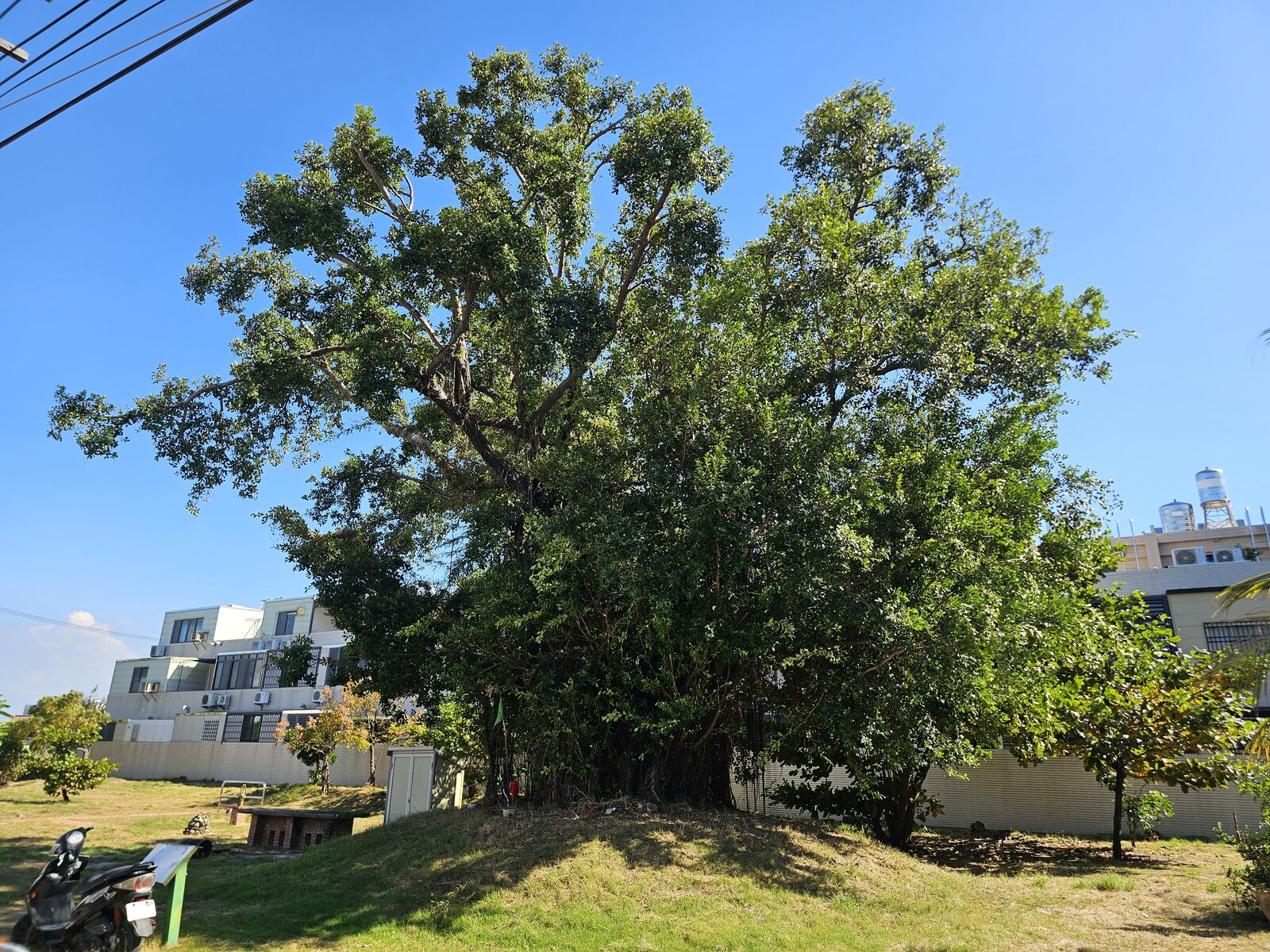
Official recordNo. 200 stands in the Shenrong Green on Chengxi Street Section 2. It is 11 meters tall, with a girth of 7.85 meters and an age of 160 years; it was registered on 2013-07-23, and its maintenance record notes 「位於土丘上」 ("located on an earthen mound") R002Source臺南市政府農業局 [Agriculture Bureau, Tainan City Government] 「愛樹一生一世」[Love Trees for a Lifetime] notable-tree website API (queryTreeDetailAll; 311 registered trees citywide, 6 in Annan District: 4 notable trees and 2 protected trees)Original URLhttps://oldtree.tainan.gov.tw/Retrieved2026-10-26Snapshot timestamp—Official response; the village of each tree is inferred from the village point data of the National Land Surveying and Mapping Center, Ministry of the Interior.. Local oral account「它確實長在一座圓形土丘上,多幹合生、氣根密布成柱;土丘前的公車站牌就叫「神榕綠地」。綠地裡那面解說立牌,在地人小時候就在了,如今整面褪成白色,一個字也辨認不出」 (It does indeed grow on a round earthen mound, its many trunks fused together and its aerial roots so dense they form columns; the bus stop in front of the mound is itself called "Shenrong Green" (神榕綠地). The interpretive sign in the green space was already there when locals were children; today the whole board has faded to white and not a single character can be made out) R001SourceLocal oral account (the project author, firsthand observation; on-site photographs and oral account on 2026-10-26 and 27, numbered T1–T28, S1–S6, C1)Original URL—Retrieved2026-10-27Snapshot timestamp—Photographs taken and kept by the author. Except where identified by the author, tree species are preliminary identifications from the photographs..
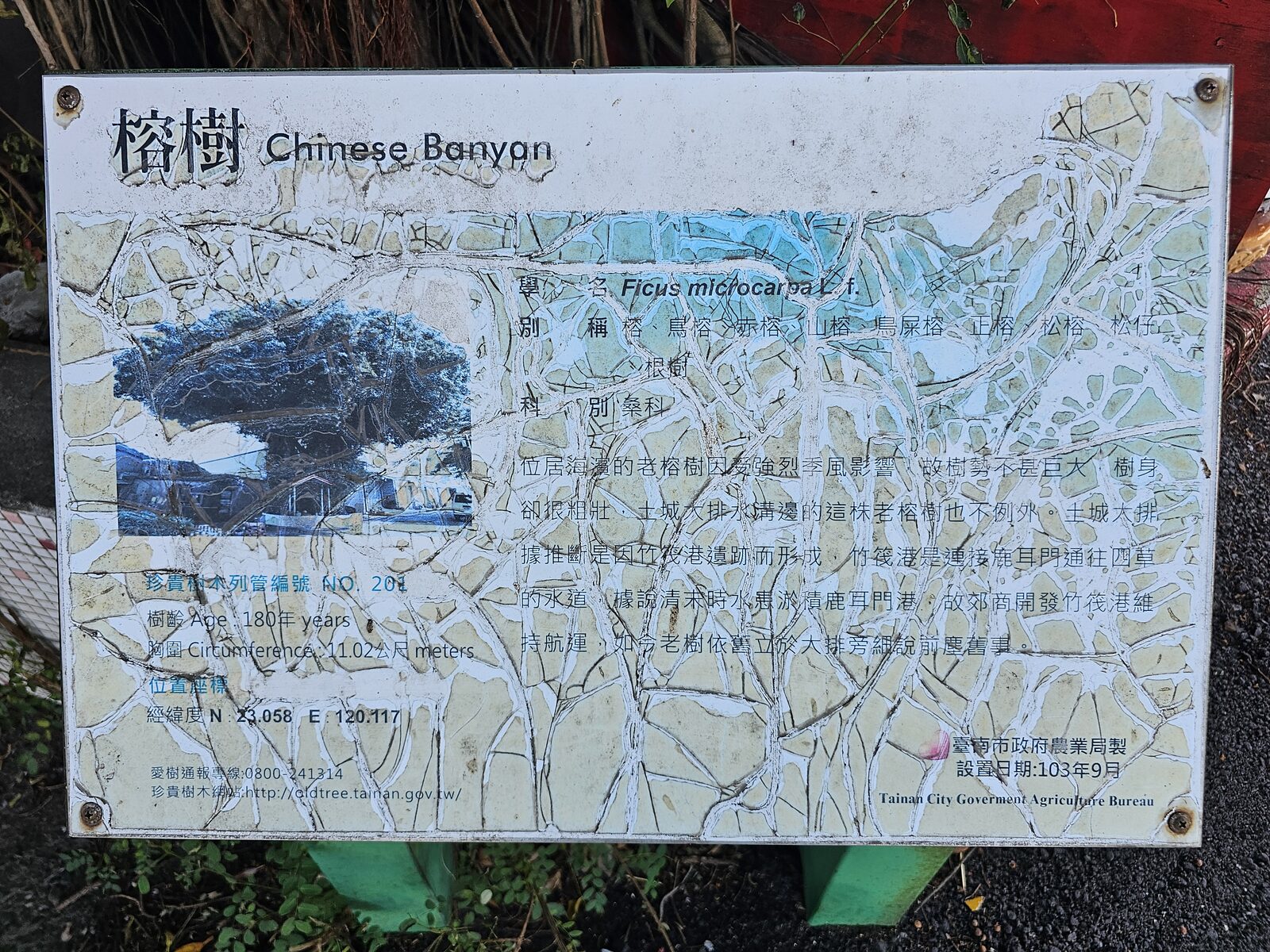
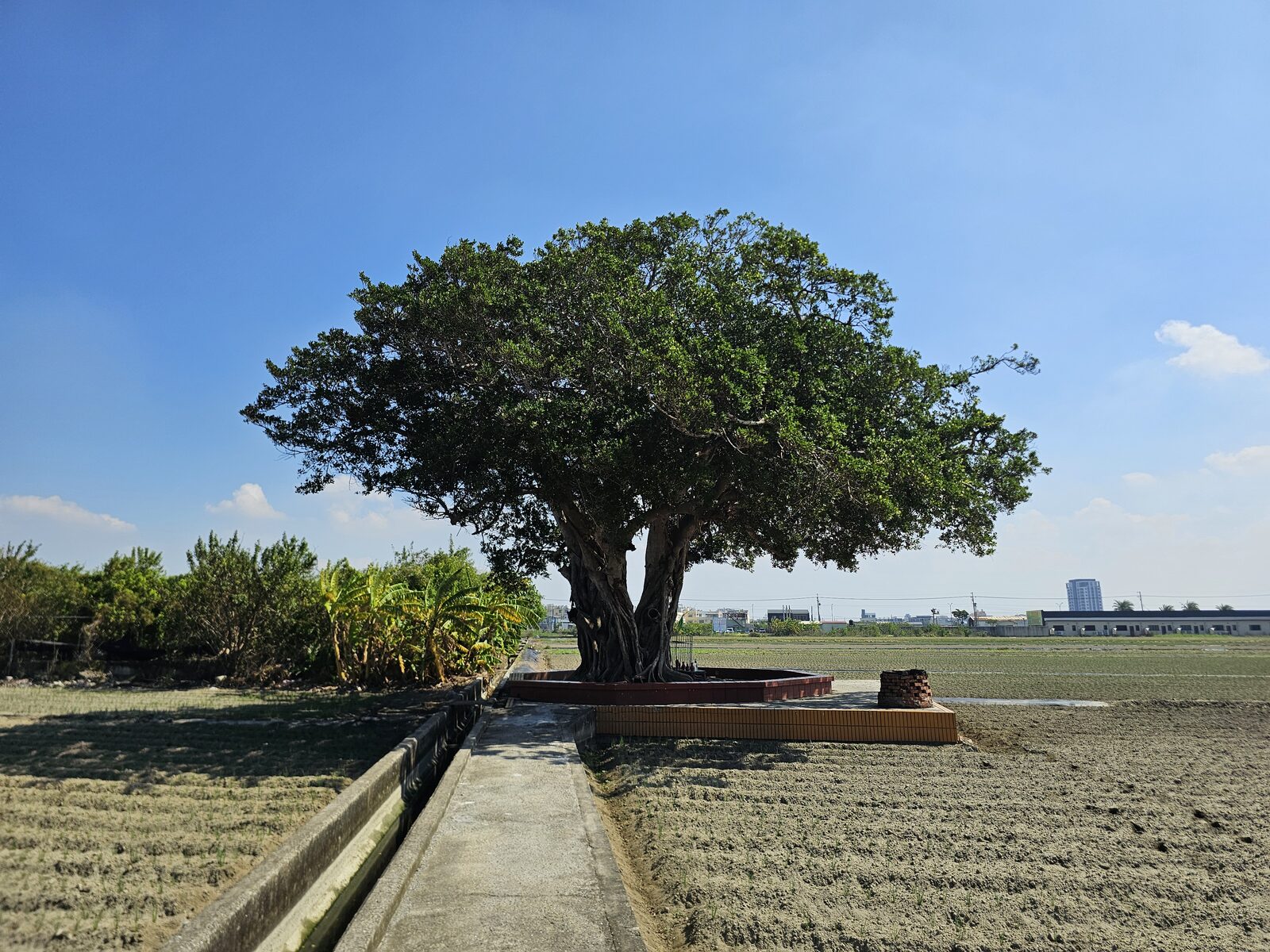
Official recordNo. 201 stands in Lane 291, Chengxi Street Section 2, beside the Tucheng Drainage Canal. It is 12 meters tall, with a girth of 11.02 meters and an age of 180 years; it was registered on 2013-07-31 R002Source臺南市政府農業局 [Agriculture Bureau, Tainan City Government] 「愛樹一生一世」[Love Trees for a Lifetime] notable-tree website API (queryTreeDetailAll; 311 registered trees citywide, 6 in Annan District: 4 notable trees and 2 protected trees)Original URLhttps://oldtree.tainan.gov.tw/Retrieved2026-10-26Snapshot timestamp—Official response; the village of each tree is inferred from the village point data of the National Land Surveying and Mapping Center, Ministry of the Interior.. The interpretive sign the Agriculture Bureau set up beside the tree in September 2014 (ROC year 103) reads: 「位居海濱的老榕樹因受強烈季風影響,故樹勢不甚巨大,樹身卻很粗壯,土城大排水溝邊的這株老榕樹也不例外。土城大排據推斷是因竹筏港遺跡而形成,竹筏港是連接鹿耳門通往四草的水道,據說清末時水患淤積鹿耳門港,故郊商開發竹筏港維持航運,如今老樹依舊立於大排旁細說前塵舊事。」 ("Old banyans on the seashore are shaped by strong monsoon winds, so they do not grow very large, but their trunks are very stout, and this old banyan beside the Tucheng Drainage Canal is no exception. The Tucheng main drain is thought to have formed from the remains of Zhufagang, the waterway linking Luermen to Sicao. It is said that in the late Qing, floods silted up Luermen Harbor, so the guild merchants developed Zhufagang to keep shipping going. Today the old tree still stands beside the drain, telling of bygone days.") R003Source臺南市政府農業局 [Agriculture Bureau, Tainan City Government] notable-tree interpretive sign (registration no. NO. 201, installed September 2014 (ROC year 103)), photographed on site by the project author on 2026-10-26Original URL—Retrieved2026-10-26Snapshot timestamp— Local oral account「樹下有一座紅色小祠,沒有五營旗」 (Under the tree is a small red shrine, with no Five Camps flags) R001SourceLocal oral account (the project author, firsthand observation; on-site photographs and oral account on 2026-10-26 and 27, numbered T1–T28, S1–S6, C1)Original URL—Retrieved2026-10-27Snapshot timestamp—Photographs taken and kept by the author. Except where identified by the author, tree species are preliminary identifications from the photographs..
Trees recorded on a walk around
First items: Trees for worship and trees for eatingThe banyan grove behind the Shengmu TempleTrees that are goneMoreLess
Trees for worship and trees for eating
Local oral account「土城的老樹大致分兩種。一種在廟埕與路口:圓形花台、鐵欄圍護,花台裡放小香爐與金紙桶,樹幹綁紅布帶或黃布條 —— T4、T5、T6 這幾個路口花台,T13–T15 頂什份塭清安宮廟埕前的三棵,田中間有紅磚小金爐的 T17,都是這一類」 (Tucheng's old trees fall roughly into two kinds. One kind stands in temple forecourts and at intersections: in a round planter ringed by an iron railing, with a small incense burner and a spirit-money bin inside the planter, and red cloth ribbons or yellow cloth strips tied around the trunk. The intersection planters at T4, T5, and T6, the three trees (T13–T15) in front of the forecourt of the Dingshifenwen Qing'an Temple (頂什份塭清安宮), and T17, which has a small red-brick spirit-money furnace in the middle of a field, all belong to this kind) R001SourceLocal oral account (the project author, firsthand observation; on-site photographs and oral account on 2026-10-26 and 27, numbered T1–T28, S1–S6, C1)Original URL—Retrieved2026-10-27Snapshot timestamp—Photographs taken and kept by the author. Except where identified by the author, tree species are preliminary identifications from the photographs.. Local oral account「這類樹下常見五營旗,屬聚落外圍的營頭之一」 (Five Camps flags (五營旗, wuying qi, flags marking the five spirit-army camps that guard a village) are often found under trees of this kind, which serve as one of the camp posts on the edge of a settlement) R001SourceLocal oral account (the project author, firsthand observation; on-site photographs and oral account on 2026-10-26 and 27, numbered T1–T28, S1–S6, C1)Original URL—Retrieved2026-10-27Snapshot timestamp—Photographs taken and kept by the author. Except where identified by the author, tree species are preliminary identifications from the photographs..
Local oral account「另一種在休憩區與住家旁,是吃得到果子的樹:溪埔仔籃球場旁兩棵蓮霧(T18、T19)和一棵土芒果(T20),樹下擺石桌長凳;城北路口兩棵麵包樹(T8,已砍);砂崙里一戶私宅庭院裡的一棵(T21);以及砂崙里路口的茄苳(T27)」 (The other kind stands in rest areas and beside homes: trees whose fruit can be eaten. There are two wax apple trees (T18, T19) and a native mango (T20) beside the Xipuzi (溪埔仔) basketball court, with stone tables and benches beneath them; two breadfruit trees at the Chengbei Road (城北路) intersection (T8, since cut down); one in the courtyard of a private home in Shalun Village (砂崙里) (T21); and a bishop wood tree (茄苳) at an intersection in Shalun Village (T27)) R001SourceLocal oral account (the project author, firsthand observation; on-site photographs and oral account on 2026-10-26 and 27, numbered T1–T28, S1–S6, C1)Original URL—Retrieved2026-10-27Snapshot timestamp—Photographs taken and kept by the author. Except where identified by the author, tree species are preliminary identifications from the photographs..
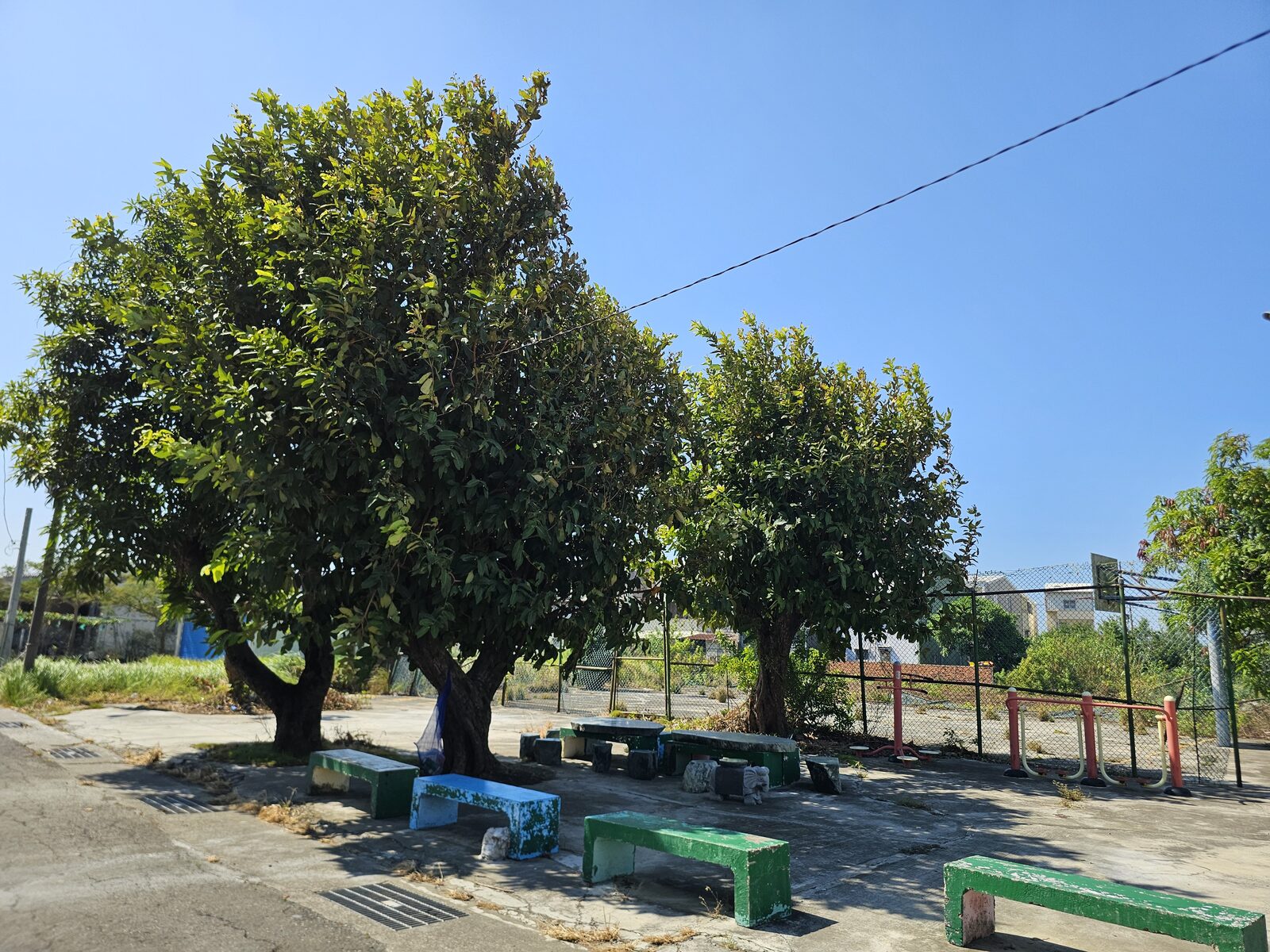
UnverifiedWhether T18 and T19 are wax apples is not yet certain; there is no fruit at all on them now. From its bark and fine needle-like leaves, T21 belongs to the genus Melaleuca, but it is not the paperbark species itself R001SourceLocal oral account (the project author, firsthand observation; on-site photographs and oral account on 2026-10-26 and 27, numbered T1–T28, S1–S6, C1)Original URL—Retrieved2026-10-27Snapshot timestamp—Photographs taken and kept by the author. Except where identified by the author, tree species are preliminary identifications from the photographs..
The banyan grove behind the Shengmu Temple
Local oral account「聖母廟後方那片榕樹林沒有全砍。它被台江大道切成兩段,砍掉了一部分,兩段都還在」 (The banyan grove behind the Shengmu Temple (聖母廟) was not cut down entirely. Taijiang Boulevard (台江大道) split it into two parts; part of it was cut, but both parts are still there) R001SourceLocal oral account (the project author, firsthand observation; on-site photographs and oral account on 2026-10-26 and 27, numbered T1–T28, S1–S6, C1)Original URL—Retrieved2026-10-27Snapshot timestamp—Photographs taken and kept by the author. Except where identified by the author, tree species are preliminary identifications from the photographs..
Local oral account「廟側那一段(S3a)在聖母廟正後方、還沒到台江大道的地方,全是榕樹,沿著圍籬成排、多幹斜生、氣根垂落成簾,林間一條碎石小徑,兩側樹冠在頭頂合攏;圍籬是「鹿耳門媽文物館興建工程」,承攬商印著「常詠營造股份有限公司」」 (The temple-side part (S3a) lies directly behind the Shengmu Temple, short of Taijiang Boulevard. It is all banyans, standing in rows along a fence, with many trunks leaning and aerial roots hanging down like curtains; a gravel path runs through the grove, and the canopies on both sides close overhead. The fence belongs to the "Luermen Mazu Museum construction project," with the contractor named as Changyong Construction Co., Ltd.) R001SourceLocal oral account (the project author, firsthand observation; on-site photographs and oral account on 2026-10-26 and 27, numbered T1–T28, S1–S6, C1)Original URL—Retrieved2026-10-27Snapshot timestamp—Photographs taken and kept by the author. Except where identified by the author, tree species are preliminary identifications from the photographs.. 「這就是童年看元宵煙火席地而躺、晚上有很多蝙蝠的那片林(見 9.5)」 (This is the grove where, as children, people lay on the ground to watch the Lantern Festival fireworks, and where there were many bats at night (see 9.5)) R001SourceLocal oral account (the project author, firsthand observation; on-site photographs and oral account on 2026-10-26 and 27, numbered T1–T28, S1–S6, C1)Original URL—Retrieved2026-10-27Snapshot timestamp—Photographs taken and kept by the author. Except where identified by the author, tree species are preliminary identifications from the photographs.. Official recordThe official specifications of the project inside the fence: the groundbreaking ceremony for the "Luermen Mazu Museum of the Orthodox Luermen Shengmu Temple" (正統鹿耳門聖母廟鹿耳門媽文物館) was held on 2025-03-09. It is sited directly behind the Jade Emperor Hall, with one floor below ground and five above and a total floor area of 3,883 ping, and is planned to contain spaces for artifact display, religious and cultural research, multimedia interaction, an educational lecture hall, and art performances; it is scheduled for completion and opening before 2029 R014Source臺南市政府全球資訊網 [Tainan City Government website] press release〈黃偉哲出席鹿耳門媽文物館動土大典 見證媽祖信仰傳承新里程碑〉[Huang Wei-che Attends Groundbreaking of the Luermen Mazu Museum, Witnessing a New Milestone in Passing on Mazu Belief] (114-03-09, i.e. 2025-03-09; located directly behind the Jade Emperor Hall, one floor below ground and five above, total floor area 3,883 ping); 自由時報 [Liberty Times]〈正統鹿耳門聖母廟斥資逾10億元打造鹿耳門媽文物館 今日舉行興建動土大典〉[Orthodox Luermen Shengmu Temple Spends Over NT$1 Billion on Luermen Mazu Museum; Groundbreaking Held Today] (2025-03-09; scheduled for completion and opening before 2029)Original URLhttps://www.tainan.gov.tw/News_Content.aspx?n=13370&s=8727888Retrieved2026-10-27Snapshot timestamp—Official and media sources. See also the Liberty Times: https://news.ltn.com.tw/news/Tainan/breakingnews/4974197 . A Tainan National University of the Arts notice calls it 「鹿耳門媽文化館」 (Luermen Mazu Cultural Center); both names are presented. It is a different building from the existing exhibition room, the 「聖母廟文物館」 (Shengmu Temple Museum).. It is a different building from the temple's existing exhibition room, the "Shengmu Temple Museum" (聖母廟文物館) R014Source臺南市政府全球資訊網 [Tainan City Government website] press release〈黃偉哲出席鹿耳門媽文物館動土大典 見證媽祖信仰傳承新里程碑〉[Huang Wei-che Attends Groundbreaking of the Luermen Mazu Museum, Witnessing a New Milestone in Passing on Mazu Belief] (114-03-09, i.e. 2025-03-09; located directly behind the Jade Emperor Hall, one floor below ground and five above, total floor area 3,883 ping); 自由時報 [Liberty Times]〈正統鹿耳門聖母廟斥資逾10億元打造鹿耳門媽文物館 今日舉行興建動土大典〉[Orthodox Luermen Shengmu Temple Spends Over NT$1 Billion on Luermen Mazu Museum; Groundbreaking Held Today] (2025-03-09; scheduled for completion and opening before 2029)Original URLhttps://www.tainan.gov.tw/News_Content.aspx?n=13370&s=8727888Retrieved2026-10-27Snapshot timestamp—Official and media sources. See also the Liberty Times: https://news.ltn.com.tw/news/Tainan/breakingnews/4974197 . A Tainan National University of the Arts notice calls it 「鹿耳門媽文化館」 (Luermen Mazu Cultural Center); both names are presented. It is a different building from the existing exhibition room, the 「聖母廟文物館」 (Shengmu Temple Museum)..
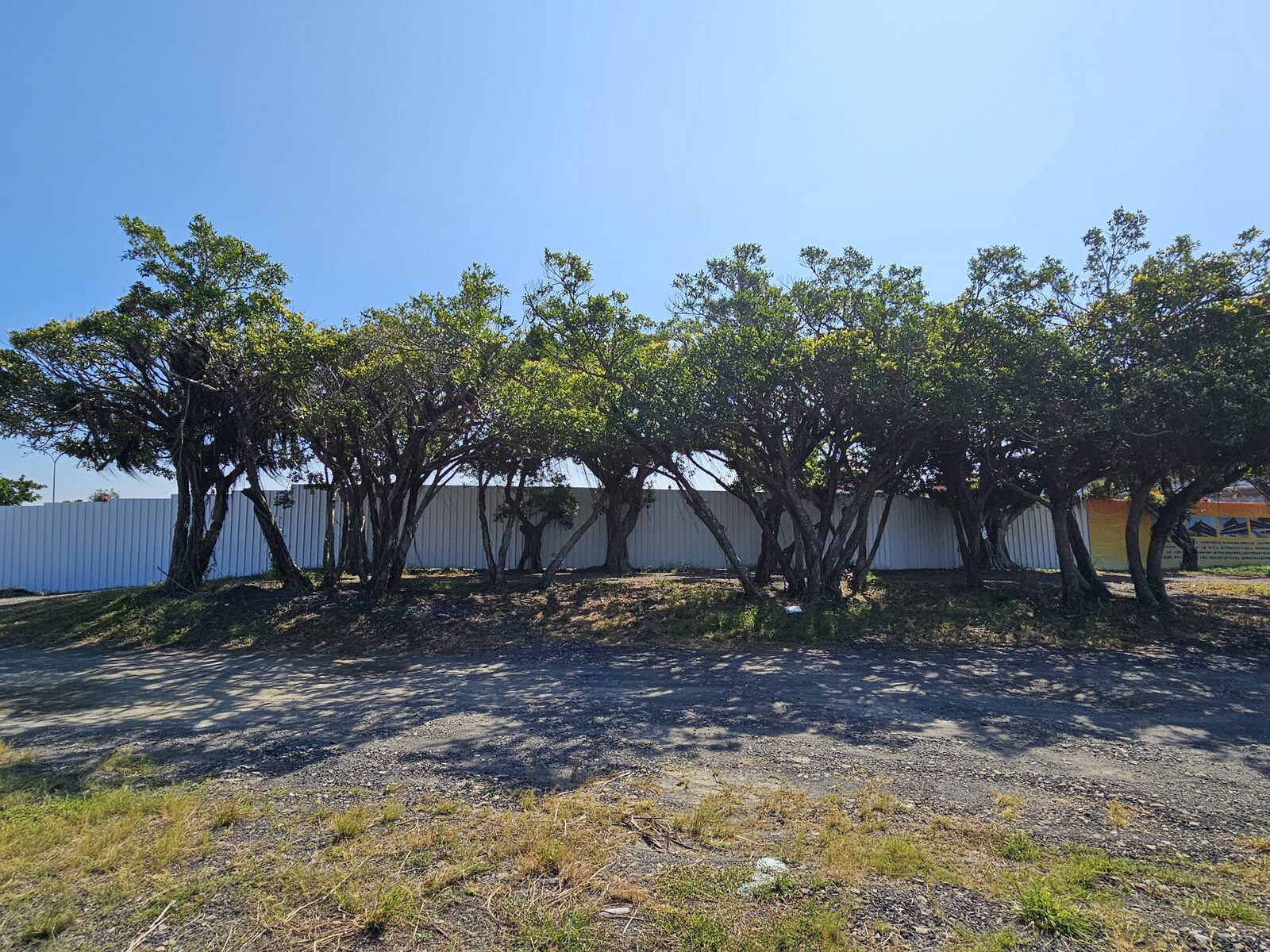
Local oral account「台江大道北側那一段(S3b)在整地中的農地上:大部分是榕樹,少部分是茄苳與黃槿,土方堆成土堤、蓋著黑色防塵網,田邊一排枯死或截頂的裸幹」 (The part north of Taijiang Boulevard (S3b) stands on farmland that is being graded. It is mostly banyans, with a few bishop wood and sea hibiscus (黃槿) trees; the earth has been piled into a berm covered with black dust netting, and along the edge of the field is a row of bare trunks, dead or topped) R001SourceLocal oral account (the project author, firsthand observation; on-site photographs and oral account on 2026-10-26 and 27, numbered T1–T28, S1–S6, C1)Original URL—Retrieved2026-10-27Snapshot timestamp—Photographs taken and kept by the author. Except where identified by the author, tree species are preliminary identifications from the photographs.. 「現在每年聖母廟元宵煙火就在這一段施放,過去不在這個位置;依廟方的規劃,這片地以後會變成「聖母園區」」 (These days the Shengmu Temple's annual Lantern Festival fireworks are launched from this part; in the past they were not set off here. According to the temple's plans, this land will later become the "Shengmu Park Complex" (聖母園區)) R001SourceLocal oral account (the project author, firsthand observation; on-site photographs and oral account on 2026-10-26 and 27, numbered T1–T28, S1–S6, C1)Original URL—Retrieved2026-10-27Snapshot timestamp—Photographs taken and kept by the author. Except where identified by the author, tree species are preliminary identifications from the photographs.. Official recordIn the news about the 2024 Lantern Festival, the fireworks launch zone announced by the temple was 「廟體建築的正後方『青砂街側-台江大道』」 ("directly behind the temple building, 'the Qingsha Street side–Taijiang Boulevard'") R007Source自由時報 [Liberty Times], 2024-02-25,〈鹿耳門煙火炸傷 3 人 廟方致慰問金:未來將擴大落焰區管制〉[Luermen Fireworks Injure 3; Temple Pays Consolation Money: Fallout Zone Controls to Be Expanded] (the temple's notice: 「廟體建築的正後方『青砂街側-台江大道』為煙火發射區」 ("directly behind the temple building, 'the Qingsha Street side–Taijiang Boulevard,' is the fireworks launch zone"); one of the injured was 「位在廟體建築後方大榕樹位置」 ("at the location of the big banyan behind the temple building"))Original URLhttps://news.ltn.com.tw/news/life/breakingnews/4588996Retrieved2026-10-20Snapshot timestamp—.
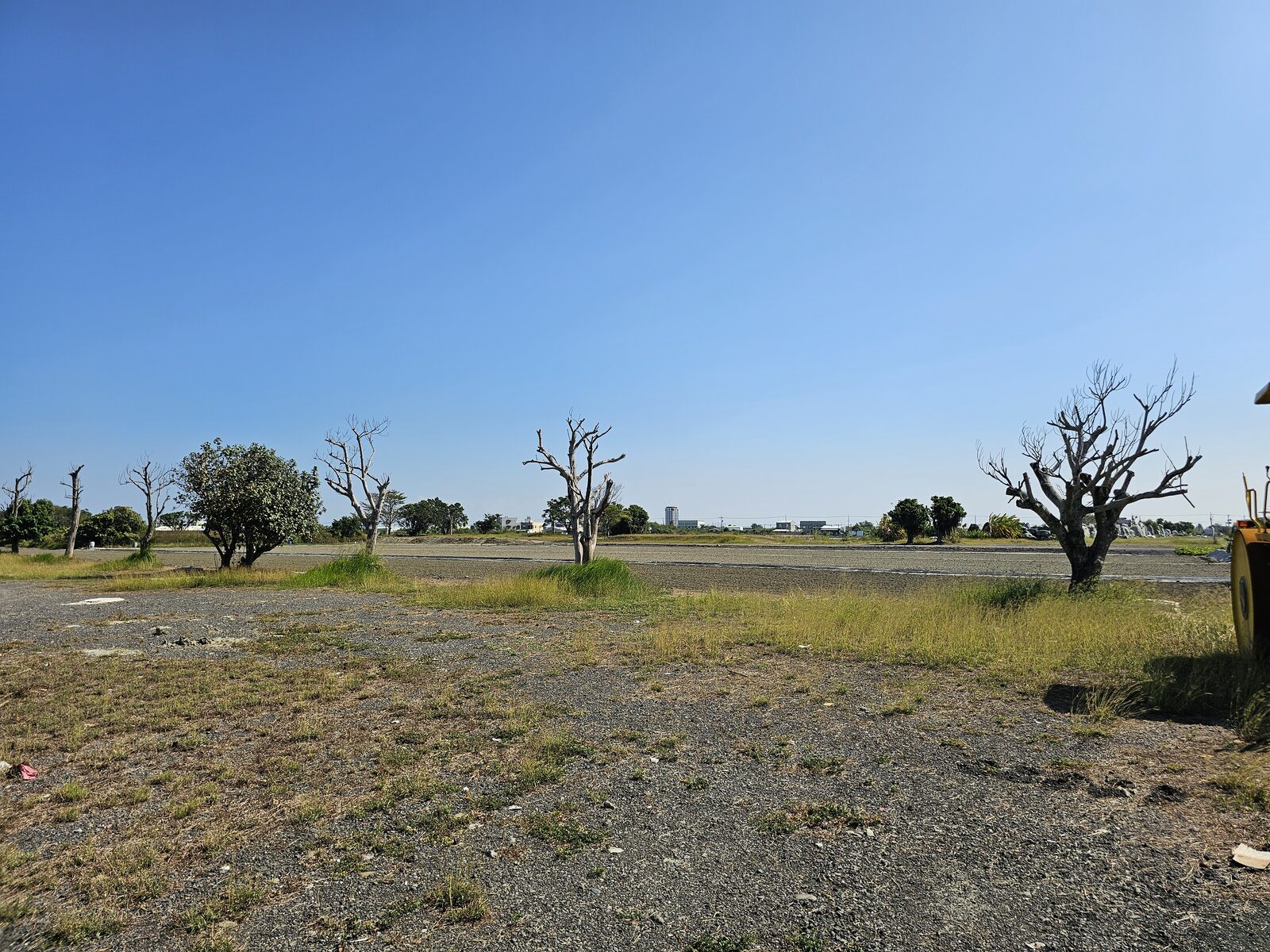
UnverifiedEstimated from the photographs, S3a has about 15–20 trees, and S3b about 10 living banyans and about 6–8 dead trees, for a combined total of about 25–30 living banyans in the two parts R001SourceLocal oral account (the project author, firsthand observation; on-site photographs and oral account on 2026-10-26 and 27, numbered T1–T28, S1–S6, C1)Original URL—Retrieved2026-10-27Snapshot timestamp—Photographs taken and kept by the author. Except where identified by the author, tree species are preliminary identifications from the photographs.. Locals remember that there used to be about 30 trees here R001SourceLocal oral account (the project author, firsthand observation; on-site photographs and oral account on 2026-10-26 and 27, numbered T1–T28, S1–S6, C1)Original URL—Retrieved2026-10-27Snapshot timestamp—Photographs taken and kept by the author. Except where identified by the author, tree species are preliminary identifications from the photographs.. Secondhand accountThe stretch of road that cut through the grove has dates: the groundbreaking for the "works behind the Orthodox Luermen Shengmu Temple" on the western section of Taijiang Boulevard was on 2014-07-08 R012Source俊逸新聞網 [Junyi News Network] (俊逸文教基金會 [Junyi Cultural and Educational Foundation] 「勝利之聲」 [Voice of Victory])〈台南市台江大道西段正統鹿耳門聖母廟後方工程動土〉[Groundbreaking for the Works on the Western Section of Taijiang Boulevard Behind the Orthodox Luermen Shengmu Temple, Tainan] (groundbreaking 2014-07-08; total budget for the new alignment NT$1.125 billion, NT$540 million less than the original alignment)Original URLhttps://www.e-go.org.tw/victor/news_detail.asp?NewsID=26019&CateID=1&CateName=%A7Y%AE%C9%B7s%BBDRetrieved2026-10-27Snapshot timestamp—Media report; single source.; the Chengbei Road to Qingsha Street (青砂街) stretch of Taijiang Boulevard Section 5 (台江大道五段), which is exactly the stretch directly behind the Shengmu Temple, opened on 2015-08-04, and on the same day work began on the Section 6 stretch from Qingsha Street to the Qingcaolun Seawall (青草崙堤防) R013Source蕃新聞 [Fan News]/今日大話新聞 [Today's Big Talk News]〈台江大道5段(安明路至青砂街)通車典禮〉[Opening Ceremony for Taijiang Boulevard Section 5 (Anming Road to Qingsha Street)] (2015-08-04; the Chengbei Road–Qingsha Street stretch opened, and on the same day work began on Section 6 from Qingsha Street to the Qingcaolun Seawall); 自由時報 [Liberty Times]〈2-7號道路西段工程安明路至青草崙堤防通車效益〉[Benefits of Opening the Western Section of Road No. 2-7 from Anming Road to the Qingcaolun Seawall]Original URLhttps://n.yam.com/Article/20150804192601Retrieved2026-10-27Snapshot timestamp—Reports from two media outlets. See also the Liberty Times: https://features.ltn.com.tw/english/article/paper/904082 . The China Daily News (中華日報) report headed 「今通車」 ("opens today") gives 08-03; both accounts are presented.; the whole road opened on 2017-03-12 R011Source交通部 [Ministry of Transportation and Communications]《交通年鑑》[Transportation Yearbook], 2014 and 2016 (ROC years 103 and 105) editions, and 自由時報 [Liberty Times], 2017-02-24,〈台江大道最後一哩路 3月12日全線通車〉[Last Mile of Taijiang Boulevard: Whole Road Opens March 12] (the western section of Taijiang Boulevard was built under separate contracts in 2013–2016 and the whole road opened on 2017-03-12)Original URLhttps://news.ltn.com.tw/news/life/breakingnews/1985125Retrieved2026-10-26Snapshot timestamp—. UnverifiedSo the grove was cut sometime between the start of work on 2014-07-08 and the opening on 2015-08-04 R012Source俊逸新聞網 [Junyi News Network] (俊逸文教基金會 [Junyi Cultural and Educational Foundation] 「勝利之聲」 [Voice of Victory])〈台南市台江大道西段正統鹿耳門聖母廟後方工程動土〉[Groundbreaking for the Works on the Western Section of Taijiang Boulevard Behind the Orthodox Luermen Shengmu Temple, Tainan] (groundbreaking 2014-07-08; total budget for the new alignment NT$1.125 billion, NT$540 million less than the original alignment)Original URLhttps://www.e-go.org.tw/victor/news_detail.asp?NewsID=26019&CateID=1&CateName=%A7Y%AE%C9%B7s%BBDRetrieved2026-10-27Snapshot timestamp—Media report; single source.R013Source蕃新聞 [Fan News]/今日大話新聞 [Today's Big Talk News]〈台江大道5段(安明路至青砂街)通車典禮〉[Opening Ceremony for Taijiang Boulevard Section 5 (Anming Road to Qingsha Street)] (2015-08-04; the Chengbei Road–Qingsha Street stretch opened, and on the same day work began on Section 6 from Qingsha Street to the Qingcaolun Seawall); 自由時報 [Liberty Times]〈2-7號道路西段工程安明路至青草崙堤防通車效益〉[Benefits of Opening the Western Section of Road No. 2-7 from Anming Road to the Qingcaolun Seawall]Original URLhttps://n.yam.com/Article/20150804192601Retrieved2026-10-27Snapshot timestamp—Reports from two media outlets. See also the Liberty Times: https://features.ltn.com.tw/english/article/paper/904082 . The China Daily News (中華日報) report headed 「今通車」 ("opens today") gives 08-03; both accounts are presented..
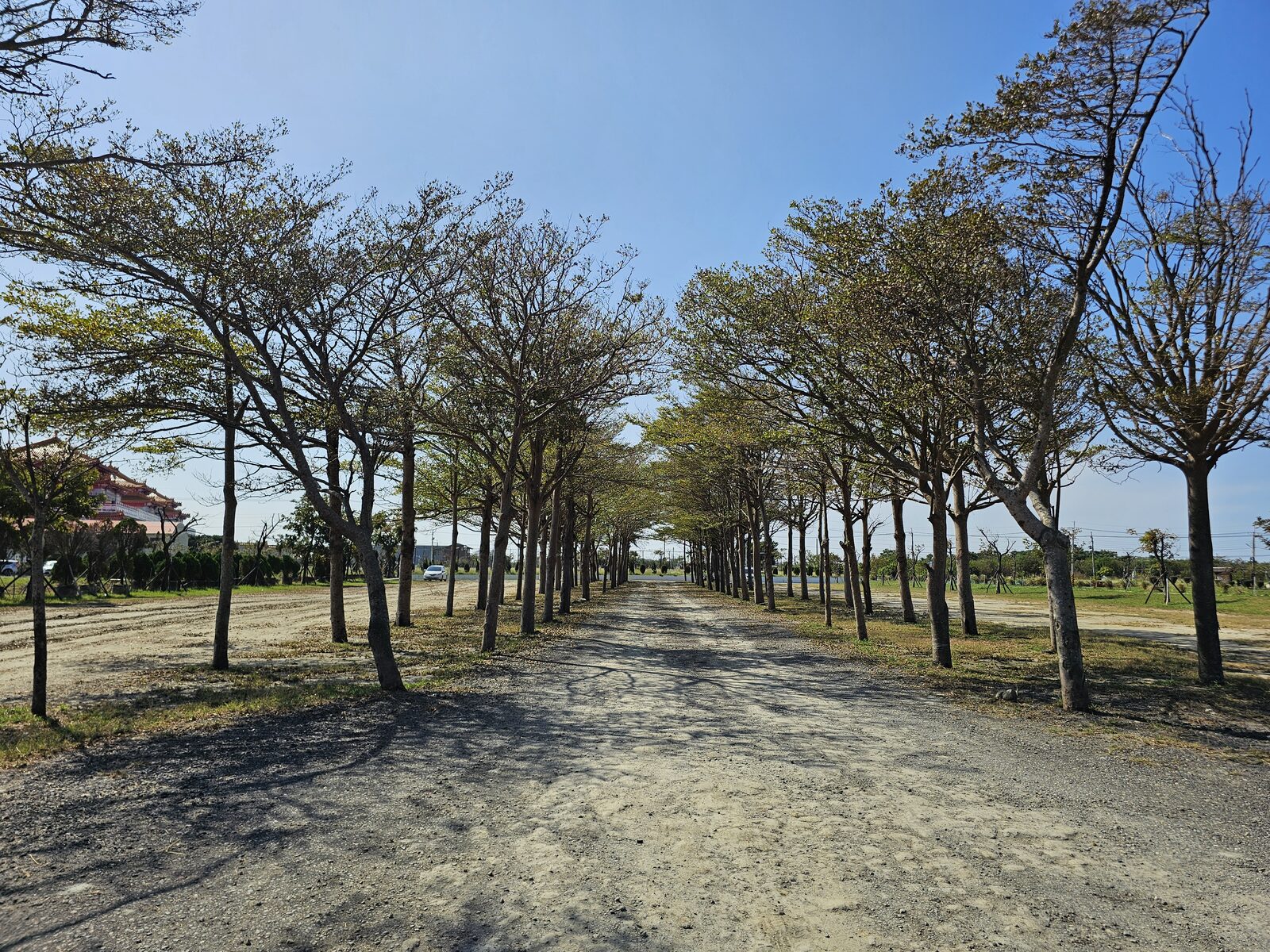
Local oral account「碑林園區尾段倉庫旁那棵大榕(S2)不屬這片林;碑林園區在廟東側,與廟後榕樹林有一段距離」 (The big banyan (S2) beside the warehouse at the far end of the Stele Forest Park does not belong to this grove; the Stele Forest Park is on the east side of the temple, some distance from the banyan grove behind it) R001SourceLocal oral account (the project author, firsthand observation; on-site photographs and oral account on 2026-10-26 and 27, numbered T1–T28, S1–S6, C1)Original URL—Retrieved2026-10-27Snapshot timestamp—Photographs taken and kept by the author. Except where identified by the author, tree species are preliminary identifications from the photographs.. Local oral account「廟區外圍另有一條小葉欖仁步道(S6),兩列整齊間植;在地人記得,它是小時候某天忽然出現的,由聖母廟所種」 (Around the outside of the temple grounds there is also a walkway of Madagascar almond trees (小葉欖仁) (S6), planted in two neat, evenly spaced rows. Locals remember that it appeared suddenly one day when they were children, planted by the Shengmu Temple) R001SourceLocal oral account (the project author, firsthand observation; on-site photographs and oral account on 2026-10-26 and 27, numbered T1–T28, S1–S6, C1)Original URL—Retrieved2026-10-27Snapshot timestamp—Photographs taken and kept by the author. Except where identified by the author, tree species are preliminary identifications from the photographs.. 「一邊是被道路切開的舊林,一邊是廟方新植的林道」 (On one side is an old grove cut through by a road; on the other, a tree-lined path newly planted by the temple) R001SourceLocal oral account (the project author, firsthand observation; on-site photographs and oral account on 2026-10-26 and 27, numbered T1–T28, S1–S6, C1)Original URL—Retrieved2026-10-27Snapshot timestamp—Photographs taken and kept by the author. Except where identified by the author, tree species are preliminary identifications from the photographs..
Trees that are gone
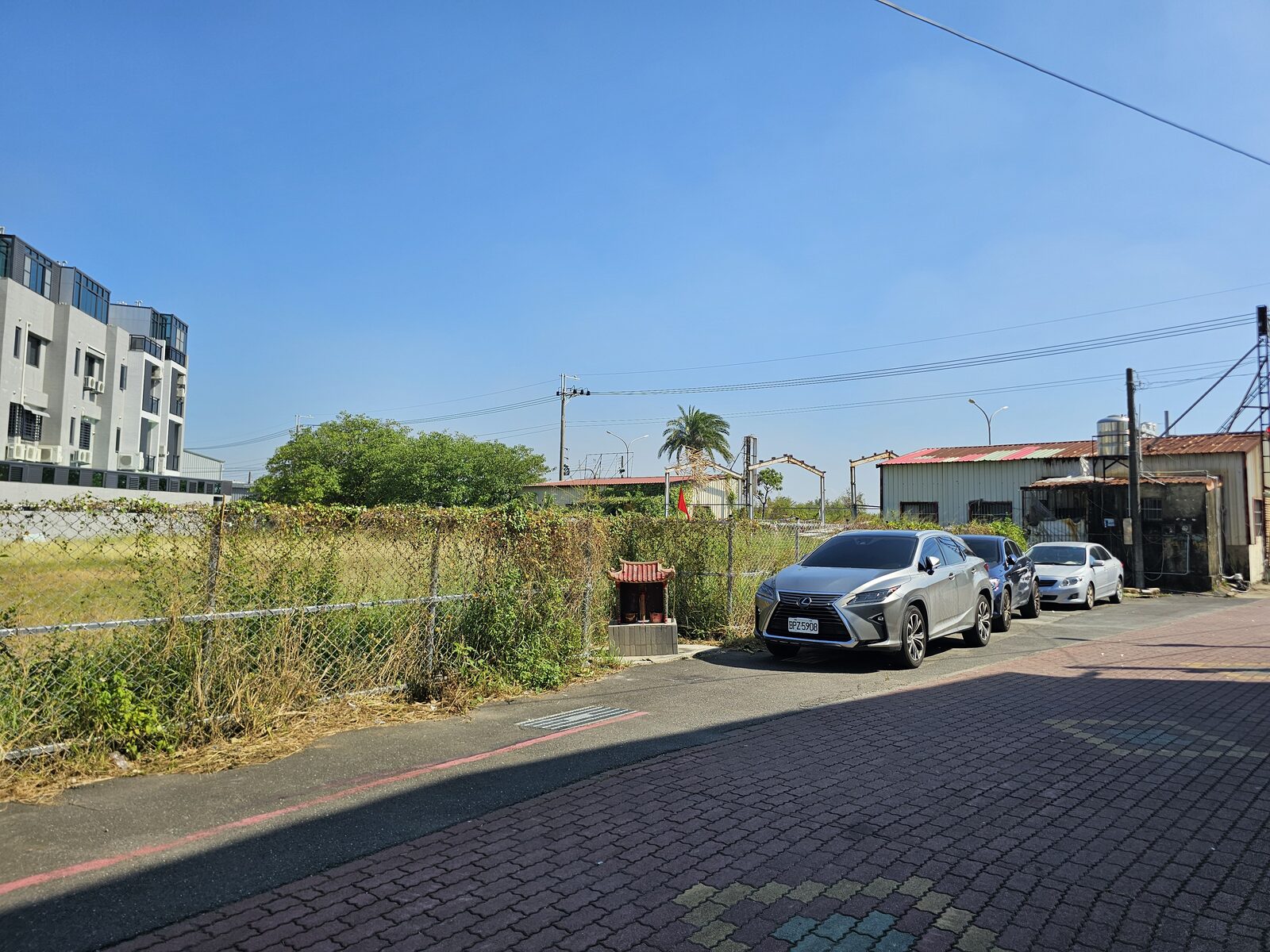
Local oral account「城北路口那兩棵麵包樹(T8)已經砍了,現址是一片雜草空地,圍籬外有一座小祠」 (The two breadfruit trees at the Chengbei Road intersection (T8) have been cut down; the site is now a weedy empty lot, with a small shrine outside the fence) R001SourceLocal oral account (the project author, firsthand observation; on-site photographs and oral account on 2026-10-26 and 27, numbered T1–T28, S1–S6, C1)Original URL—Retrieved2026-10-27Snapshot timestamp—Photographs taken and kept by the author. Except where identified by the author, tree species are preliminary identifications from the photographs.. 「從前常有老人在樹下乘涼,熟落的果實掉得滿地都是」 (Old people used to sit in the shade under the trees, and the ripe fruit fell and covered the ground) R001SourceLocal oral account (the project author, firsthand observation; on-site photographs and oral account on 2026-10-26 and 27, numbered T1–T28, S1–S6, C1)Original URL—Retrieved2026-10-27Snapshot timestamp—Photographs taken and kept by the author. Except where identified by the author, tree species are preliminary identifications from the photographs..
Local oral account「Google 街景 2009-12 還清楚拍到兩棵麵包樹,大葉寬冠,長在路口三角空地上,樹下一圈白磁磚矮凳」 (Google Street View in 2009-12 still clearly shows the two breadfruit trees, with large leaves and broad crowns, growing on a triangular empty lot at the intersection, with a ring of low white-tiled seats under them) R001SourceLocal oral account (the project author, firsthand observation; on-site photographs and oral account on 2026-10-26 and 27, numbered T1–T28, S1–S6, C1)Original URL—Retrieved2026-10-27Snapshot timestamp—Photographs taken and kept by the author. Except where identified by the author, tree species are preliminary identifications from the photographs.. UnverifiedIn the Street View frame from 2018-06 the crowns are still visible; in the frame from 2022-09 they are gone R001SourceLocal oral account (the project author, firsthand observation; on-site photographs and oral account on 2026-10-26 and 27, numbered T1–T28, S1–S6, C1)Original URL—Retrieved2026-10-27Snapshot timestamp—Photographs taken and kept by the author. Except where identified by the author, tree species are preliminary identifications from the photographs..
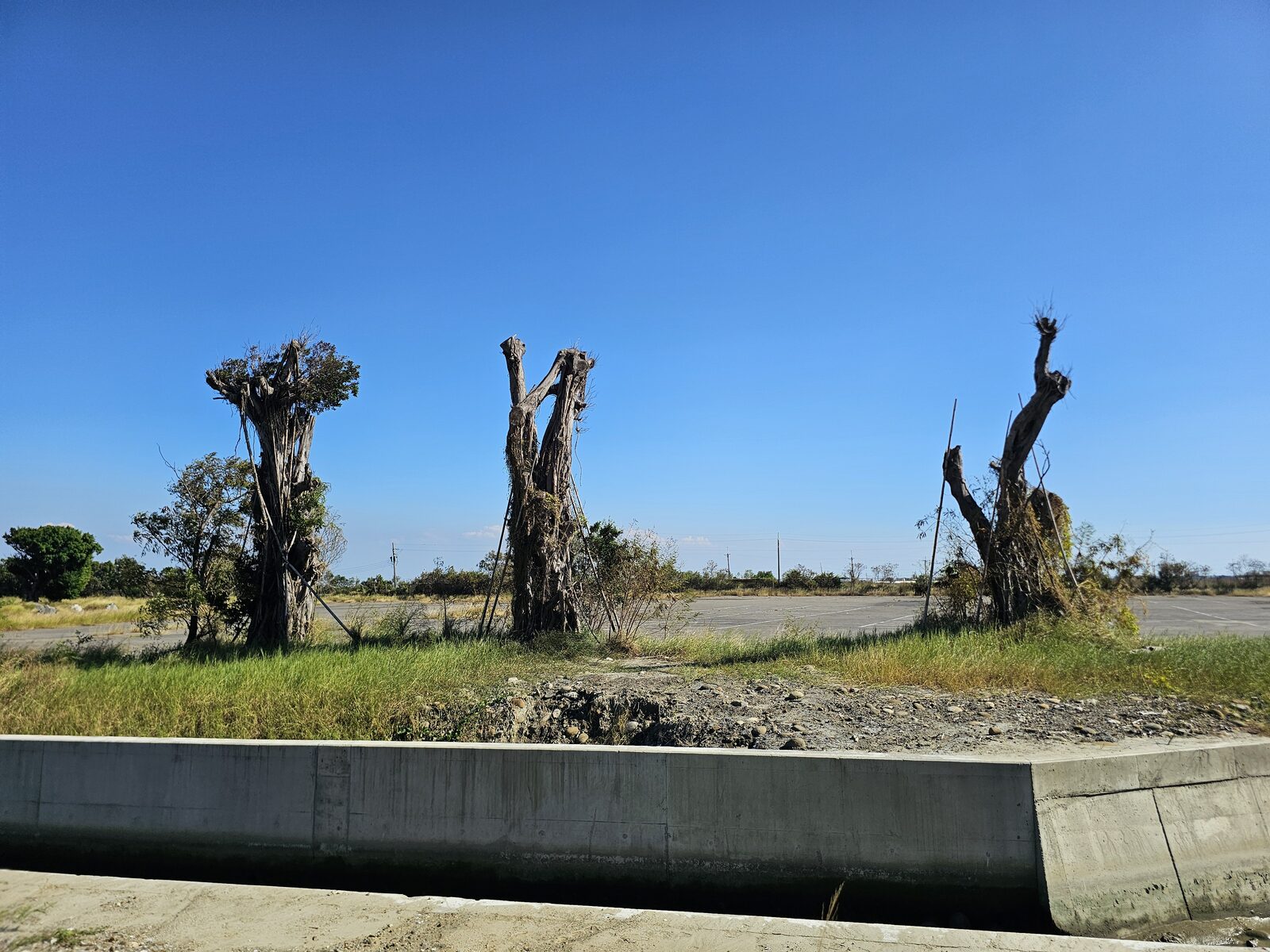
Local oral account「城西里一處公墓旁、大排對岸的三棵榕(T23–T25),現在只剩截頂後的殘幹,以竹竿與鋼管撐著,幾乎全禿;在地人記得,小時候的它們非常高大」 (Three banyans (T23–T25) beside a public cemetery in Chengxi Village (城西里), across the main drain, are now only topped stumps propped up with bamboo poles and steel pipes, almost entirely bare. Locals remember that in their childhood these trees were very tall and large) R001SourceLocal oral account (the project author, firsthand observation; on-site photographs and oral account on 2026-10-26 and 27, numbered T1–T28, S1–S6, C1)Original URL—Retrieved2026-10-27Snapshot timestamp—Photographs taken and kept by the author. Except where identified by the author, tree species are preliminary identifications from the photographs..
Trees by the water
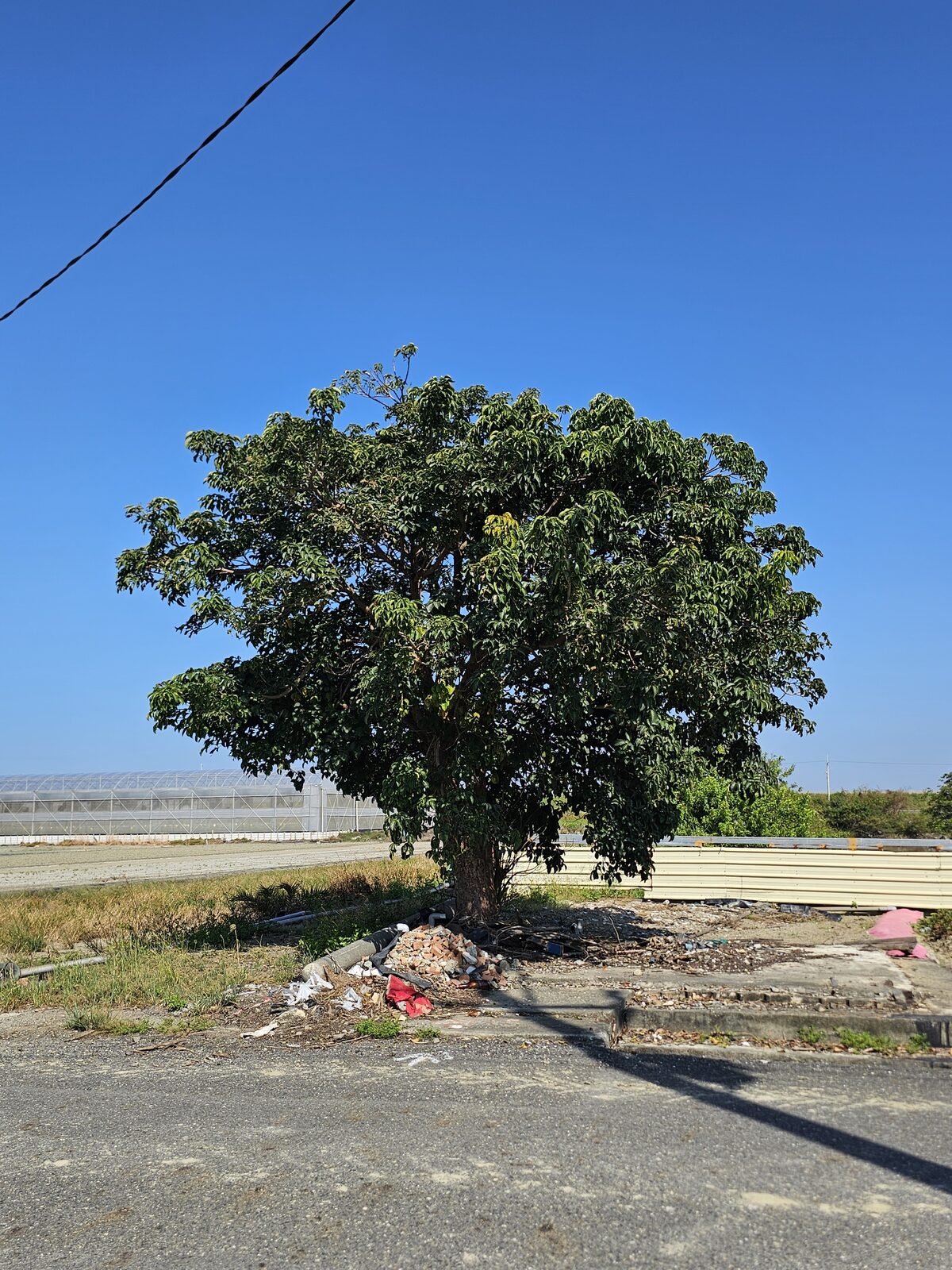
Local oral account「砂崙里城北路 871 巷與青砂街 572 巷 116 弄的路口有一棵茄苳(T27),單幹直立、樹冠圓整;它旁邊以前有一座水塔,現在已經拆了;北方約一百公尺有一座淡水蓄水池,池旁還有一棵老榕(T28)」 (At the intersection of Lane 871, Chengbei Road and Alley 116, Lane 572, Qingsha Street in Shalun Village stands a bishop wood tree (T27), with a single upright trunk and a neatly rounded crown. There used to be a water tower beside it, which has since been demolished; about one hundred meters to the north is a freshwater storage pond, with another old banyan (T28) beside it) R001SourceLocal oral account (the project author, firsthand observation; on-site photographs and oral account on 2026-10-26 and 27, numbered T1–T28, S1–S6, C1)Original URL—Retrieved2026-10-27Snapshot timestamp—Photographs taken and kept by the author. Except where identified by the author, tree species are preliminary identifications from the photographs.R006SourceLocal oral account (the project author relaying local storytelling; that the water tower once existed and has been demolished was seen firsthand)Original URL—Retrieved2026-10-27Snapshot timestamp—.
Secondhand accountAccording to local storytelling, long ago in the period of Japanese rule (日治), water was generally very dirty, and the water tower beside this old tree was one of the few places with clean, safe water. Later the water tower was demolished, and the pond nearby was the reservoir that stored fresh water R006SourceLocal oral account (the project author relaying local storytelling; that the water tower once existed and has been demolished was seen firsthand)Original URL—Retrieved2026-10-27Snapshot timestamp—.
Secondhand accountThe periodical of the National Museum of Taiwan History (國立臺灣歷史博物館) writes that the Taijiang settlements once drew their water from 「食水堀」 (shizuikut, communal drinking-water ponds). After electric pumps spread in the 1950s and 1960s, each settlement built concrete 「公共食水塔」 ("public drinking-water towers") in a public space, pumping water from the drinking-water pond or from wells into the tower and piping it to households. Annan District had 50–60 drinking-water ponds in the early years, 7 remained in 2006, and 3 in January 2024 R017Source故事 StoryStudio/國立臺灣歷史博物館 [National Museum of Taiwan History]《觀‧臺灣》[Guan Taiwan]〈土生土長的人工水源:集眾人之力打造的飲水池,台江地區的「食水堀」〉[A Homegrown Artificial Water Source: The Communally Built Drinking-Water Ponds (shizuikut) of the Taijiang Area] (after electric pumps spread in the 1950s and 1960s, Taijiang settlements built concrete 「公共食水塔」 ("public drinking-water towers") in public spaces; Annan District had 50–60 drinking-water ponds in the early years, 7 remained in 2006, and 3 in January 2024)Original URLhttps://storystudio.tw/article/watch-Taiwan-NMTH/hydraulic-engineering-in-taiwanRetrieved2026-10-27Snapshot timestamp—Academic journal (museum periodical); a general account of the Taijiang area, not specifically about this water tower in Shalun Village..
Beyond the register
MoreLess
Official recordTainan City's threshold for a notable tree is set out in Article 3 of the self-governance ordinance: a diameter at breast height of 1.2 meters or a girth of 3.8 meters or more, an age of 80 years or more, a canopy covering 300 square meters, or special or regionally representative significance; meeting any one of these four criteria is enough R004Source臺南市珍貴樹木保護自治條例 [Tainan City Notable Tree Protection Self-Governance Ordinance] (enacted and promulgated 101.10.29 (2012-10-29) by order 府法規字第 1010909240A 號), Article 3, registration thresholdsOriginal URLhttps://w3fs.tainan.gov.tw/Download.ashx?u=LzAwMS9VcGxvYWQvMTgvcmVsZmlsZS84ODY3LzEyODMzLzIzYWM2ZDk4LTkwYzQtNDM1Ni05NmY2LTA1ZWI2ODJkYmQ1Zi5wZGY%3d&n=6Ie65Y2X5biC54%2bN6LK05qi55pyo5L%2bd6K236Ieq5rK75qKd5L6LLnBkZg%3d%3dRetrieved2026-10-26Snapshot timestamp—.
Official recordThe government's own commissioned reports include two trees that meet the threshold but are not on the register. One is the northern tree of the Luermen river-guarding old banyans: in 1904 Luermen-Ma (鹿耳門媽祖) directed that two banyans be planted on the east side of Mazugong Village (媽祖宮庄) to control the waters; the southern tree died around 1980, and the northern tree is still growing R005Source《古台江遺址調查暨文史成效評估及展望成果報告書》[Results Report on the Survey of Ancient Taijiang Sites and the Assessment and Outlook of Cultural-History Outcomes], commissioned by 臺江國家公園管理處 [Taijiang National Park Headquarters], 國立臺南大學 [National University of Tainan], Tai Wen-feng (戴文鋒), 2018-12 (Table 4-1, 「台江地區的洪患信仰」 [Flood-related beliefs in the Taijiang area], printed p. 88)Original URL—Retrieved2026-10-20Snapshot timestamp—In 1904 Luermen-Ma directed that two flood-guarding banyans be planted on the east side of Mazugong Village; the southern tree died around 1980, and the northern tree is still growing., and the report even gives its coordinates R009Source《台江地區無形文化資產暨文獻資料蒐集計畫成果報告書》[Final Report of the Project to Collect Intangible Cultural Heritage and Documentary Materials of the Taijiang Area], commissioned by 臺江國家公園管理處 [Taijiang National Park Headquarters] (printed pp. 152–153, Figure 3-77: coordinates of the Luermen river-guarding old banyan 23.040483, 120.129658)Original URL—Retrieved2026-10-26Snapshot timestamp—. Official recordThis tree has three names. The Taijiang National Park Headquarters (臺江國家公園管理處) report and the National Park Service's (國家公園署) PDF Protecting Village and Home (《保庄護宅》) call it the 「鎮溪古榕」 ("river-guarding old banyan") R005Source《古台江遺址調查暨文史成效評估及展望成果報告書》[Results Report on the Survey of Ancient Taijiang Sites and the Assessment and Outlook of Cultural-History Outcomes], commissioned by 臺江國家公園管理處 [Taijiang National Park Headquarters], 國立臺南大學 [National University of Tainan], Tai Wen-feng (戴文鋒), 2018-12 (Table 4-1, 「台江地區的洪患信仰」 [Flood-related beliefs in the Taijiang area], printed p. 88)Original URL—Retrieved2026-10-20Snapshot timestamp—In 1904 Luermen-Ma directed that two flood-guarding banyans be planted on the east side of Mazugong Village; the southern tree died around 1980, and the northern tree is still growing.R016Source內政部國家公園署 [National Park Service, Ministry of the Interior]《保庄護宅:台江國家公園中的厭勝物文化》[Protecting Village and Home: The Culture of Apotropaic Objects in Taijiang National Park] PDF (calls it 「媽祖宮庄鎮溪古榕」 ("the river-guarding old banyan of Mazugong Village") and likewise records that in 1904 Mazu directed that 2 banyans be planted on the east side of the village to guard against floods)Original URLhttps://www.taiwan.nps.gov.tw/upload/cmDownloadFile/2025-04-09/e653d8cc-c64a-467c-8ab9-e919b5fd007c/%E4%BF%9D%E5%BA%84%E8%AD%B7%E5%AE%85%EF%BC%9A%E5%8F%B0%E6%B1%9F%E5%9C%8B%E5%AE%B6%E5%85%AC%E5%9C%92%E4%B8%AD%E7%9A%84%E5%8E%AD%E5%8B%9D%E7%89%A9%E6%96%87%E5%8C%96.pdfRetrieved2026-10-27Snapshot timestamp—Official source.. Excerpts from the Luermen Gazetteer (《鹿耳門志節錄》) on the official website of the Luermen Tianhou Temple (鹿耳門天后宮) calls it the 「祭溪神榕」 ("river-offering sacred banyan"). In the temple's version, after the Zengwen River (曾文溪) shifted course and flooded in 1904, Mazu instructed by divine sign that 2 banyans be planted on the east side of the village as an offering to the river to control its waters, side by side north and south; the southern tree died of pests and disease around 1980. In 2002 the Tianhou Temple erected an interpretive sign beside the tree titled 「百年神榕」 ("Century-Old Sacred Banyan") R015Source鹿耳門天后宮 [Luermen Tianhou Temple] official website,《鹿耳門志節錄》[Excerpts from the Luermen Gazetteer],〈鹿耳門的祭溪神榕〉[The River-Offering Sacred Banyans of Luermen] and〈鹿耳門的傳說故事:四、開基媽勅令栽植神榕祭溪〉[Legends of Luermen: 4. The Kaiji Mazu Orders Sacred Banyans Planted as an Offering to the River] (after the Zengwen River shifted course and flooded in 1904, Mazu instructed by divine sign that 2 banyans be planted on the east side of the village as an offering to the river to control its waters, side by side north and south; the southern tree died around 1980; in 2002 an interpretive sign titled 「百年神榕」 ("Century-Old Sacred Banyan") was erected)Original URLhttps://www.luerhmen.org.tw/about_us.php?kind=1&class_id=56&item_id=155Retrieved2026-10-27Snapshot timestamp—Temple's official website (a firsthand account by the temple). The sign reads 「民國(前)七年(1904年)左右」 ("around (pre-)ROC year 7 (1904)"); 1904 is actually eight years before the ROC; the original is quoted as written.. The sign reads 「民國(前)七年(1904年)左右」 ("around (pre-)ROC year 7 (1904)"); 1904 is actually eight years before the founding of the ROC R015Source鹿耳門天后宮 [Luermen Tianhou Temple] official website,《鹿耳門志節錄》[Excerpts from the Luermen Gazetteer],〈鹿耳門的祭溪神榕〉[The River-Offering Sacred Banyans of Luermen] and〈鹿耳門的傳說故事:四、開基媽勅令栽植神榕祭溪〉[Legends of Luermen: 4. The Kaiji Mazu Orders Sacred Banyans Planted as an Offering to the River] (after the Zengwen River shifted course and flooded in 1904, Mazu instructed by divine sign that 2 banyans be planted on the east side of the village as an offering to the river to control its waters, side by side north and south; the southern tree died around 1980; in 2002 an interpretive sign titled 「百年神榕」 ("Century-Old Sacred Banyan") was erected)Original URLhttps://www.luerhmen.org.tw/about_us.php?kind=1&class_id=56&item_id=155Retrieved2026-10-27Snapshot timestamp—Temple's official website (a firsthand account by the temple). The sign reads 「民國(前)七年(1904年)左右」 ("around (pre-)ROC year 7 (1904)"); 1904 is actually eight years before the ROC; the original is quoted as written.. UnverifiedCounting from 1904, the tree is about 122 years old as of 2026, yet it is neither on the city's register nor in the national old-tree reporting database R002Source臺南市政府農業局 [Agriculture Bureau, Tainan City Government] 「愛樹一生一世」[Love Trees for a Lifetime] notable-tree website API (queryTreeDetailAll; 311 registered trees citywide, 6 in Annan District: 4 notable trees and 2 protected trees)Original URLhttps://oldtree.tainan.gov.tw/Retrieved2026-10-26Snapshot timestamp—Official response; the village of each tree is inferred from the village point data of the National Land Surveying and Mapping Center, Ministry of the Interior.R009Source《台江地區無形文化資產暨文獻資料蒐集計畫成果報告書》[Final Report of the Project to Collect Intangible Cultural Heritage and Documentary Materials of the Taijiang Area], commissioned by 臺江國家公園管理處 [Taijiang National Park Headquarters] (printed pp. 152–153, Figure 3-77: coordinates of the Luermen river-guarding old banyan 23.040483, 120.129658)Original URL—Retrieved2026-10-26Snapshot timestamp—.
Official recordThe other is the sacred banyan of Huweiliao (虎尾寮): the report says it 「栽種日期為民國 27 年(1938 年)…是當地人公認的守護神之一」 ("was planted in ROC year 27 (1938)… and is recognized by locals as one of their guardian spirits") R008Source《台江文化保存及創新應用(1/3)─台江地區曾文溪以南古今地名源流暨古地圖調查》[Taijiang Cultural Preservation and Innovative Application, 2017 (ROC year 106) (1/3): Survey of the Origins of Old and Modern Place Names and Old Maps of the Taijiang Area South of the Zengwen River], commissioned by 臺江國家公園管理處 [Taijiang National Park Headquarters] (printed p. 123: the Huweiliao sacred banyan 「栽種日期為民國 27 年(1938 年)…是當地人公認的守護神之一」 ("was planted in ROC year 27 (1938)… and is recognized by locals as one of their guardian spirits"))Original URL—Retrieved2026-10-26Snapshot timestamp—. UnverifiedThat makes it about 88 years old as of 2026, and it too is unregistered R008Source《台江文化保存及創新應用(1/3)─台江地區曾文溪以南古今地名源流暨古地圖調查》[Taijiang Cultural Preservation and Innovative Application, 2017 (ROC year 106) (1/3): Survey of the Origins of Old and Modern Place Names and Old Maps of the Taijiang Area South of the Zengwen River], commissioned by 臺江國家公園管理處 [Taijiang National Park Headquarters] (printed p. 123: the Huweiliao sacred banyan 「栽種日期為民國 27 年(1938 年)…是當地人公認的守護神之一」 ("was planted in ROC year 27 (1938)… and is recognized by locals as one of their guardian spirits"))Original URL—Retrieved2026-10-26Snapshot timestamp—.
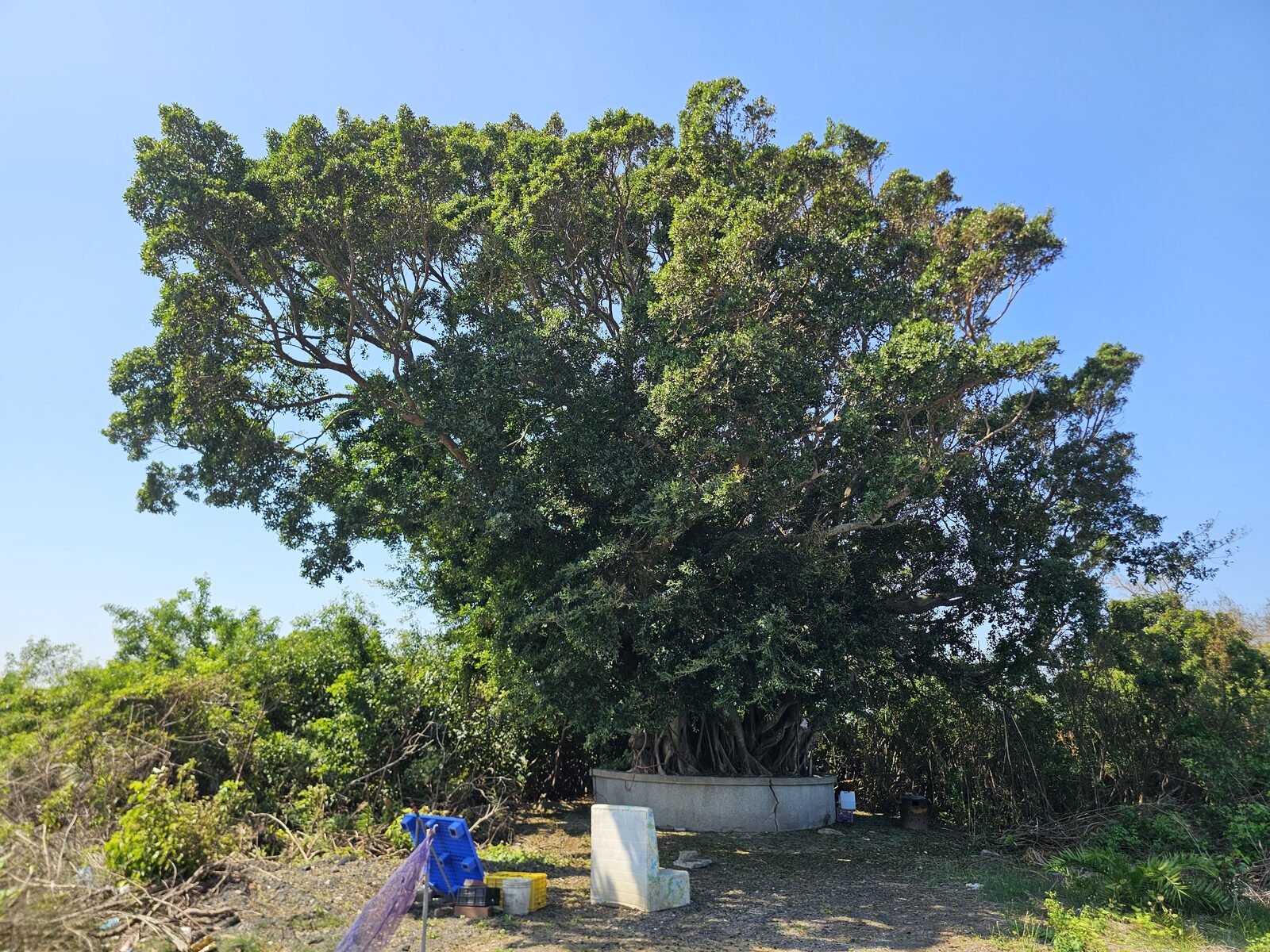
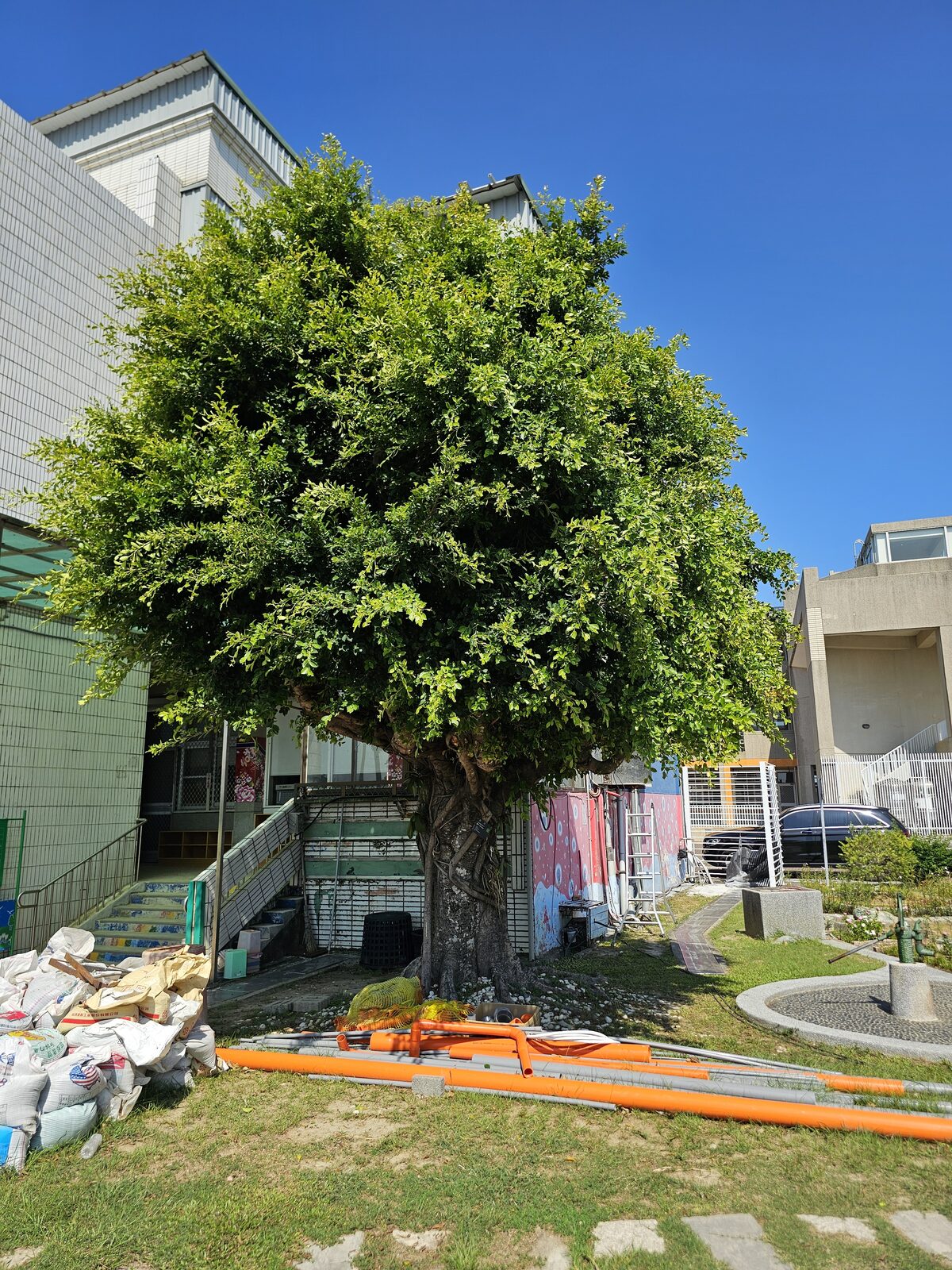
Local oral account「名冊之外的樹,有不少看起來不比名冊上的小:頂什份塭魚塭區那棵獨立大榕(T11),多幹叢生、氣根垂地成林,樹冠寬過兩層樓;青草國小附設幼兒園門前那棵大榕(C1),承載了幼稚園小朋友很多回憶」 (Many trees beyond the register look no smaller than those on it: the lone big banyan in the fish-farm area of Dingshifenwen (頂什份塭) (T11), with many clustered trunks and aerial roots reaching the ground to form a small forest, its crown wider than a two-story building; and the big banyan (C1) in front of the kindergarten attached to Cingcao Elementary School (青草國小), which holds many memories for the kindergarten children) R001SourceLocal oral account (the project author, firsthand observation; on-site photographs and oral account on 2026-10-26 and 27, numbered T1–T28, S1–S6, C1)Original URL—Retrieved2026-10-27Snapshot timestamp—Photographs taken and kept by the author. Except where identified by the author, tree species are preliminary identifications from the photographs..
Summary table
MoreLess
Except for trees marked "identified by the author" and those on the official register, species are preliminary identifications from the photographs; "unregistered" means not found when checked on 2026-10-26 against the 6 Annan District trees on the city register R001SourceLocal oral account (the project author, firsthand observation; on-site photographs and oral account on 2026-10-26 and 27, numbered T1–T28, S1–S6, C1)Original URL—Retrieved2026-10-27Snapshot timestamp—Photographs taken and kept by the author. Except where identified by the author, tree species are preliminary identifications from the photographs.R002Source臺南市政府農業局 [Agriculture Bureau, Tainan City Government] 「愛樹一生一世」[Love Trees for a Lifetime] notable-tree website API (queryTreeDetailAll; 311 registered trees citywide, 6 in Annan District: 4 notable trees and 2 protected trees)Original URLhttps://oldtree.tainan.gov.tw/Retrieved2026-10-26Snapshot timestamp—Official response; the village of each tree is inferred from the village point data of the National Land Surveying and Mapping Center, Ministry of the Interior..
| No. | Location | Village | Species | Registration status | Remarks |
|---|---|---|---|---|---|
| T1 | Shenrong Green, Chengxi Street Section 2 | Chengnan Village | Banyan (official) | Registered, No. 200 | Grows on an earthen mound; the bus stop is named after this tree |
| T2 | Inside Lane 61, Chengxi Street Section 1 | Chengnan Village | Banyan | Unregistered | Round concrete planter with an iron railing |
| T3 | Chengxi Street Section 1, in front of a snack shop | Chengnan Village | Banyan | Unregistered | The shop does business right under the tree |
| T4 | Intersection of Lane 61, Chengxi Street Section 1 × Lane 519, Anzhong Road Section 6 | Chengnan Village | Banyan | Unregistered | Small incense burner and spirit-money bin inside a red-brick planter |
| T5 | Between the Keliao Zhong'an Temple (蚵寮中安宮) and the Chengbei Community Activity Center | Border of Chengzhong Village and Chengbei Village | Banyan | Unregistered | Small incense burner inside a white-tiled planter |
| T6 | Intersection of Lane 500 × Lane 554, Anzhong Road Section 6 | Chengbei Village (to be confirmed) | Banyan | Unregistered | Twin trunks in a V; among those that feel oldest |
| T7 | Empty lot inside Lane 500, Anzhong Road Section 6 | Chengbei Village (to be confirmed) | Banyan | Open question | Once heavily pruned |
| T8 | Triangular empty lot at the Chengbei Road intersection | Chengbei Village | Breadfruit ×2 (identified by the author) | Cut down; never registered | Still present in Street View 2009-12 |
| T9 | Roadside, Shalun Village | Shalun Village | Not a banyan (identified by the author); species undetermined | Unregistered | Main trunk leans in an S shape |
| T10 | Intersection near Cingcao Elementary School, behind the Fuxing Temple (復興宮) | Qingcao Village | Banyan | Unregistered | An oxcart used to be kept under the tree; removed in the last year or two |
| T11 | Dingshifenwen fish-farm area | Shalun Village | Banyan | Unregistered | The largest recorded so far |
| T12 | Dingshifenwen, between two sheet-metal factory buildings | Shalun Village | Banyan | Unregistered | Very close to T11 but a different tree |
| T13–T15 | In front of the forecourt of the Dingshifenwen Qing'an Temple (清安宮) | Shalun Village | Banyan ×3 | Unregistered | Old banyans in the forecourt of a jiaotou temple (角頭廟, neighborhood temple); one on the west, two on the east |
| T16 | Behind the Dingshifenwen Qing'an Temple (清安宮) | Shalun Village | Banyan | Unregistered | In the same frame as the temple roof, one lane away |
| T17 | In a field at the end of Lane 866, Chengbei Road | Chengbei Village (to be confirmed) | Banyan | Unregistered | Small red-brick spirit-money furnace on the planter |
| T18–T19 | Beside the Xipuzi basketball court | Chengbei Village | Wax apple ×2 (identified by the author, who is not sure either) | Unregistered | Rest area with stone tables and benches under the trees |
| T20 | Beside the fence of the Xipuzi basketball court | Chengbei Village | Native mango (identified by the author) | Unregistered | Same spot as T18–T19 |
| T21 | Courtyard of a private home, Shalun Village | Shalun Village | Melaleuca (preliminary; species undetermined) | Unregistered | Inside a private home; location not disclosed |
| T22 | Lane 291, Chengxi Street Section 2, beside the Tucheng main drain | Chengnan Village | Banyan (official) | Registered, No. 201 | Thickest and oldest in Annan District; has an Agriculture Bureau interpretive sign |
| T23–T25 | Beside the public cemetery, across the main drain | Chengxi Village (to be confirmed) | Banyan ×3 | Unregistered | Only topped stumps remain |
| T26 | Beside the scrapyard on Chengbei Road | Shalun Village | Banyan (identified by the author) | Unregistered | Extremely wide crown; whether one tree or several fused is to be confirmed |
| T27 | Intersection of Lane 871, Chengbei Road × Alley 116, Lane 572, Qingsha Street | Shalun Village | Bishop wood (identified by the author) | Unregistered | Beside a demolished water tower, said in local storytelling to have been a source of clean water |
| T28 | Field path beside the freshwater storage pond | Shalun Village | Banyan (identified by the author) | Unregistered | Part of the same waterside landscape as T27 |
| S1 | Beside the 「聖母廟(城安路)」 ("Shengmu Temple (Cheng'an Road)") bus stop on the eastern part of Cheng'an Road | Chengdong Village | Banyan | Open question | Old people sit under the tree |
| S2 | Far end of the Shengmu Temple Stele Forest Park, beside the warehouse | Chengdong Village | Banyan | Unregistered | Not part of the grove behind the temple; half the crown is withered and yellow |
| S3a | Directly behind the Shengmu Temple, south of Taijiang Boulevard | Chengdong Village/Shalun Village (to be confirmed) | Banyan (author: all banyans) | Unregistered | About 15–20 trees (estimated from photos); beside the museum construction fence |
| S3b | Farmland north of Taijiang Boulevard | Chengdong Village/Shalun Village (to be confirmed) | Mostly banyan, a few bishop wood and sea hibiscus (identified by the author) | Unregistered | About 10 living banyans and about 6–8 dead trees (estimated from photos); now the Lantern Festival fireworks launch site |
| S4 | Two rows in front of the Shengmu Temple forecourt | Chengdong Village | Banyan (in rows) | Open question | Local oral account |
| S5 | Beside the "Shengmu Park" (聖母公園) archway at the entrance of the waterside park on Luermen Boulevard | Chengdong Village (to be confirmed) | Banyan | Unregistered | Unchanged since childhood |
| S6 | Walkway around the outside of the Shengmu Temple | Chengdong Village (to be confirmed) | Madagascar almond (identified by the author) | Not applicable | Tree-lined path newly planted by the temple; not old trees |
| C1 | In front of the classroom of the kindergarten attached to Cingcao Elementary School | Qingcao Village | Banyan | Unregistered | Memories of the kindergarten children |
Differing accounts
- Number of registered trees citywide: three figures, 311, 352, and 338 R002Source臺南市政府農業局 [Agriculture Bureau, Tainan City Government] 「愛樹一生一世」[Love Trees for a Lifetime] notable-tree website API (queryTreeDetailAll; 311 registered trees citywide, 6 in Annan District: 4 notable trees and 2 protected trees)Original URLhttps://oldtree.tainan.gov.tw/Retrieved2026-10-26Snapshot timestamp—Official response; the village of each tree is inferred from the village point data of the National Land Surveying and Mapping Center, Ministry of the Interior..
- Address of No. 200 (same coordinates) R002Source臺南市政府農業局 [Agriculture Bureau, Tainan City Government] 「愛樹一生一世」[Love Trees for a Lifetime] notable-tree website API (queryTreeDetailAll; 311 registered trees citywide, 6 in Annan District: 4 notable trees and 2 protected trees)Original URLhttps://oldtree.tainan.gov.tw/Retrieved2026-10-26Snapshot timestamp—Official response; the village of each tree is inferred from the village point data of the National Land Surveying and Mapping Center, Ministry of the Interior.:
- The city government API gives 「城西街二段 185 號旁」 ("beside No. 185, Chengxi Street Section 2").
- The older open data gives 「城西街一段 160 巷對面」 ("opposite Lane 160, Chengxi Street Section 1").
- Names of the two Luermen banyans of 1904 R005Source《古台江遺址調查暨文史成效評估及展望成果報告書》[Results Report on the Survey of Ancient Taijiang Sites and the Assessment and Outlook of Cultural-History Outcomes], commissioned by 臺江國家公園管理處 [Taijiang National Park Headquarters], 國立臺南大學 [National University of Tainan], Tai Wen-feng (戴文鋒), 2018-12 (Table 4-1, 「台江地區的洪患信仰」 [Flood-related beliefs in the Taijiang area], printed p. 88)Original URL—Retrieved2026-10-20Snapshot timestamp—In 1904 Luermen-Ma directed that two flood-guarding banyans be planted on the east side of Mazugong Village; the southern tree died around 1980, and the northern tree is still growing.R015Source鹿耳門天后宮 [Luermen Tianhou Temple] official website,《鹿耳門志節錄》[Excerpts from the Luermen Gazetteer],〈鹿耳門的祭溪神榕〉[The River-Offering Sacred Banyans of Luermen] and〈鹿耳門的傳說故事:四、開基媽勅令栽植神榕祭溪〉[Legends of Luermen: 4. The Kaiji Mazu Orders Sacred Banyans Planted as an Offering to the River] (after the Zengwen River shifted course and flooded in 1904, Mazu instructed by divine sign that 2 banyans be planted on the east side of the village as an offering to the river to control its waters, side by side north and south; the southern tree died around 1980; in 2002 an interpretive sign titled 「百年神榕」 ("Century-Old Sacred Banyan") was erected)Original URLhttps://www.luerhmen.org.tw/about_us.php?kind=1&class_id=56&item_id=155Retrieved2026-10-27Snapshot timestamp—Temple's official website (a firsthand account by the temple). The sign reads 「民國(前)七年(1904年)左右」 ("around (pre-)ROC year 7 (1904)"); 1904 is actually eight years before the ROC; the original is quoted as written.R016Source內政部國家公園署 [National Park Service, Ministry of the Interior]《保庄護宅:台江國家公園中的厭勝物文化》[Protecting Village and Home: The Culture of Apotropaic Objects in Taijiang National Park] PDF (calls it 「媽祖宮庄鎮溪古榕」 ("the river-guarding old banyan of Mazugong Village") and likewise records that in 1904 Mazu directed that 2 banyans be planted on the east side of the village to guard against floods)Original URLhttps://www.taiwan.nps.gov.tw/upload/cmDownloadFile/2025-04-09/e653d8cc-c64a-467c-8ab9-e919b5fd007c/%E4%BF%9D%E5%BA%84%E8%AD%B7%E5%AE%85%EF%BC%9A%E5%8F%B0%E6%B1%9F%E5%9C%8B%E5%AE%B6%E5%85%AC%E5%9C%92%E4%B8%AD%E7%9A%84%E5%8E%AD%E5%8B%9D%E7%89%A9%E6%96%87%E5%8C%96.pdfRetrieved2026-10-27Snapshot timestamp—Official source.:
- River-guarding old banyan (鎮溪古榕) (Taijiang National Park Headquarters report; National Park Service).
- River-offering sacred banyan (祭溪神榕) (Tianhou Temple official website).
- Century-old sacred banyan (百年神榕) (2002 interpretive sign).
- Name of the Luermen Mazu Museum: the city government and most media call it a 「文物館」 ("museum," literally "hall of cultural relics"); a Tainan National University of the Arts notice calls it a 「文化館」 ("cultural center") R014Source臺南市政府全球資訊網 [Tainan City Government website] press release〈黃偉哲出席鹿耳門媽文物館動土大典 見證媽祖信仰傳承新里程碑〉[Huang Wei-che Attends Groundbreaking of the Luermen Mazu Museum, Witnessing a New Milestone in Passing on Mazu Belief] (114-03-09, i.e. 2025-03-09; located directly behind the Jade Emperor Hall, one floor below ground and five above, total floor area 3,883 ping); 自由時報 [Liberty Times]〈正統鹿耳門聖母廟斥資逾10億元打造鹿耳門媽文物館 今日舉行興建動土大典〉[Orthodox Luermen Shengmu Temple Spends Over NT$1 Billion on Luermen Mazu Museum; Groundbreaking Held Today] (2025-03-09; scheduled for completion and opening before 2029)Original URLhttps://www.tainan.gov.tw/News_Content.aspx?n=13370&s=8727888Retrieved2026-10-27Snapshot timestamp—Official and media sources. See also the Liberty Times: https://news.ltn.com.tw/news/Tainan/breakingnews/4974197 . A Tainan National University of the Arts notice calls it 「鹿耳門媽文化館」 (Luermen Mazu Cultural Center); both names are presented. It is a different building from the existing exhibition room, the 「聖母廟文物館」 (Shengmu Temple Museum)..
- UnverifiedDate of the water tower beside T27: local storytelling places it in the period of Japanese rule R006SourceLocal oral account (the project author relaying local storytelling; that the water tower once existed and has been demolished was seen firsthand)Original URL—Retrieved2026-10-27Snapshot timestamp—; the "public drinking-water towers" of Taijiang were mostly built in the 1950s and 1960s (general account) R017Source故事 StoryStudio/國立臺灣歷史博物館 [National Museum of Taiwan History]《觀‧臺灣》[Guan Taiwan]〈土生土長的人工水源:集眾人之力打造的飲水池,台江地區的「食水堀」〉[A Homegrown Artificial Water Source: The Communally Built Drinking-Water Ponds (shizuikut) of the Taijiang Area] (after electric pumps spread in the 1950s and 1960s, Taijiang settlements built concrete 「公共食水塔」 ("public drinking-water towers") in public spaces; Annan District had 50–60 drinking-water ponds in the early years, 7 remained in 2006, and 3 in January 2024)Original URLhttps://storystudio.tw/article/watch-Taiwan-NMTH/hydraulic-engineering-in-taiwanRetrieved2026-10-27Snapshot timestamp—Academic journal (museum periodical); a general account of the Taijiang area, not specifically about this water tower in Shalun Village..
The content of this hall consists of local oral accounts; entries with zero official records are marked as such; secondhand accounts and firsthand observations are marked separately.
Behind this door is the internal site, with profiles of people and local comments. The internal site is deployed separately.