Luermen Tianhou Temple (鹿耳門天后宮) is a Mazu temple in Mazugong Village, Annan District, Tainan City, dedicated to Tianshang Shengmu (Mazu); its registered name is 「台灣省台南市鹿耳門天后宮」 [R007][R027]. The present temple broke ground in 1977 and its deities were enthroned in 1979; it replaced a temple rebuilt with funds raised by village gentry in 1946 and completed in 1947, and accounts from the Tianhou Temple side hold that it continues the Qing-period Tianhou Temple of Luermen [R022][R038].
Relationship map
Principal deity11
Takes part in festival11
Participating temples and troupes44
Branch temples55
Events here55
Luermen Tianhou Temple (鹿耳門天后宮) is a Mazu temple in Mazugong Village, Annan District, Tainan City, dedicated to Tianshang Shengmu (Mazu); its registered name is 「台灣省台南市鹿耳門天后宮」 R007Source內政部全國宗教資訊網寺廟登記 [Temple registration in the National Religion Information Network, Ministry of the Interior](2026-10 查 [consulted October 2026])與中研院 CRGIS 文化資源地理資訊系統 [and the Academia Sinica CRGIS Cultural Resources Geographic Information System](2011 田調,經 Wayback 取回 [2011 fieldwork, retrieved via the Wayback Machine])Original URL—Retrieved2026-10-28Snapshot timestamp—Registered name 「台灣省台南市鹿耳門天后宮」 ("Luermen Tianhou Temple, Tainan City, Taiwan Province"); principal deity Tianshang Shengmu; formally registered; year of founding 1661; person in charge Lin Jui-nan (林瑞男).R027Source內政部全國宗教資訊網 [Ministry of the Interior, National Religion Information Network]〈宗教團體查詢〉[Religious Organization Search] temple registration: 台灣省台南市鹿耳門天后宮 (data updated 2023/01/06)Original URLhttps://religion.moi.gov.tw/Religion/FoundationTemple?ci=1Retrieved2026-11-06Snapshot timestamp—Official registration data; telephone numbers not recorded.. The present temple broke ground in 1977 and its deities were enthroned in 1979; it replaced a temple rebuilt with funds raised by village gentry in 1946 and completed in 1947, and accounts from the Tianhou Temple side hold that it continues the Qing-period Tianhou Temple of Luermen R022Source《回首鹿耳門:紀念鄭成功復台333週年》[Looking Back at Luermen: Commemorating the 333rd Anniversary of Koxinga's Recovery of Taiwan] (Lin Wen-chang (林文漲), Cultural and Educational Foundation of the Tienhou Temple at Luermen (鹿耳門天后宮文教公益基金會), Zewei Publishing (澤偉出版社), 1996, 3rd ed.), pp. 83–87, 131–136Original URL—Retrieved2026-11-09Snapshot timestamp—SourceFrom 《Looking Back at Luermen: Commemorating the 333rd Anniversary of Koxinga's Recovery of Taiwan (回首鹿耳門:紀念鄭成功復台333週年)》p. 83–87、131–138Photographed from the physical book; the whole book was carefully transcribed by Claude from the photographs on 2026-11-09, with personal names following the characters in the photographs; written from the Tianhou Temple's side.R038SourceHuang Wen-po (黃文博), 《鹿耳門天后宮送迎神儀典》 [Deity Send-off and Welcoming Rites of the Luermen Tianhou Temple], pp. 14–19, 42–61, 157–167Original URL—Retrieved2026-11-09Snapshot timestamp—SourceFrom 《Deity Send-off and Welcoming Rites of the Luermen Tianhou Temple (鹿耳門天后宮送迎神儀典)》p. 14–19、42–61、157–167Photographed from the physical book and carefully transcribed by Claude photo by photo; personal names follow the characters as they appear in the photographs.. The Seal-Closing Ceremony and the Welcoming the God of Joy Ceremony, held by the temple since 1993, were registered in 2013 as a Tainan City Municipal Folk Custom under the name "Sending-off and Welcoming of the Gods Ceremony of the Luermen Tianhou Temple" R038SourceHuang Wen-po (黃文博), 《鹿耳門天后宮送迎神儀典》 [Deity Send-off and Welcoming Rites of the Luermen Tianhou Temple], pp. 14–19, 42–61, 157–167Original URL—Retrieved2026-11-09Snapshot timestamp—SourceFrom 《Deity Send-off and Welcoming Rites of the Luermen Tianhou Temple (鹿耳門天后宮送迎神儀典)》p. 14–19、42–61、157–167Photographed from the physical book and carefully transcribed by Claude photo by photo; personal names follow the characters as they appear in the photographs.. The temple and the Orthodox Luermen Shengmu Temple in Tuchengzi hold competing claims to the heritage of the Qing-period Mazu temple at Luermen.
History
Main article: History of the Luermen Tianhou Temple
According to accounts from the Tianhou Temple side, the Qing-period Tianhou Temple of Luermen was swallowed by the river in the great storm of 1871; the Mazu image was rescued by the temple keeper Lin Zan and villagers and was then worshipped in rotation by the whole village for more than seventy years R022Source《回首鹿耳門:紀念鄭成功復台333週年》[Looking Back at Luermen: Commemorating the 333rd Anniversary of Koxinga's Recovery of Taiwan] (Lin Wen-chang (林文漲), Cultural and Educational Foundation of the Tienhou Temple at Luermen (鹿耳門天后宮文教公益基金會), Zewei Publishing (澤偉出版社), 1996, 3rd ed.), pp. 83–87, 131–136Original URL—Retrieved2026-11-09Snapshot timestamp—SourceFrom 《Looking Back at Luermen: Commemorating the 333rd Anniversary of Koxinga's Recovery of Taiwan (回首鹿耳門:紀念鄭成功復台333週年)》p. 83–87、131–138Photographed from the physical book; the whole book was carefully transcribed by Claude from the photographs on 2026-11-09, with personal names following the characters in the photographs; written from the Tianhou Temple's side.R038SourceHuang Wen-po (黃文博), 《鹿耳門天后宮送迎神儀典》 [Deity Send-off and Welcoming Rites of the Luermen Tianhou Temple], pp. 14–19, 42–61, 157–167Original URL—Retrieved2026-11-09Snapshot timestamp—SourceFrom 《Deity Send-off and Welcoming Rites of the Luermen Tianhou Temple (鹿耳門天后宮送迎神儀典)》p. 14–19、42–61、157–167Photographed from the physical book and carefully transcribed by Claude photo by photo; personal names follow the characters as they appear in the photographs.. In 1946 gentry including Lin Yang and Lin Tien-sung raised funds to rebuild the temple 800 meters south of the old site, completed in spring 1947; rebuilding into the present temple began in 1977, and the deities were enthroned on 22 March 1979 R038SourceHuang Wen-po (黃文博), 《鹿耳門天后宮送迎神儀典》 [Deity Send-off and Welcoming Rites of the Luermen Tianhou Temple], pp. 14–19, 42–61, 157–167Original URL—Retrieved2026-11-09Snapshot timestamp—SourceFrom 《Deity Send-off and Welcoming Rites of the Luermen Tianhou Temple (鹿耳門天后宮送迎神儀典)》p. 14–19、42–61、157–167Photographed from the physical book and carefully transcribed by Claude photo by photo; personal names follow the characters as they appear in the photographs..
Deities
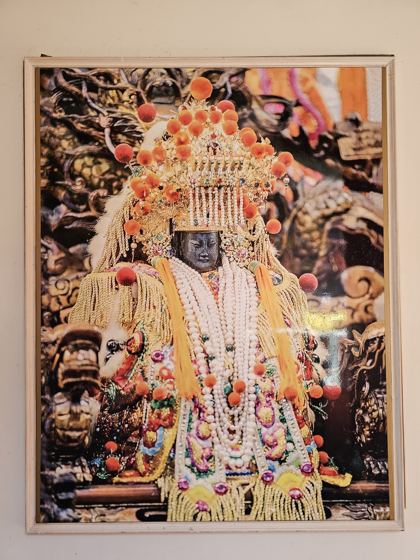
The principal deity is Tianshang Shengmu. The Mazu image said to have been worshipped on Koxinga's flagship is generally called "Luermen-Ma" (鹿耳門媽), also "the Original Ma" (開基媽); when the deities were enthroned in 1979 a new "Temple-Guardian Ma" (鎮殿媽) was carved, and the Original Ma is placed at the front center of the inner hall R036Source台南市鹿耳門天后宮 [Luermen Tianhou Temple, Tainan City], 《台灣之門 鹿耳門:鹿耳門天后宮文化手冊》 [Luermen, Gateway of Taiwan: Cultural Handbook of the Tienhou Temple at Luermen], 3rd ed. (2002.11), table of contents and English section, pp. 44–50 (pp. 44–47 and 49 inferred)Original URL—Retrieved2026-11-08Snapshot timestamp—SourceFrom 《Luermen, Gateway of Taiwan: Cultural Handbook of the Tienhou Temple at Luermen (台灣之門 鹿耳門:鹿耳門天后宮文化手冊)》p. 44–50An official temple publication (issued by the Luermen Tianhou Temple; Chinese, English and Japanese), the basis for name normalization on this site.R038SourceHuang Wen-po (黃文博), 《鹿耳門天后宮送迎神儀典》 [Deity Send-off and Welcoming Rites of the Luermen Tianhou Temple], pp. 14–19, 42–61, 157–167Original URL—Retrieved2026-11-09Snapshot timestamp—SourceFrom 《Deity Send-off and Welcoming Rites of the Luermen Tianhou Temple (鹿耳門天后宮送迎神儀典)》p. 14–19、42–61、157–167Photographed from the physical book and carefully transcribed by Claude photo by photo; personal names follow the characters as they appear in the photographs.. Account by an involved party
- Accompanying deities (CRGIS): Guanyin (觀音佛祖), Shuixian Zunwang, the Three Officials, the Dragon Kings of the Four Seas, Linshui Furen, Zhusheng Niangniang, the Star Lords of the Southern and Northern Dippers, Wenheng Shengdi (文衡聖帝), the Prince of Yanping, and Wenchang Dijun.Official recordR029Source中研院人社中心 CRGIS 文化資源地理資訊系統 [Academia Sinica Center for Humanities and Social Sciences, CRGIS Cultural Resources Geographic Information System]〈鹿耳門天后宮〉[Luermen Tianhou Temple] (2011 fieldwork survey, retrieved from the web archive)Original URL—Retrieved2026-11-06Snapshot timestamp—Form data from 2011; the person in charge is the one at the time the form was filled in.
For the deities of each hall and the order of worship, see Architecture and relics of the Luermen Tianhou Temple.
Organization and management
First items: The registered temple name is 「台灣省台南市鹿耳門…Registered name 「台灣省台南市鹿耳門天后宮」, No. 136,…2011 CRGIS form: folk temple, built by f…MoreLess
- The registered temple name is 「台灣省台南市鹿耳門天后宮」 ("Luermen Tianhou Temple, Tainan City, Taiwan Province"), and the address is No. 136, Mazugong 1st Street (媽祖宮一街); the principal deity is Tianshang Shengmu (天上聖母, Holy Mother in Heaven), and the registration category is formal registration.Official recordR007Source內政部全國宗教資訊網寺廟登記 [Temple registration in the National Religion Information Network, Ministry of the Interior](2026-10 查 [consulted October 2026])與中研院 CRGIS 文化資源地理資訊系統 [and the Academia Sinica CRGIS Cultural Resources Geographic Information System](2011 田調,經 Wayback 取回 [2011 fieldwork, retrieved via the Wayback Machine])Original URL—Retrieved2026-10-28Snapshot timestamp—Registered name 「台灣省台南市鹿耳門天后宮」 ("Luermen Tianhou Temple, Tainan City, Taiwan Province"); principal deity Tianshang Shengmu; formally registered; year of founding 1661; person in charge Lin Jui-nan (林瑞男).
- Registered name 「台灣省台南市鹿耳門天后宮」, No. 136, Mazugong 1st Street; religion Taoism, principal deity Tianshang Shengmu, formal registration; the National Religion Information Network data were updated 2023-01-06, and the person in charge is Lin Jui-nan.Official recordR027Source內政部全國宗教資訊網 [Ministry of the Interior, National Religion Information Network]〈宗教團體查詢〉[Religious Organization Search] temple registration: 台灣省台南市鹿耳門天后宮 (data updated 2023/01/06)Original URLhttps://religion.moi.gov.tw/Religion/FoundationTemple?ci=1Retrieved2026-11-06Snapshot timestamp—Official registration data; telephone numbers not recorded.
- 2011 CRGIS form: folk temple, built by fundraising, organizational form management committee; the person in charge when the form was filled in was Lin Chi-chin.Official recordR029Source中研院人社中心 CRGIS 文化資源地理資訊系統 [Academia Sinica Center for Humanities and Social Sciences, CRGIS Cultural Resources Geographic Information System]〈鹿耳門天后宮〉[Luermen Tianhou Temple] (2011 fieldwork survey, retrieved from the web archive)Original URL—Retrieved2026-11-06Snapshot timestamp—Form data from 2011; the person in charge is the one at the time the form was filled in.
From the 5th term the chair of the management committee has been elected by all believers of Mazugong Village, for a four-year term R038SourceHuang Wen-po (黃文博), 《鹿耳門天后宮送迎神儀典》 [Deity Send-off and Welcoming Rites of the Luermen Tianhou Temple], pp. 14–19, 42–61, 157–167Original URL—Retrieved2026-11-09Snapshot timestamp—SourceFrom 《Deity Send-off and Welcoming Rites of the Luermen Tianhou Temple (鹿耳門天后宮送迎神儀典)》p. 14–19、42–61、157–167Photographed from the physical book and carefully transcribed by Claude photo by photo; personal names follow the characters as they appear in the photographs.. For successive chairs see History of the Luermen Tianhou Temple.
Architecture and relics
First items: The present temple halls were rebuilt fr…Scale: the temple's "Chronology" records…Layout: the Tainan Travel website record…MoreLess
Main article: Architecture and relics of the Luermen Tianhou Temple
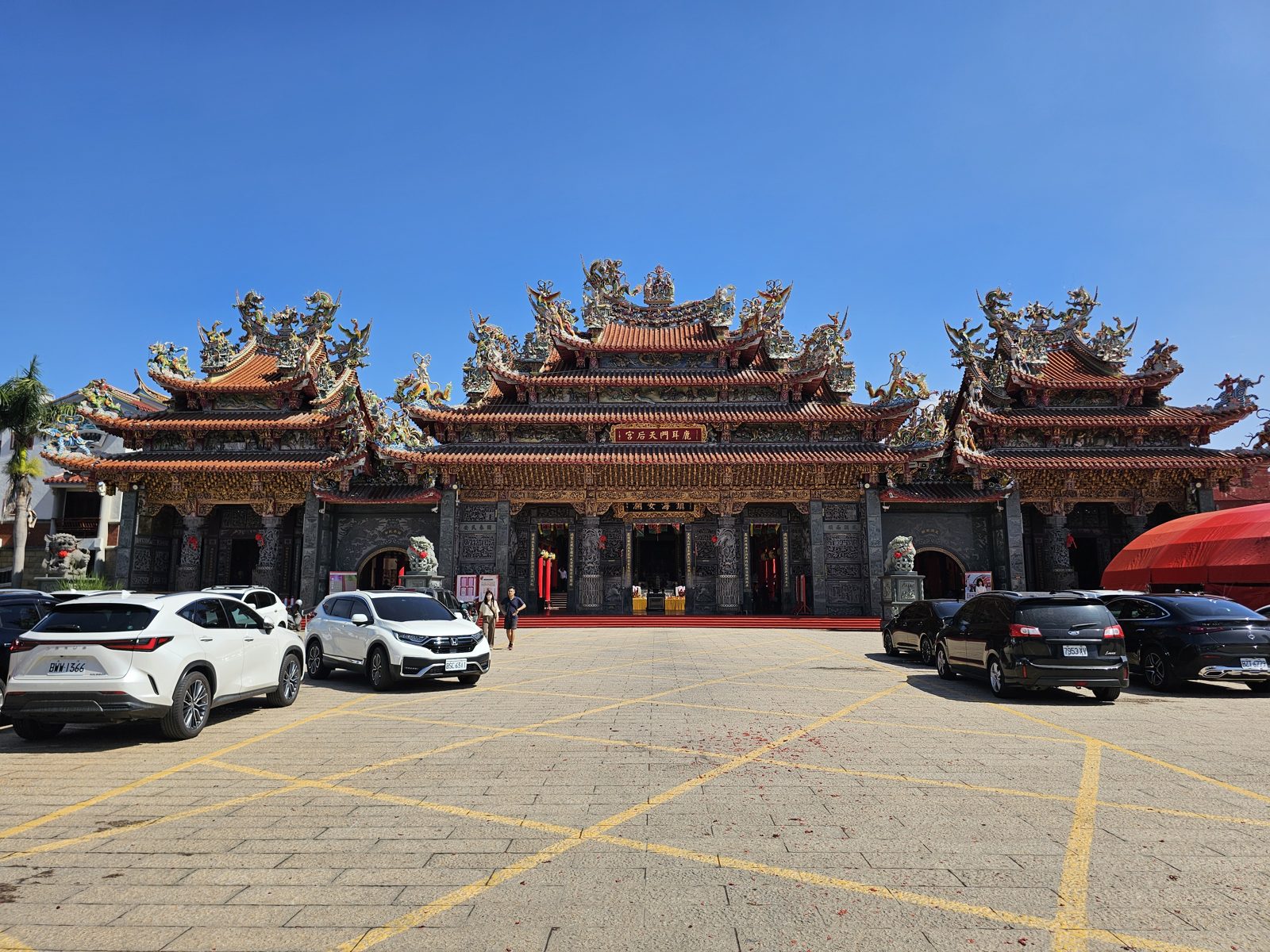
- The present temple halls were rebuilt from a groundbreaking in 1977 (ROC year 66):
- The Tainan Travel website records that 「鹿耳門天后宮於民國66年動土改建,以陳宗乾的構思設計」 ("Luermen Tianhou Temple broke ground for rebuilding in ROC year 66 [1977], to a design conceived by Chen Tsung-chien").Official recordR020Source臺南市政府觀光旅遊局「台南旅遊網」["Tainan Travel" website, Tourism Bureau, Tainan City Government]〈鹿耳門天后宮〉[Luermen Tianhou Temple]Original URLhttps://www.twtainan.net/zh-tw/attractions/detail/4281/Retrieved2026-10-30Snapshot timestamp—A government tourism website. Excerpts in V4-97 (T11).
- The temple's "Chronology" records that on the 9th day of the third month of the same year the groundbreaking ceremony for the rebuilding was held, with Legislator Chang Wen-hsien (張文獻) laying the foundation and Tainan Mayor Chang Li-tang (張麗堂) breaking the ground; the architect was Chen Tsung-chien (陳宗乾).Account by an involved partyR008Source鹿耳門天后宮官網 [Official website of Luermen Tianhou Temple]〈大事紀〉[Chronology]Original URLhttps://www.luerhmen.org.tw/story.phpRetrieved2026-10-28Snapshot timestamp—
- The "History" page of the temple's official website says this rebuilding 「斥資新台幣二億餘元」 ("cost more than NT$200 million").Account by an involved partyR012Source鹿耳門天后宮官網 [Official website of Luermen Tianhou Temple]〈沿革〉[History]〈歷史的鹿耳門天后宮〉[The Historic Luermen Tianhou Temple]Original URLhttps://www.luerhmen.org.tw/about_us.php?class_id=54Retrieved2026-10-30Snapshot timestamp—The temple's official website (account of an involved party). See also https://www.luerhmen.org.tw/about_us.php?class_id=3 . Excerpts in V4-97 (T3).
- The official website's page "The Historic Luermen Tianhou Temple" writes that the rebuilding of ROC year 66 is 「目前尚未完成」 ("not yet completed at present").Account by an involved partyR012Source鹿耳門天后宮官網 [Official website of Luermen Tianhou Temple]〈沿革〉[History]〈歷史的鹿耳門天后宮〉[The Historic Luermen Tianhou Temple]Original URLhttps://www.luerhmen.org.tw/about_us.php?class_id=54Retrieved2026-10-30Snapshot timestamp—The temple's official website (account of an involved party). See also https://www.luerhmen.org.tw/about_us.php?class_id=3 . Excerpts in V4-97 (T3).
- Scale: the temple's "Chronology" records that after the rebuilding the temple is 「正面寬五十公尺、前後深60公尺」 ("fifty meters wide at the front and 60 meters deep from front to back"), and gives the height in the original text as 「高約21公尺20(70台尺)」 ("about 21.20 meters high (70 Taiwanese feet)").Account by an involved partyR008Source鹿耳門天后宮官網 [Official website of Luermen Tianhou Temple]〈大事紀〉[Chronology]Original URLhttps://www.luerhmen.org.tw/story.phpRetrieved2026-10-28Snapshot timestamp—
- Layout: the Tainan Travel website records that the temple 「採傳統孔廟古制『殿堂式』回字型格局配置,由三川殿、後殿及左右廂房將正殿圍繞於中央」 ("follows the ancient 'hall-style' layout of traditional Confucian temples, shaped like the character 回, with the Sanchuan Hall, the rear hall and the left and right wings surrounding the main hall at the center").Official recordR020Source臺南市政府觀光旅遊局「台南旅遊網」["Tainan Travel" website, Tourism Bureau, Tainan City Government]〈鹿耳門天后宮〉[Luermen Tianhou Temple]Original URLhttps://www.twtainan.net/zh-tw/attractions/detail/4281/Retrieved2026-10-30Snapshot timestamp—A government tourism website. Excerpts in V4-97 (T11).
- Structure and style:
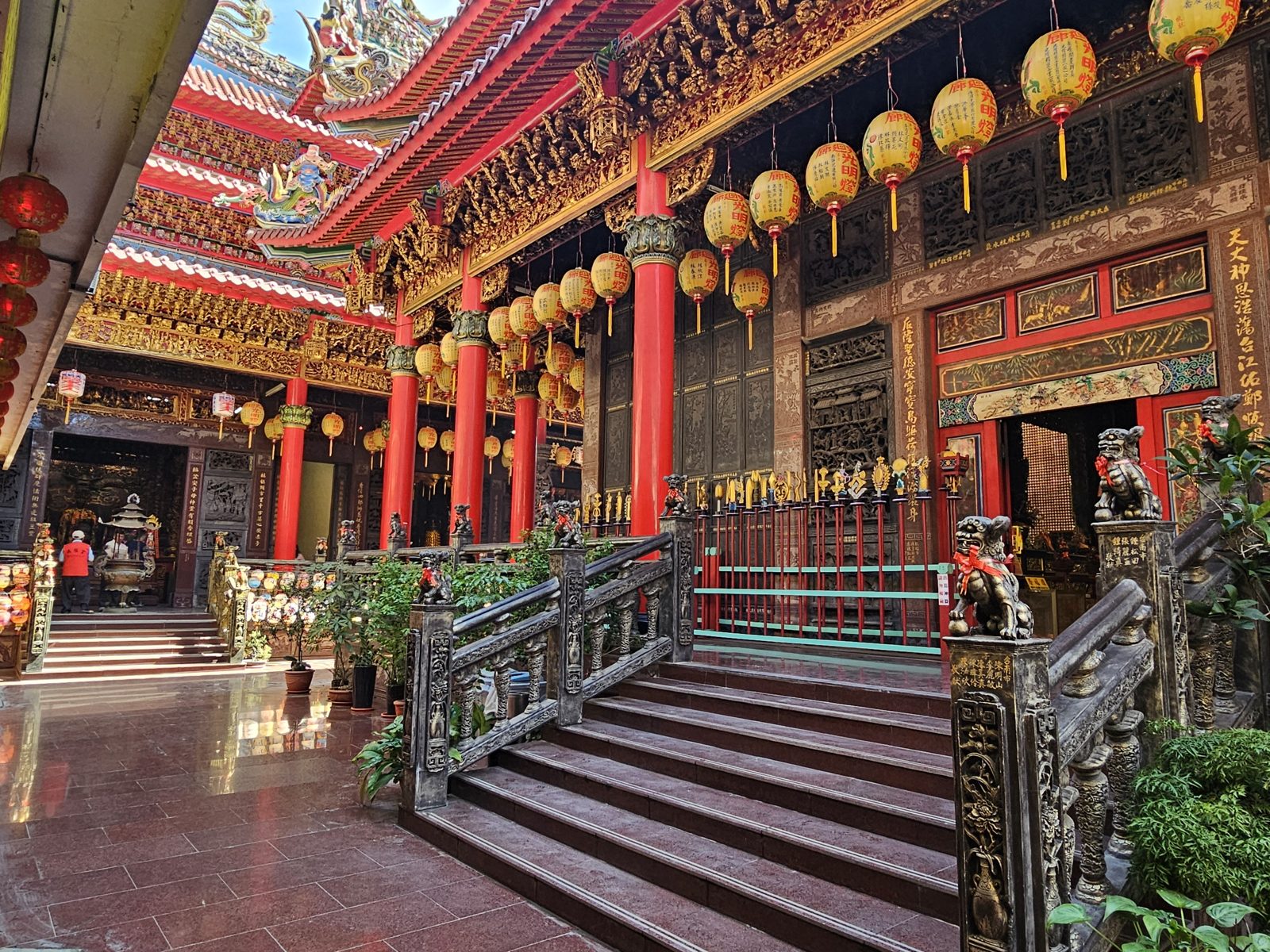
- The temple's official website says the temple belongs to the 「現代式RC系統,可視為七0年代台灣廟宇之建築風格」 ("modern reinforced-concrete system, and can be regarded as the architectural style of Taiwanese temples of the 1970s").Account by an involved partyR010Source鹿耳門天后宮官網 [Official website of Luermen Tianhou Temple]〈廟堂之美〉[Beauty of the Temple Halls]Original URLhttps://www.luerhmen.org.tw/about_us.php?class_id=9Retrieved2026-10-30Snapshot timestamp—The temple's official website (account of an involved party): layout, roofs, dragon columns, door gods, bronze studs, brackets, etc. Excerpts in 資料統整研究/raw/web/agent_v10/V4-97_兩鹿耳門廟殿宇與神明.md (T1).
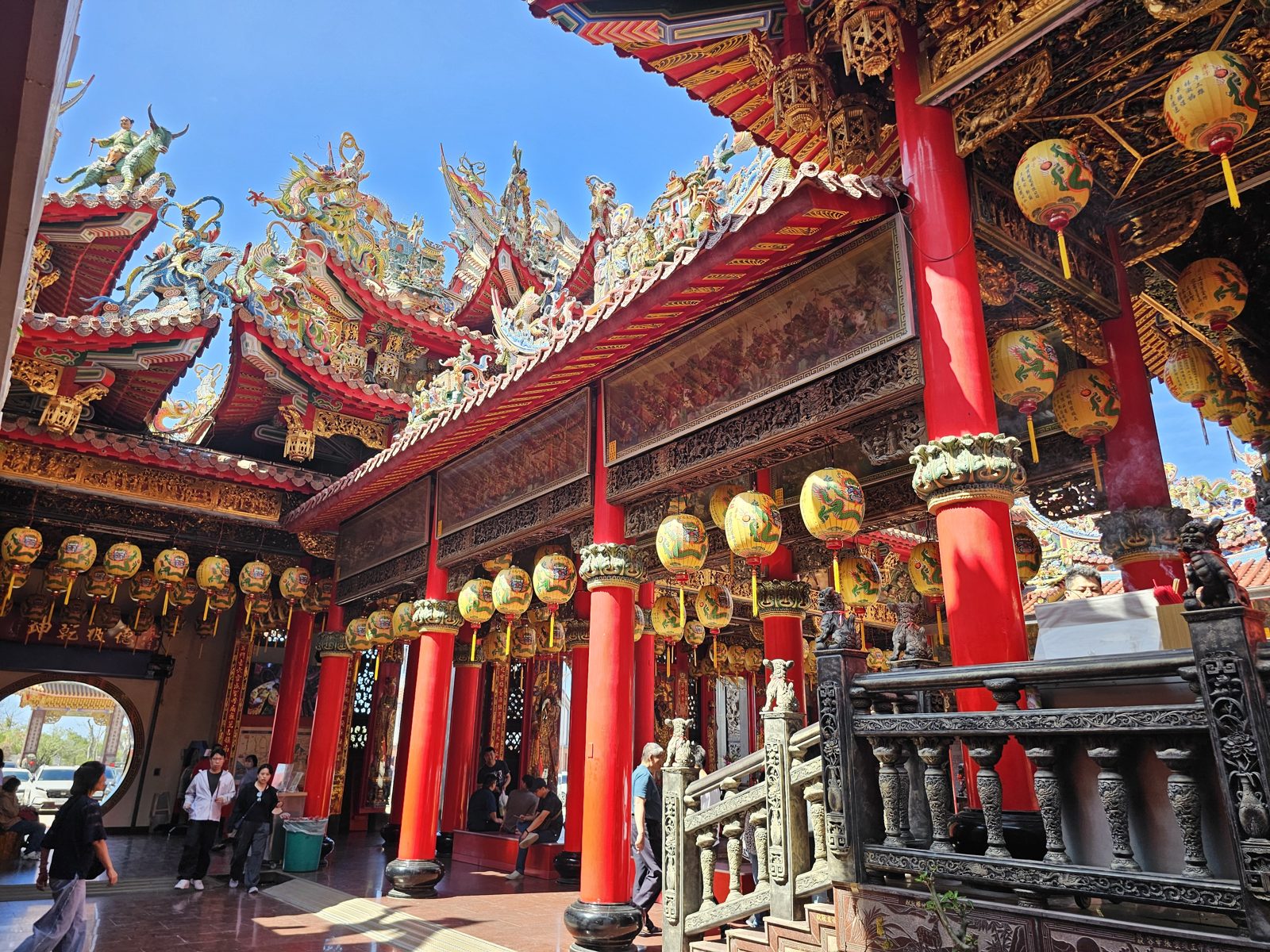
- The roof ridges follow the Minnan (southern Fujian) style; every hall has a 「歇山重簷西施脊飾燕尾」 ("double-eave hip-and-gable roof with a Xishi ridge decorated with swallowtails"), with yellow glazed cylindrical and flat tiles as the main color and material.Account by an involved partyR010Source鹿耳門天后宮官網 [Official website of Luermen Tianhou Temple]〈廟堂之美〉[Beauty of the Temple Halls]Original URLhttps://www.luerhmen.org.tw/about_us.php?class_id=9Retrieved2026-10-30Snapshot timestamp—The temple's official website (account of an involved party): layout, roofs, dragon columns, door gods, bronze studs, brackets, etc. Excerpts in 資料統整研究/raw/web/agent_v10/V4-97_兩鹿耳門廟殿宇與神明.md (T1).
Festivals and activities
First items: Festival: the birthday of Tianshang Shen…In 1993, under the leadership of chair L…Of its events, the sealing ceremony (封印大…MoreLess
- Festival: the birthday of Tianshang Shengmu on the 23rd day of the 3rd lunar month.Official recordR029Source中研院人社中心 CRGIS 文化資源地理資訊系統 [Academia Sinica Center for Humanities and Social Sciences, CRGIS Cultural Resources Geographic Information System]〈鹿耳門天后宮〉[Luermen Tianhou Temple] (2011 fieldwork survey, retrieved from the web archive)Original URL—Retrieved2026-11-06Snapshot timestamp—Form data from 2011; the person in charge is the one at the time the form was filled in.
- In 1993, under the leadership of chair Lin Hsien-yang (林仙養), the Luermen Tianhou Temple Cultural Festival was founded, holding the "Mazu New Year" (「媽祖年」; called the "Taiwan New Year," 「臺灣年」, before 2009) every Spring Festival.
- Of its events, the sealing ceremony (封印大典) that sends off the gods and the Grand Ceremony of Welcoming the God of Joy (迎喜神大典) on the fourth day of the New Year were registered as a Municipal Folk Custom on 2013-01-28 under the name 「鹿耳門天后宮送迎神儀典」 (Deity Send-off and Welcoming Rites of the Luermen Tianhou Temple) (府文資處字第 1020066902B 號), with the Luermen Tianhou Temple as the preservation group.
- The Luermen Mazu procession that the Tianhou Temple holds at irregular intervals, the 「Taijiang Welcoming-the-Deities Festival (臺江迎神祭)」 (Taijiang Welcoming-the-Deities Festival), was first held in 2005 and for the second time in 2012; see that entry for details.
The Taijiang National Park Headquarters has repeatedly co-organized Lunar New Year conservation outreach on the temple square, and the Taijiang Night Walk uses the temple as a rest stop; see Taijiang National Park Lunar New Year outreach and Taijiang Night Walk R031Source台江國家公園管理處 [Taijiang National Park Headquarters], 〈「台江夜行」300人相伴踏上學習之路〉["Taijiang Night Walk": 300 people set out together on a path of learning] (2019-10-28)Original URLhttps://www.tjnp.gov.tw/ch/titlelist/latest-news/1864Retrieved2026-11-07Snapshot timestamp—Official press release (Taijiang National Park Headquarters; account of one party only).R033Source台江國家公園管理處 [Taijiang National Park Headquarters], Lunar New Year outreach press releases for the Tianhou Temple events, 2023–2026: 〈台江癸卯迎新春 玉兔賜福好運年 台江國家公園管理處與北汕尾鹿耳門天后宮 邀您參加112年新春宣導活動〉[Taijiang welcomes the *guimao* New Year, the Jade Rabbit blesses a lucky year: the Taijiang National Park Headquarters and the Luermen Tianhou Temple of Beishanwei invite you to the 2023 (ROC year 112) New Year outreach event] (2023-01-13) and 3 othersOriginal URLhttps://www.tjnp.gov.tw/ch/titlelist/latest-news/2092Retrieved2026-11-07Snapshot timestamp—Official press release (Taijiang National Park Headquarters; account of one party only); see also https://www.tjnp.gov.tw/ch/titlelist/latest-news/2174 (2024-01-31), https://www.tjnp.gov.tw/ch/titlelist/latest-news/2250 (2025-01-13), https://www.tjnp.gov.tw/ch/titlelist/latest-news/3997 (2026-02-04). Official record
Branch temples
- The Tianhou Temple's chronology records that from 1994 to 1997 it held the 「分靈媽祖金蘭姊妹會」 ("Sworn Sisterhood Gathering of Branch Mazu"), in which 「參與分靈媽祖600餘尊、到會信徒約5萬人次,遍佈全省各地」 ("more than 600 branch Mazu images took part and about 50,000 visits were made by believers, from all over the province").Secondhand accountR008Source鹿耳門天后宮官網 [Official website of Luermen Tianhou Temple]〈大事紀〉[Chronology]Original URLhttps://www.luerhmen.org.tw/story.phpRetrieved2026-10-28Snapshot timestamp—
- In 2024 it held the sisterhood gathering again; the news report said that branch Mazu images at home and abroad totaled more than three thousand.Secondhand accountR009Source自由時報 [Liberty Times]〈鹿耳門天后宮暌違近30年再辦「媽祖姊妹會」〉[Luermen Tianhou Temple holds the "Mazu Sisterhood Gathering" again after nearly 30 years],2024-11-08Original URLhttps://news.ltn.com.tw/news/life/breakingnews/4857116Retrieved2026-10-28Snapshot timestamp—
For the branch temples that can be identified one by one, and overseas branches, see History of the Luermen Tianhou Temple.
Name
- The English name used is Luermen Tianhou Temple. The temple's 2002 handbook Luermen, Gateway of Taiwan (《台灣之門 鹿耳門》) has Tienhou Temple at Luermen in English (in the English article title "The History of the Tienhou Temple at Luermen"), which is treated as an alias; one occurrence of Tieuhou in the text is a misprint. Account by an involved partyR036Source台南市鹿耳門天后宮 [Luermen Tianhou Temple, Tainan City], 《台灣之門 鹿耳門:鹿耳門天后宮文化手冊》 [Luermen, Gateway of Taiwan: Cultural Handbook of the Tienhou Temple at Luermen], 3rd ed. (2002.11), table of contents and English section, pp. 44–50 (pp. 44–47 and 49 inferred)Original URL—Retrieved2026-11-08Snapshot timestamp—SourceFrom 《Luermen, Gateway of Taiwan: Cultural Handbook of the Tienhou Temple at Luermen (台灣之門 鹿耳門:鹿耳門天后宮文化手冊)》p. 44–50An official temple publication (issued by the Luermen Tianhou Temple; Chinese, English and Japanese), the basis for name normalization on this site.
Controversies
Which of this temple and the Orthodox Luermen Shengmu Temple in Tuchengzi continues the Qing-period Mazu temple at Luermen is disputed; see Luermen Mazu orthodoxy dispute and the column "The Orthodoxy Dispute: Sixty Years of Debate between Two Luermen Mazu Temples".
Where the sources disagree
The dispute over the "orthodox" Luermen Mazu temple (Faith hall, 3.2)
- Account 1This temple holds the Stele Record of the New Luermen Official Lodge (1777); the stele was unearthed from the Luer River and then re-erected on the riverbankR001Source國家圖書館 [National Central Library]「臺灣記憶」[Taiwan Memory] stele rubbing〈新建鹿耳門公館碑記〉[Stele Record of the New Luermen Official Lodge] (call no. 014_002_0000009798; compiled by 何培夫 [Ho Pei-fu],《台灣地區現存碑碣圖誌》[Illustrated Record of Extant Steles in Taiwan], 國立中央圖書館臺灣分館 [Taiwan Branch, National Central Library], 1999)Original URLhttps://tm.ncl.edu.tw/article?u=014_002_0000009798&lang=chnRetrieved2026-10-18Snapshot timestamp—Qianlong 42 (1777); now at the Luermen Tianhou Temple. The description reads 「碑自鹿耳溪中出土,移立溪畔天后宮」 ("the stele was dug out of the Luer River and moved to the Tianhou Temple on the riverbank").
- Account 2The Orthodox Luermen Shengmu Temple holds the Stele Record of the Restoration of the Tianhou Temple (c. 1860–1862), catalogued as 「收藏、未立」 ("kept, not erected"), with no dated inscriptionR040Source國家圖書館 [National Central Library]「臺灣記憶」[Taiwan Memory] stele rubbing〈重興天后宮碑記〉[Stele Record of the Restoration of the Tianhou Temple] (call no. 014_002_0000009799; compiled by 何培夫 [Ho Pei-fu],《台灣地區現存碑碣圖誌》[Illustrated Record of Extant Steles in Taiwan], 國立中央圖書館臺灣分館 [Taiwan Branch, National Central Library], 1999)Original URLhttps://tm.ncl.edu.tw/article?u=014_002_0000009799&lang=chnRetrieved2026-10-18Snapshot timestamp—The stele has no dated inscription; from the terms of office of the officials named it is dated to about Xianfeng 10 to Tongzhi 1 (1860–1862). Its present location is catalogued as the Luermen Shengmu Temple, with the status "kept, not erected" (收藏、未立).
- Account 3Chiang Chia-chin's "A Study of the Site of Old Luermen" records the survey of September 1956: 「據土城子人士所指示遺址地點,實與顯宮人士所指者相符」 ("the site indicated by the people of Tuchengzi in fact matched the one indicated by the people of Xiangong")R004Source本站勘誤紀錄 [This site's errata record]Original URL—Retrieved2026-10-27Snapshot timestamp—Source of Chiang Chia-chin's survey record in 〈古鹿耳門遺址之研究〉 [A Study of the Site of Old Luermen]; this page does not adjudicate.
The two temples were registered as cultural heritage on the same day (2013-01-28, same main document number with different suffixes).
The date and unearthing day of the Stele Record of the Restoration of the Tianhou Temple
- Account 1《回首鹿耳門》 [Looking Back at Luermen], p. 83: the stele record was erected in Kangxi 58 (1719)R022Source《回首鹿耳門:紀念鄭成功復台333週年》[Looking Back at Luermen: Commemorating the 333rd Anniversary of Koxinga's Recovery of Taiwan] (Lin Wen-chang (林文漲), Cultural and Educational Foundation of the Tienhou Temple at Luermen (鹿耳門天后宮文教公益基金會), Zewei Publishing (澤偉出版社), 1996, 3rd ed.), pp. 83–87, 131–136Original URL—Retrieved2026-11-09Snapshot timestamp—Photographed from the physical book; the whole book was carefully transcribed by Claude from the photographs on 2026-11-09, with personal names following the characters in the photographs; written from the Tianhou Temple's side.
- Account 2《回首鹿耳門》, pp. 135–136: around 1862; the unearthing day is given as December 25 in one place and December 26 on another page; the unearthing of the Official Lodge stele is given as both 1980 and 1981R022Source《回首鹿耳門:紀念鄭成功復台333週年》[Looking Back at Luermen: Commemorating the 333rd Anniversary of Koxinga's Recovery of Taiwan] (Lin Wen-chang (林文漲), Cultural and Educational Foundation of the Tienhou Temple at Luermen (鹿耳門天后宮文教公益基金會), Zewei Publishing (澤偉出版社), 1996, 3rd ed.), pp. 83–87, 131–136Original URL—Retrieved2026-11-09Snapshot timestamp—Photographed from the physical book; the whole book was carefully transcribed by Claude from the photographs on 2026-11-09, with personal names following the characters in the photographs; written from the Tianhou Temple's side.
The figures differ between earlier and later pages of the same book; read together with the temple website's 「咸豐五年左右」 ("around Xianfeng 5 [1855]") and 「咸豐七年立」 ("erected in Xianfeng 7 [1857]"); see "Original texts of stele records, plaques, and couplets."
The year of the Luotian Grand Jiao
- Account 1Temple website chronology: from 1984, with the closing rites in 1987; the subheading on the same page reads 「1977 年全國首次羅天大醮」 ("1977: the first Luotian Grand Jiao in the country")R025SourceLuermen Tianhou Temple official website, 〈大事紀〉 [Chronology] (page opened 2026-11-06)Original URL—Retrieved2026-11-06Snapshot timestamp—The temple's own account.
- Account 2Report commissioned by Taijiang National Park Headquarters, 2020: 1983R025SourceLuermen Tianhou Temple official website, 〈大事紀〉 [Chronology] (page opened 2026-11-06)Original URL—Retrieved2026-11-06Snapshot timestamp—The temple's own account.
- Account 3Online videos label it: jiazi year, closing rites in ROC year 76, 36th anniversary, which coexist with 1983 and 1984R023SourceYouTube: youngstut, 《鹿耳門開基天后宮甲子年七七羅天大醮影片翻拍片段.AVI》[Footage Re-filmed from the Jiazi-Year 7x7 Luotian Grand Jiao of the Luermen Founding Tianhou Temple]; 高瑟聰; 鹿耳門采風Original URLhttps://www.youtube.com/watch?v=XUYpYhPh7TYRetrieved2026-11-06Snapshot timestamp—Online video (personal upload, not official); the title was checked with YouTube oEmbed, the content was not watched.
Start and end years of the Sworn Sisterhood Gathering of Branch MazuHandling on this site: Unverified
- Account 1Website chronology: from 1994 for three consecutive years, to 1997R025SourceLuermen Tianhou Temple official website, 〈大事紀〉 [Chronology] (page opened 2026-11-06)Original URL—Retrieved2026-11-06Snapshot timestamp—The temple's own account.
- Account 2Liberty Times 2024, citing the Tianhou Temple: 1995 to 1997R025SourceLuermen Tianhou Temple official website, 〈大事紀〉 [Chronology] (page opened 2026-11-06)Original URL—Retrieved2026-11-06Snapshot timestamp—The temple's own account.
The record in Huang Chin-fang's thesis (2009)
First items: The Thirteen Fang (十三房): after the war t…Electoral districts under the articles (…Cultural and educational foundation: the…MoreLess
- The Thirteen Fang (十三房): after the war the residents of the Mazugong area (the two villages of Xiangong and Luer) were divided into thirteen "fang" (房, lineage branches) that took turns casting divination blocks to select the luzhu (爐主, incense-burner master) and toujia (頭家, festival stewards), eight of which have their own ancestral deities; the thesis records that after the articles of organization of the management committee were adopted in 1976, worship came to be directed by the committee, whose members were still chosen by the thirteen fang R043SourceHuang Chin-fang (黃晉芳),《台南市安南區北線尾社會經濟之變遷》[Socioeconomic Change in Beixianwei, Annan District, Tainan City],長榮大學臺灣研究所碩士論文 [master's thesis, Graduate Institute of Taiwan Studies, Chang Jung Christian University],2009,printed pp. 114–116, 126–129Original URL—Retrieved2026-11-20Snapshot timestamp—SourceFrom 《Socioeconomic Change in Beixianwei, Annan District, Tainan City (台南市安南區北線尾社會經濟之變遷)》p. 114–116、126–129Electoral districts and seat numbers are cited from the 〈台灣省台南市鹿耳門天后宮管理委員會組織章程〉 [Articles of Organization of the Management Committee of the Luermen Tianhou Temple, Tainan City, Taiwan Province]; the culture festival is described from temple materials.. Scholarly viewAnother record gives 1993 as the year the management committee was established; both years are given. For the fang and their ancestral deities see Mazugong Village.
- Electoral districts under the articles (109 believers' representatives, 39 management committee members, 13 supervisory committee members) R043SourceHuang Chin-fang (黃晉芳),《台南市安南區北線尾社會經濟之變遷》[Socioeconomic Change in Beixianwei, Annan District, Tainan City],長榮大學臺灣研究所碩士論文 [master's thesis, Graduate Institute of Taiwan Studies, Chang Jung Christian University],2009,printed pp. 114–116, 126–129Original URL—Retrieved2026-11-20Snapshot timestamp—SourceFrom 《Socioeconomic Change in Beixianwei, Annan District, Tainan City (台南市安南區北線尾社會經濟之變遷)》p. 114–116、126–129Electoral districts and seat numbers are cited from the 〈台灣省台南市鹿耳門天后宮管理委員會組織章程〉 [Articles of Organization of the Management Committee of the Luermen Tianhou Temple, Tainan City, Taiwan Province]; the culture festival is described from temple materials.:
- District 1, Mazugong: 60 representatives, 22 management committee members (including 5 standing members and 1 ex officio member, the head of Xiangong Village), 7 supervisors.
- District 2: Luer, Sicao and Yantian villages, the temples of the Sixteen Liao of Annan (安南十六寮) and the Cultural, Educational and Public Welfare Foundation: 4 representatives, 13 management committee members, 5 supervisors.
- District 3, Xigang Qing'an Temple: 3 representatives, 1 standing member, 1 supervisor.
- District 4, Qieba Tianhou Temple (茄拔天后宮) in Shanhua, and District 5, Shizilai Tianhou Temple (石仔瀨天后宮) in Danei: 2 representatives and 1 management committee member each.
- District 6, Xuzhongying Shuntian Temple (許中營順天宮) in Anding, Houku Tanmeipo Temple (後堀潭湄婆宮) and Shanshang Tianhou Temple (山上天后宮): 2 representatives, 1 management committee member.
- Cultural and educational foundation: the Luermen Cultural and Educational Foundation (鹿耳門文教基金會) was set up in 1993, funding the Chinese orchestra and the golden lion troupe of Xiangong Elementary School; in 1992 the chair Lin Hsien-yang (林仙養) and committee members invited scholars to plan a culture festival, which from 1993 was handed over to the foundation to run R043SourceHuang Chin-fang (黃晉芳),《台南市安南區北線尾社會經濟之變遷》[Socioeconomic Change in Beixianwei, Annan District, Tainan City],長榮大學臺灣研究所碩士論文 [master's thesis, Graduate Institute of Taiwan Studies, Chang Jung Christian University],2009,printed pp. 114–116, 126–129Original URL—Retrieved2026-11-20Snapshot timestamp—SourceFrom 《Socioeconomic Change in Beixianwei, Annan District, Tainan City (台南市安南區北線尾社會經濟之變遷)》p. 114–116、126–129Electoral districts and seat numbers are cited from the 〈台灣省台南市鹿耳門天后宮管理委員會組織章程〉 [Articles of Organization of the Management Committee of the Luermen Tianhou Temple, Tainan City, Taiwan Province]; the culture festival is described from temple materials..
See also
- Orthodox Luermen Shengmu Temple⚖︎Mazu temple of Tuchengzi, host of the Tuchengzi Incense ProcessionContains 18 items
- Beishanwei⚖︎A historical sandbar island on the west side of the Taijiang Inland SeaContains 3 items
- Luermen RiverRiver of Annan District flowing to the sea at SicaoContains 1 items
- Xigang Incense Procession (Xigang Xiang)⚖︎The triennial guaxiang of the Xigang Qing'an TempleContains 85 items
- Taijiang National Park HeadquartersGovernment agency managing Taijiang National ParkContains 8 items
- Taijiang Night WalkAnnual night walk of Taijiang National Park
- Taijiang National Park Lunar New Year OutreachThe Taijiang National Park Headquarters' Lunar New Year conservation outreach
- Taijiang Welcoming-the-Deities FestivalThe Luermen Mazu's procession through the sixteen liao of TaijiangContains 2 items
- Xinanliao Xing'an Temple Golden Lion Troupe⚖︎The Golden Lion Troupe of the Xing'an Temple, Xinanliao, Annan District
- Qinghe Society Nanguan Troupe of Hailiao Putuo TempleThe nanguan society of Putuo Temple, Hailiao, Anding
- Deity Send-off and Welcoming Rites of the Luermen Tianhou TempleThe Luermen Tianhou Temple's New Year send-off and welcoming rites
- Luermen Tianhou Temple Cultural FestivalThe annual cultural event of the Luermen Tianhou Temple
- Sealing Ceremony (Fengyin Dadian)The Luermen Tianhou Temple's year-end send-off rite
- Grand Ceremony of Welcoming the God of JoyThe Luermen Tianhou Temple's god-receiving ceremony on the 4th day of the New Year
- Qinian AltarAltar in the temple square of the Luermen Tianhou Temple, formerly the Nine Dragons Altar
- XuzhongyingA Zheng military-colony place name in Zhongrong Village, Anding District
- CPDC Dioxin Pollution Self-Help Association (中石化戴奧辛污染自救會)Self-help group of Anshun Plant dioxin victims
- 1987 to present・Postwar officialsBaba TeruzōWard head of Kawachi-chō, Hirado
- Baiweiman vineA legendary plant in front of the old Luermen temple
- Bao'an Temple (Tucheng)⚖︎The Orthodox Luermen Shengmu Temple's name before 1960
- BeimenThe northern end of the Taijiang–Tucheng Area
- Postwar to 1987・Local gentry and familiesTsai An-chungChief sponsor of the Luotian Grand Jiao
- Postwar to 1987・Temple leadersTsai HangA local gentleman who rebuilt the Tianhou Temple in 1946
- 1987 to present・Temple leadersTsai Ching-nanVice-chairman of the Luermen Tianhou Temple
- 1987 to present・Journalists and mediaTsai Wen-chuLiberty Times reporter in Tainan
- Postwar to 1987・Local gentry and familiesTsai Hsien-tuiHead of the Luotian Jiao
- Postwar to 1987・Local gentry and familiesTsai HsiuHead of the Luotian Jiao
- Postwar to 1987・Temple leadersChen Ting-chuanChair of the temple's rebuilding
- Postwar to 1987・Local gentry and familiesChen Kun-jenChief sponsor of the Luotian Grand Jiao
- Postwar to 1987・Local gentry and familiesChen SheHead of the Luotian Jiao
- 1987 to present・Elected representatives and officialsChen Shui-bian⚖︎10th and 11th President of the Republic of China
- Qing era・Scholars and local historiansChen WendaQing-era gazetteer compiler
- Scholars and local historiansChen Hsi-chengAuthor of the Tianhou Temple side's essay in the dispute
- Postwar to 1987・Local gentry and familiesChen Tsai-yuChief sponsor of the Luotian Grand Jiao
- 1987 to present・Writers, poets and artistsChen Chih-hsienCover designer of the temple handbook
- Postwar to 1987・Doctors, lawyers and other professionalsChen Tsung-chienArchitect of the temple's rebuilding
- Stele Record of the Restoration of the Tianhou Temple⚖︎The stele recording the Xianfeng-era restoration of the old Luermen Mazu Temple
- Qing era・Qing and Japanese-era officialsDeng Chuan'anQing official, acting prefect in the Daoguang era
- 1987 to present・Scholars and local historiansFan Sheng-hsiungChairman of the Tainan City Cultural Heritage Protection Association who, in 2005, inspected with the Tainan City Cultural Affairs Bureau and Ho Pei-fu old brick walls dug up in a Tucheng fishpond, judged them possibly the remains of a Qing-era temple, and recommended backfilling them for protection.
- MoraceaeChinese banyan (Ficus microcarpa)Native tree of the mulberry family
- Postwar to 1987・Temple leadersKao Chung-hsu⚖︎Name of a member of the Five-Member Panel on Koxinga's Landing Site
- 1987 to present・Journalists and mediaKao I-yuanPhotographer in the temple handbook
- 1987 to present・Scholars and local historiansKao Chih-pinAuthor of the 1997 review of the orthodoxy dispute
- Guanliao Sheng'an TempleMazu temple of Guanliao, AndingContains 1 items
- Postwar to 1987・Local gentry and familiesKuo Yin-shuHead of the Luotian Jiao
- Koxinga's Mazu⚖︎The Shengmu Temple's name for the Mazu that came on Koxinga's ships
- Postwar to 1987・Scholars and local historiansHan Shih-luAuthor in the 1962 Luermen special issue
- Postwar to 1987・Local gentry and familiesHo Chin-chuanChief sponsor of the Luotian Grand Jiao
- 1987 to present・Journalists and mediaHo Cheng-fengSET reporter on Qigu solar and Luermen stories
- Postwar to 1987・Scholars and local historiansHung Min-linTunghai University professor, author of the Luotian Grand Jiao stele record
- Postwar to 1987・Scholars and local historiansHuang Tien-chuanMember of the Tainan City Historical Commission
- Postwar to 1987・Local gentry and familiesHuang Chiang-chenChief sponsor of the Luotian Grand Jiao
- Qing era・Scholars and local historiansHuang ShujingEarly-Qing figure
- Postwar to 1987・Scholars and local historiansHuang Tien-hengMember of the Tainan City Historical Commission
- Postwar to 1987・Scholars and local historiansChiang Chia-chin⚖︎Tainan City historical commissioner and amateur prehistoric archaeologist
- 1987 to present・Scholars and local historiansChiang Shu-sheng⚖︎Taiwan historian resident in the Netherlands
- Qing era・Qing and Japanese-era officialsJiang YuanshuThe prefect who built the Luermen Official Lodge
- SapindaceaeTaiwan golden-rain tree (Koelreuteria henryi)An endemic tree of the soapberry family
- Koxinga, Prince of Yanping (as a deity)Koxinga worshipped as a deityContains 1 items
- Koxinga Landing Site Memorial Stele (Xiangong)The 1961 Koxinga landing stele at Xiangong
- Postwar to 1987・Scholars and local historiansLai Chien-mingTucheng-school author in the Luermen debate
- 1987 to present・Scholars and local historiansLee Chung-taoVisitor recorded in the handbook
- 1987 to present・Elected representatives and officialsLee Teng-huiFormer President
- 1987 to present・Elected representatives and officialsLee Ming-tungPolitical figure
- Postwar to 1987・Local gentry and familiesLi Chu-kenChief sponsor of the Luotian Grand Jiao
- 1987 to present・Elected representatives and officialsLien ChanPolitical figure
- Postwar to 1987・Local gentry and familiesLiao Nien-chiChief sponsor of the Luotian Grand Jiao
- Qing era・People in major eventsLin Bai⚖︎The villager who saved The Original Ma image
- 1987 to present・Temple leadersLin Teng-hsienChairman of the Tianhou Temple's 3rd committee
- Postwar to 1987・Local gentry and familiesLin Kao-pienChief sponsor of the Luotian Grand Jiao
- Postwar to 1987・Postwar officialsLin Heng-taoScholar of the Taiwan Provincial Historical Commission
- Postwar to 1987・Scholars and local historiansLin Ho-tingAuthor of "On the Location of Luermen"
- Postwar to 1987・Local gentry and familiesLin Ho-yuanHead of the Luotian Jiao
- 1987 to present・People in major eventsLin Hsuan-chiMember of the volunteer legal team in the Anshun Plant compensation suits
- Qing era・Interviewees and oral sourcesLin Huang TuanWitness to the washing away of the old Xiangong temple
- 1987 to present・Temple leadersLin Chi-chin⚖︎Head of the CPDC dioxin pollution self-help association
- 1987 to present・People in major eventsLin Chin-tsungLawyer on the pro bono team in the Anshun case
- Postwar to 1987・Local gentry and familiesLin Kun-faChief sponsor of the Luotian Grand Jiao
- Postwar to 1987・Local gentry and familiesLin Liang (Luotian Jiao head)Head of the Luotian Jiao
- Postwar to 1987・Temple leadersLin Mou (林謀)Gentry member who rebuilt the Tianhou Temple in 1946
- Postwar to 1987・Temple leadersLin Nao-wan (林鬧晚)A gentry member who rebuilt the Tianhou Temple in 1946
- Postwar to 1987・Local gentry and familiesLin Chuan-fu (Luotian Jiao head)Chief sponsor of the Luotian Grand Jiao
- 1987 to present・Temple leadersLin Jui-nanChairman of the Beishanwei Luermen Tianhou Temple
- 1987 to present・Temple leadersLin Jui-chuanGeneral secretary of the Beishanwei Luermen Tianhou Temple
- Postwar to 1987・Temple leadersLin San-hoChair of the rebuilding of the Luermen Tianhou Temple
- Postwar to 1987・Local gentry and familiesLin Shan-pen (Luotian Jiao head)Head of the Luotian Jiao
- Postwar to 1987・People in major eventsLin Shih-chuXiangong-side figure in the 1961 Luermen debate
- 1987 to present・Scholars and local historiansLin Su-meiResearcher of Mazu temples in Tainan City
- Postwar to 1987・Temple leadersLin Tien-sungFirst chairman of the Luermen Tianhou Temple management committee
- Postwar to 1987・Local gentry and familiesLin Tien-sung (Luotian Jiao head)Jiao head of the 1984 Luotian Grand Jiao at the Luermen Tianhou Temple
- Postwar to 1987・Temple leadersLin TingA gentry member who rebuilt the Tianhou Temple in 1946
- 1987 to present・Temple leadersLin Ting-chu7th chairperson of the Tianhou Temple
- Postwar to 1987・Elected representatives and officialsLin Wen-changXiangong village warden in the 1961 monument dispute
- 1987 to present・Temple leadersLin Hsien-yangChair of the Luermen Tianhou Temple
- Qing era・People in major eventsLin YanThe worshipper who rescued the Mazu statue
- Postwar to 1987・Temple leadersLin YangInitiator of the 1947 rebuilding of the Tianhou Temple
- Postwar to 1987・Temple leadersLin Yin-shengA gentleman who rebuilt the Tianhou Temple in 1946
- Postwar to 1987・Local gentry and familiesLin I-hsingChief sponsor of the Luotian Grand Jiao
- 1987 to present・Temple leadersLin Yu-shanPlanner of the temple handbook
- Qing era・Temple leadersLin Zan⚖︎Temple keeper of the Ancient Luermen Mazu Temple
- Qing era・People in major eventsLin Zhang⚖︎Father of Lin Zan, of Anshunliao Village
- Longyu BridgeBicycle and motorcycle bridge across the Luermen River
- Longyu ParkA pond-side park beside the Luermen Tianhou Temple
- Postwar to 1987・Scholars and local historiansLu Chia-hsingTainan local historian
- Koxinga Landing ReenactmentThe Luer community's reenactment of Koxinga's landing
- Luer VillageVillage of Annan District, east bank of the Luermen RiverContains 1 items
- Ancient Luermen Mazu Temple⚖︎A Qing-era Mazu temple beside Luermen HarborContains 1 items
- Luermen Official Lodge (Qing dynasty)A Qing-dynasty official lodge at Luermen
- Stele Record of the New Luermen Official LodgeThe 1777 Luermen lodge stele
- Luermen jipuA lodged pudu after the old Luermen temple was destroyed
- Luermen Mazu⚖︎The name used around Luermen for MazuContains 8 items
- Memorial Stele to the Relics of Tianshang Shengmu at the Original Site of Luermen⚖︎The memorial stele at the site of the Old Luermen Mazu Temple
- Luermen⚖︎An old harbor channel and sandbar at the northern mouth of the Taijiang Inland SeaContains 6 items
- History of LuermenLuermen from the Dutch period to the Qing dynasty
- Junior ritual officersYoung ritual officers of the Luermen Tianhou Temple chosen by divination blocks
- Excavations at the Site of the Ancient Luermen Mazu Temple⚖︎Finds and inspections at the old temple site, 1980–2005
- Architecture and relics of the Luermen Tianhou TempleHalls, deities, facilities, steles and couplets of the Luermen Tianhou Temple
- History of the Luermen Tianhou TempleHow the Luermen Tianhou Temple developed from the old temple to the present one
- History of the Grand Ceremony of Welcoming the God of JoyGods of Joy and ritual officers by year
- Luermen Zhenmen TempleA Koxinga temple at the mouth of the Luermen River
- 1987 to present・Postwar officialsLu Teng-yuanFirst Director of the Taijiang National Park Headquarters
- Mazugong ParkPark opposite the Luermen Tianhou Temple
- Mazugong VillageVillage of Annan District, formerly Xiangong VillageContains 1 items
- 1987 to present・Spirit mediums, ritual masters and Taoist priestsMiyashita AzumaJapanese believer in Luermen Mazu and spirit medium
- Nankunshen Daitian TempleHead temple of the Wufu Qiansui in Beimen DistrictContains 19 items
- 1987 to present・Writers, poets and artistsNi Yung-chenMaster of music of the Welcoming the God of Joy ceremony
- 1987 to present・ForeignersNoma TakeAuthor of the handbook's Japanese article
- Postwar to 1987・Local gentry and familiesPan Feng-yuanChief sponsor of the Luotian Grand Jiao
- Postwar to 1987・Artisans and craftsPan Yueh-hsiungTemple painter of old Tainan city
- 1987 to present・ForeignersPaul JobinFrench sociologist
- Dutch and Zheng eras・ForeignersPhilip MeijLand surveyor of the Dutch East India Company
- Datanliao Long'an Temple⚖︎Tengfeng Marshal temple of Datanliao, Qigu District
- Postwar to 1987・Local gentry and familiesChiu Yen-huChief sponsor of the Luotian Grand Jiao
- Seven Star Peace BridgeA Lunar New Year bridge for dispelling misfortune
- Qing era・Qing and Japanese-era officialsShao Lianke⚖︎Brigade general of Taiwan in the Xianfeng reign
- Postwar to 1987・Procession troupesShih Chin-shuiFirst-generation lion-head maker
- Postwar to 1987・Scholars and local historiansShih Wan-shouNCKU professor, author of the Tianhou Temple rebuilding stele record
- Japanese era・Scholars and local historiansShih Yang-suiTainan local historian
- Shisandian Qingxing TempleThe Wangye temple of Shisandian
- 1987 to present・Elected representatives and officialsJames SoongFormer Governor of Taiwan Province
- Postwar to 1987・Local gentry and familiesSu Wan-shunChief sponsor of the Luotian Grand Jiao
- Postwar to 1987・Temple leadersSu YinA gentry member who rebuilt the Tianhou Temple in 1946
- The Dispute over the Orthodoxy of the Luermen Mazu⚖︎The dispute over the succession of the two Luermen Mazu temples
- Polling Stations Around TuchengPolling stations in the 2020 and 2024 elections
- Postwar to 1987・Local gentry and familiesWang Chin-tsaiChief sponsor of the Luotian Grand Jiao
- Postwar to 1987・Scholars and local historiansWang Peng-chengA co-author of the Luermen location study
- 1987 to present・Journalists and mediaWang Shao-yuSET News reporter
- 1987 to present・Doctors, lawyers and other professionalsWu Chien-anLawyer on the pro bono team in the Anshun case
- Japanese era・Scholars and local historiansWu Hsin-jung⚖︎Jiali physician and Salt Belt writer
- Wubaihu Ciyun TempleA Mazu temple in Wubaihu, Annan District
- Siangong Elementary SchoolThe elementary school of Xiangong Village, Annan District
- Xiangong Police SubstationA police substation in Mazugong Village, Annan
- 1987 to present・Scholars and local historiansHsieh Kuo-hsingResearch fellow, Institute of Taiwan History, Academia Sinica
- XigangNorth bank of the Zengwen River, home of the Xigang guaxiang
- Procession Organization and Troupe Calendar of the 2009 Jichou Cycle of the Xigangzi Incense ProcessionPalanquin numbers and troupe hall dates of the 2009 Xigang Incense Procession
- 1987 to present・Scholars and local historiansHsu Chih-shunResearcher on Koxinga's landing site
- 1987 to present・Postwar officialsYang Chin-chenDeputy-Director of Taijiang National Park Headquarters
- Dutch and Zheng eras・Military figuresYang YingKoxinga's revenue officer, author of the Veritable Record of the Campaigns
- Postwar to 1987・Scholars and local historiansYang Yun-pingHistory professor at National Taiwan University
- Japanese era・Postwar officialsYeh Ting-kueiMayor of Tainan (1st, 3rd and 5th terms)
- Permanently Enshrined Royal Boats⚖︎The royal boat that is worshipped but never sent away
- Postwar to 1987・Temple leadersYu Shih-chiA gentry member who rebuilt the Tianhou Temple in 1946
- Postwar to 1987・Local gentry and familiesYu Hsiang-chingHead of the Luotian Jiao
- 1987 to present・Postwar officialsYu Kuo-hwaPolitical figure
- 1987 to present・Doctors, lawyers and other professionalsTseng Kuo-enArchitect
- Postwar to 1987・Local gentry and familiesChan Chung-chengHead of the Luotian Jiao
- Postwar to 1987・Local gentry and familiesChang Hao (Luotian Jiao head)Chief sponsor of the Luotian Grand Jiao
- Postwar to 1987・Local gentry and familiesChang Kun-shan (Luotian Jiao head)Jiao head of the 1984 Luotian Grand Jiao
- Postwar to 1987・Postwar officialsChang Li-tangFormer mayor of Tainan
- 1987 to present・Doctors, lawyers and other professionalsChao Pei-haoVolunteer lawyer in the Anshun case
- Koxinga Memorial Park⚖︎The memorial park at Koxinga's traditional landing site
- Postwar to 1987・Local gentry and familiesCheng Hung-mingChief sponsor of the Luotian Grand Jiao
- 1987 to presentCheng Chi-chungProofreader of the temple handbook
- 1987 to present・Writers, poets and artistsChung Tung-jungChief editor of Looking Back at Luermen
- Postwar to 1987・Local gentry and familiesChou Yu-liangChief sponsor of the Luotian Grand Jiao
- 1987 to present・Temple leadersChuang Pi-hsunChairman of the Luermen Tianhou Temple's foundation
- 1987 to present・People in major eventsCho Ping-chungLegal Aid Foundation Tainan branch executive secretary in the Anshun compensation case


Records in academic theses
First items: Wu Chien-sheng's 2010 dissertation quote…The same dissertation also lists Liu Lia…Lin Su-mei's (林素梅) master's thesis (c. 2…MoreLess
- Wu Chien-sheng's 2010 dissertation quotes Shih Wan-shou's "台南市宗教誌": the temples built in the Zheng period include 「鹿耳門天后宮(顯宮里媽祖宮)」 ("Luermen Tianhou Temple (the Mazu temple of Xiangong Village)") R039SourceWu Chien-sheng (吳建昇),《道光三年以前台江內海及周圍地區歷史變遷之研究》[The History Vicissitudes of Taijiang Inner Sea and Its Surrounding Areas Before 1823],國立成功大學歷史學系 [Department of History, National Cheng Kung University] 博士論文 [doctoral dissertation],2010,頁 132、209、250 [pp. 132、209、250]Original URL—Retrieved2026-11-12Snapshot timestamp—SourceFrom 《The History Vicissitudes of Taijiang Inner Sea and Its Surrounding Areas Before 1823 (道光三年以前台江內海及周圍地區歷史變遷之研究)》p. 132、209、250. Secondhand account
- The same dissertation also lists Liu Liangbi's gazetteer, "built with donations from the civil and military officials in Kangxi 58", and Guanxi's memorial of Daoguang 4, 「南線舊建天后宮已百餘年」 ("the Tianhou temple built long ago on the south line is more than a hundred years old"); all three refer to the Qing-era ancient Luermen Mazu temple (see Ancient Luermen Mazu Temple) R039SourceWu Chien-sheng (吳建昇),《道光三年以前台江內海及周圍地區歷史變遷之研究》[The History Vicissitudes of Taijiang Inner Sea and Its Surrounding Areas Before 1823],國立成功大學歷史學系 [Department of History, National Cheng Kung University] 博士論文 [doctoral dissertation],2010,頁 132、209、250 [pp. 132、209、250]Original URL—Retrieved2026-11-12Snapshot timestamp—SourceFrom 《The History Vicissitudes of Taijiang Inner Sea and Its Surrounding Areas Before 1823 (道光三年以前台江內海及周圍地區歷史變遷之研究)》p. 132、209、250.
- Lin Su-mei's (林素梅) master's thesis (c. 2004) quotes the temple's Cultural Handbook of the Luermen Tianhou Temple (《鹿耳門天后宮文化手冊》): in Tongzhi 10 (1871) the Zengwen River changed course and a great flood destroyed the Luermen Mazu temple; the golden image of Mazu was bravely rescued by the villagers Lin Zhang (林章), Lin Yan (林硯), Lin Bai (林白) and others, and was temporarily worshipped in a private house, with the luzhu of the year responsible for the rites; after Retrocession the villagers pooled funds in 1946 to rebuild the "Tianhou Temple" on the present site, which was rebuilt again in 1977 R042SourceLin Su-mei (林素梅),《台南市媽祖信仰之研究》[The Study on Mazu Worship in Tainan City],國立臺南大學臺灣文化研究所碩士論文 [master's thesis, Graduate Institute of Taiwan Culture, National University of Tainan],c. 2004,printed pp. 12–13, 22, 28, 33, 84–85, 96, 129, 131, 133–135Original URL—Retrieved—Snapshot timestamp—SourceFrom 《The Study on Mazu Worship in Tainan City (台南市媽祖信仰之研究)》p. 12–13、22、28、33、84–85、96、129、131、133–135Degree thesis; the temple history is quoted from 《鹿耳門天后宮文化手冊》 [Cultural Handbook of the Luermen Tianhou Temple] (1999), Tai Wen-feng (戴文鋒)《第三屆府城媽祖行腳》[The Third Fucheng Mazu Walk] (2003), Lin Te-cheng (林德政)《安南區志》[Annan District Gazetteer] (1999) and Chang Chih-cheng (張志成) (1999).. Account by an involved party
- As to the first of the rescuers, Chapter 5 of the thesis cites Kao Chih-pin (高志彬) and the Annan District Gazetteer (《安南區志》) as giving 「林贊」 (Lin Zan), and cites Chen Hsi-cheng (陳熙城) as holding that it was Lin Zhang; see The Dispute over the Orthodoxy of the Luermen Mazu R042SourceLin Su-mei (林素梅),《台南市媽祖信仰之研究》[The Study on Mazu Worship in Tainan City],國立臺南大學臺灣文化研究所碩士論文 [master's thesis, Graduate Institute of Taiwan Culture, National University of Tainan],c. 2004,printed pp. 12–13, 22, 28, 33, 84–85, 96, 129, 131, 133–135Original URL—Retrieved—Snapshot timestamp—SourceFrom 《The Study on Mazu Worship in Tainan City (台南市媽祖信仰之研究)》p. 12–13、22、28、33、84–85、96、129、131、133–135Degree thesis; the temple history is quoted from 《鹿耳門天后宮文化手冊》 [Cultural Handbook of the Luermen Tianhou Temple] (1999), Tai Wen-feng (戴文鋒)《第三屆府城媽祖行腳》[The Third Fucheng Mazu Walk] (2003), Lin Te-cheng (林德政)《安南區志》[Annan District Gazetteer] (1999) and Chang Chih-cheng (張志成) (1999)..
- The same thesis cites Tai Wen-feng (戴文鋒): that this temple's Mazu has been revered by Japanese Mazu devotees since Retrocession is one of the temple's distinctive features R042SourceLin Su-mei (林素梅),《台南市媽祖信仰之研究》[The Study on Mazu Worship in Tainan City],國立臺南大學臺灣文化研究所碩士論文 [master's thesis, Graduate Institute of Taiwan Culture, National University of Tainan],c. 2004,printed pp. 12–13, 22, 28, 33, 84–85, 96, 129, 131, 133–135Original URL—Retrieved—Snapshot timestamp—SourceFrom 《The Study on Mazu Worship in Tainan City (台南市媽祖信仰之研究)》p. 12–13、22、28、33、84–85、96、129、131、133–135Degree thesis; the temple history is quoted from 《鹿耳門天后宮文化手冊》 [Cultural Handbook of the Luermen Tianhou Temple] (1999), Tai Wen-feng (戴文鋒)《第三屆府城媽祖行腳》[The Third Fucheng Mazu Walk] (2003), Lin Te-cheng (林德政)《安南區志》[Annan District Gazetteer] (1999) and Chang Chih-cheng (張志成) (1999)..
- Organization: a system of a single manager was established in 1946, and a management committee in 1993; the thesis classifies it as a village temple, and notes that the residents of Mazugong are mostly of the Lin surname, with others of the Tsai, Su and other surnames R042SourceLin Su-mei (林素梅),《台南市媽祖信仰之研究》[The Study on Mazu Worship in Tainan City],國立臺南大學臺灣文化研究所碩士論文 [master's thesis, Graduate Institute of Taiwan Culture, National University of Tainan],c. 2004,printed pp. 12–13, 22, 28, 33, 84–85, 96, 129, 131, 133–135Original URL—Retrieved—Snapshot timestamp—SourceFrom 《The Study on Mazu Worship in Tainan City (台南市媽祖信仰之研究)》p. 12–13、22、28、33、84–85、96、129、131、133–135Degree thesis; the temple history is quoted from 《鹿耳門天后宮文化手冊》 [Cultural Handbook of the Luermen Tianhou Temple] (1999), Tai Wen-feng (戴文鋒)《第三屆府城媽祖行腳》[The Third Fucheng Mazu Walk] (2003), Lin Te-cheng (林德政)《安南區志》[Annan District Gazetteer] (1999) and Chang Chih-cheng (張志成) (1999)..
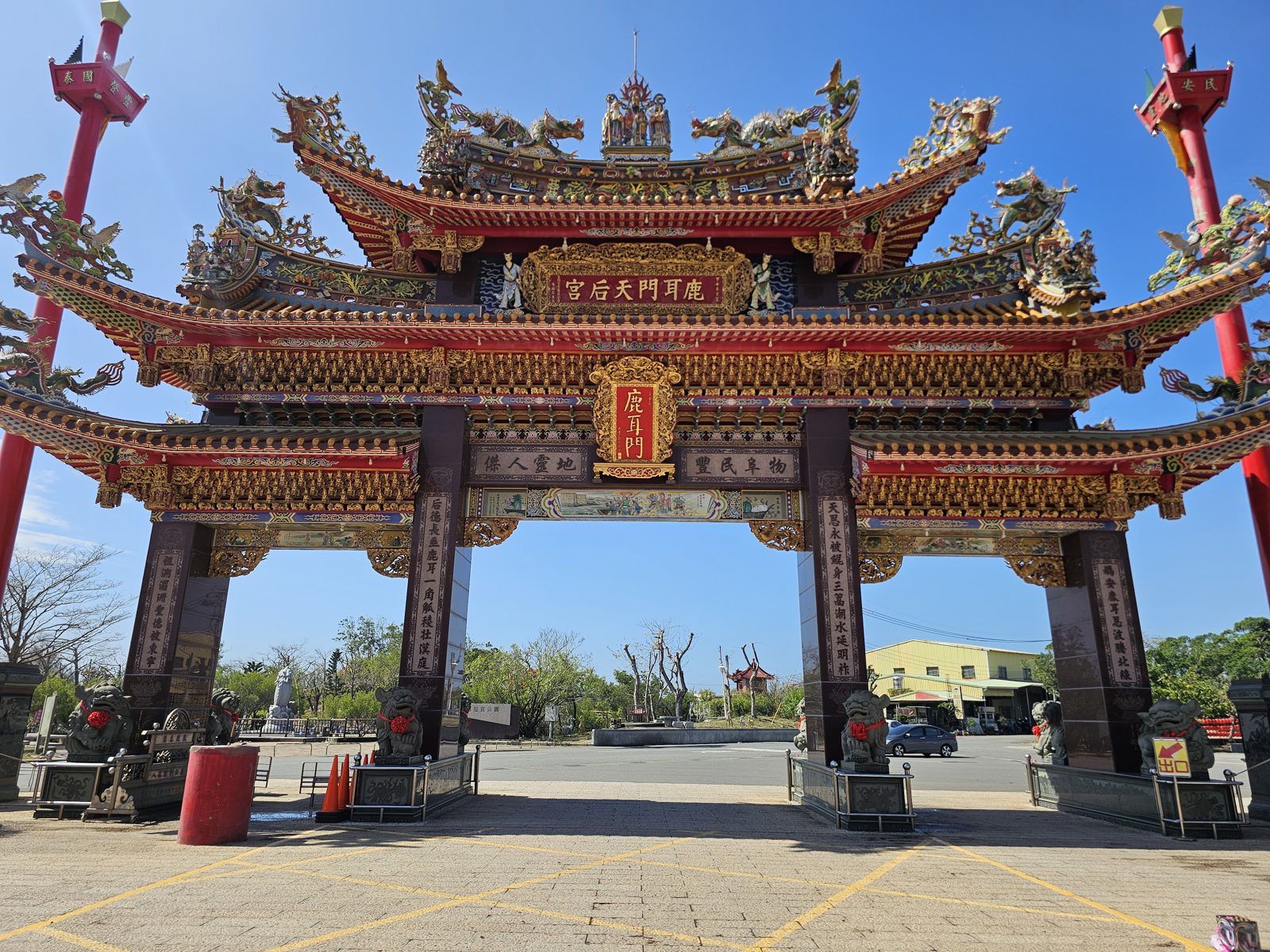
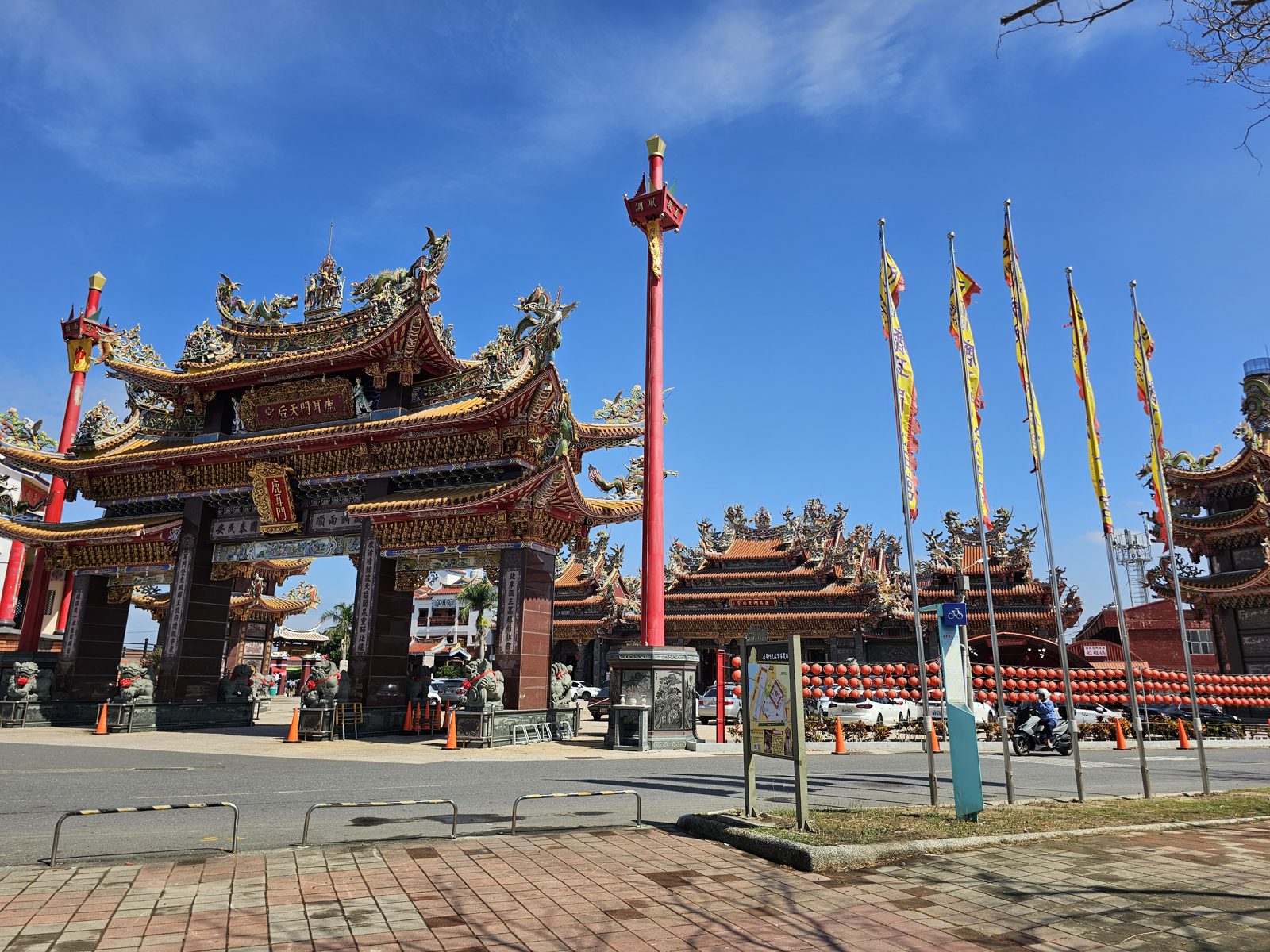
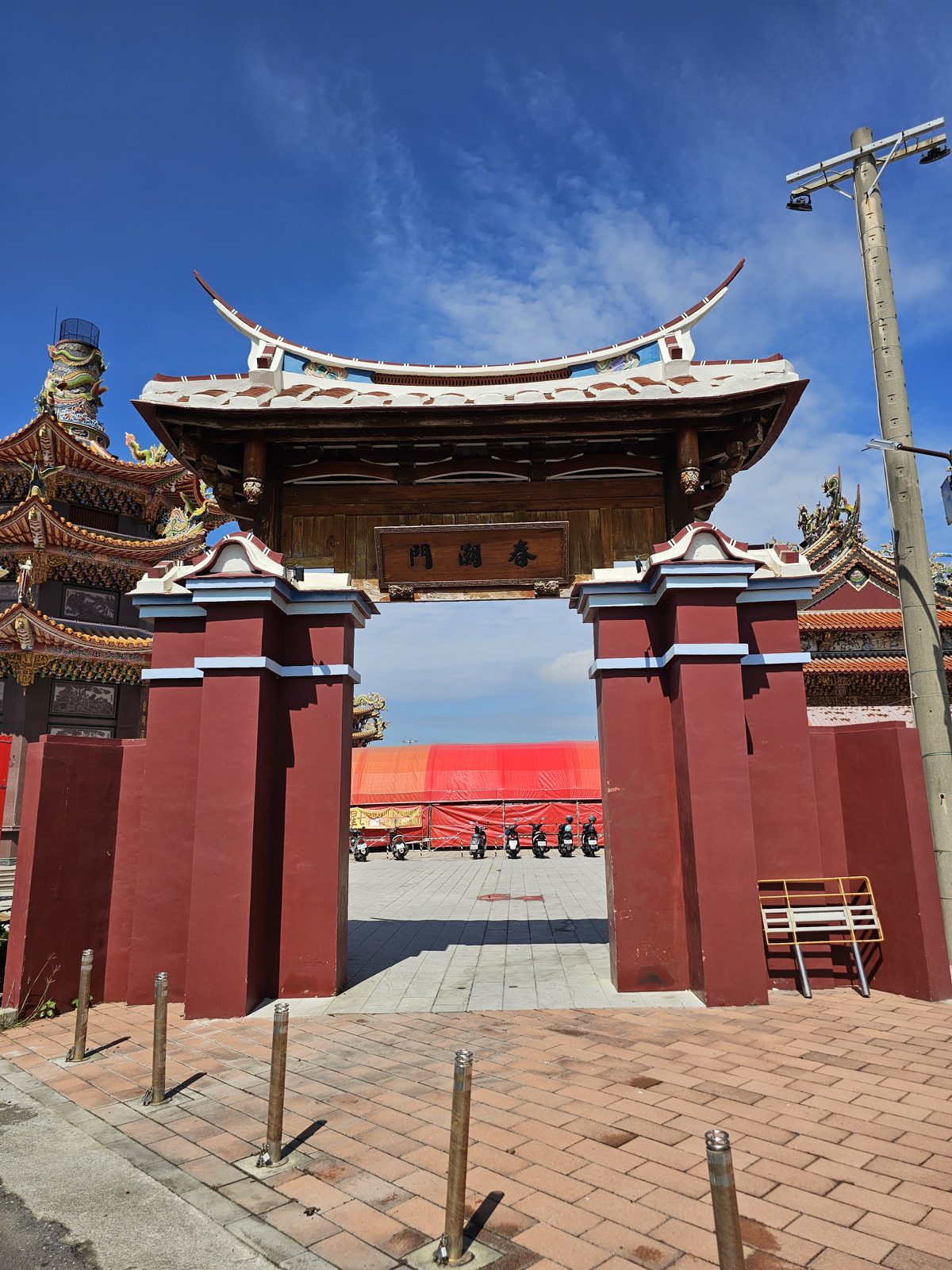
- Architecture: the 1977 rebuilding imitated the layout of the Sanxia Zushi Temple (三峽祖師廟), with a front elevation of four tiers of eaves (most double-eaved Qing-era Taiwanese temples have two); the small gates on either side of the paifang are inscribed 「連帆坊」 ("Lianfan Gate") and 「春潮門」 ("Chunchao Gate"), taken from the Eight Views of Taiwan 「鹿耳連帆」 ("Linked Sails at Luermen") and 「鹿耳春潮」 ("Spring Tide at Luermen") R042SourceLin Su-mei (林素梅),《台南市媽祖信仰之研究》[The Study on Mazu Worship in Tainan City],國立臺南大學臺灣文化研究所碩士論文 [master's thesis, Graduate Institute of Taiwan Culture, National University of Tainan],c. 2004,printed pp. 12–13, 22, 28, 33, 84–85, 96, 129, 131, 133–135Original URL—Retrieved—Snapshot timestamp—SourceFrom 《The Study on Mazu Worship in Tainan City (台南市媽祖信仰之研究)》p. 12–13、22、28、33、84–85、96、129、131、133–135Degree thesis; the temple history is quoted from 《鹿耳門天后宮文化手冊》 [Cultural Handbook of the Luermen Tianhou Temple] (1999), Tai Wen-feng (戴文鋒)《第三屆府城媽祖行腳》[The Third Fucheng Mazu Walk] (2003), Lin Te-cheng (林德政)《安南區志》[Annan District Gazetteer] (1999) and Chang Chih-cheng (張志成) (1999)..
- Deities (survey of around 2003): in the side bays to the left and right of the main hall are the accompanying deities Shuixian Zunwang (水仙尊王, with only the single image of Emperor Yu enshrined) and the Dragon Kings of the Four Seas (四海龍王); Zhongtan Yuanshuai (中壇元帥) is also worshipped R042SourceLin Su-mei (林素梅),《台南市媽祖信仰之研究》[The Study on Mazu Worship in Tainan City],國立臺南大學臺灣文化研究所碩士論文 [master's thesis, Graduate Institute of Taiwan Culture, National University of Tainan],c. 2004,printed pp. 12–13, 22, 28, 33, 84–85, 96, 129, 131, 133–135Original URL—Retrieved—Snapshot timestamp—SourceFrom 《The Study on Mazu Worship in Tainan City (台南市媽祖信仰之研究)》p. 12–13、22、28、33、84–85、96、129、131、133–135Degree thesis; the temple history is quoted from 《鹿耳門天后宮文化手冊》 [Cultural Handbook of the Luermen Tianhou Temple] (1999), Tai Wen-feng (戴文鋒)《第三屆府城媽祖行腳》[The Third Fucheng Mazu Walk] (2003), Lin Te-cheng (林德政)《安南區志》[Annan District Gazetteer] (1999) and Chang Chih-cheng (張志成) (1999)..
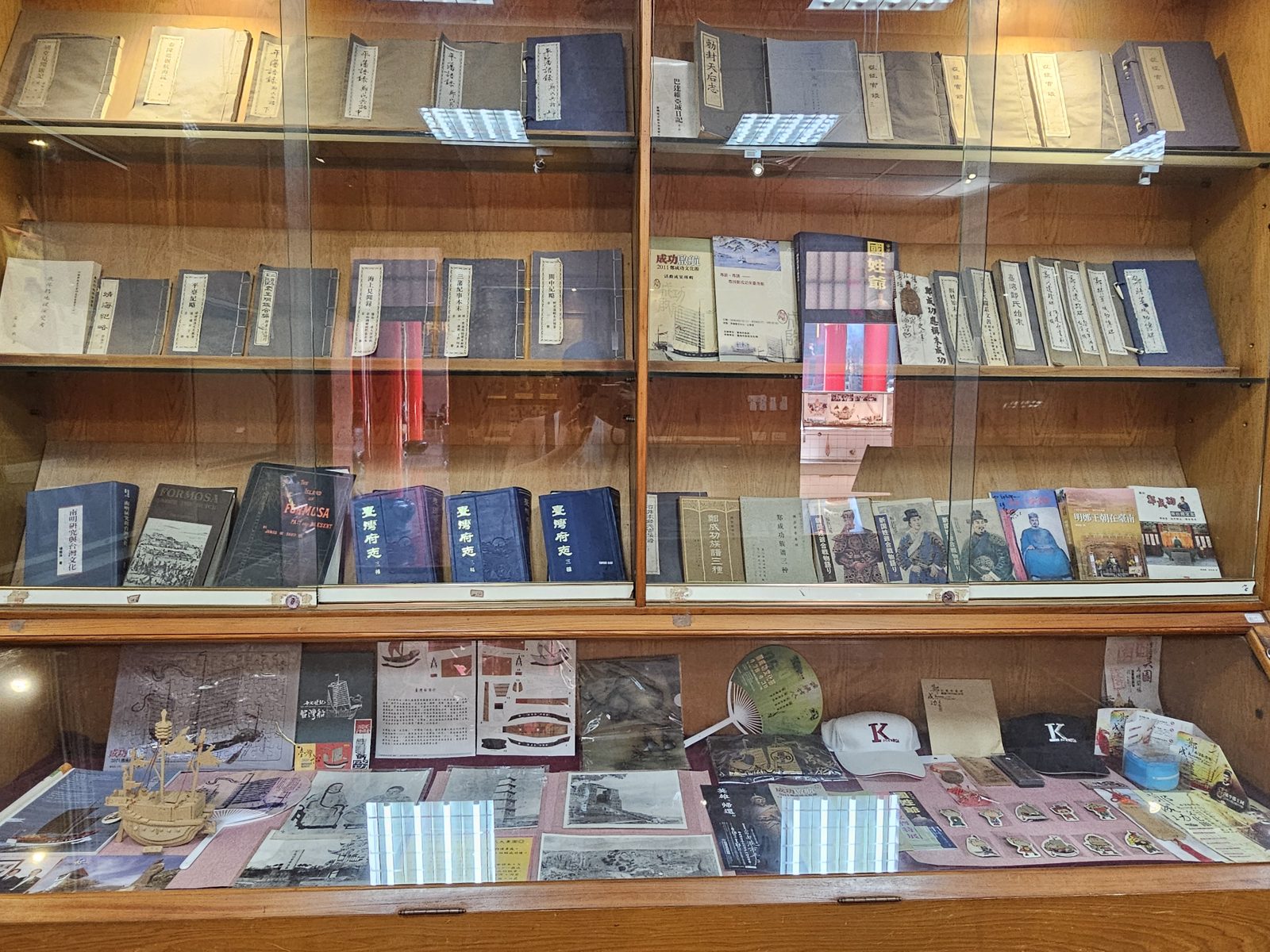
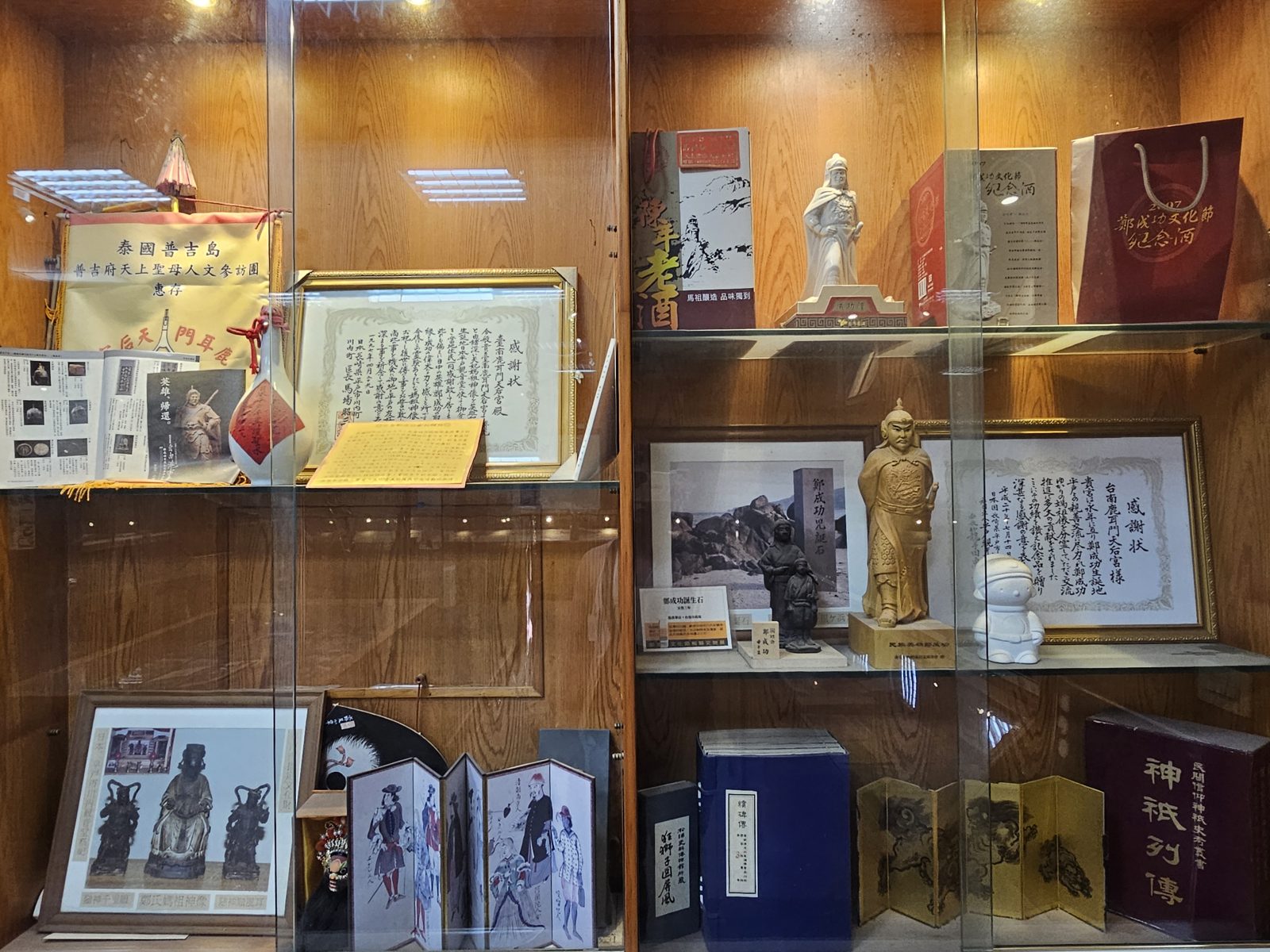
- Activities: from November 2, 1984 a 49-day "Luotian Grand Jiao" (「羅天大醮」) was held, performing rites of deliverance at the mouth of the Luermen River for the soldiers fallen in battle through the ages and building a "Mazu boat" (「媽祖船」); in 1992 more than sixty scholars were engaged to form a culture festival preparatory committee, the Cultural, Educational and Public Welfare Foundation was set up in 1993, and five culture festivals were held in succession (cultural roots, natural ecology, historical origins, folk literature, folk belief); in 1994 it funded Xiangong Elementary School in setting up a Chinese orchestra; from 1995 a "Mazu Sisterhood Gathering" (「媽祖姊妹會」) has been held every third lunar month; in January 1997 the "Koxinga Cultural Relics Museum" (「鄭成功文物館」) was founded in the temple; and during the SARS epidemic of 2003 a yuangui (元龜, turtle-shaped offering) was made of white rice to pray for blessings R042SourceLin Su-mei (林素梅),《台南市媽祖信仰之研究》[The Study on Mazu Worship in Tainan City],國立臺南大學臺灣文化研究所碩士論文 [master's thesis, Graduate Institute of Taiwan Culture, National University of Tainan],c. 2004,printed pp. 12–13, 22, 28, 33, 84–85, 96, 129, 131, 133–135Original URL—Retrieved—Snapshot timestamp—SourceFrom 《The Study on Mazu Worship in Tainan City (台南市媽祖信仰之研究)》p. 12–13、22、28、33、84–85、96、129、131、133–135Degree thesis; the temple history is quoted from 《鹿耳門天后宮文化手冊》 [Cultural Handbook of the Luermen Tianhou Temple] (1999), Tai Wen-feng (戴文鋒)《第三屆府城媽祖行腳》[The Third Fucheng Mazu Walk] (2003), Lin Te-cheng (林德政)《安南區志》[Annan District Gazetteer] (1999) and Chang Chih-cheng (張志成) (1999)..
- Relics: the 「新建鹿耳門公館碑記」 ("Stele Record of the Newly Built Luermen Lodge," erected in the fourth month of Qianlong 42) was unearthed at the site of the ancient Tianhou Temple on November 17, 1981, with only the upper half surviving, and the one held by the Tianhou Temple is the original; the 「重興天后宮碑記」 ("Stele Record of the Revival of the Tianhou Temple") was unearthed on December 26, 1980, and the one held by the Tianhou Temple is a copy, the original being kept at the Orthodox Luermen Shengmu Temple; there is also a monument to Koxinga's landing place with an inscription composed by Yang Yun-ping (楊雲萍) on April 30, 1961 (the thesis cites Lin Te-cheng's (林德政) Annan District Gazetteer) R042SourceLin Su-mei (林素梅),《台南市媽祖信仰之研究》[The Study on Mazu Worship in Tainan City],國立臺南大學臺灣文化研究所碩士論文 [master's thesis, Graduate Institute of Taiwan Culture, National University of Tainan],c. 2004,printed pp. 12–13, 22, 28, 33, 84–85, 96, 129, 131, 133–135Original URL—Retrieved—Snapshot timestamp—SourceFrom 《The Study on Mazu Worship in Tainan City (台南市媽祖信仰之研究)》p. 12–13、22、28、33、84–85、96、129、131、133–135Degree thesis; the temple history is quoted from 《鹿耳門天后宮文化手冊》 [Cultural Handbook of the Luermen Tianhou Temple] (1999), Tai Wen-feng (戴文鋒)《第三屆府城媽祖行腳》[The Third Fucheng Mazu Walk] (2003), Lin Te-cheng (林德政)《安南區志》[Annan District Gazetteer] (1999) and Chang Chih-cheng (張志成) (1999)..
- Xigang Incense Procession: the thesis records that after Tucheng refused Xigang Qing'an Temple's coming to request fire (請火) in 1961, Xigang Qing'an Temple turned instead to the Luermen Tianhou Temple to "invite Mazu" (「請媽祖」) R042SourceLin Su-mei (林素梅),《台南市媽祖信仰之研究》[The Study on Mazu Worship in Tainan City],國立臺南大學臺灣文化研究所碩士論文 [master's thesis, Graduate Institute of Taiwan Culture, National University of Tainan],c. 2004,printed pp. 12–13, 22, 28, 33, 84–85, 96, 129, 131, 133–135Original URL—Retrieved—Snapshot timestamp—SourceFrom 《The Study on Mazu Worship in Tainan City (台南市媽祖信仰之研究)》p. 12–13、22、28、33、84–85、96、129、131、133–135Degree thesis; the temple history is quoted from 《鹿耳門天后宮文化手冊》 [Cultural Handbook of the Luermen Tianhou Temple] (1999), Tai Wen-feng (戴文鋒)《第三屆府城媽祖行腳》[The Third Fucheng Mazu Walk] (2003), Lin Te-cheng (林德政)《安南區志》[Annan District Gazetteer] (1999) and Chang Chih-cheng (張志成) (1999)..
- The thesis cites the view of Chen Yin-lin (陳胤霖, 2001 master's thesis): the Tianhou Temple originally had royal-boat jiao rites like Tucheng, but after the orthodoxy dispute with Tucheng it shifted the focus of its worship to Mazu, renamed its royal boat the "Mazu boat," and used its participation in the Xigang Incense Procession to display its own orthodoxy R042SourceLin Su-mei (林素梅),《台南市媽祖信仰之研究》[The Study on Mazu Worship in Tainan City],國立臺南大學臺灣文化研究所碩士論文 [master's thesis, Graduate Institute of Taiwan Culture, National University of Tainan],c. 2004,printed pp. 12–13, 22, 28, 33, 84–85, 96, 129, 131, 133–135Original URL—Retrieved—Snapshot timestamp—SourceFrom 《The Study on Mazu Worship in Tainan City (台南市媽祖信仰之研究)》p. 12–13、22、28、33、84–85、96、129、131、133–135Degree thesis; the temple history is quoted from 《鹿耳門天后宮文化手冊》 [Cultural Handbook of the Luermen Tianhou Temple] (1999), Tai Wen-feng (戴文鋒)《第三屆府城媽祖行腳》[The Third Fucheng Mazu Walk] (2003), Lin Te-cheng (林德政)《安南區志》[Annan District Gazetteer] (1999) and Chang Chih-cheng (張志成) (1999).. Scholarly view
Video
Videos were uploaded by their respective channels; titles and channel names follow the video pages. This site quotes only short excerpts with timecodes; the videos themselves are authoritative.
Showing 15 videos, newest first; click a thumbnail to play it here.
 鹿耳門開基天后宮甲子年七七羅天大醮影片翻拍片段.AVI [Footage Re-filmed from the Jiazi-Year 7x7 Luotian Grand Jiao of the Luermen Founding Tianhou Temple (AVI)]Personal upload, not official; the title was checked with YouTube oEmbed, the content was not watched.


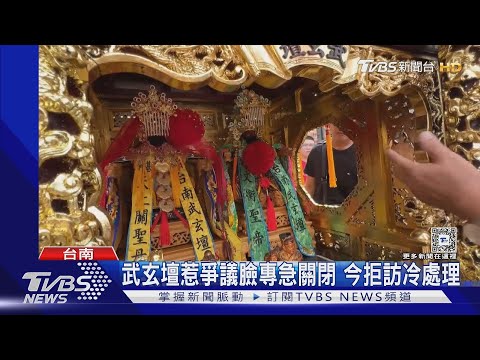
 "媽祖嫁關公"武玄壇擅自合婚 天后宮擬告"要求道歉" 不忍了! 北汕尾鹿耳門天后宮要求"合婚"神壇道歉│記者 古芙仙 王紹宇 黃啟超│【新聞一把抓】20240612│三立新聞台 ["Mazu marries Guan Gong": Wuxuan Altar arranges a marriage without permission; Tianhou Temple plans to sue and "demands an apology." Patience runs out! Beishanwei Luermen Tianhou Temple demands an apology from the altar behind the "marriage" | Reporters Ku Fu-hsien, Wang Shao-yu, Huang Chi-chao | News Roundup 2024-06-12 | SET News]The 2024 incident in which a private altar staged a "marriage of Mazu and Guan Gong"; the Tianhou Temple planned to sue.

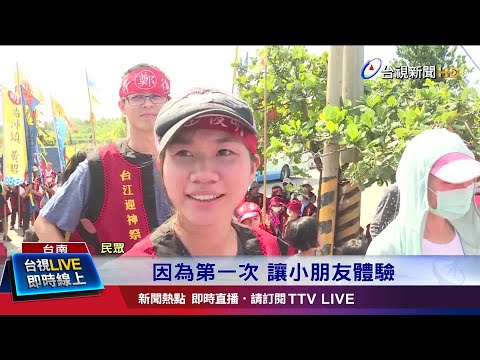
 「台灣媽祖平安護照」扯政治 鹿耳門天后宮:多餘聯想-民視新聞 ["Taiwan Mazu Peace Passport" drawn into politics; Luermen Tianhou Temple: an unnecessary association - FTV News]Political controversy over the peace passport; the temple responded that it was an "unnecessary association" (per the title).



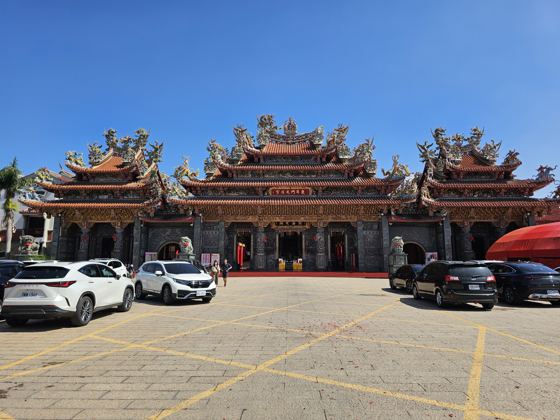
Photos on site
Taken on site by the author of this website (40 photos). Click a thumbnail to enlarge; use the arrow keys to browse.
Main gate and temple views
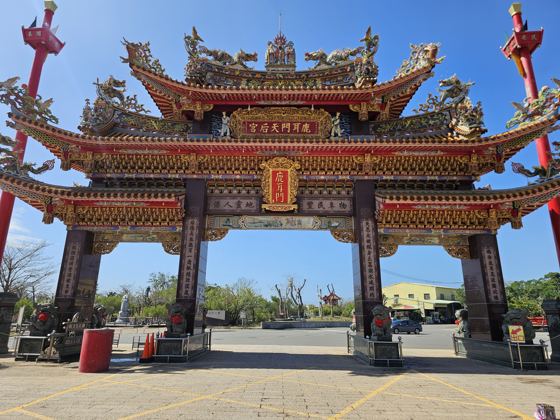
Main gate
Main gate
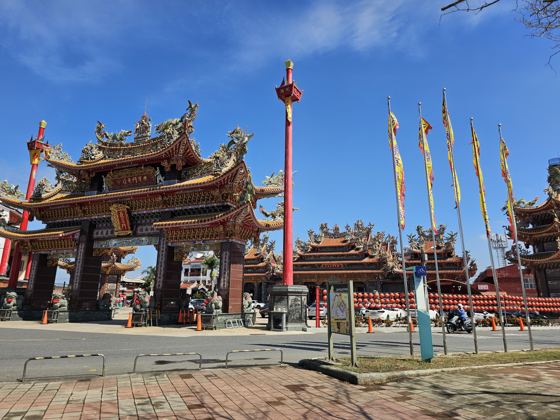
Main gate (another angle)
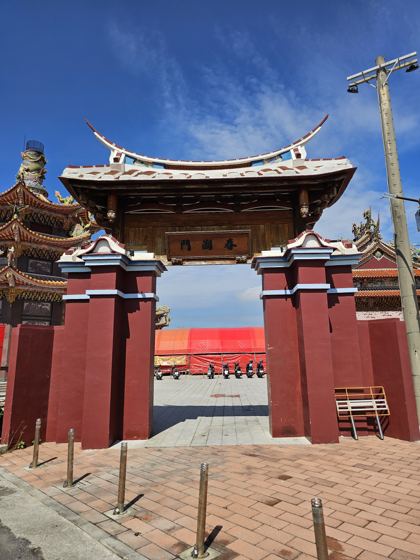
Chunchao Gate
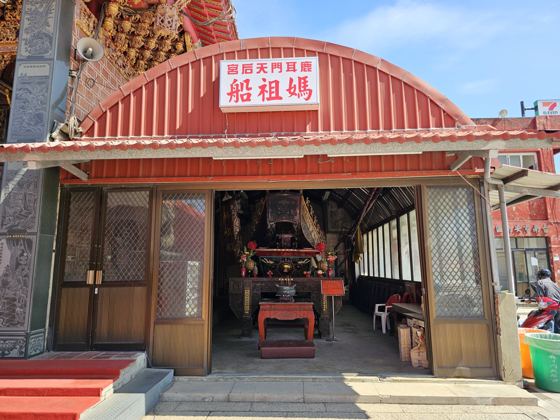
Royal boat
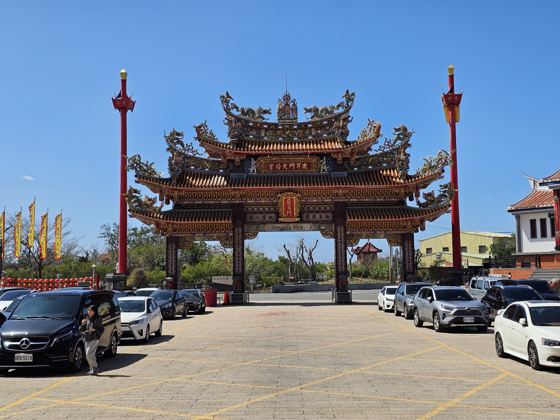
Main gate
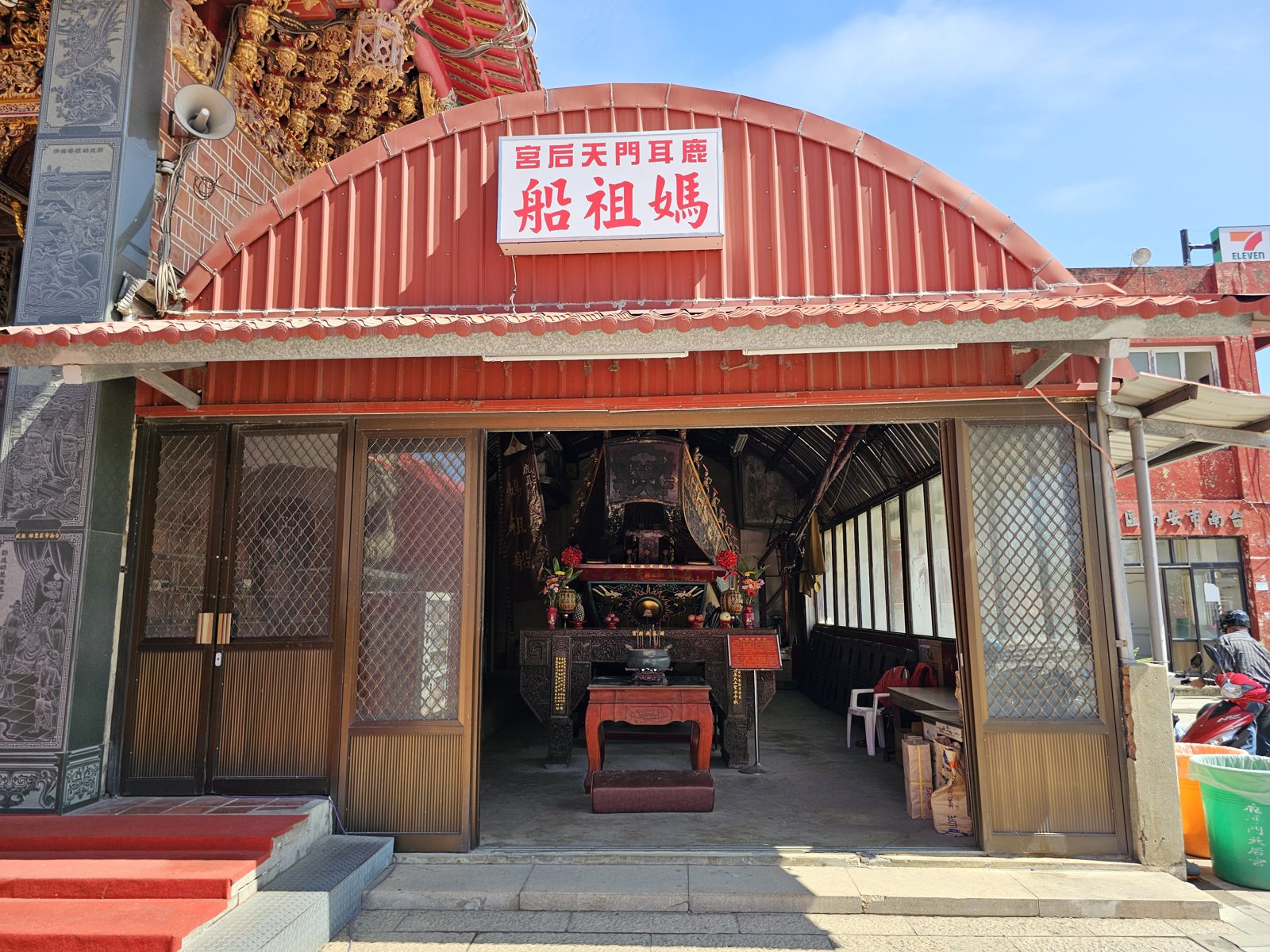
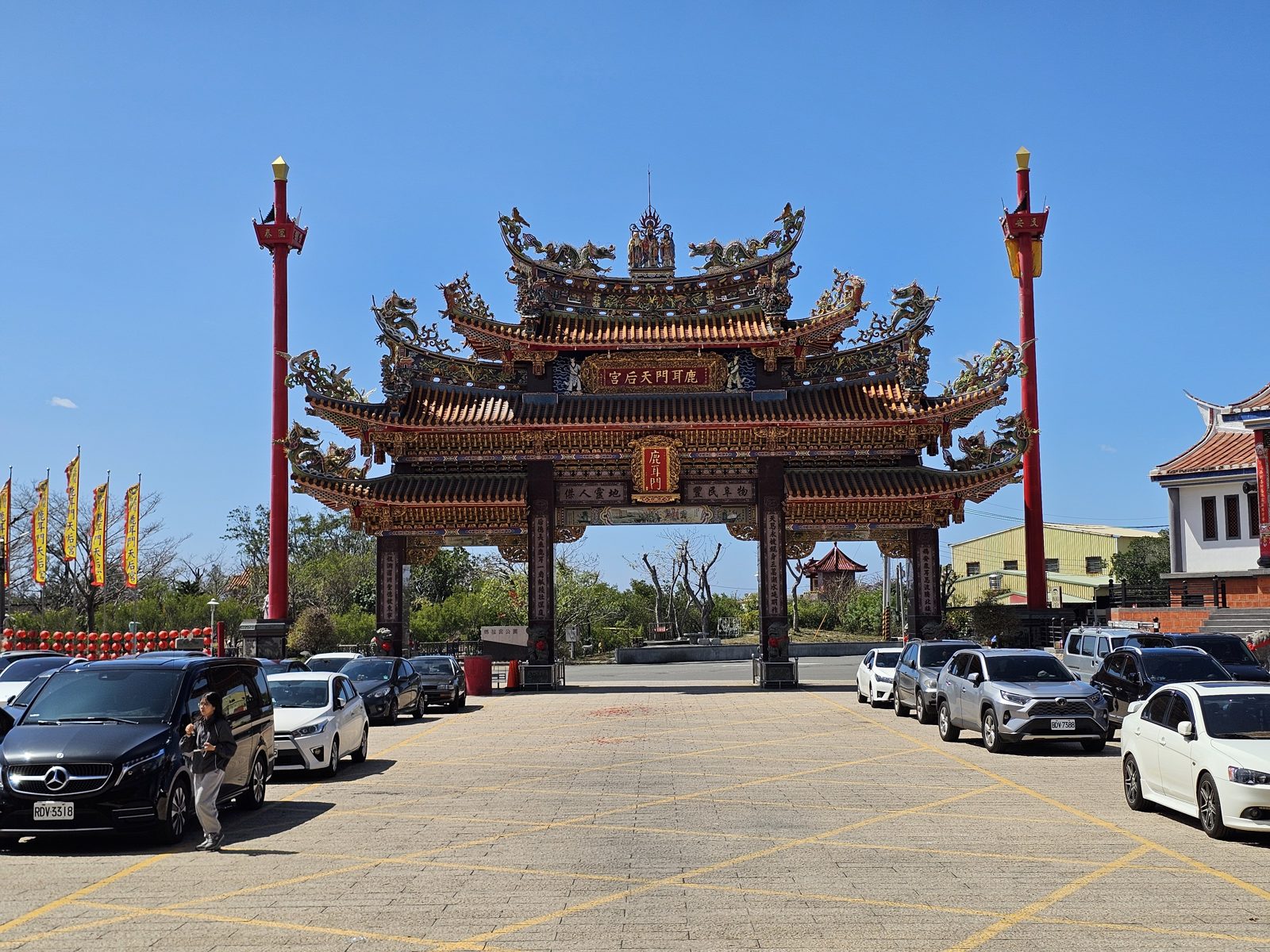
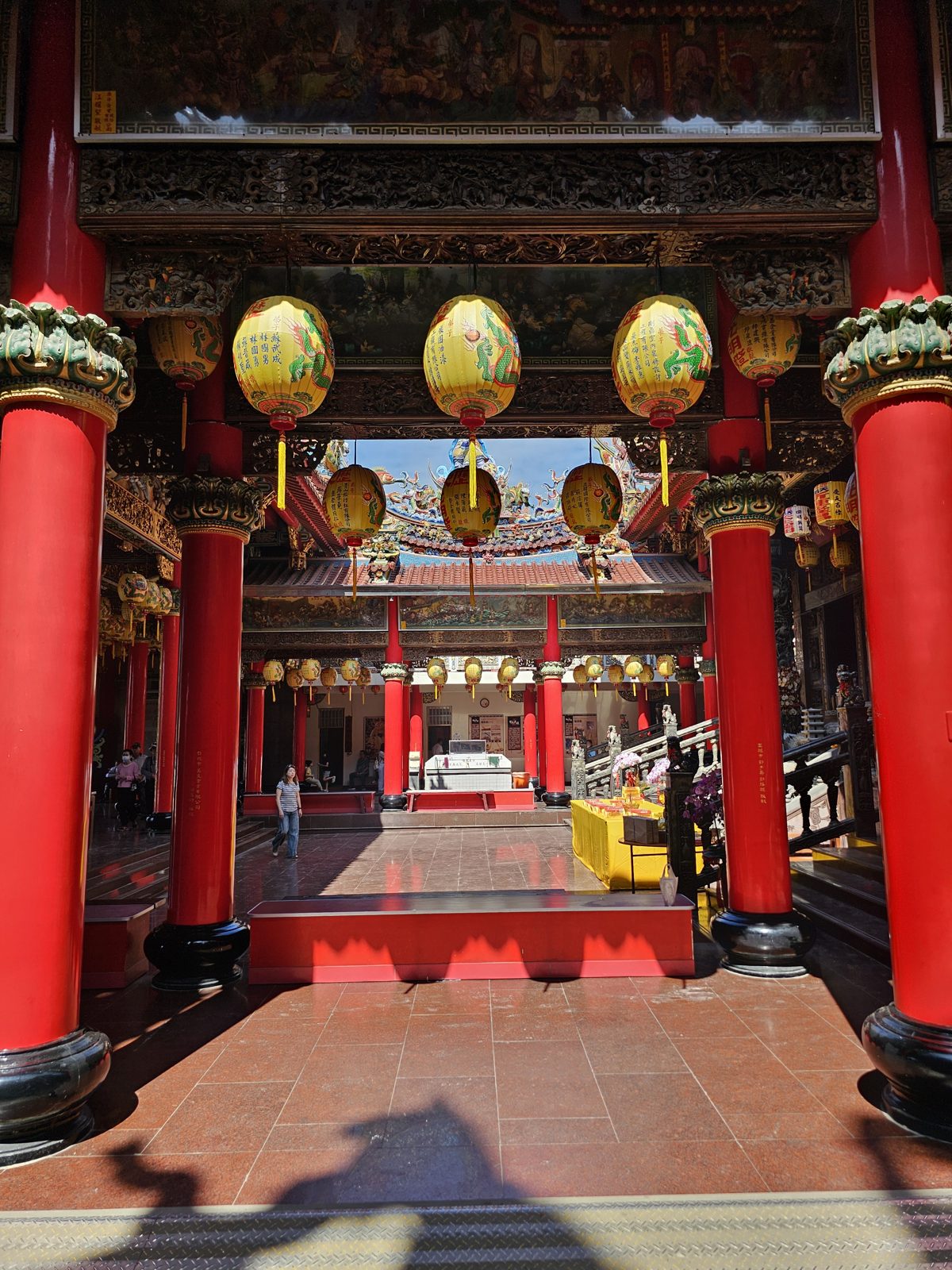
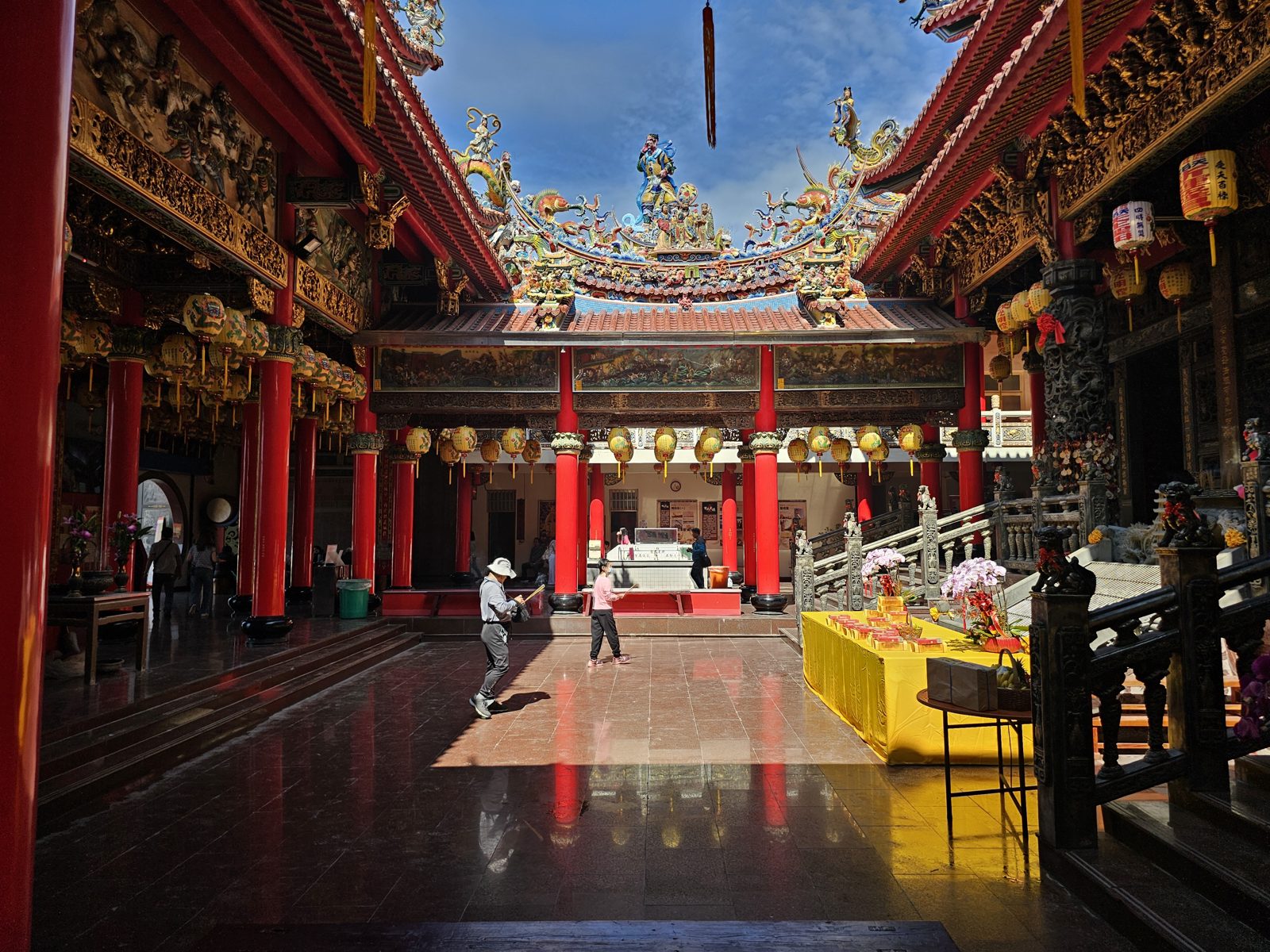
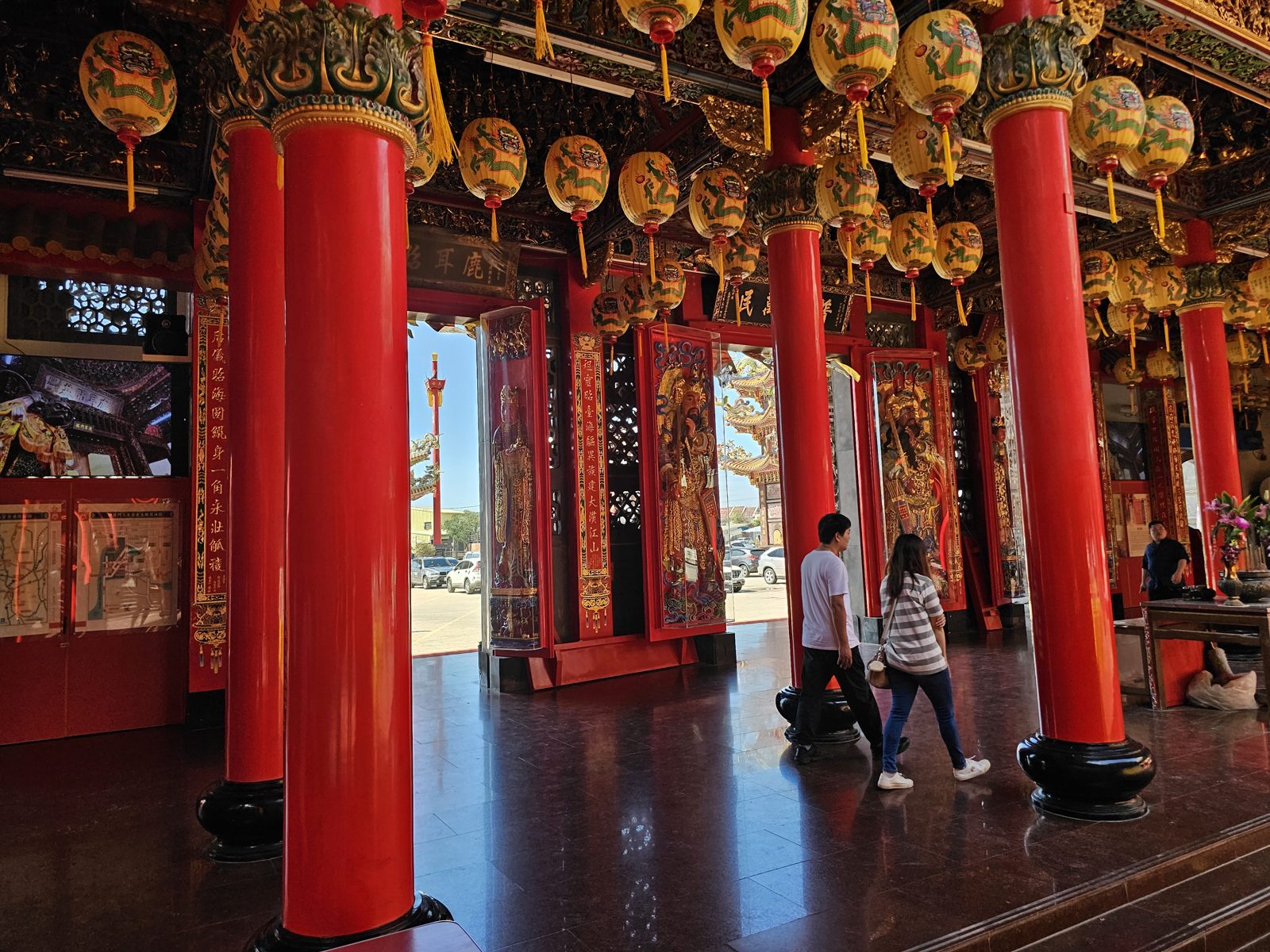
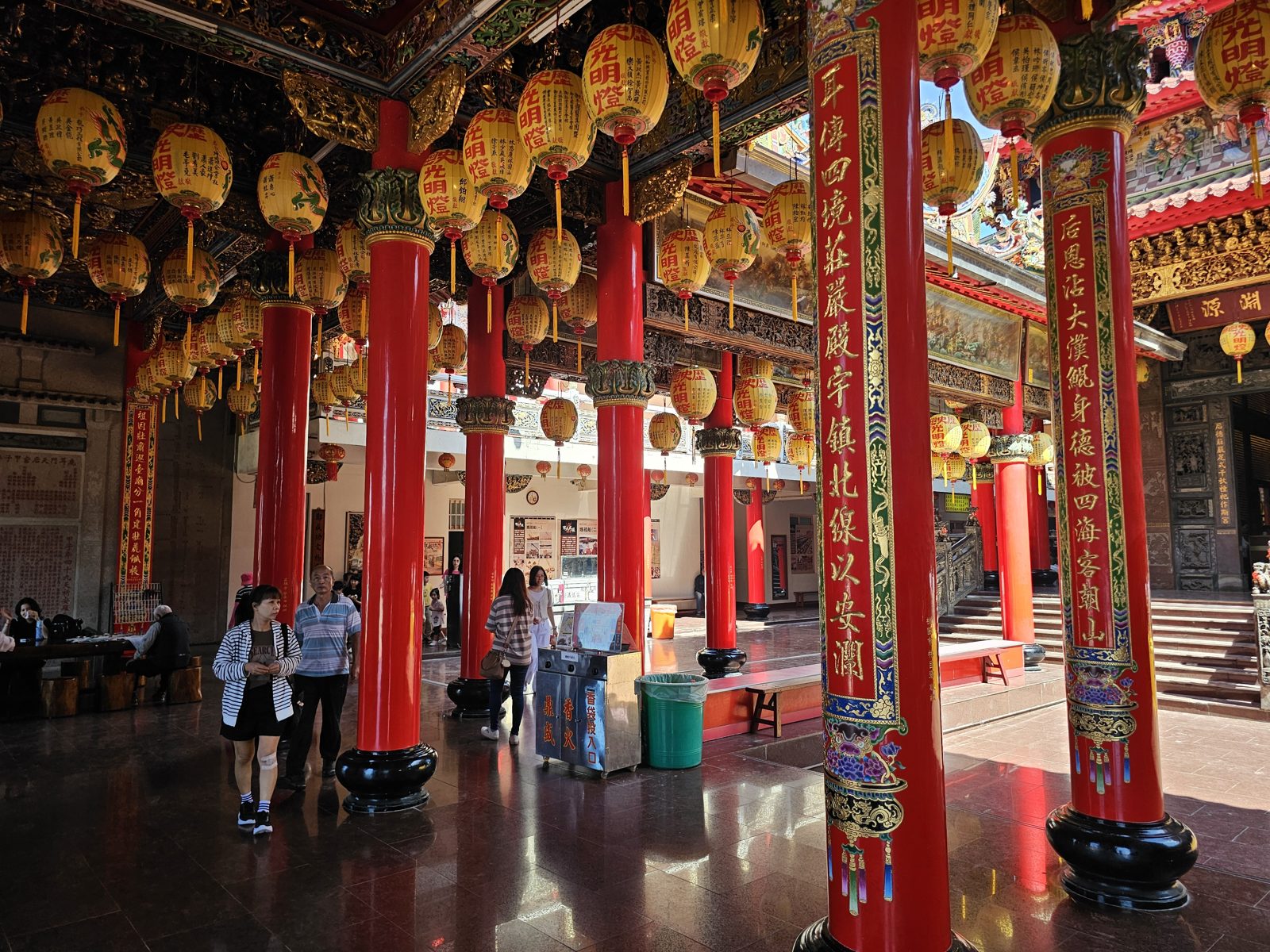
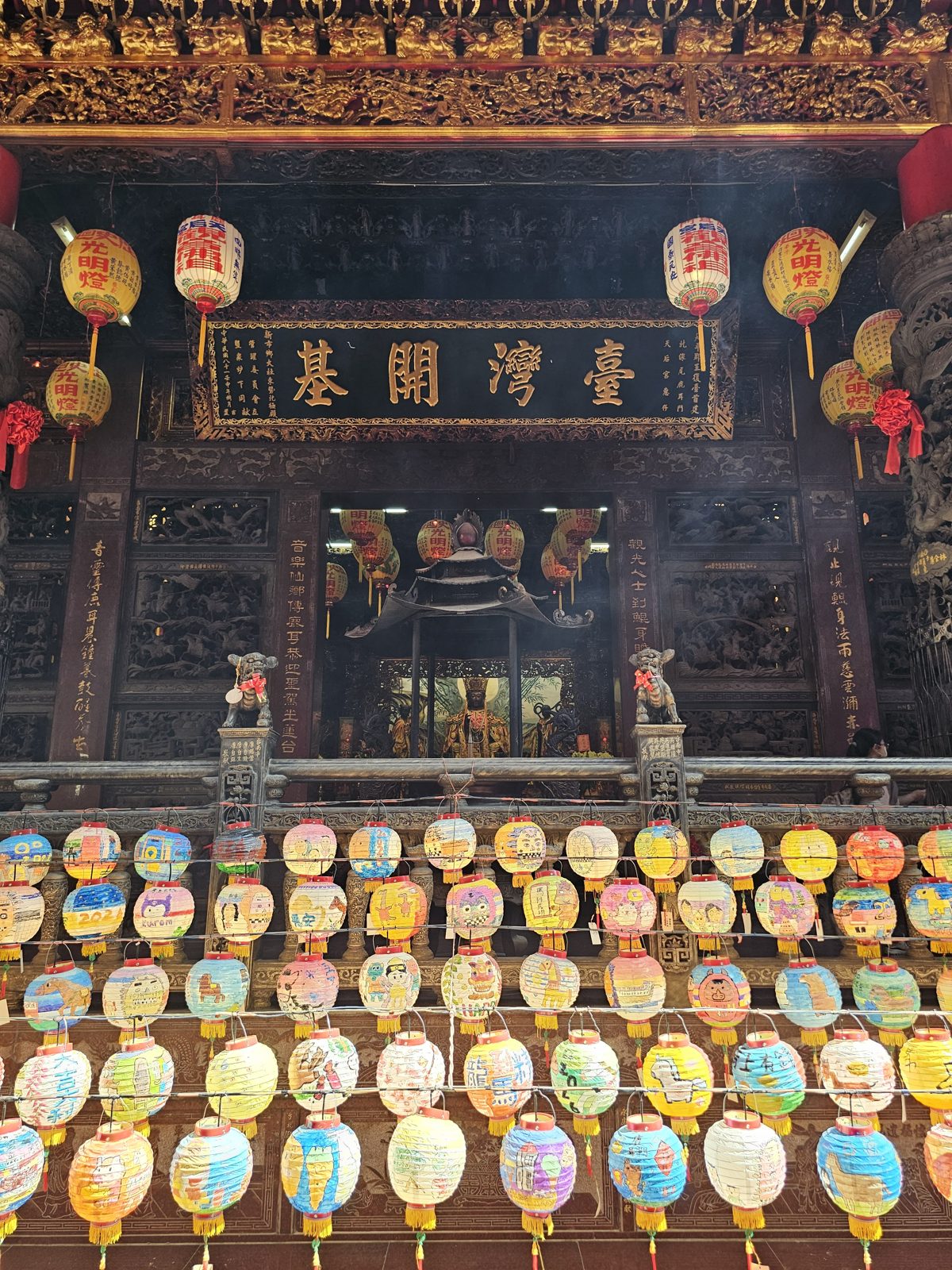
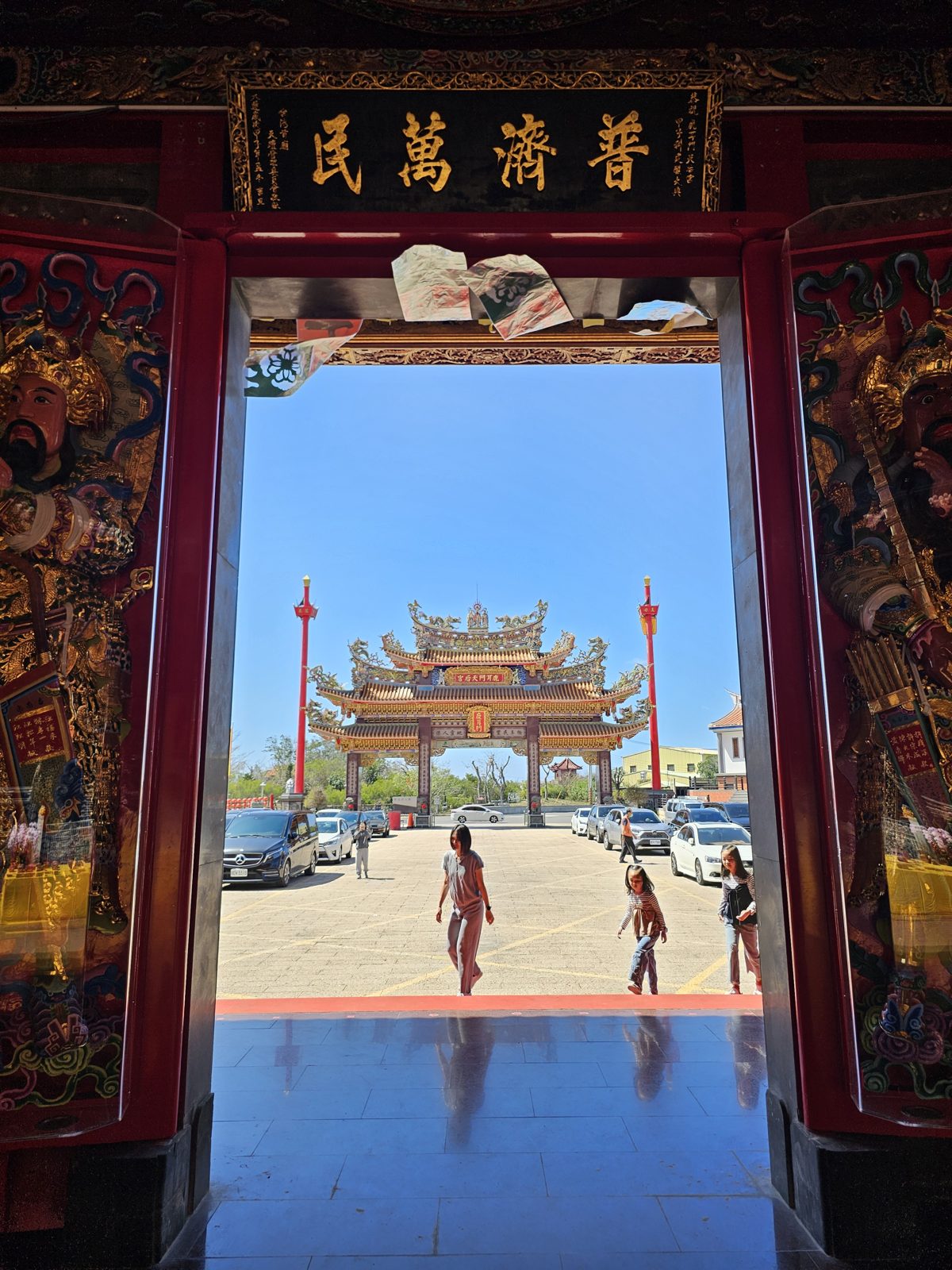
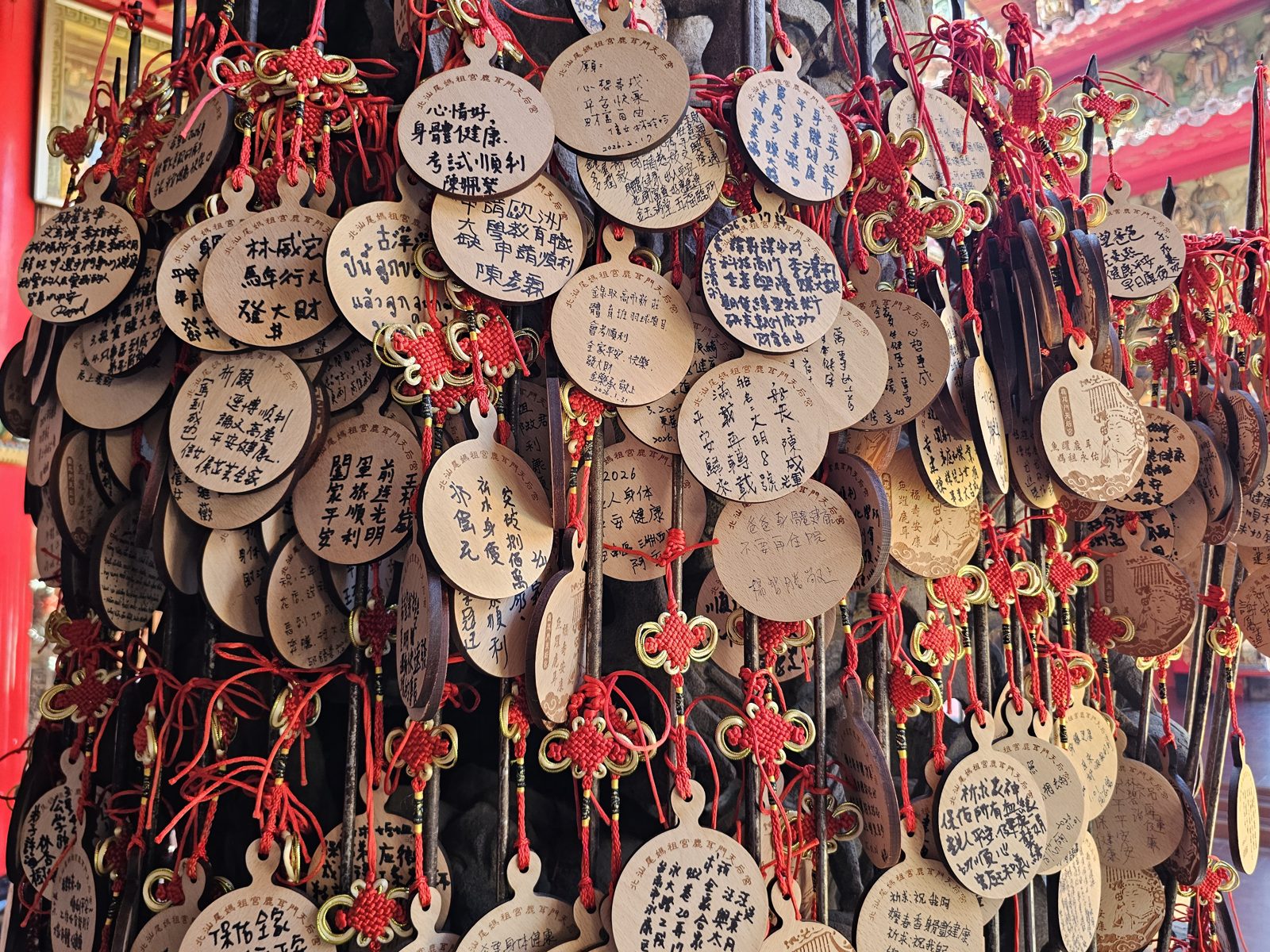
Inside the temple
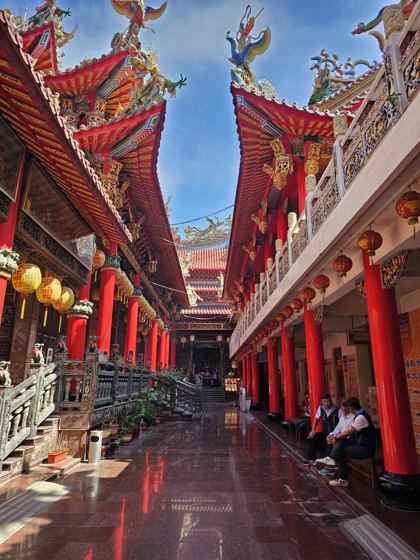
Inside the temple
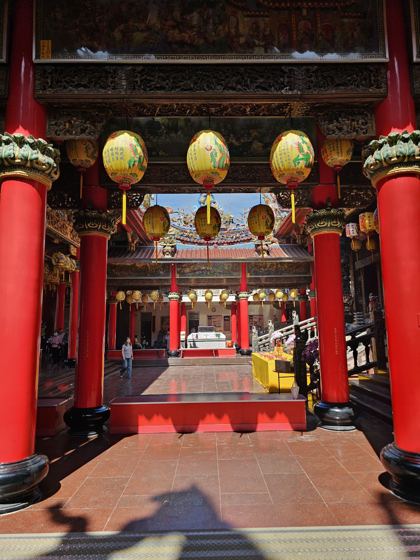
Inside the temple
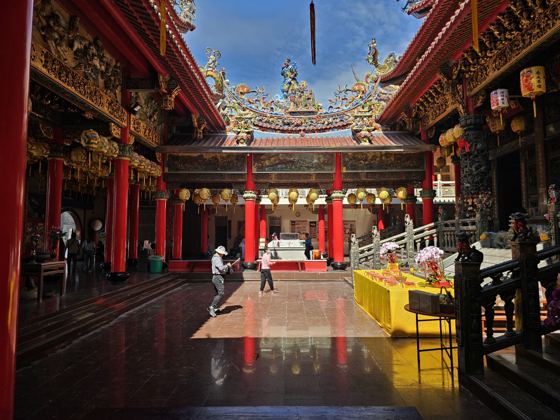
Inside the temple
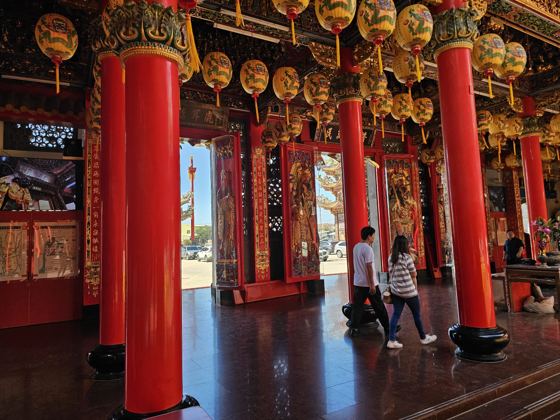
Inside the temple
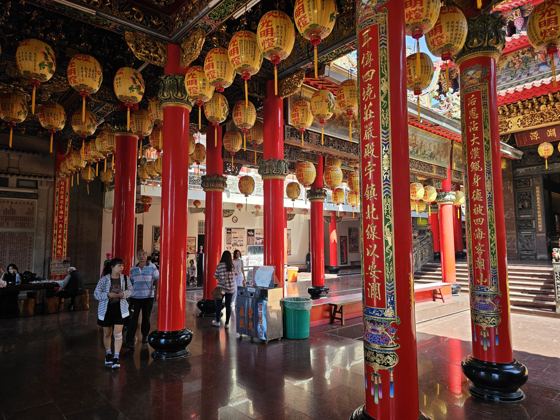
Inside the temple
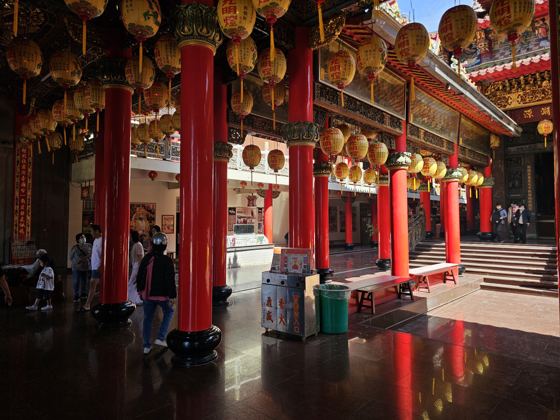
Inside the temple
Inside the temple
Inside the temple
Inside the temple
Inside the temple
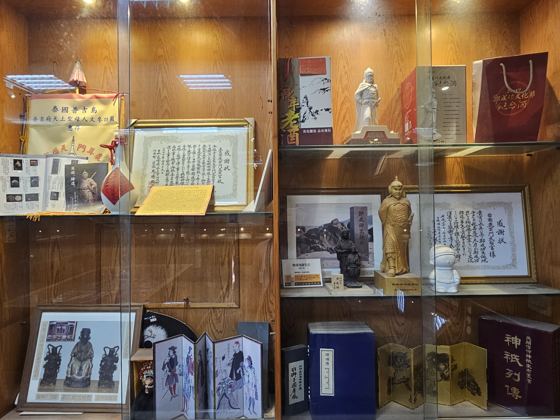
Inside the temple
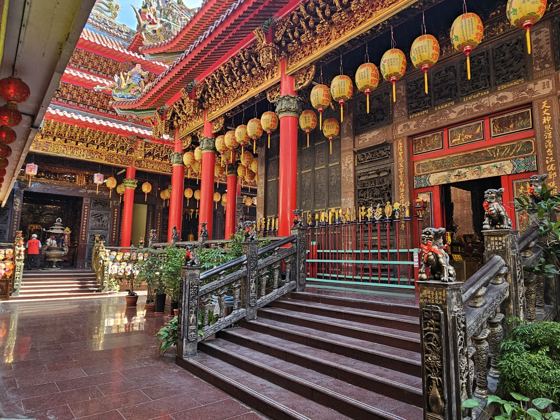
Inside the temple
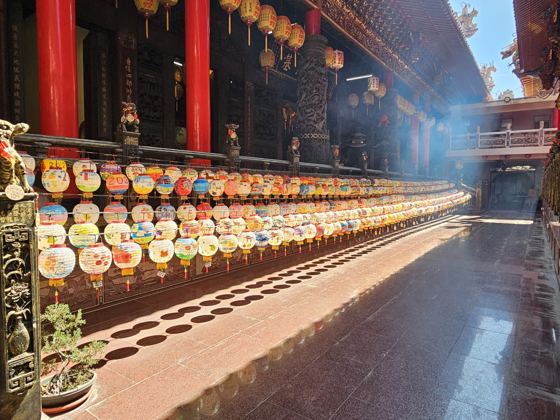
Inside the temple
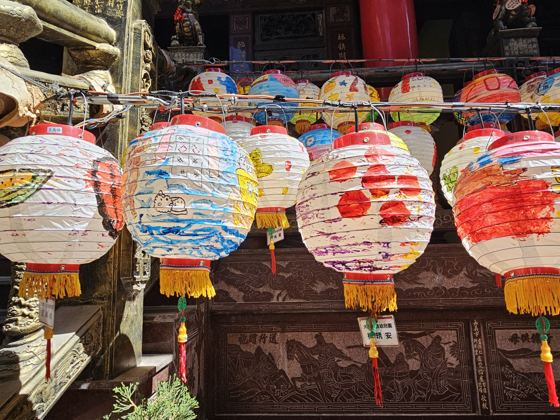
Inside the temple
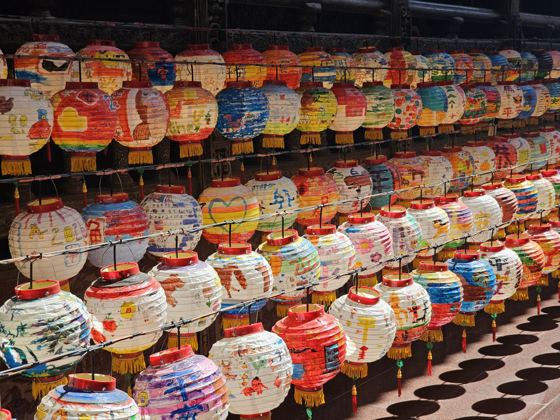
Inside the temple
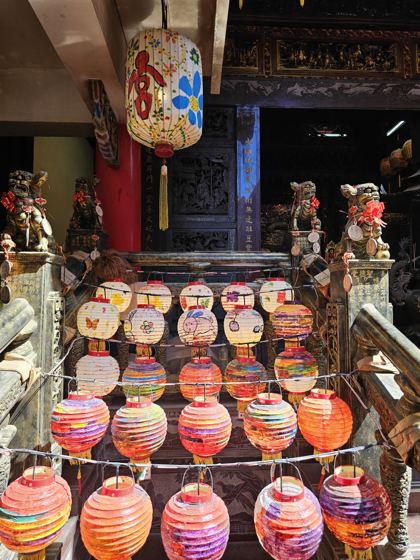
Inside the temple
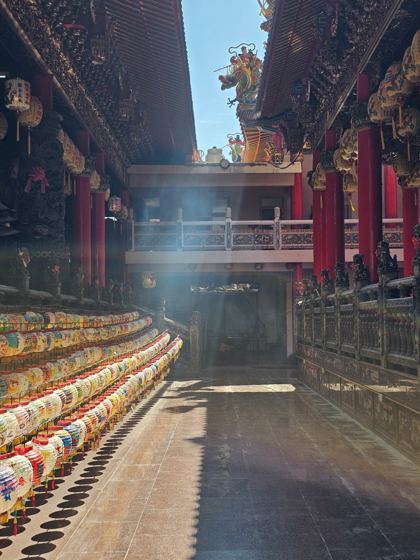
Inside the temple
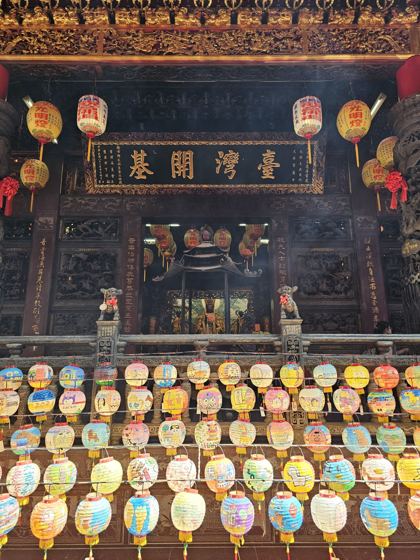
Inside the temple
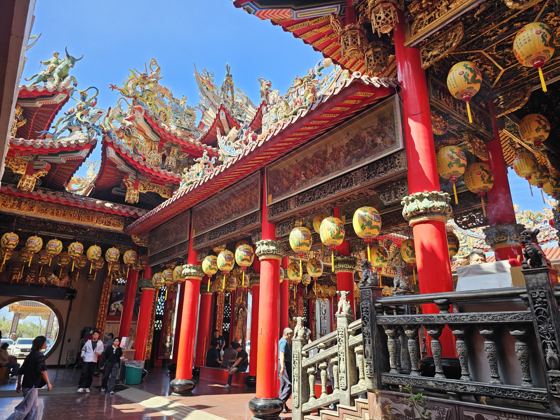
Inside the temple
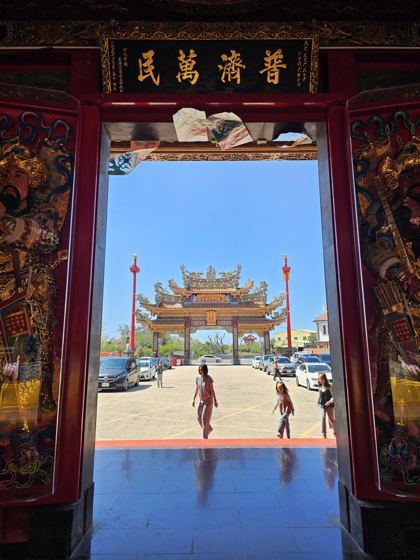
Inside the temple
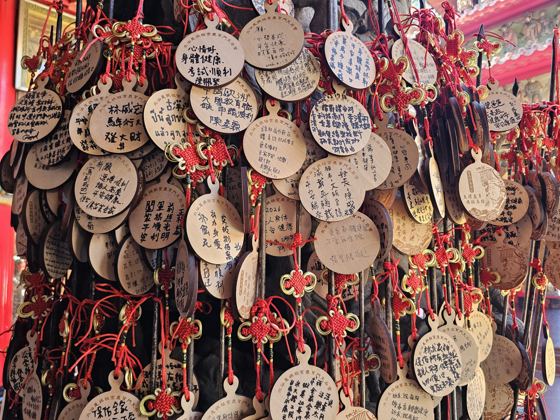
Inside the temple
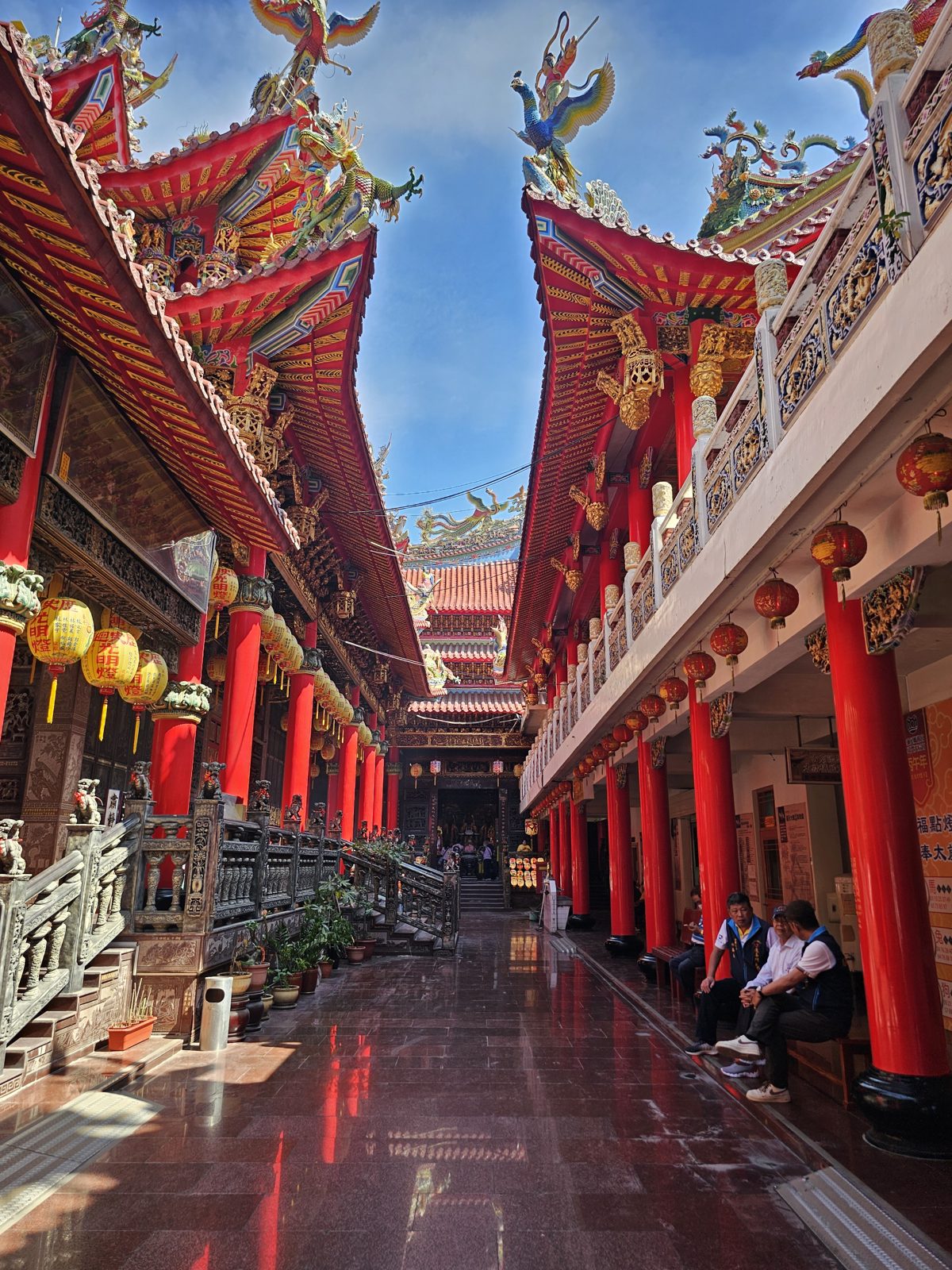
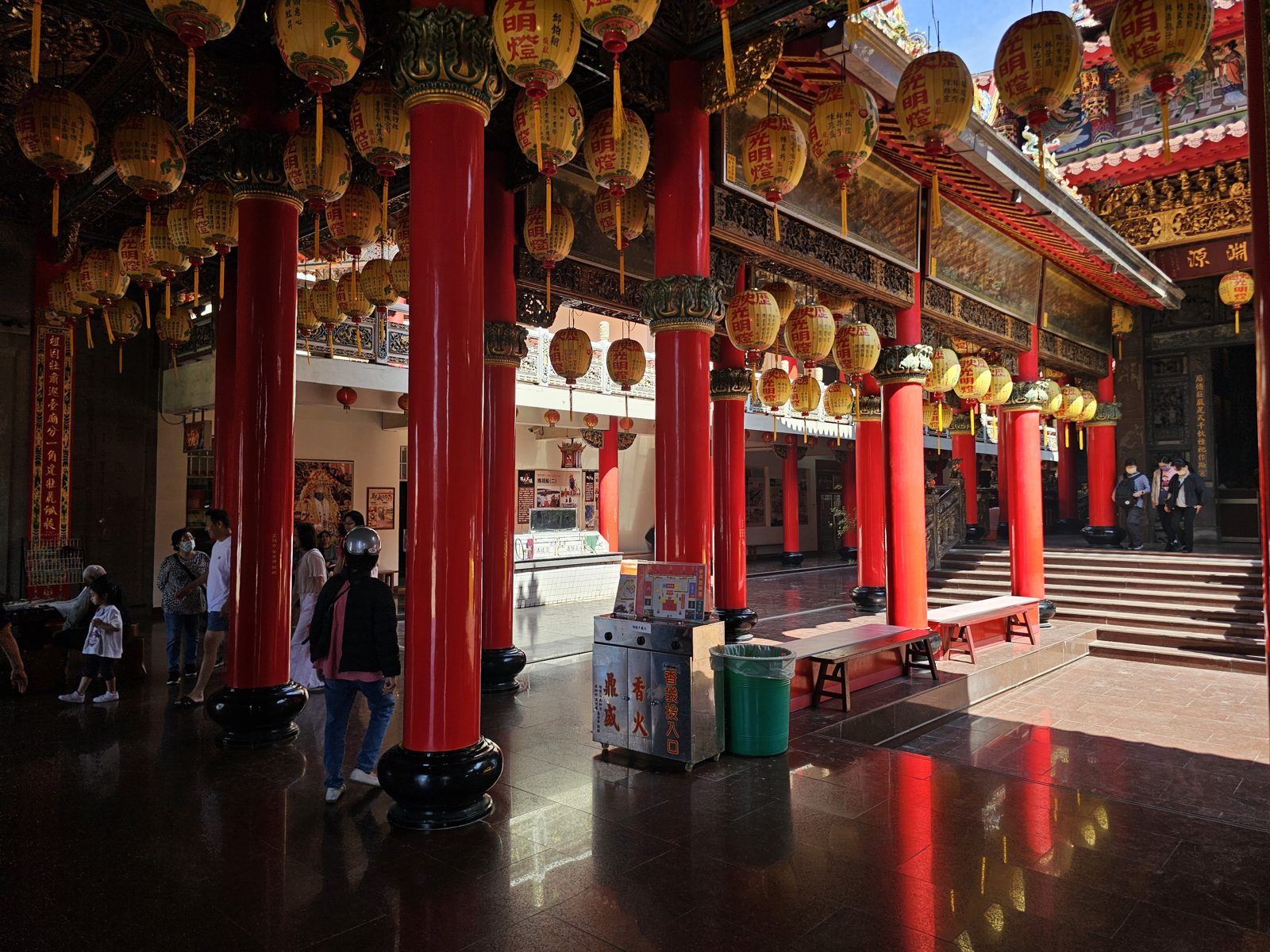
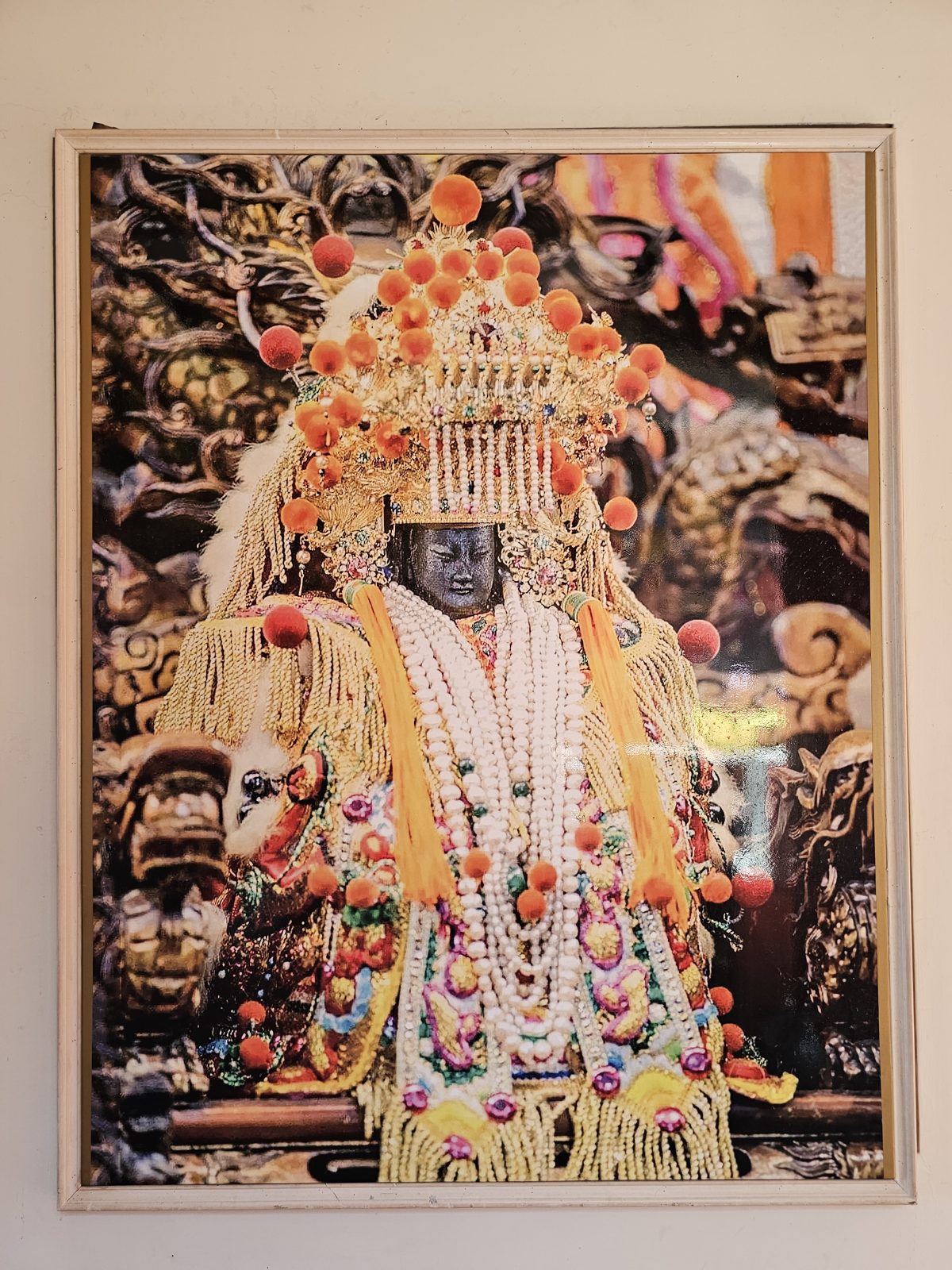
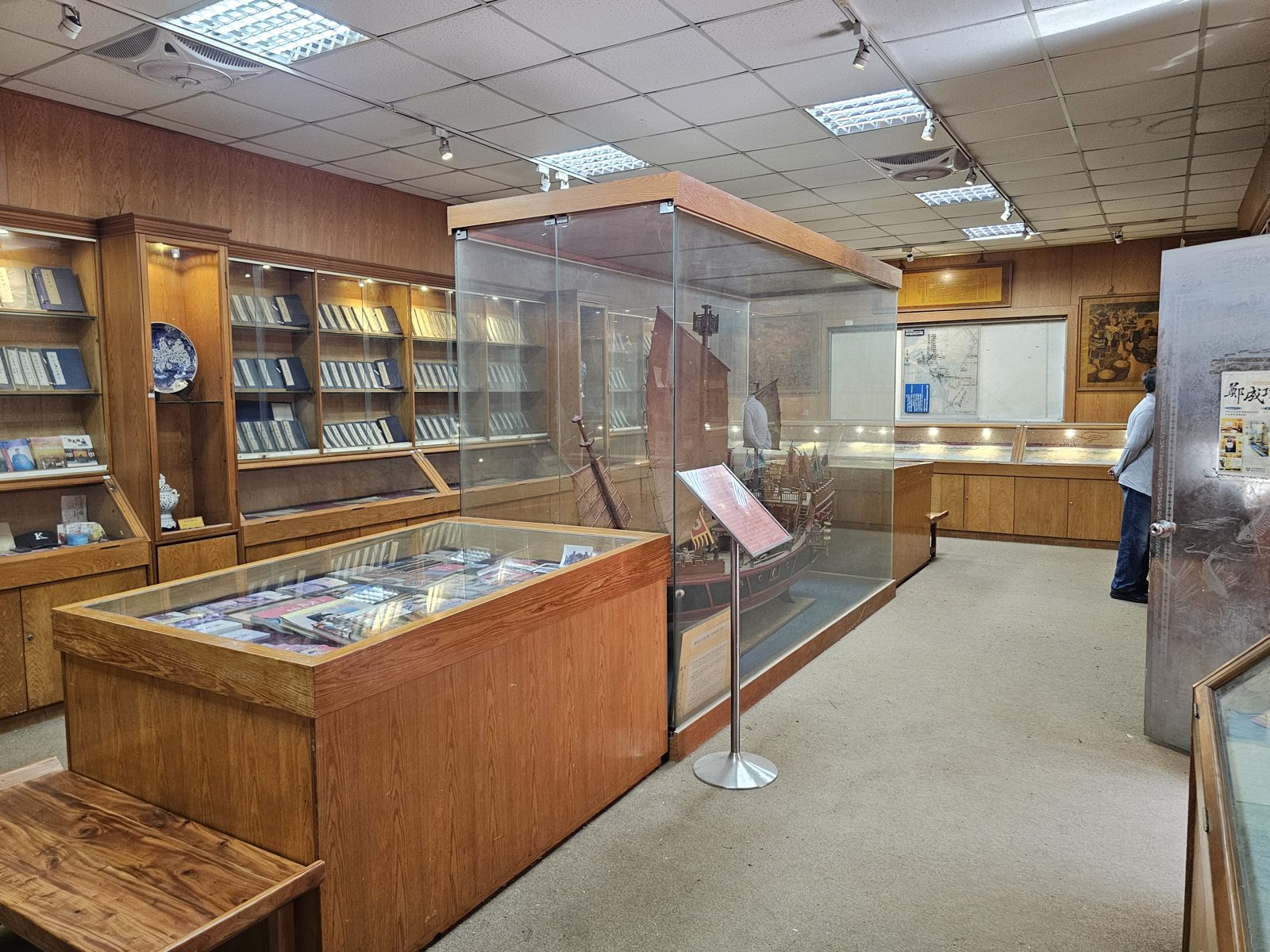
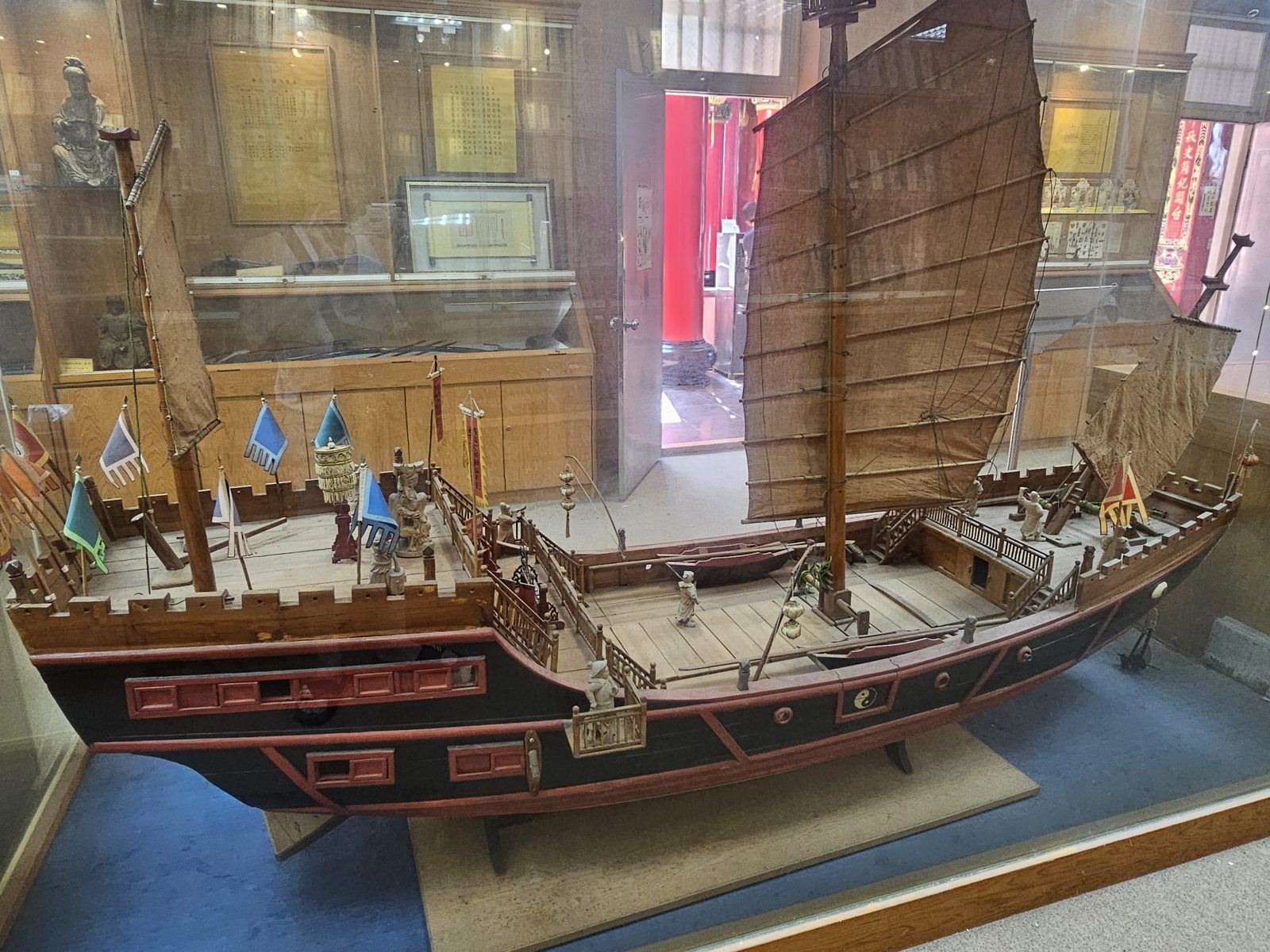
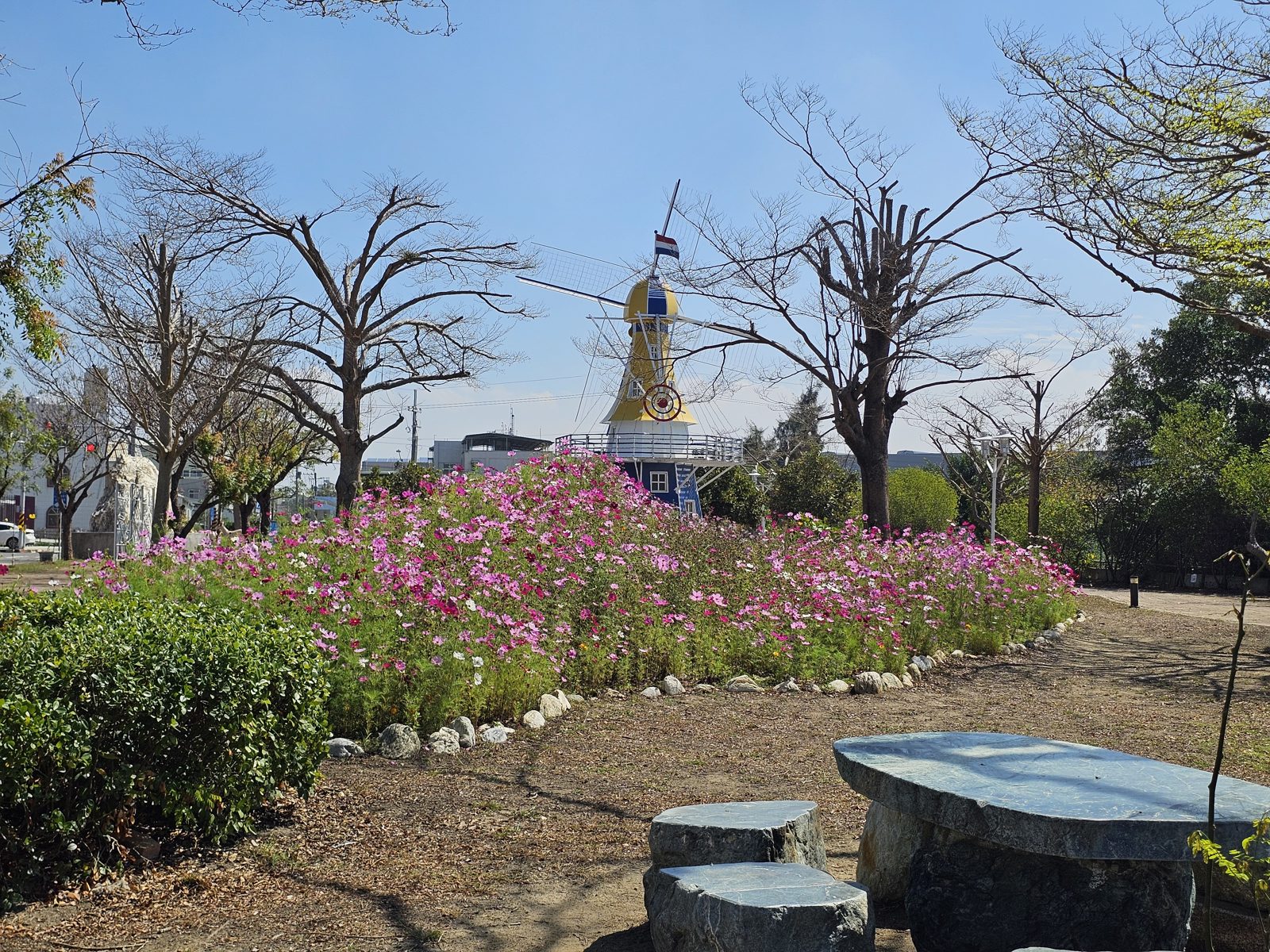
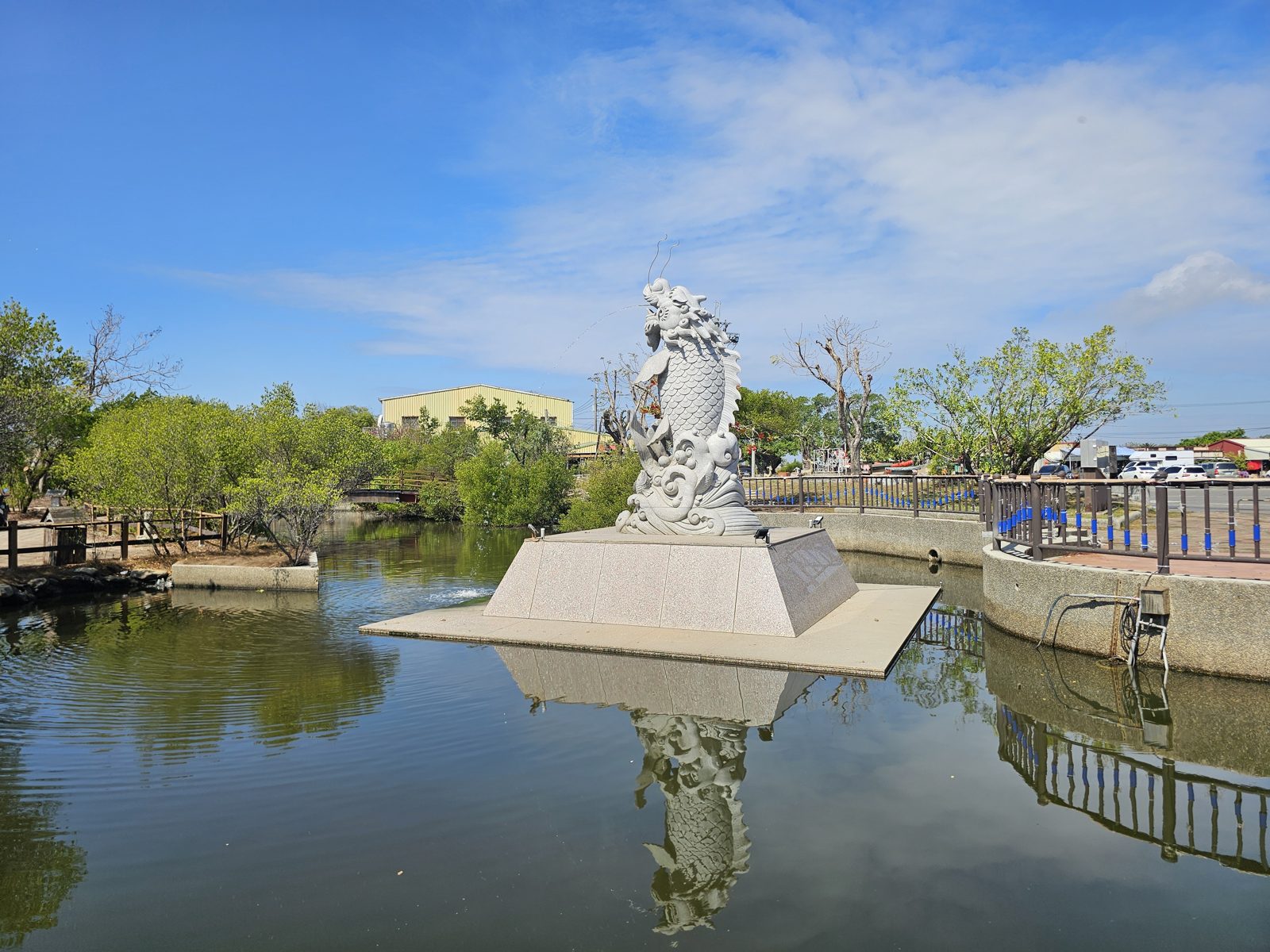
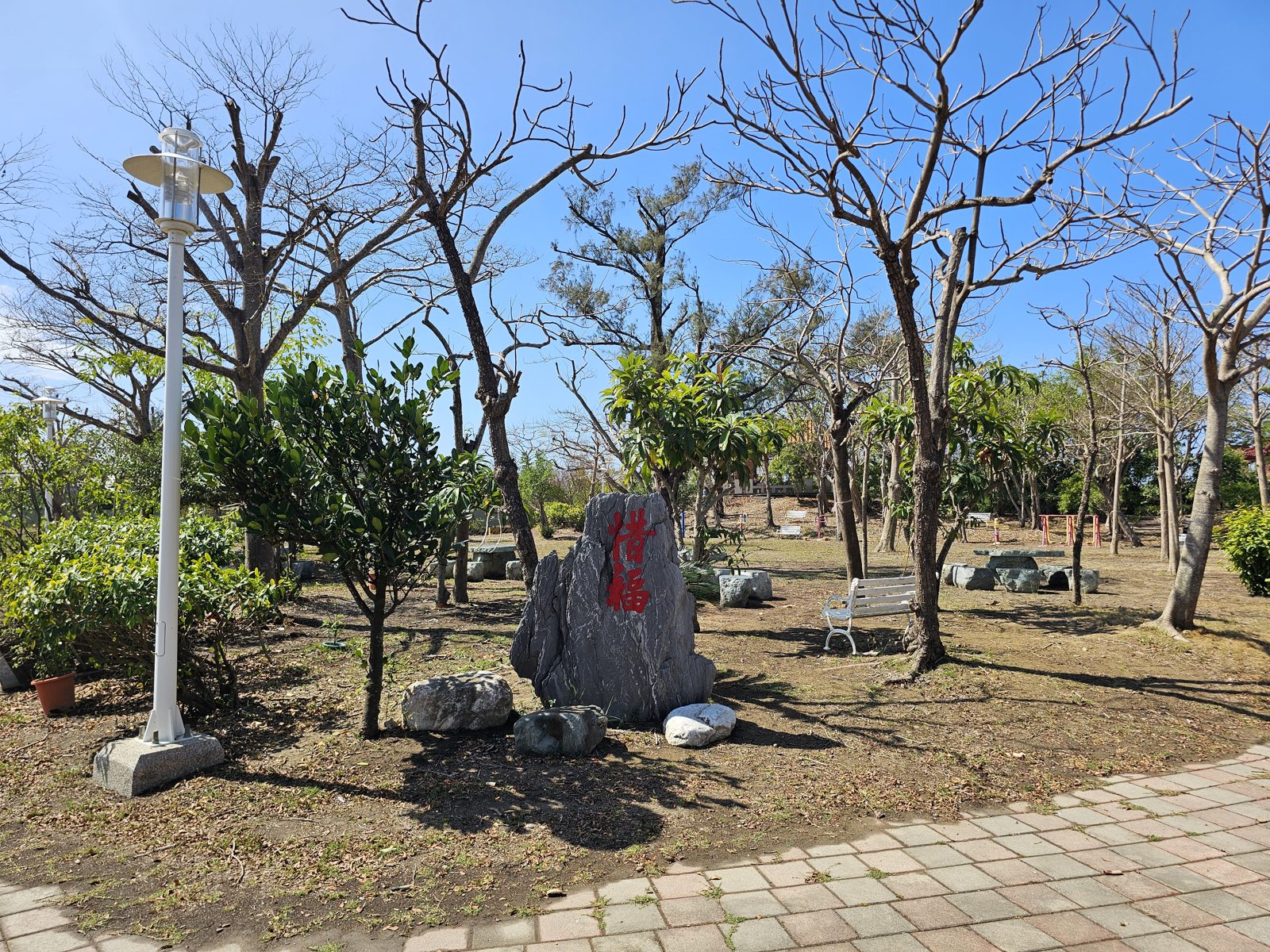
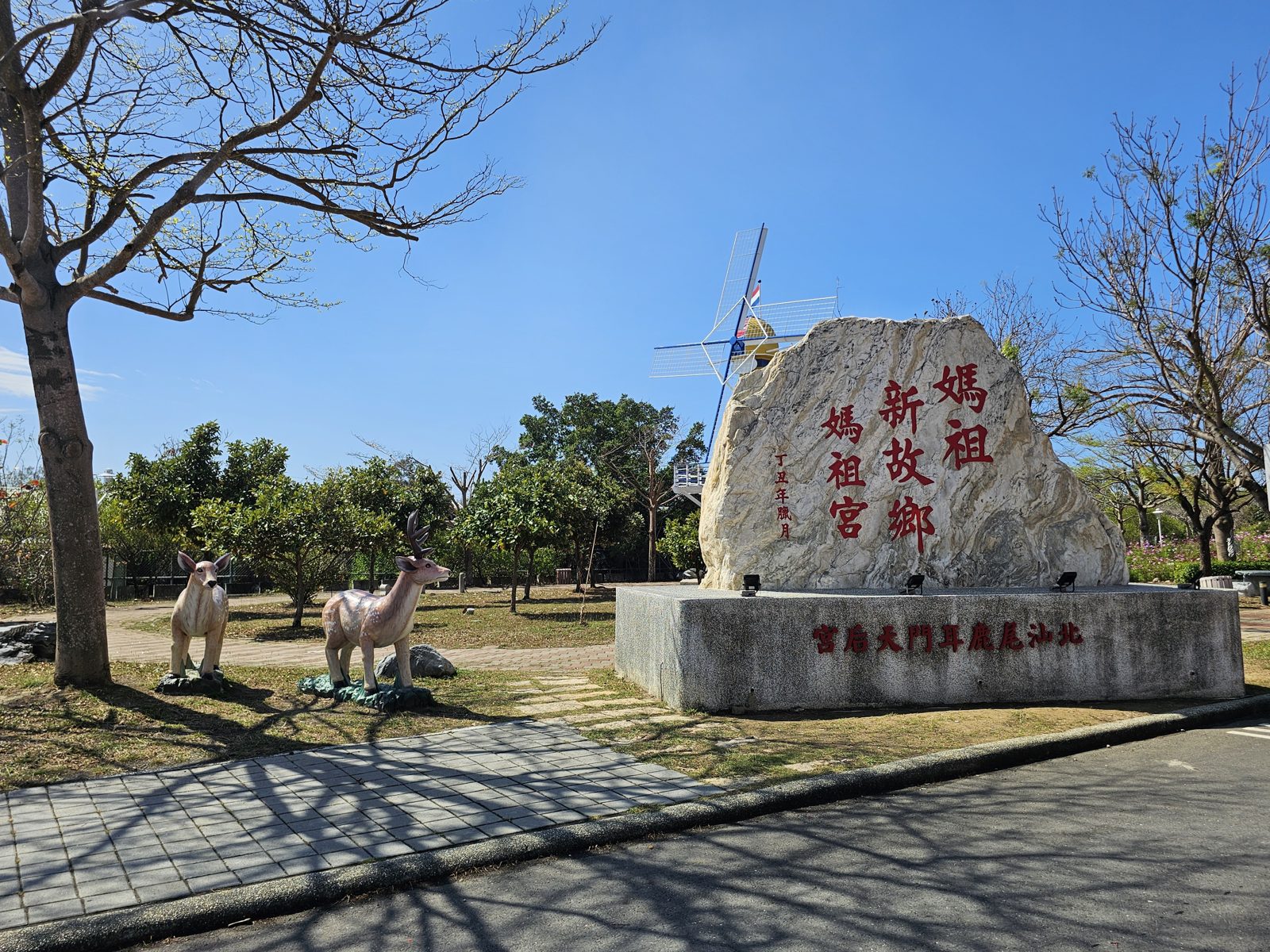
Mazugong Park
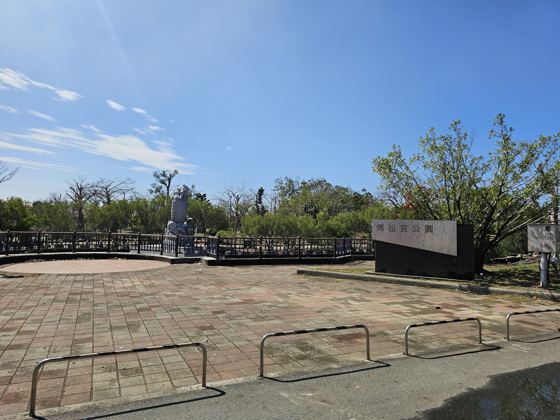
Mazugong Park
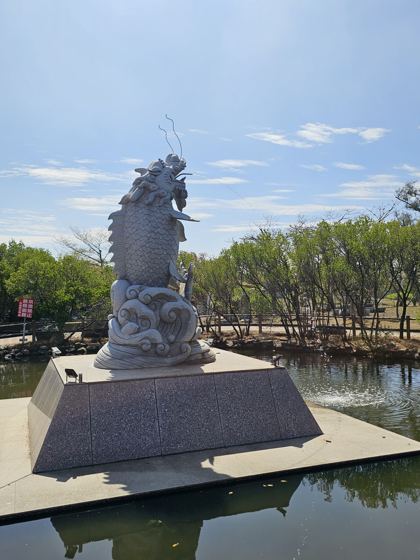
Mazugong Park
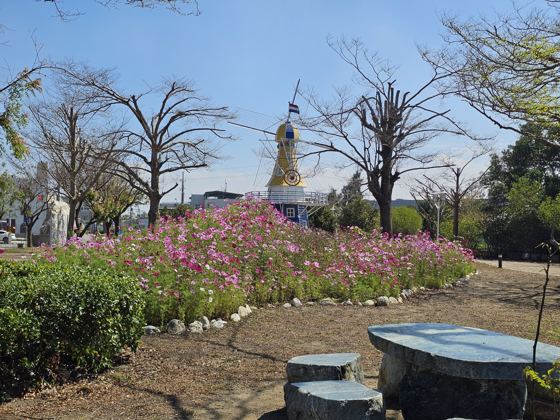
Mazugong Park
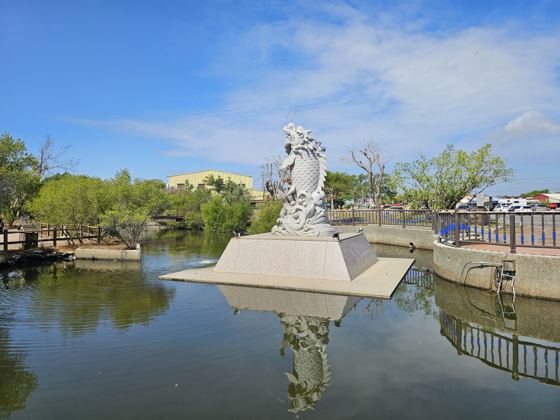
Mazugong Park
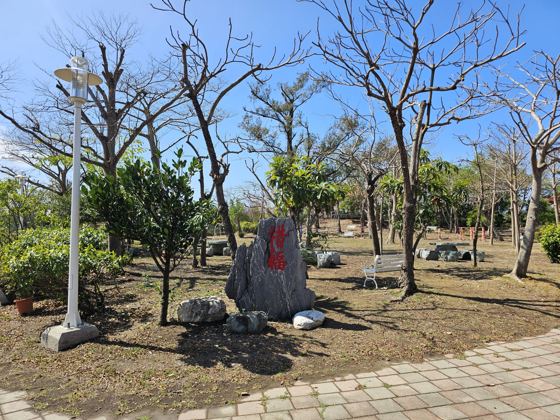
Mazugong Park
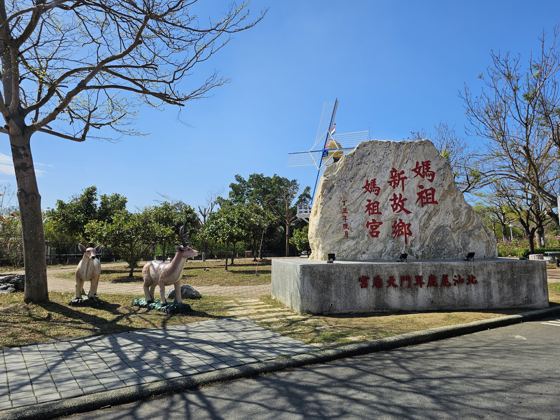
Mazugong Park
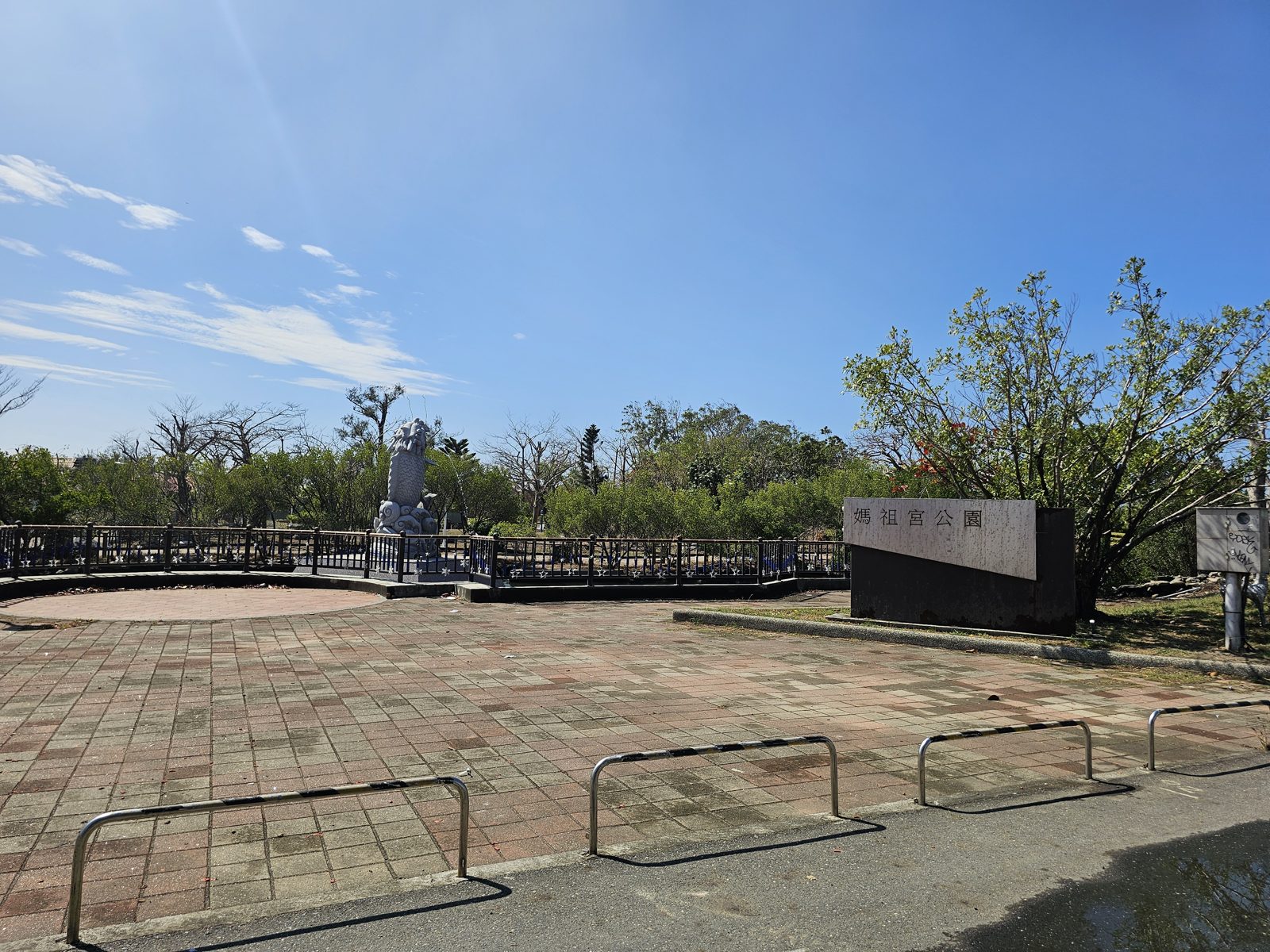
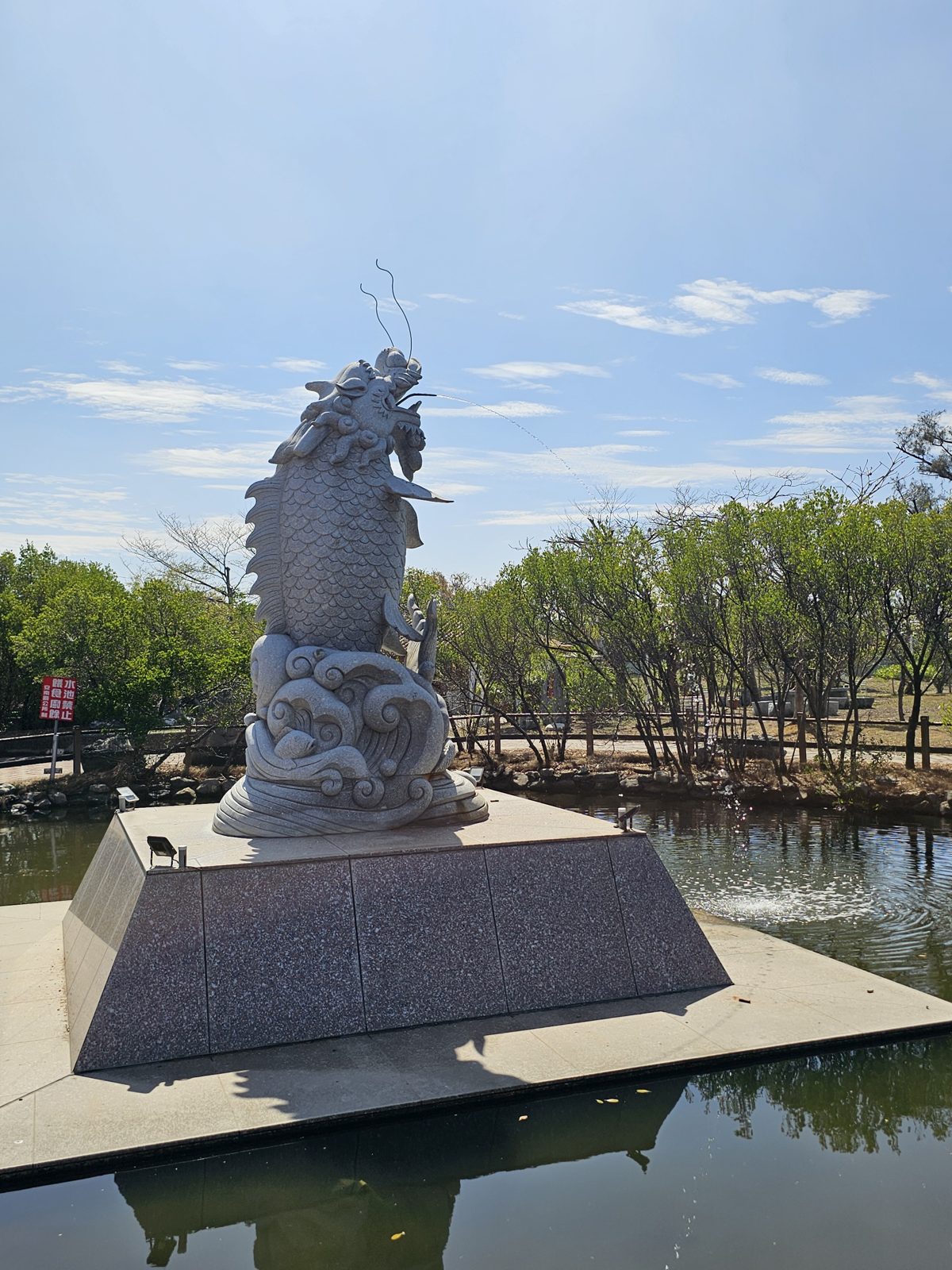
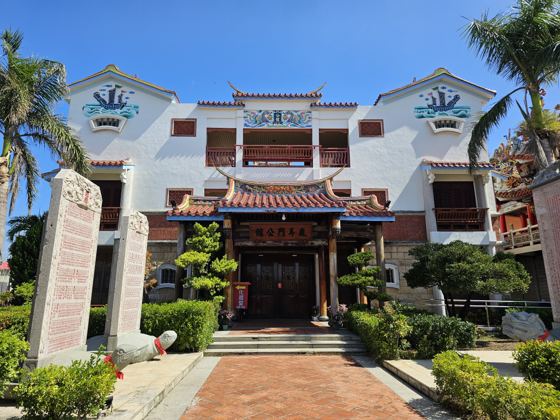
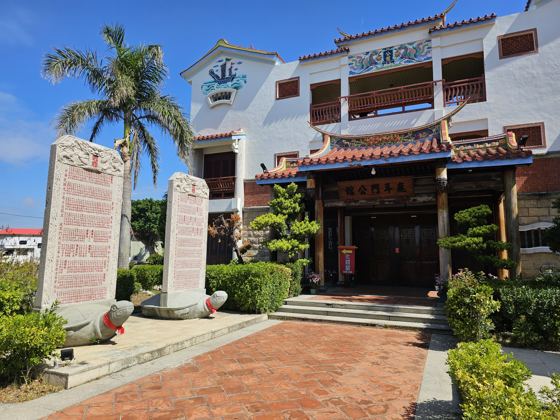
Luermen Gongguan
Luermen Gongguan
Luermen Gongguan
Luermen Gongguan
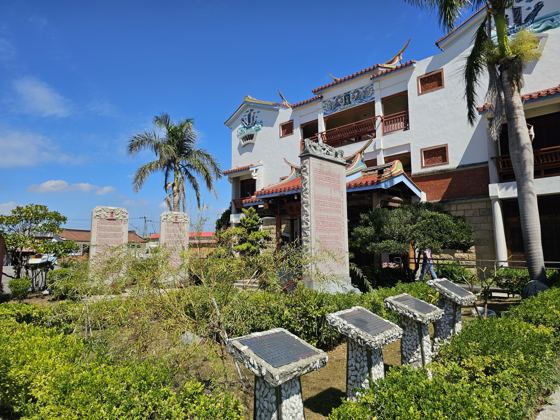
Luermen Gongguan
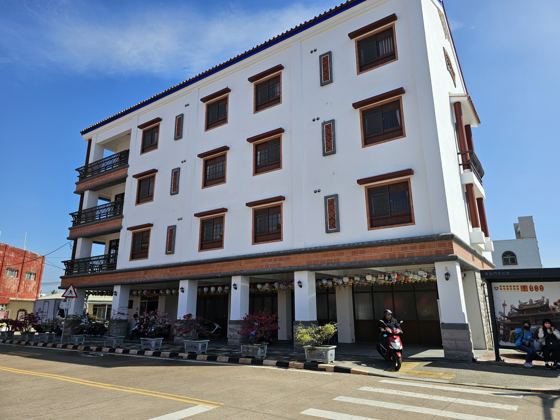
Luming Hall
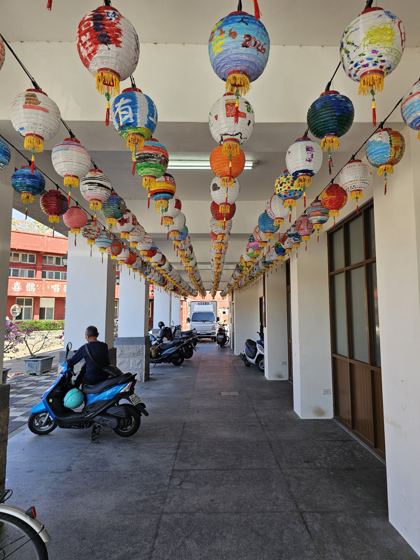
Luming Hall
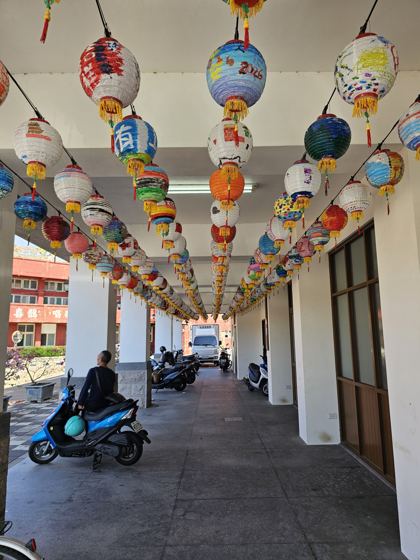
Luming Hall
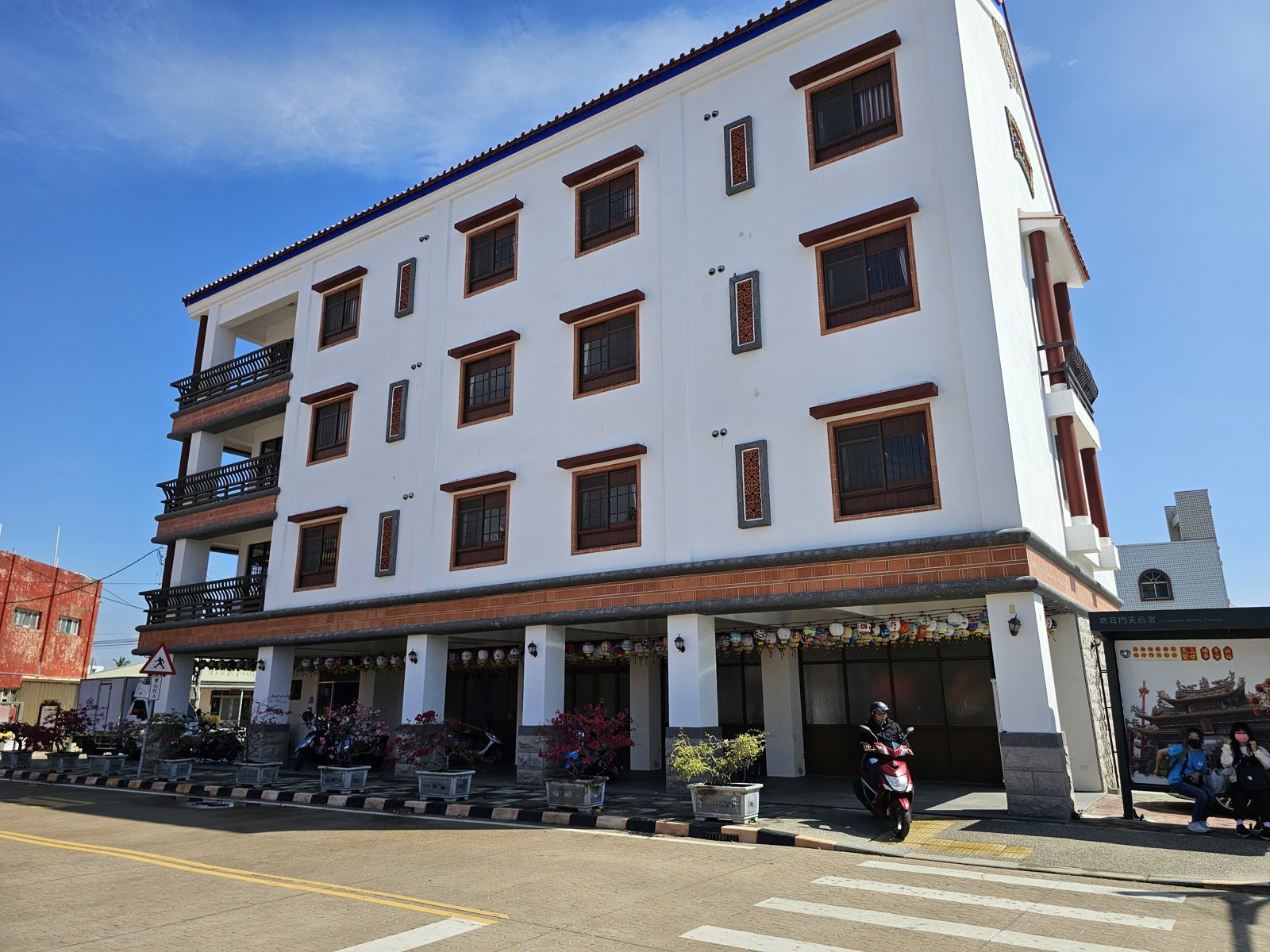
Luming Hall
Events that happened here
- 1993Sealing Ceremony (Fengyin Dadian)The Sealing Ceremony (Fengyin Dadian) is the Luermen Tianhou Temple's deity send-off rite held at dawn on the 24th day of the 12th lunar month each year, first held in 1993: the sealing minister wraps and seals the temple seal, the round-altar envoy closes the altar at the Qinian Altar, and finally the God of Joy command token is burned to send off the gods.
- 1993Luermen Tianhou Temple Cultural FestivalThe Luermen Tianhou Temple Cultural Festival is the annual cultural event of the Luermen Tianhou Temple, founded in 1993 under the leadership of the chairperson Lin Hsien-yang; the Lunar New Year "Mazu Year" rites of sending off and welcoming the gods grew out of it.
- 1993Deity Send-off and Welcoming Rites of the Luermen Tianhou TempleThe Deity Send-off and Welcoming Rites of the Luermen Tianhou Temple are the rites of sending off the gods (the Sealing Ceremony) and receiving them (the Grand Ceremony of Welcoming the God of Joy) held by the Luermen Tianhou Temple around the Lunar New Year; begun in 1993, they were registered as Tainan City folklore in 2013.
- 2005Taijiang Welcoming-the-Deities FestivalThe Taijiang Welcoming-the-Deities Festival is the procession of the Luermen Mazu held irregularly by the Luermen Tianhou Temple, chiefly covering the sixteen liao of Taijiang; it was first held in 2005, for the second time in 2012 and for the third in 2021.
- Grand Ceremony of Welcoming the God of JoyThe Grand Ceremony of Welcoming the God of Joy is the Luermen Tianhou Temple's ceremony for receiving the gods, held each year at the Qinian Altar on the morning of the 4th day of the Lunar New Year, in which the year's God of Joy (a God of Wealth) is welcomed with an official-style rite of three offerings accompanied by music and dance.
Spirit-division and incense network
Linked to Luermen Tianhou Temple by spirit division, incense division, incense lineage, or incense festival ties: 34 temples in all, listed by city/county and district in Luermen Mazu's branch temples and incense network.
Works
- 《Luermen, Gateway of Taiwan: Cultural Handbook of the Tienhou Temple at Luermen (台灣之門 鹿耳門:鹿耳門天后宮文化手冊)》 2002,台南市鹿耳門天后宮 [Luermen Tianhou Temple, Tainan City],author
Reports that mention it
Hall of Faith3.3Faith / Temple historiesMain
Luermen Tianhou Temple
Two official records of the Qing-period temple site corroborate each other, and both point to the bed of the Luermen River some 800 to 900 meters east of today's temple; the temple also holds the Stele Record of the New Luermen Official Lodge (新建鹿耳門公館碑記), unearthed from the river in 1777.
Hall of Faith3.2Faith / The orthodoxy dispute
The Orthodoxy Dispute
A survey in 1956 opened nearly a decade of debate; and the most even-handed piece of evidence today is that the two sides' Qing-dynasty stele inscriptions are preserved, one each, in the two temples that now stand opposed.
Hall of Faith3.2bFaith / The orthodoxy dispute
The Orthodoxy Dispute: Sixty Years of Debate between Two Luermen Mazu Temples
On the north bank of the Luermen River stands the Orthodox Luermen Shengmu Temple, and on the south bank the Luermen Tianhou Temple; both say they carry on the incense lineage of the Qing-dynasty old Luermen Mazu Temple. Beginning with a survey in 1956, press conferences, petitions, official documents and special newspaper issues followed one after another. The two sides' own words are quoted as they were and set alongside scholars and official documents; this site does not adjudicate.
Hall of Origins1.5Settlement / Place names and jiaotou
Poems and Steles of Tucheng
As early as the Qianlong era, four officials and literati wrote poems on Luermen, and these poems are now carved on walls in Tucheng; there are also several little-documented steles scattered around Zhongzhoujiao, Qingcaolun and the banks of Zhufagang.
Hall of Faith3.2cFaith / The orthodoxy dispute
1661: Koxinga Enters Taijiang through Luermen
On a foggy morning at the end of April 1661, several hundred junks appeared outside the Luermen channel. Koxinga went ashore first by small boat to survey the ground, the fleet sailed into Taijiang on the tide, and that evening the main force landed at Heliao Harbor north of Chikan. This page compares, passage by passage, the campaign record of Yang Ying on the Zheng side with the day-by-day journal kept in the Dutch castle, and explains where these places are today and which matters the historical sources cannot settle.
Hall of Faith3.9Faith / Temple governance
How a Temple Is Run: The Legal Status, Organization and Money of Temples
What a temple is in law, who manages it, where its money comes from, who sees its accounts, and how it relates to city councilors. From the 1929 Act Governing the Supervision of Temples and the Temple Registration Regulations abolished in 2018 to the three organizational types in use today, set beside the public records and organization charts of the Shengmu Temple, the Tianhou Temple, the Sicao Dazhong Temple and the Xuejia Ciji Temple; and finally, the records readers can look up for themselves.
Hall of Origins1.2Settlement / Place names and jiaotou
The Eleven Jiaotou and the Upper and Lower Bao
The difference between ten jiaotou and eleven is the single jiaotou of Xiashifenwen; the lists of four jiaotou in the Upper Bao and seven in the Lower Bao come from two independent sources, and all eleven jiaotou are named on the "Sanzhao Xiangjiao Fuzhang" of the jiao festival.
Hall of Faith3.1Faith / Temple histories
Orthodox Luermen Shengmu Temple
The temple's own account divides its history into four stages: a thatched temple in the Song dynasty, official construction in 1719, the royal boat that drifted ashore in 1913 and the second building of 1918, and the third building of 1975; yet official-grade sources disagree with one another on the year the old temple was destroyed and on the origin of the royal boat.
Hall of Faith3.5Faith / Temple histories
Other Temples in Annan District
Beyond the Ministry of the Interior's registration roll there is a group of unregistered temples; and of the "divine boats" of the Taijiang area, the official list names only four, two of which are in Tucheng and Xiangong.
Hall of Faith3.8Faith / Temple events
Who Comes to the Shengmu Temple, and What They Do There
Looking at the Shengmu Temple as a place in use: pilgrims and procession troupes, fireworks watchers, night-market goers, people staying in the pilgrim lodges (pilgrims, a film crew, disaster evacuees, race participants, reservist training units), and people exercising on the temple plaza; voters, however, have never come here — in the official lists for both 2008 and 2016, the polling stations of the five villages of Tucheng were in activity centers.
Hall of Incense Festivals4.1Incense Festivals / Tucheng Incense Procession
Tuchengzi Incense Procession
Incense procession and jiao combined, held once every three years (in Chou, Chen, Wei, and Xu years), with a three-day procession circuit of more than 100 kilometers, registered as a Municipal Folk Custom in 2013; permanently enshrined royal boats are a regional custom of the Taijiang–Anping sandbar belt, and Tucheng's is the largest example; there are six versions of the 1958 break in incense ties.
Hall of Incense Festivals4.1bIncense Festivals / Tucheng Incense Procession
Where the Rules of the Tuchengzi Incense Procession Came From
In 1913 a royal boat (wangchuan) carrying the Wufu Qiansui (Lords of the Five Palaces) drifted ashore at Xibianhuzi. For nearly fifty years afterward Tuchengzi held no jiao of its own: its jiaotou (neighborhood units) followed the Xigangzi Incense Procession and even saw Luermen Mazu carried to the place of honor on the Xigang jiao altar. In 1958 the two sides parted ways, and in 1961 Tuchengzi held its own first cycle. How the Wangfu is arranged, how the Centipede Procession is formed, who serves as presiding Taoist priest and as festival leaders: some of these were learned from Xigang, some were settled by casting divination blocks before the gods, and some were reworked cycle by cycle. This article traces the source of each of these rules, one by one.
Hall of Incense Festivals4.2Incense Festivals / Tucheng Incense Procession
Chronology of Festival Cycles
The Tuchengzi Incense Procession is held once every three years, with festival years falling on Chou, Chen, Wei, and Xu years, and 1961 (Xinchou) as the first cycle; around the 1980s the procession route began to cross to the north bank of the Zengwen River, and the 2027 Dingwei cycle is reported to be changing to a four-day procession circuit.
Hall of Incense Festivals4.4Incense Festivals / The Five Great Incense Processions
Comparing the Five Great Incense Processions of Nanying
A side-by-side comparison of the host temples, festival cycles, and cultural heritage status of the five processions — Xuejia, Xiaolong, Xigang, Madou, and Tucheng — plus Zhijianong, the sixth; the Madou Incense Procession is the only one of the five with no cultural heritage status.
Hall of Incense Festivals4.4bIncense Festivals / The Five Great Incense Processions
Where the Five Great Incense Processions Came From
The Xigang Incense Procession traces itself to a royal boat found at Gumagong in 1784; the Xuejia Incense Procession traces itself to the day in 1661 when Baosheng Dadi came ashore with the settlers; the Madou Incense Procession says the Five Lords drifted to Madou Harbor on a royal boat; the Jintang Temple of the Xiaolong Incense Procession says its incense was divided from the Daren Temple in Guiren; and the Tuchengzi Incense Procession split off from the Xigang procession in 1958 and held its own first cycle in 1961. The legends and the earliest dates the documents can prove are often decades to more than a century apart. What binds a whole cluster of villages together is a system: festival leaders chosen by casting divination blocks, palanquins and troupes sent by each village, and Taoist priests engaged to perform the jiao. This page sets out the origins of the five processions, and where that system came from, with a source for every point.
Hall of Incense Festivals4.6Faith / Temple events
The Lantern Festival: Fireworks, the Spring Ox, and the Street Parade
Tucheng's Lantern Festival has two sets of protagonists: one is the aerial fireworks and beehive fireworks encircling the temple that officials and the media report on every year; the other is something only local people remember — schoolchildren led by their teachers to parade in front of the temple, and, after the fireworks, being unable to squeeze out of the crowds.
Hall of Incense Festivals4.7Incense Festivals / The break in incense ties and its restoration
The Haiwei and Tucheng Incense Processions: A Thirty-Six-Year Break in Incense Ties
For the first three cycles of the Tuchengzi Incense Procession, the presiding deity of the jiao altar was the Baosheng Dadi of the Haiwei Chaohuang Temple; after the third cycle the two sides broke off ties for thirty-six years, until three favorable divination-block casts in 2002 led the Tucheng Incense Procession's second-day route to pass through Haiwei again in 2003.
Hall of Education7.5Incense Festivals / Troupes
Procession Troupes and Schools
In Tucheng, the zhentou (procession troupe) tradition is passed down through the village temples, not the schools; yet several schools next door have written troupes into their timetables, and even into their school vision.
Hall of Education7.7Settlement / Schools
Resources and Contacts
What schools can apply for, and whom to approach; plus a comparison: fifteen village temples on the south bank of the Zengwen River host thirty classes each semester, while the temples of Tucheng's five villages host none.
Hall of Education7.8Settlement / Schools
The Order of School Founding in Annan District: Seventeen Schools Grown from Two Mother Schools
Almost every school in Annan District grew out of one of two mother schools: in the east, the Anshun Public School of 1916; in the west, the Tuchengzi Branch School of 1922.
Archive8.1About this site / Research methods
How This Site Researches Its Material
This site's research methods laid out in the open: fifty-seven commissioned reports, three sets of government registration data, citizen-science databases, the Wayback Machine, and the lessons left by automated searching.
Archive8.2About this site / Corrections and contradictions
How to Read the Corrections Table and the Contradictions Table
What this site has changed and why; how many accounts exist of the same matter, which can be ruled on, and which must be presented side by side.
Hall of Local Memory9.9Everyday memories / Old trees
The Old Trees of Tucheng
Tainan City's register of protected old trees lists only 6 in Annan District, and only 2 in the five villages of Tucheng, both on Chengxi Street Section 2 in Chengnan Village. Yet a two-day walk around Tucheng on October 26 and 27, 2026 recorded more than thirty old-tree sites, numbered T1–T28, S1–S6, and C1, the great majority of them on no register at all.
- Hall of FaithHall front page: Hall of Faith
Continue from here
- Luermen (Mazugong): other TemplesLuermen Zhenmen TempleA Koxinga temple at the mouth of the Luermen River
- Principal deityLuermen Mazu⚖︎The name used around Luermen for MazuContains 8 items
- Disputed withThe Dispute over the Orthodoxy of the Luermen Mazu⚖︎The dispute over the succession of the two Luermen Mazu temples