Hall 3 of 9
Hall of FaithLuermen Mazu and the Lords of the Five Palaces
Rnmeow(Wikimedia Commons)・CC0
Each bank of the Luermen River (鹿耳門溪) has a Luermen Mazu temple, and each says it carries on the incense lineage of the old temple; this hall introduces the two temples, sixty years of the orthodoxy dispute, and the temples around them.
What this hall is about
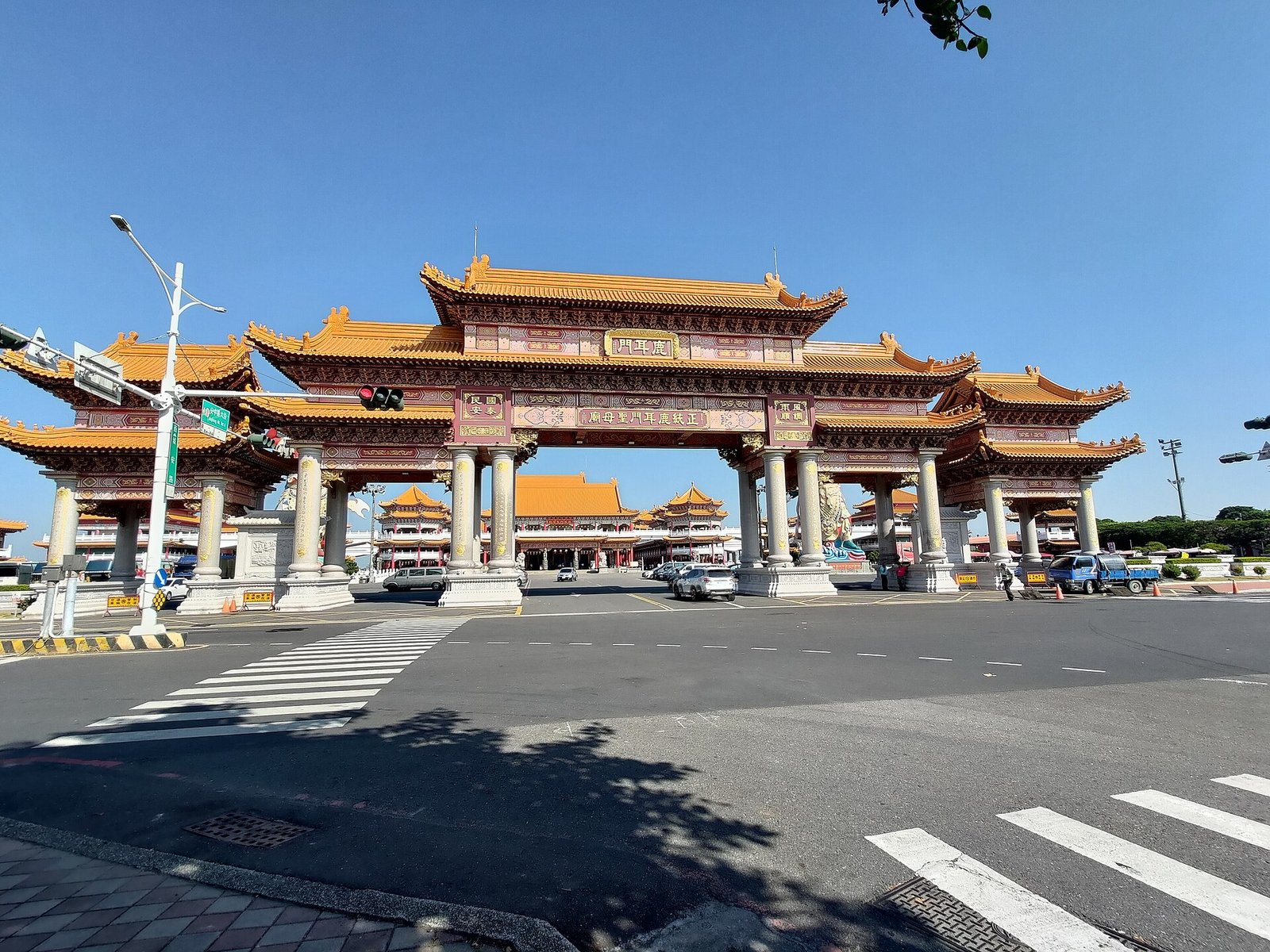
Religious life in Tucheng (土城) centers on the Luermen Shengmu Temple (鹿耳門聖母廟), which venerates Luermen Mazu (鹿耳門媽) and the Wufu Qiansui (五府千歲, Lords of the Five Palaces), who arrived with a royal boat (wangchuan, 王船) in 1913. But there are two "Luermen Mazu temples": the Orthodox Luermen Shengmu Temple (正統鹿耳門聖母廟) on the north bank of the Luermen River (鹿耳門溪) and the Luermen Tianhou Temple (鹿耳門天后宮) on the south bank, and each says it carries on the incense lineage of the old Qing-dynasty Luermen Mazu temple.
The dispute began with a survey in 1956 and involves where Koxinga (Zheng Chenggong, 鄭成功) landed, where the old harbor lay, and who holds the site of the old temple; it cannot be avoided in understanding the religious history of Tucheng. This hall first introduces the two temples separately, then lays out the debate, and finally looks at the surrounding temples, everyday life in the temple square, and how a temple is run as an institution. Its eleven subpages follow five threads:
Thread 1
The two Luermen Mazu temples
Their histories, artifacts, and evidence.
- 3.1Orthodox Luermen Shengmu TempleStart here1173
The four stages in the temple's own account, the eight versions of the 1913 royal boat, and its halls and deities.
- 3.3Luermen Tianhou Temple633
Two official records of the Qing-dynasty temple site, and the stele unearthed from the river in 1777.
- 3.1Orthodox Luermen Shengmu TempleStart here1173
Thread 2
The orthodoxy dispute
How the debate began, what it is about, and how it ended institutionally.
- 3.2The Orthodoxy DisputeStart here653
The 1956 survey, the position of scholars, the Qing-dynasty steles each side preserves, and the institutional outcome.
- 3.2bThe Orthodoxy Dispute: Sixty Years of Debate between Two Luermen Mazu Temples24129
Six points of dispute laid out one by one, with both sides' own words set beside scholarly and official documents.
- 3.2c1661: Koxinga Enters Taijiang through Luermen1456
Yang Ying's (楊英) campaign record compared with the Dutch castle's daily journal, to see how far the sources can speak about the landing.
- 3.2The Orthodoxy DisputeStart here653
- 3.4Sicao Dazhong TempleStart here554
Two sets of founding dates, three accounts of the identity of Zhenhai Da Yuanshuai (鎮海大元帥, Great Sea-Guarding Marshal), and the bone mound behind the temple.
- 3.7The Temples of Anping and the Luermen Mazu563
The direction of incense lineages on the north and south wings of Taijiang, a shared Zhenhai Yuanshuai, and the royal boats neither side sends away.
- 3.5Other Temples in Annan District554
Discrepancies among three temple registers, easily confused temple names, and the four divine boats of the Taijiang area.
- 3.6The Five Small Shrines of Gangzixi (Chengxi Village)643
Five Youyinggong (有應公, spirits of the unclaimed dead) shrines, two temples, and minor place names that survive only in documents.
- 3.4Sicao Dazhong TempleStart here554
Thread 4
The temple as a place
Who comes and what they do.
- 3.8Who Comes to the Shengmu Temple, and What They Do ThereStart here1484
Pilgrims and troupes, people who come for the fireworks and the night market, those who stay in the pilgrims' hostel, and people who exercise in the temple square.
- 3.8Who Comes to the Shengmu Temple, and What They Do ThereStart here1484
Thread 5
How a temple is run
Legal status, organization and money.
- 3.9How a Temple Is Run: The Legal Status, Organization and Money of TemplesStart here2896
Temple registration and foundations, management committees and the luzhu (爐主), incense money and taxes, temples and local politics, with organization charts of the three types and of local temples.
- 3.9How a Temple Is Run: The Legal Status, Organization and Money of TemplesStart here2896
How things are marked
- The accounts of the two temples are always presented side by side; this site does not rule on which is orthodox
- The temples' own accounts, scholarly arguments, and official documents are marked separately; where sources disagree on the same matter, each page lists them item by item under "Differing accounts."
Sources used in this hall
Temples and procession troupes; Ministry of the Interior temple registrations and CRGIS histories; Qing-dynasty stele inscriptions and cultural-heritage announcements from both sides; a special report on Chengxi.