What it is
The Five Great Incense Processions of Nanying (南瀛五大香) are those of Xuejia (學甲), Xiaolong (蕭壠), Xigang (西港), Madou (麻豆), and Tucheng (土城), with Zhijianong (直加弄) as a sixth; when they are set side by side, the first thing that emerges is not which is larger, but how widely the five differ in legal status.
Cultural heritage status: five processions, four kinds of status
- Xigang Incense Procession (西港刈香): registered as a Municipal Folk Custom on 2008-06-27, designated Significant Folklore by the Ministry of Culture on 2009-02-17, and re-registered on 2017-11-21 under Article 111 of the Cultural Heritage Preservation Act.
- Xuejia Shang Baijiao (學甲上白礁): municipal on 2008-06-27, Significant Folklore on 2022-09-23.
- Xiaolong Incense Procession (蕭壠香): only a Municipal Folk Custom, from 2009-01-15.
- Tuchengzi Incense Procession (土城仔香): Municipal Folk Custom on 2013-01-28, amended on 2018-11-12 R001Source文化部文化資產局 [Bureau of Cultural Heritage, Ministry of Culture], 國家文化資產網 [National Cultural Heritage Database], registration and designation announcements in the folklore category (Xigang Incense Procession: municipal 2008-06-27 / Significant Folklore 2009-02-17 / re-registered under Article 111 of the Cultural Heritage Preservation Act 2017-11-21; Xuejia Shang Baijiao: municipal 2008-06-27 / Significant Folklore 2022-09-23; Xiaolong Incense Procession: municipal 2009-01-15; Luermen Shengmu Temple Tuchengzi Xiang: municipal 2013-01-28 / amended 2018-11-12)Original URLhttps://nchdb.boch.gov.tw/Retrieved2026-10-24Snapshot timestamp2026-10-23The Madou Incense Procession is not registered as cultural heritage; it is the only one of the five with no cultural heritage status.. Official record
- Madou Incense Procession (麻豆香): not registered — of the Five Great Incense Processions, it alone has no cultural heritage status of any kind R001Source文化部文化資產局 [Bureau of Cultural Heritage, Ministry of Culture], 國家文化資產網 [National Cultural Heritage Database], registration and designation announcements in the folklore category (Xigang Incense Procession: municipal 2008-06-27 / Significant Folklore 2009-02-17 / re-registered under Article 111 of the Cultural Heritage Preservation Act 2017-11-21; Xuejia Shang Baijiao: municipal 2008-06-27 / Significant Folklore 2022-09-23; Xiaolong Incense Procession: municipal 2009-01-15; Luermen Shengmu Temple Tuchengzi Xiang: municipal 2013-01-28 / amended 2018-11-12)Original URLhttps://nchdb.boch.gov.tw/Retrieved2026-10-24Snapshot timestamp2026-10-23The Madou Incense Procession is not registered as cultural heritage; it is the only one of the five with no cultural heritage status..
Festival years and months
Festival years and months R006SourceTable of festival-year earthly branches and months (compiled from each procession's official announcements and monographs)Original URL—Retrieved2026-10-24Snapshot timestamp2026-10-23"The staggering is a deliberate design" is the compiler's inference; this site writes only that "when laid out, they do not overlap.": Secondhand account
- Xiaolong Incense Procession Zi, Mao, Wu, and You years; mid-first lunar month
- 2026 Bingwu cycle: pre-jiao rites and the fire jiao on March 4; inviting the Wangye and opening the five-day wangjiao on March 5; procession from March 6 to 8; sending off the Wangye on March 11. Secondhand accountR016Source台南意向 [Tainan Outlook], 〈2026 丙午年蕭壠香科:佳里金唐殿五朝王醮大典與遶境時程〉 [2026 Bingwu Xiaolong Incense Procession: Schedule of the Five-Day Wangye Jiao Ceremony and Procession of the Jiali Jintang Temple]Original URLhttps://www.tainanoutlook.com/activities/%E9%87%91%E5%94%90%E6%AE%BFRetrieved2026-10-30Snapshot timestamp—
- Xuejia Shang Baijiao Zi, Chen, and Shen years; 9th to 11th of the third lunar month
- The annual Shang Baijiao ancestral pilgrimage has customarily been held on the 11th of the 3rd lunar month; in 2025, because it was hard to find enough troupe members, it was held on a Saturday (April 5 in the Gregorian calendar) for the first time. Secondhand accountR008Source自由時報電子報 [Liberty Times e-paper], report on the Xuejia Shang Baijiao being held on a Saturday for the first time, 2025-04-02Original URLhttps://news.ltn.com.tw/news/life/breakingnews/4999749Retrieved2026-10-30Snapshot timestamp—
- Tuchengzi Incense Procession Chou, Chen, Wei, and Xu years; middle and latter part of the third lunar month
- Madou Incense Procession Also Chou, Chen, Wei, and Xu years; April in the Gregorian calendar
- For the 2024 Jiachen cycle, the dates in the temple's announcement were May 3 to 5 in the Gregorian calendar (the 25th to 27th of the 3rd lunar month). Secondhand accountR007Source麻豆代天府 [Madou Daitian Temple] official website, 〈最新消息〉 [Latest News] (announcement of the Jiachen-year Madou Incense Procession circuit, 2023-04-04)Original URLhttps://www.5god.com.tw/news.htmlRetrieved2026-10-30Snapshot timestamp—
- For the next cycle, the 2027 Dingwei cycle, the temple has announced April 30 to May 2 in the Gregorian calendar (the 24th to 26th of the 3rd lunar month). Secondhand accountR014Source麻豆代天府 [Madou Daitian Temple] official website announcement, 〈116年歲次丁未年五府千歲遶境活動 百足真人報名登記〉 [Procession of the Five Lords, Dingwei Year, ROC 116: Registration for the Hundred-Legged Perfected One], 2026-03-19Original URLhttps://www.5god.com.tw/news-detail-4040027.htmlRetrieved2026-10-30Snapshot timestamp—
- Xigang Incense Procession Also Chou, Chen, Wei, and Xu years; middle and latter part of April
The three processions that share the same set of earthly branches fall in successive months, so that over the course of a year they do not overlap. Unverified
Leading the way: three kinds of centipede procession
First items: Xuejia: carried entirely by handMadou: pushed on wheelsXiaolong: the longestMoreLess
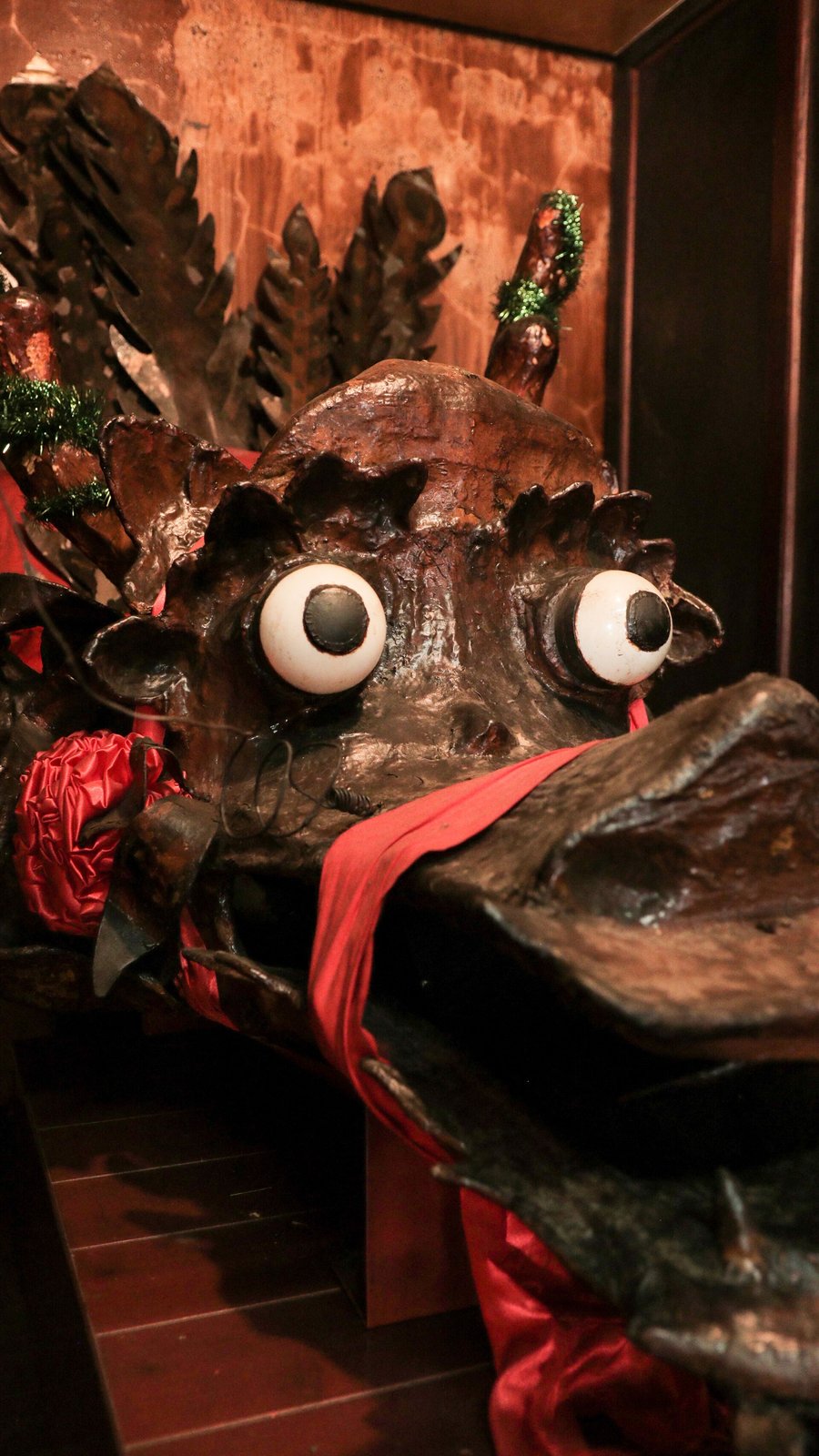
All five processions are led by a centipede procession (蜈蚣陣, wugong zhen), but the centipede processions of the Xuejia, Madou, and Xiaolong cycles differ in size, in how they move, and in how they are organized.
- Xuejia: carried entirely by hand
- Organized by the Jihe Temple (集和宮) of Houshe neighborhood, with a dragon head and phoenix tail, made of 18 joined wooden boards, carrying 36 child deities, and carried by hand the whole way; the National Cultural Memory Bank (國家文化記憶庫) calls it 「台灣少數以人力扛抬的蜈蚣陣」 ("one of the few centipede processions in Taiwan carried by human strength"). Official recordR010Source文化部國家文化記憶庫 [Ministry of Culture, National Cultural Memory Bank], 〈學甲上白礁暨刈香-學甲後社集和宮蜈蚣陣1〉 [Xuejia Shang Baijiao and Incense Procession: Centipede Procession of the Houshe Jihe Temple, Xuejia, 1], catalogued by 臺南市政府文化局 [Cultural Affairs Bureau, Tainan City Government]Original URLhttps://tcmb.culture.tw/zh-tw/detail?indexCode=Culture_Invisible&id=298495Retrieved2026-10-30Snapshot timestamp—
- The cost of carrying it by hand is concrete. For the 2022 Renyin cycle, a report wrote that this centipede procession 「每天需要228人輪流扛行,要走30公里」 ("needs 228 people each day taking turns carrying it, and has to walk 30 kilometers"); on the third day there were not enough bearers, and the centipede procession stopped at the Song Jiang hall of Zhongshe (中社宋江館) to "rest," never reaching Xipunei (西埔內), Yugang (玉港), Sanliaowan (三寮灣), or Erchonggang (二重港) in Beimen, 「引起參加香科的宮廟不滿,群起抗議」 ("causing discontent among the temples taking part in the incense procession, which protested en masse"). Wang Wen-tsung (王文宗), chairman of the Ciji Temple (慈濟宮), said: 「扛工很辛苦,人力出現問題,目前就是趕緊找扛工頂替,希望蜈蚣陣持續遶境。」 ("Carrying is very hard work, and there was a manpower problem; right now we are hurrying to find replacement bearers, and we hope the centipede procession can continue its tour.") Secondhand accountR011Source自由時報電子報 [Liberty Times e-paper], reporter Yang Chin-cheng (楊金城), 〈台南學甲香遶境蜈蚣陣罷工!地方宮廟等不到陣頭群起反彈〉 [Centipede Procession Goes on Strike During Tainan's Xuejia Incense Procession! Local Temples Left Waiting for the Troupe Protest], 2022-04-11Original URLhttps://news.ltn.com.tw/news/life/breakingnews/3889178Retrieved2026-10-30Snapshot timestamp—
- Three years later, in 2025, the Shang Baijiao was held on a Saturday for the first time, and one of the reasons was precisely that it was hard to find people for the centipede procession and other troupes. Secondhand accountR008Source自由時報電子報 [Liberty Times e-paper], report on the Xuejia Shang Baijiao being held on a Saturday for the first time, 2025-04-02Original URLhttps://news.ltn.com.tw/news/life/breakingnews/4999749Retrieved2026-10-30Snapshot timestamp—
- Madou: pushed on wheels
- Organized by the Daitian Temple (代天府) itself, it enacts "Emperor Taizong of Tang Crossing the Sea on His Eastern Campaign" (唐太宗跨海征東). The caption of the photographs of the 2000 Gengchen cycle reads 「一共有19節,由麻豆地區38位小朋友」 ("19 sections in all, [taken on] by 38 children from the Madou area"). Official recordR012Source文化部國家文化記憶庫 [Ministry of Culture, National Cultural Memory Bank], 〈1997南瀛藝陣誌_麻豆香_代天府蜈蚣陣遶境〉 [1997 Record of Nanying Performance Troupes: Madou Incense Procession, Daitian Temple Centipede Procession] (the content consists of photographs of the 2000 Gengchen cycle)Original URLhttps://tcmb.culture.tw/zh-tw/detail?indexCode=Culture_Object&id=733964Retrieved2026-10-30Snapshot timestamp—
- In the 2018 Wuxu cycle it was about 85 meters long, with 「共有19節、38位神童,底下裝輪子用人力推動前進」 ("19 sections and 38 child deities in all, fitted with wheels underneath and pushed forward by human strength"). Secondhand accountR013Source自由時報電子報 [Liberty Times e-paper], reporter Yang Chin-cheng (楊金城), 〈85米長蜈蚣陣當開路先鋒 「麻豆香」熱鬧遶境〉 [85-Meter Centipede Procession Leads the Way as the "Madou Incense Procession" Tours in Festive Style], 2018-05-11Original URLhttps://news.ltn.com.tw/news/life/breakingnews/2423009Retrieved2026-10-30Snapshot timestamp— The number of sections is also given elsewhere as 38 or 108; see the Madou Incense Procession.
- For the 2027 Dingwei cycle, the Hundred-Legged Perfected One (百足真人) is as usual recruiting 38 children, aged 6 to 12. Secondhand accountR014Source麻豆代天府 [Madou Daitian Temple] official website announcement, 〈116年歲次丁未年五府千歲遶境活動 百足真人報名登記〉 [Procession of the Five Lords, Dingwei Year, ROC 116: Registration for the Hundred-Legged Perfected One], 2026-03-19Original URLhttps://www.5god.com.tw/news-detail-4040027.htmlRetrieved2026-10-30Snapshot timestamp—
- Xiaolong: the longest
- Organized by the Jintang Temple (金唐殿) itself, with 108 sections and 108 children dressed as the 36 Heavenly Spirits (天罡) and 72 Earthly Fiends (地煞), over 201 meters long in total, setting a Guinness World Record. Official recordR015Source臺南市政府全球資訊網 [Tainan City Government website], news from 民政局 [Civil Affairs Bureau], 〈金氏紀錄「百足真人」再現佳里!丙午蕭壠香科蜈蚣陣開館剪綵〉 [Guinness-Record "Hundred-Legged Perfected One" Returns to Jiali! Ribbon-Cutting Opens the Centipede Procession of the Bingwu Xiaolong Incense Procession], 2026-03-05Original URLhttps://www.tainan.gov.tw/news_content.aspx?n=13370&s=8800588Retrieved2026-10-30Snapshot timestamp—
- It is opened at the Jintang Temple's front plaza on the day the Wangye are invited R015Source臺南市政府全球資訊網 [Tainan City Government website], news from 民政局 [Civil Affairs Bureau], 〈金氏紀錄「百足真人」再現佳里!丙午蕭壠香科蜈蚣陣開館剪綵〉 [Guinness-Record "Hundred-Legged Perfected One" Returns to Jiali! Ribbon-Cutting Opens the Centipede Procession of the Bingwu Xiaolong Incense Procession], 2026-03-05Original URLhttps://www.tainan.gov.tw/news_content.aspx?n=13370&s=8800588Retrieved2026-10-30Snapshot timestamp—, and the centipede procession tours one day longer than the Wangye palanquins: in the 2026 Bingwu cycle, the Wangye palanquins toured for 3 days, from March 6 to 8, while the Hundred-Legged Perfected One centipede procession toured for 4 days, from March 5 to 8. Official recordSecondhand accountR018Source中國新聞媒體協會 [China News Media Association], reporter Wu Hao-chang (吳浩彰), 〈佳里金唐殿丙午年蕭壠香科五朝王醮遶境建議用路人改道〉 [Road Users Advised to Detour During the Procession of the Bingwu Xiaolong Incense Procession and Five-Day Wangye Jiao of the Jiali Jintang Temple], March 2026 (notice of the 佳里分局 [Jiali Precinct])Original URLhttps://www.cnma.org.tw/page/news/show.aspx?num=50422Retrieved2026-10-30Snapshot timestamp—
The relationship between the Tuchengzi and Xigang Incense Processions
MoreLess
The registration reasons for the Tuchengzi Incense Procession themselves state that 「香陣和儀程大抵是西港刈香的翻版」 ("its procession troupes and ritual program are by and large a copy of the Xigang Incense Procession"). The official announcement for the Xigang Incense Procession contains a troupe-by-troupe list of 34 procession troupes with their waist sash colors (4 of them in Annan District), 16 official ritual stages, 6 official taboos, and the official history: the origin in the Jiachen cycle of 1784 at the Gumagong (Aunt Mazu Temple) of Bafen, the taking over by the Qing'an Temple (慶安宮) in 1823, and the first wangjiao (王醮, Wangye jiao ritual) cycle in 1847 R002Source〈西港刈香〉 [Xigang Incense Procession], announcement on the Tainan City sub-site of the 文化部文化資產局 [Bureau of Cultural Heritage, Ministry of Culture] (municipal 2008, national 2009; including a troupe-by-troupe list of 34 procession troupes with waist sash colors, 16 official ritual stages, 6 official taboos, and the official history)Original URLhttps://nchdb.boch.gov.tw/Retrieved2026-10-24Snapshot timestamp2026-10-23The registration reasons for the Tuchengzi Incense Procession themselves state that 「香陣和儀程大抵是西港刈香的翻版」 ("its procession troupes and ritual program are by and large a copy of the Xigang Incense Procession"), so the Xigang announcement can serve as a baseline for comparison; but details of Xigang must not be written up as details of Tucheng.. Official record
The 2008 announcement for the 〈西港刈香〉 (Xigang Incense Procession) states 「天上聖母則是分靈自鹿耳門天后宮,這也就是每屆刈香前必先至鹿耳門『請媽祖』的歷史背景」 ("the Tianshang Shengmu [Holy Mother in Heaven] is a spirit division from the Luermen Tianhou Temple, and this is the historical background to going first to Luermen to 'invite Mazu' before every guaxiang"); in the 2009 national designation announcement, the "Inviting Mazu" entry under ceremonial rites reads 「西港香境 96 村鄉所有人神陣(包括蜈蚣陣)轎,前往鹿耳門天后宮恭請『鹿耳門媽』前來鑒醮、作客看熱鬧,以示飲水思源」 ("all the people, deities, troupes (including the centipede procession), and palanquins of the 96 villages of the Xigang procession territory go to the Luermen Tianhou Temple to respectfully invite the 'Luermen Mazu' to come to witness the jiao and to be a guest and enjoy the festivities, as a sign of remembering one's roots") R002Source〈西港刈香〉 [Xigang Incense Procession], announcement on the Tainan City sub-site of the 文化部文化資產局 [Bureau of Cultural Heritage, Ministry of Culture] (municipal 2008, national 2009; including a troupe-by-troupe list of 34 procession troupes with waist sash colors, 16 official ritual stages, 6 official taboos, and the official history)Original URLhttps://nchdb.boch.gov.tw/Retrieved2026-10-24Snapshot timestamp2026-10-23The registration reasons for the Tuchengzi Incense Procession themselves state that 「香陣和儀程大抵是西港刈香的翻版」 ("its procession troupes and ritual program are by and large a copy of the Xigang Incense Procession"), so the Xigang announcement can serve as a baseline for comparison; but details of Xigang must not be written up as details of Tucheng..
The division of procession territories
First items: Settlements of the Xigang procession territory in Annan DistrictSettlements and troupes with dual procession territoriesMoreLess
Settlements of the Xigang procession territory in Annan District
Of the 96 villages of the Xigang Incense Procession, official sources explicitly list 6 villages in Annan District R002Source〈西港刈香〉 [Xigang Incense Procession], announcement on the Tainan City sub-site of the 文化部文化資產局 [Bureau of Cultural Heritage, Ministry of Culture] (municipal 2008, national 2009; including a troupe-by-troupe list of 34 procession troupes with waist sash colors, 16 official ritual stages, 6 official taboos, and the official history)Original URLhttps://nchdb.boch.gov.tw/Retrieved2026-10-24Snapshot timestamp2026-10-23The registration reasons for the Tuchengzi Incense Procession themselves state that 「香陣和儀程大抵是西港刈香的翻版」 ("its procession troupes and ritual program are by and large a copy of the Xigang Incense Procession"), so the Xigang announcement can serve as a baseline for comparison; but details of Xigang must not be written up as details of Tucheng.:
- Gongwenzi Wan'an Temple (公塭仔萬安宮) (forms the "Hundred-Legged Perfected One" (百足真人) Centipede Procession together with the Xipuliao Anxi Temple (溪埔寮安溪宮) of Xigang; it keeps faith with the divine instruction 「只准增加,不許減少」 ("it may only grow, never shrink"); 70 people in the Wuxu cycle of 2018; places are hereditary within families)
- Gongqinliao Qingshui Temple (公親寮清水寺) (Tianzi Mensheng (天子門生, Disciples of the Son of Heaven) troupe, founded in Daoguang 26 (1846); Municipal Traditional Performing Art, 2015)
- Xinanliao Xing'an Temple (溪南寮興安宮) (golden lion troupe with red waist sashes; Municipal Traditional Performing Art, 2013)
- Benyuanliao Chaoxing Temple (本淵寮朝興宮) (golden lion troupe with yellow waist sashes; founded in the 1940s)
- Luermen Tianhou Temple, Mazugong (媽祖宮)
- Shifenwen Qing'an Temple (什份塭清安宮)
Another source lists 4 more villages R005SourceWikipedia, list of 96 villages in the article 〈西港刈香〉 [Xigang Incense Procession] (compiled from Huang Wen-po (黃文博), 《西港刈香》 [The Xigang Incense Procession])Original URLhttps://zh.wikipedia.org/Retrieved2026-10-24Snapshot timestamp2026-10-23Secondary literature; this is the only source for the 4 villages not listed in the Bureau of Cultural Heritage announcement.: Unverified
- Zhongzhouliao Bao'an Temple (中洲寮保安宮)
- Xinliao Zhen'an Temple (新寮鎮安宮)
- Shierdian (十二佃)
- Xin Shierdian Long'an Temple (新十二佃龍安宮)
Shifenwen is a special case among them. After founding the Qing'an Temple (清安宮) in 1965, it withdrew from the joint palanquins and troupes, but the official announcement states 「請媽祖日及『土城仔香』時,宋江陣必至什份塭支援接香,展現兄弟庄之情誼」 ("on the day of inviting Mazu and during the 'Tuchengzi Incense Procession,' the Song Jiang troupe must go to Shifenwen to help receive the incense, showing the friendship of brother villages") R002Source〈西港刈香〉 [Xigang Incense Procession], announcement on the Tainan City sub-site of the 文化部文化資產局 [Bureau of Cultural Heritage, Ministry of Culture] (municipal 2008, national 2009; including a troupe-by-troupe list of 34 procession troupes with waist sash colors, 16 official ritual stages, 6 official taboos, and the official history)Original URLhttps://nchdb.boch.gov.tw/Retrieved2026-10-24Snapshot timestamp2026-10-23The registration reasons for the Tuchengzi Incense Procession themselves state that 「香陣和儀程大抵是西港刈香的翻版」 ("its procession troupes and ritual program are by and large a copy of the Xigang Incense Procession"), so the Xigang announcement can serve as a baseline for comparison; but details of Xigang must not be written up as details of Tucheng.. Official record After the split of 1958, the two procession territories were not entirely severed at the institutional level, and Shifenwen is the point of connection.
Settlements and troupes with dual procession territories
Because of its geography and patterns of settlement, Qigu (七股) is connected at once with the Xiaolong, Xigangzi, and Tuchengzi Incense Processions, forming the "Three Processions Meet at Qigu" (三香會七股), and some villages take part in all three; the officially commissioned report also offers an interpretive framework — the Xiaolong Incense Procession leans toward geographic living-sphere ties, the Xigangzi Incense Procession toward migratory settlement ties R003Source《台江國家公園及周緣地區人文歷史調查及保存之先期規劃成果報告》 [Final Report on the Preliminary Planning for the Survey and Preservation of the Human History of Taijiang National Park and Its Surrounding Areas], commissioned by 臺江國家公園管理處 [Taijiang National Park Headquarters], chapter 5 written by Huang Wen-po (黃文博), 2010-12-19 (printed pp. 70–71, 「三香會七股」 ["Three Processions Meet at Qigu"])Original URLhttps://www.tjnp.gov.tw/Retrieved2026-10-24Snapshot timestamp2026-10-20Provides the interpretive framework of "geographic living-sphere ties vs. migratory settlement ties.". Official record As for individual cases: Xiashanziliao (下山仔寮) is a settlement that takes part in both the Xiaolong and Tuchengzi Incense Processions; the Sanguzi Longde Temple (三股仔龍德宮) sends out its Drum-Leaping Troupe to both the Xigangzi and Tuchengzi Incense Processions; and the Longshan Temple (龍山宮) of Longshan Village (龍山里), Qigu, formed a Song Jiang troupe around 1971 to take part in the Tuchengzi Incense Procession R004Source《台江地區無形文化資產暨文獻資料蒐集計畫成果報告書》 [Final Report of the Project to Collect Intangible Cultural Heritage and Documentary Materials of the Taijiang Area], commissioned by 臺江國家公園管理處 [Taijiang National Park Headquarters], 2020 (printed pp. 150, 164, 168, 221, 236)Original URLhttps://www.tjnp.gov.tw/Retrieved2026-10-24Snapshot timestamp2026-10-19Source for cases of dual procession territories, such as Xiashanziliao taking part in both the Xiaolong and Tuchengzi Incense Processions, and the Sanguzi Longde Temple Drum-Leaping Troupe taking part in both the Xigangzi and Tuchengzi Incense Processions.. The Big Drum and Flower Troupe (大鼓花陣) of the Sanguzi Longde Temple was founded in 1975, disbanded in 1985, and revived in 2015, recruiting more than twenty students from Sangu Elementary School and Zhuqiao Junior High School R004Source《台江地區無形文化資產暨文獻資料蒐集計畫成果報告書》 [Final Report of the Project to Collect Intangible Cultural Heritage and Documentary Materials of the Taijiang Area], commissioned by 臺江國家公園管理處 [Taijiang National Park Headquarters], 2020 (printed pp. 150, 164, 168, 221, 236)Original URLhttps://www.tjnp.gov.tw/Retrieved2026-10-24Snapshot timestamp2026-10-19Source for cases of dual procession territories, such as Xiashanziliao taking part in both the Xiaolong and Tuchengzi Incense Processions, and the Sanguzi Longde Temple Drum-Leaping Troupe taking part in both the Xigangzi and Tuchengzi Incense Processions..
Differing accounts
- Village temple names of two villages: for Shierdian, one account gives the Nantian Temple and another the Wusheng Temple; for Zhongzhouliao, one gives the Bao'an Temple and another the Baozhou Temple. Unverified
- Total number of troupes in the Xigang Incense Procession: the official announcement gives a troupe-by-troupe list of 34 procession troupes R002Source〈西港刈香〉 [Xigang Incense Procession], announcement on the Tainan City sub-site of the 文化部文化資產局 [Bureau of Cultural Heritage, Ministry of Culture] (municipal 2008, national 2009; including a troupe-by-troupe list of 34 procession troupes with waist sash colors, 16 official ritual stages, 6 official taboos, and the official history)Original URLhttps://nchdb.boch.gov.tw/Retrieved2026-10-24Snapshot timestamp2026-10-23The registration reasons for the Tuchengzi Incense Procession themselves state that 「香陣和儀程大抵是西港刈香的翻版」 ("its procession troupes and ritual program are by and large a copy of the Xigang Incense Procession"), so the Xigang announcement can serve as a baseline for comparison; but details of Xigang must not be written up as details of Tucheng.; a campus media report of 2024-09-30 gives 13 civil troupes and 18 martial troupes, 31 in all, without saying which cycle R009Source國立中正大學 [National Chung Cheng University] campus e-newsletter, reporter Chien Ling-hsuan (簡綾萱), report on the procession troupes of the Xigang Incense Procession, 2024-09-30Original URLhttps://enews.ccu.edu.tw/p/405-1089-62687,c178.php?Lang=zh-twRetrieved2026-10-30Snapshot timestamp—. Both accounts are presented side by side.
- Month of the Madou Incense Procession: the festival-year table gives April in the Gregorian calendar R006SourceTable of festival-year earthly branches and months (compiled from each procession's official announcements and monographs)Original URL—Retrieved2026-10-24Snapshot timestamp2026-10-23"The staggering is a deliberate design" is the compiler's inference; this site writes only that "when laid out, they do not overlap."; the temple's announcement for the 2024 Jiachen cycle gives May 3 to 5 in the Gregorian calendar R007Source麻豆代天府 [Madou Daitian Temple] official website, 〈最新消息〉 [Latest News] (announcement of the Jiachen-year Madou Incense Procession circuit, 2023-04-04)Original URLhttps://www.5god.com.tw/news.htmlRetrieved2026-10-30Snapshot timestamp—. Both accounts are presented side by side.
- The starting point of the Madou Incense Procession's three-year cycle: a city government press release says it has been held on a fixed three-year cycle since 1967; the committee chairman Chen Chung-shan (陳中山) said the procession was held every year before 1956 (ROC year 45) and every three years thereafter, with 2018 the 22nd cycle R013Source自由時報電子報 [Liberty Times e-paper], reporter Yang Chin-cheng (楊金城), 〈85米長蜈蚣陣當開路先鋒 「麻豆香」熱鬧遶境〉 [85-Meter Centipede Procession Leads the Way as the "Madou Incense Procession" Tours in Festive Style], 2018-05-11Original URLhttps://news.ltn.com.tw/news/life/breakingnews/2423009Retrieved2026-10-30Snapshot timestamp—, while a 2021 report calls it the 23rd cycle R017Source自由時報電子報 [Liberty Times e-paper], reporter Yang Chin-cheng (楊金城), report on the cancellation of the Xinchou cycle of the Madou Incense Procession, 2021-02-01Original URLhttps://news.ltn.com.tw/news/life/breakingnews/3428554Retrieved2026-10-30Snapshot timestamp—. Both accounts are presented side by side.
Video
Videos were uploaded by their respective channels; titles and channel names follow the video pages. This site quotes only short excerpts with timecodes; the videos themselves are authoritative.
Behind this door is the internal site, with profiles of people and local comments. The internal site is deployed separately.