What it is
The route of the Tuchengzi Incense Procession (土城仔香) is not a fixed line: over more than sixty years it has grown from a circuit around a single settlement into a three-day journey that crosses the Zengwen River (曾文溪) and spans three administrative districts — and it may change again in the next cycle.
History
- 1961 The first cycle centered on the surroundings of the Tuchengzi (土城仔) settlement, serving the circle of villages that had withdrawn from the Xigangzi Incense Procession (西港仔香) together with Tucheng R006Source《台江國家公園及周緣地區人文歷史調查及保存之先期規劃成果報告》 [Final Report on the Preliminary Planning for the Survey and Preservation of the Human History of Taijiang National Park and Its Surrounding Areas], commissioned by 臺江國家公園管理處 [Taijiang National Park Headquarters], chapter 5 written by Huang Wen-po (黃文博), 2010-12-19 (printed pp. 71–72)Original URLhttps://www.tjnp.gov.tw/Retrieved2026-10-24Snapshot timestamp2026-10-20The extent of the first cycle in 1961 and the list of the eight villages that withdrew together..
- Around the 1980s The procession route began to cross to the north bank of the Zengwen River R001Source《台江地區無形文化資產暨文獻資料蒐集計畫成果報告書》 [Final Report of the Project to Collect Intangible Cultural Heritage and Documentary Materials of the Taijiang Area], commissioned by 臺江國家公園管理處 [Taijiang National Park Headquarters], 2020 (printed pp. 113, 236, 237; complete list of 36 participating settlements; Fig. 4-22, 「台江家園守護圈內參與土城仔刈香祠廟」 [Temples within the Taijiang Homeland Protection Circle Taking Part in the Tuchengzi Incense Procession])Original URLhttps://www.tjnp.gov.tw/Retrieved2026-10-24Snapshot timestamp2026-10-19Source for the four stages of the route's development, the three ritual sites, and the 36 participating settlements..
- The Wuchen cycle of 1988 and the Xinwei cycle of 1991 The procession circuit extended to the southern end of Jiali District (佳里區), Qingkunshen in Jiangjun District (將軍區), and Qigu District (七股區) R001Source《台江地區無形文化資產暨文獻資料蒐集計畫成果報告書》 [Final Report of the Project to Collect Intangible Cultural Heritage and Documentary Materials of the Taijiang Area], commissioned by 臺江國家公園管理處 [Taijiang National Park Headquarters], 2020 (printed pp. 113, 236, 237; complete list of 36 participating settlements; Fig. 4-22, 「台江家園守護圈內參與土城仔刈香祠廟」 [Temples within the Taijiang Homeland Protection Circle Taking Part in the Tuchengzi Incense Procession])Original URLhttps://www.tjnp.gov.tw/Retrieved2026-10-24Snapshot timestamp2026-10-19Source for the four stages of the route's development, the three ritual sites, and the 36 participating settlements..
- After the Yiwei cycle of 2015 It settled into three days divided by district: the first day in Qigu District, the second in Annan District (安南區), and the third in Tuchengzi and Xuejialiao (學甲寮) R001Source《台江地區無形文化資產暨文獻資料蒐集計畫成果報告書》 [Final Report of the Project to Collect Intangible Cultural Heritage and Documentary Materials of the Taijiang Area], commissioned by 臺江國家公園管理處 [Taijiang National Park Headquarters], 2020 (printed pp. 113, 236, 237; complete list of 36 participating settlements; Fig. 4-22, 「台江家園守護圈內參與土城仔刈香祠廟」 [Temples within the Taijiang Homeland Protection Circle Taking Part in the Tuchengzi Incense Procession])Original URLhttps://www.tjnp.gov.tw/Retrieved2026-10-24Snapshot timestamp2026-10-19Source for the four stages of the route's development, the three ritual sites, and the 36 participating settlements.. Official record
The complete list of participating settlements numbers 36 (2 in Jiali, 15 in Qigu, 19 in Annan), of which 10 lie within the Taijiang Homeland Protection Circle (台江家園守護圈) R001Source《台江地區無形文化資產暨文獻資料蒐集計畫成果報告書》 [Final Report of the Project to Collect Intangible Cultural Heritage and Documentary Materials of the Taijiang Area], commissioned by 臺江國家公園管理處 [Taijiang National Park Headquarters], 2020 (printed pp. 113, 236, 237; complete list of 36 participating settlements; Fig. 4-22, 「台江家園守護圈內參與土城仔刈香祠廟」 [Temples within the Taijiang Homeland Protection Circle Taking Part in the Tuchengzi Incense Procession])Original URLhttps://www.tjnp.gov.tw/Retrieved2026-10-24Snapshot timestamp2026-10-19Source for the four stages of the route's development, the three ritual sites, and the 36 participating settlements..
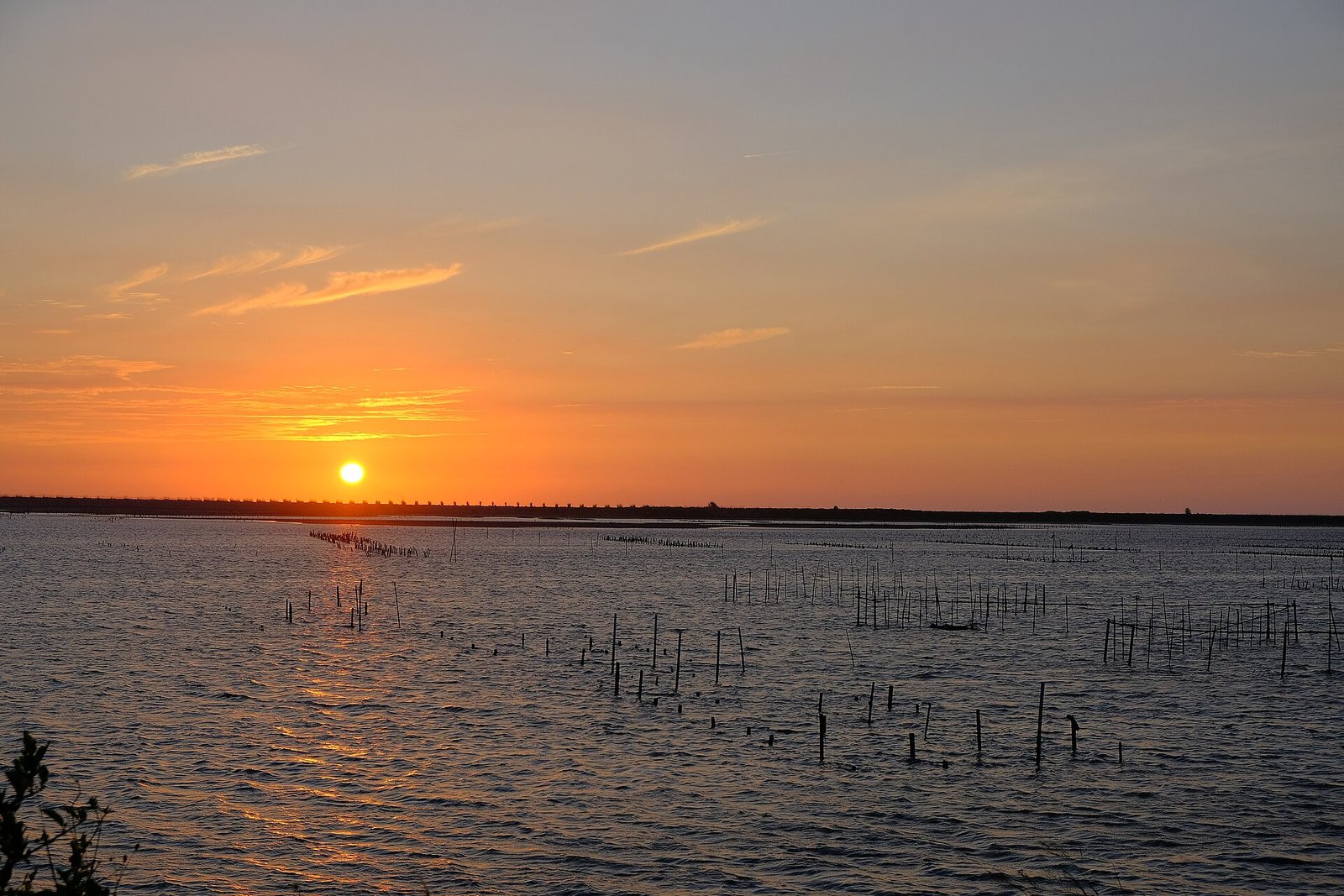
The year of crossing the river
There are three accounts of the year the route crossed to the north bank of the Zengwen River: 1979 R003Source臺灣宗教與民俗文化平台 [Taiwan Religion and Folk Culture Platform] trfc.tw (ART000064, Wu Chin-chih (吳進池); ART000065, Su Jung-shou (蘇榮守); 2024); 文化部國家文化記憶庫 [National Cultural Memory Bank, Ministry of Culture], 〈正統鹿耳門聖母廟王船〉 [Royal Boat of the Orthodox Luermen Shengmu Temple] (citing Wu Ming-hsun (吳明勳) and Hung Ying-fa (洪瑩發), 2013)Original URLhttps://tcmb.culture.tw/Retrieved2026-10-24Snapshot timestamp2026-10-23Sources for the 1979 and 1982 accounts of the year of crossing the river; the two may be successive corrections by the same research team., 1982 R003Source臺灣宗教與民俗文化平台 [Taiwan Religion and Folk Culture Platform] trfc.tw (ART000064, Wu Chin-chih (吳進池); ART000065, Su Jung-shou (蘇榮守); 2024); 文化部國家文化記憶庫 [National Cultural Memory Bank, Ministry of Culture], 〈正統鹿耳門聖母廟王船〉 [Royal Boat of the Orthodox Luermen Shengmu Temple] (citing Wu Ming-hsun (吳明勳) and Hung Ying-fa (洪瑩發), 2013)Original URLhttps://tcmb.culture.tw/Retrieved2026-10-24Snapshot timestamp2026-10-23Sources for the 1979 and 1982 accounts of the year of crossing the river; the two may be successive corrections by the same research team., and the placement by the report commissioned by the Taijiang National Park Headquarters (台江處) in 2020 after the completion of the new temple in 1983 R001Source《台江地區無形文化資產暨文獻資料蒐集計畫成果報告書》 [Final Report of the Project to Collect Intangible Cultural Heritage and Documentary Materials of the Taijiang Area], commissioned by 臺江國家公園管理處 [Taijiang National Park Headquarters], 2020 (printed pp. 113, 236, 237; complete list of 36 participating settlements; Fig. 4-22, 「台江家園守護圈內參與土城仔刈香祠廟」 [Temples within the Taijiang Homeland Protection Circle Taking Part in the Tuchengzi Incense Procession])Original URLhttps://www.tjnp.gov.tw/Retrieved2026-10-24Snapshot timestamp2026-10-19Source for the four stages of the route's development, the three ritual sites, and the 36 participating settlements.. Unverified There are two accounts of why the procession crossed the river: the material condition of the completion of the new temple R001Source《台江地區無形文化資產暨文獻資料蒐集計畫成果報告書》 [Final Report of the Project to Collect Intangible Cultural Heritage and Documentary Materials of the Taijiang Area], commissioned by 臺江國家公園管理處 [Taijiang National Park Headquarters], 2020 (printed pp. 113, 236, 237; complete list of 36 participating settlements; Fig. 4-22, 「台江家園守護圈內參與土城仔刈香祠廟」 [Temples within the Taijiang Homeland Protection Circle Taking Part in the Tuchengzi Incense Procession])Original URLhttps://www.tjnp.gov.tw/Retrieved2026-10-24Snapshot timestamp2026-10-19Source for the four stages of the route's development, the three ritual sites, and the 36 participating settlements., and the interpersonal condition of the center of gravity shifting north after the break in incense ties with the Haiwei Chaohuang Temple (海尾朝皇宮) R003Source臺灣宗教與民俗文化平台 [Taiwan Religion and Folk Culture Platform] trfc.tw (ART000064, Wu Chin-chih (吳進池); ART000065, Su Jung-shou (蘇榮守); 2024); 文化部國家文化記憶庫 [National Cultural Memory Bank, Ministry of Culture], 〈正統鹿耳門聖母廟王船〉 [Royal Boat of the Orthodox Luermen Shengmu Temple] (citing Wu Ming-hsun (吳明勳) and Hung Ying-fa (洪瑩發), 2013)Original URLhttps://tcmb.culture.tw/Retrieved2026-10-24Snapshot timestamp2026-10-23Sources for the 1979 and 1982 accounts of the year of crossing the river; the two may be successive corrections by the same research team. (see 4.7).
Points and fixed sites on the procession route
First items: Three points in Qigu on the first day of the processionThree fixed sites on the procession routeThe main street section within TuchengMoreLess
Three points in Qigu on the first day of the procession
The place-name writing project recorded the route of the first day of the procession: 「此地也是『西港仔香』請媽祖及『土城仔香』第 1 日香的香路,凡是香陣從十份仔九塊厝神帝府前往三股仔龍德宮前,必先至鎮海將軍宮參拜。」 ("This place is also on the procession route of the 'Xigangzi Incense Procession' for inviting Mazu and of the first day of the 'Tuchengzi Incense Procession'; whenever the procession troupes travel from the Jiukuaicuo Shendi Temple in Shifenzi to the Sanguzi Longde Temple, they must first go to the Zhenhai General Temple to pay their respects.") R002Source《臺南市地名研究(2/3)》 [A Study of Tainan City Place Names (2/3)] and the rest of the Place-Name Trilogy (commissioned by the Taijiang National Park Headquarters (台江處), 2019 (ROC year 108) Taijiang place-name writing project; printed pp. 150, 164, 168)Original URLhttps://www.tjnp.gov.tw/Retrieved2026-10-24Snapshot timestamp2026-10-20The only records of the procession route in the three volumes: three points in Qigu on the first day of the procession.Official record Jiukuaicuo Shendi Temple (九塊厝神帝府) → Zhenhai General Temple (鎮海將軍宮) → Sanguzi Longde Temple (三股仔龍德宮): all three stops are in Qigu District. The same volume also records, of the area around Beikangliao (北槺寮) (Gongdiwei, 公地尾), that 「此地同時也是『土城仔』聖母廟『土城仔香』的香路」 ("this place is also on the route of the 'Tuchengzi Incense Procession' of the Shengmu Temple of 'Tuchengzi'") R002Source《臺南市地名研究(2/3)》 [A Study of Tainan City Place Names (2/3)] and the rest of the Place-Name Trilogy (commissioned by the Taijiang National Park Headquarters (台江處), 2019 (ROC year 108) Taijiang place-name writing project; printed pp. 150, 164, 168)Original URLhttps://www.tjnp.gov.tw/Retrieved2026-10-24Snapshot timestamp2026-10-20The only records of the procession route in the three volumes: three points in Qigu on the first day of the procession..
Three fixed sites on the procession route
The procession route moves, but the ritual sites do not R001Source《台江地區無形文化資產暨文獻資料蒐集計畫成果報告書》 [Final Report of the Project to Collect Intangible Cultural Heritage and Documentary Materials of the Taijiang Area], commissioned by 臺江國家公園管理處 [Taijiang National Park Headquarters], 2020 (printed pp. 113, 236, 237; complete list of 36 participating settlements; Fig. 4-22, 「台江家園守護圈內參與土城仔刈香祠廟」 [Temples within the Taijiang Homeland Protection Circle Taking Part in the Tuchengzi Incense Procession])Original URLhttps://www.tjnp.gov.tw/Retrieved2026-10-24Snapshot timestamp2026-10-19Source for the four stages of the route's development, the three ritual sites, and the 36 participating settlements.: Official record
- Qingwang (請王, inviting the Wangye) takes place at Xibianhu (西爿湖) (Chengxi Village, 城西里), where the Five Lords are welcomed up into the hall facing the spot where the royal boat was found.
- Drawing water takes place at the "Old Temple Ground Pit" (舊廟地堀仔) in Keliaojiao (蚵寮角), presided over by the hand palanquin of the Luermen Mazu (鹿耳門媽) and carried out by Taoist priests.
- Sending off the Fire King takes place on the bank of the Luermen River (鹿耳門溪) south of the village; when the Fire King is sent off, the whole village puts out its fires, and the martial troupes within the territory are sent out as escort.
The three fixed sites fall respectively in Chengxi Village, Chengzhong Village (城中里), and on the riverbank south of the village, pinning the beginning and end of the procession route to the ground (see 4.1 for details).
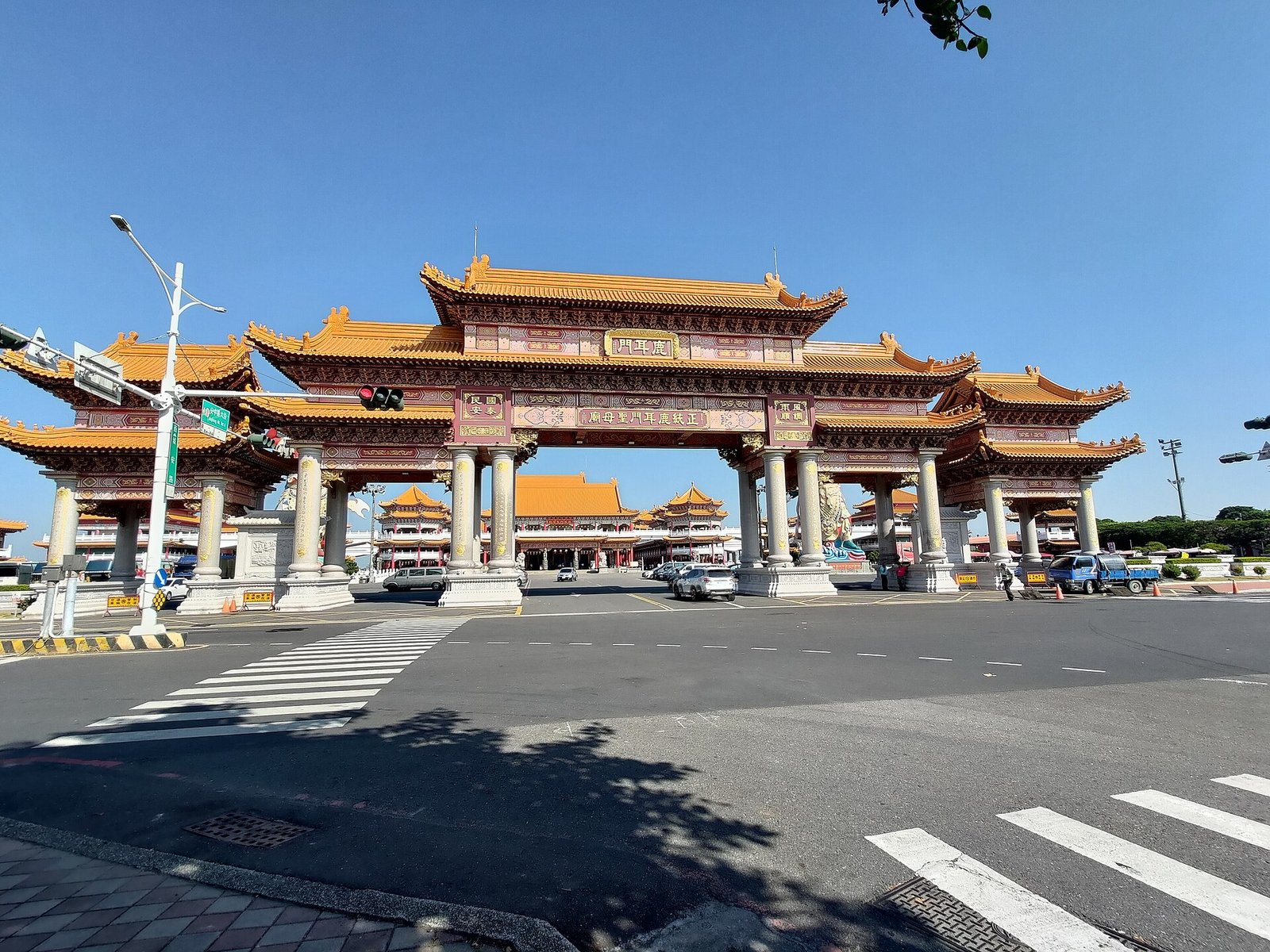
The main street section within Tucheng
The traffic controls on event days reveal the main streets within Tucheng. For the blessing night run of April 20, 2024, Fucheng Bus (府城客運) announced that Route 11 would stop serving 15 stops — Tuchengzi (土城子), Shengmu Temple (Cheng'an Road, 城安路), Shengmu Temple East, Tucheng Elementary School (土城國小), Chengdong Village (城東里), Chengnan Village (城南里), Chengnan Bridge, Chengnan Xinlüyuan, Shenrong Green Space (神榕綠地), Denglu Station, Memorial Park, Denglu Bridge, Chengxi Street (城西街) Sec. 3, Chengxi East, and Chengxi Village — with passengers picked up and dropped off instead at the 「安中路六段(土城)」 ("Anzhong Road Sec. 6 (Tucheng)") stop; Hsing-Nan Bus (興南客運) issued an announcement on the same matter affecting the two Blue 24 lines and Blue 25 R005Source府城客運 [Fucheng Bus], 2024-03-25, 〈配合 113/4/20「2024 土城香正統鹿耳門聖母廟祈福夜跑」活動交通管制〉 [Traffic Control for the "2024 Tucheng Xiang Orthodox Luermen Shengmu Temple Blessing Night Run" on 2024/4/20 (ROC 113/4/20)], and the announcement on the same matter by 興南客運 [Hsing-Nan Bus], 2024-04-11 (大台南公車 [Greater Tainan Bus])Original URLhttps://2384.tainan.gov.tw/Retrieved2026-10-24Snapshot timestamp2026-10-23Traffic-control notices for event days can be used to infer the main street sections the procession route passes through; no rerouting notice has been found for the 2024 procession circuit.. Official record The section that was cut off is the very section of main street that people and procession troupes actually occupy during the xiangke. Unverified
Possible changes in the 2027 Dingwei cycle
According to media reports, the 2027 Dingwei cycle will bring three changes: the procession circuit will be extended from three days to four; the old city district of Fucheng (府城) will be added; and for the first time in more than fifty years the procession will cross the Yanshui River (鹽水溪), south of the Luermen River, into the old city district of Fucheng — all said to have been decided by consulting the gods through divination blocks R004Source中華日報 [China Daily News], 2026-10-20, Chen Chih-chiao (陳治交), 〈聖母廟丁未科土城香遶境改 4 天〉 [Shengmu Temple's Dingwei-Cycle Tucheng Xiang Procession Changes to 4 Days]; a report with the same content reposted on today.line.meOriginal URL—Retrieved2026-10-24Snapshot timestamp2026-10-23Reports from two media outlets, neither of them a temple announcement; no related announcement has been found on the temple's official website.. Secondhand accountUnverified
Differing accounts
- Year of crossing the river: one account gives 1979; another gives 1982; the report commissioned by the Taijiang National Park Headquarters places it after the completion of the new temple in 1983 R001Source《台江地區無形文化資產暨文獻資料蒐集計畫成果報告書》 [Final Report of the Project to Collect Intangible Cultural Heritage and Documentary Materials of the Taijiang Area], commissioned by 臺江國家公園管理處 [Taijiang National Park Headquarters], 2020 (printed pp. 113, 236, 237; complete list of 36 participating settlements; Fig. 4-22, 「台江家園守護圈內參與土城仔刈香祠廟」 [Temples within the Taijiang Homeland Protection Circle Taking Part in the Tuchengzi Incense Procession])Original URLhttps://www.tjnp.gov.tw/Retrieved2026-10-24Snapshot timestamp2026-10-19Source for the four stages of the route's development, the three ritual sites, and the 36 participating settlements.R003Source臺灣宗教與民俗文化平台 [Taiwan Religion and Folk Culture Platform] trfc.tw (ART000064, Wu Chin-chih (吳進池); ART000065, Su Jung-shou (蘇榮守); 2024); 文化部國家文化記憶庫 [National Cultural Memory Bank, Ministry of Culture], 〈正統鹿耳門聖母廟王船〉 [Royal Boat of the Orthodox Luermen Shengmu Temple] (citing Wu Ming-hsun (吳明勳) and Hung Ying-fa (洪瑩發), 2013)Original URLhttps://tcmb.culture.tw/Retrieved2026-10-24Snapshot timestamp2026-10-23Sources for the 1979 and 1982 accounts of the year of crossing the river; the two may be successive corrections by the same research team.. Unverified
Behind this door is the internal site, with profiles of people and local comments. The internal site is deployed separately.