The gou-gou-tinn around the Mid-Autumn Festival
MoreLess
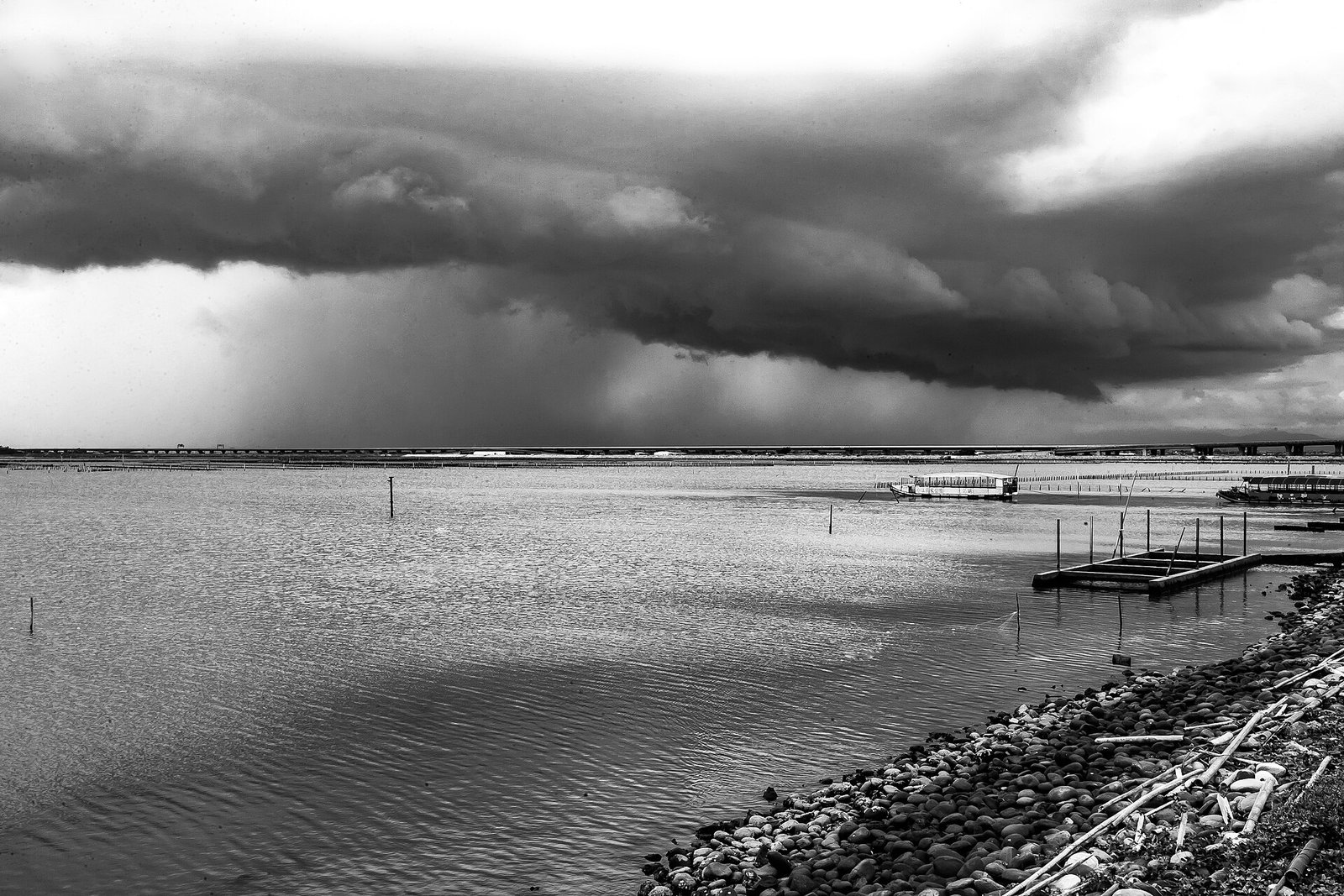
Local oral account「幼稚園到國小那幾年,每年中秋前後(大約十月)會和家人到城西海邊用「勾勾纏」抓勝利黎明蟹,一次好幾個水桶;誘餌是放兩三天的秋刀魚,靠腥味引來」 (From kindergarten through elementary school, every year around the Mid-Autumn Festival (roughly October) I would go with my family to the Chengxi shore to catch Matuta victor crabs with a gou-gou-tinn (勾勾纏, a snare-hook rig), several buckets at a time; the bait was Pacific saury left out for two or three days, which drew the crabs with its fishy smell) R002SourceLocal oral account (the project author, as an eyewitness; family foraging)Original URL—Retrieved2026-10-19Snapshot timestamp—. 「卵清甜,公蟹的蟹膏也清甜無腥,與紅蟳的味道差很多」 (The roe was sweet and clean, and the male crabs' roe-fat was sweet too, with no fishiness at all, very different in taste from mud crab) R002SourceLocal oral account (the project author, as an eyewitness; family foraging)Original URL—Retrieved2026-10-19Snapshot timestamp—.
Local oral account「一年到頭,只有中秋前後(約十月)抓得到;其他月份放下勾勾纏,幾乎什麼也抓不到。中秋正是母蟹抱卵的季節,即使在一次能抓好幾桶的年代,也是這樣。這幾年,已經幾乎抓不到了」 (All year round, they could be caught only around the Mid-Autumn Festival (about October); in other months, you could put the gou-gou-tinn down and catch almost nothing. The Mid-Autumn Festival is exactly the season when the females carry their eggs, and that held true even in the years when you could catch several buckets in one go. These past few years, you can hardly catch any at all) R002SourceLocal oral account (the project author, as an eyewitness; family foraging)Original URL—Retrieved2026-10-19Snapshot timestamp—.
Official recordOn the official side, a habitat entry can be given: the habitat of 頑強黎明蟹 (that is, the Matuta victor crab, 勝利黎明蟹, Matuta victor) is given as 「防風林及沙灘區」 ("windbreak forest and sandy beach areas") R007Source《台江國家公園整體遊憩資源調查及規劃案》 [Overall Survey and Planning of Recreational Resources in Taijiang National Park], 中華民國國家公園學會 [National Park Society of the Republic of China], 2011-12 (Table 3-1-24, crab habitat column, derived from a survey by the Taiwan Wetlands Society; printed page 5-22, 「鹿耳門溪口是釣魚熱點」 [the mouth of the Luermen River is a fishing hotspot])Original URL—Retrieved2026-10-20Snapshot timestamp—. UnverifiedIn the citizen-science data, the photographs of Matuta victor in Annan District were all taken at the mouth of the Yanshui River (鹽水溪口) (in 2020, 2022, 2024 and 2025); there is not yet a single open-data record point on the Chengxi beach R008SourceTaiwan Biodiversity Network (臺灣生物多樣性網絡, TBN) open API occurrence query (Matuta victor; bounding box 120.00–120.20°E, 22.98–23.18°N)Original URLhttps://www.tbn.org.tw/api/v26/occurrence?taxonUUID=754bf44c-6429-4d25-b305-d252d65553db&boundedBy=120.20%2023.18%2C120.00%2022.98&limit=1000Retrieved2026-11-01Snapshot timestamp—Citizen-science data mean that "someone photographed it"; they are not catch figures and cannot be used to refute local memories of catches..
Body-size memories, using the palm as a ruler
Local oral account「角眼沙蟹的體型明顯變小了:童年在城西沙灘挖到的和凶狠圓軸蟹差不多大、比手掌還大,現在多數只有手掌的一半」 (Horned ghost crabs have clearly got smaller: the ones I dug up on the Chengxi beach as a child were about as big as brown land crabs, bigger than the palm of my hand, but now most are only half a palm) R003SourceLocal oral account (the project author, as an eyewitness)Original URL—Retrieved2026-10-19Snapshot timestamp—.
Official recordThe brown land crab, for its part, has been measured: at Qingcaolun (青草崙) the measured maximum carapace width of males is 134.5 mm and the average 102.7 mm, consistent in scale with the oral account's 「比手掌大」 ("bigger than the palm of a hand") R005Source《台江國家公園陸蟹生態調查》 [Land Crab Ecological Survey of Taijiang National Park], Liu Hung-chang (劉烘昌), 2020 (ROC year 109) (Menghuan Lake at Qingcaolun and the surrounding coastal forest are the most important land crab hotspot; brown land crab carapace width measured at a maximum of 134.5 mm and an average of 102.7 mm; the horned ghost crab is the dominant species, but there are no body-size measurements for it anywhere in the book)Original URL—Retrieved2026-10-19Snapshot timestamp—. The conclusion of the same report is that Menghuan Lake (夢幻湖) at Qingcaolun on the south bank of the Zengwen River (曾文溪) and the coastal forest around it form the most important land crab hotspot in Taijiang (台江), and it recommends closing about two kilometers of the Qingcaolun flood-patrol road in July and August R005Source《台江國家公園陸蟹生態調查》 [Land Crab Ecological Survey of Taijiang National Park], Liu Hung-chang (劉烘昌), 2020 (ROC year 109) (Menghuan Lake at Qingcaolun and the surrounding coastal forest are the most important land crab hotspot; brown land crab carapace width measured at a maximum of 134.5 mm and an average of 102.7 mm; the horned ghost crab is the dominant species, but there are no body-size measurements for it anywhere in the book)Original URL—Retrieved2026-10-19Snapshot timestamp—. Local oral account「而口述說凶狠圓軸蟹最常出現的路段,正是前往青草崙夢幻湖的那條堤防路」 (And the stretch of road where the oral account says brown land crabs appear most often is precisely the seawall road leading to Menghuan Lake at Qingcaolun) R004SourceLocal oral account (the project author, as an eyewitness)Original URL—Retrieved2026-10-19Snapshot timestamp—.
Taste: earthiness as a local criterion
MoreLess
Local oral account「凶狠圓軸蟹在家裡吃過,肉質豐美尤其是雙螯,但有土味,蟹膏也有;在家放著吐沙洗腮的效果很差」 (We ate brown land crabs at home; the meat was rich, especially the two claws, but it had an earthy taste, and so did the roe-fat; leaving them at home to purge sand and clean their gills worked very poorly) R003SourceLocal oral account (the project author, as an eyewitness)Original URL—Retrieved2026-10-19Snapshot timestamp—. 「在地的推測是細菌造成的」 (The local guess is that it is caused by bacteria) R003SourceLocal oral account (the project author, as an eyewitness)Original URL—Retrieved2026-10-19Snapshot timestamp—.
Official recordThe official oral history, for its part, gives four explanations: poor feed; the farther inland, the stronger the muddy, earthy smell; a bottom-dwelling habit of sifting food out of the mud; and generational differences in taste R006Source《台江耆老飲食文化口述歷史》 [Oral History of the Food Culture of Taijiang Elders], 臺大城鄉基金會 [NTU Building and Planning Research Foundation], 2016-12 (printed page 23, section on proverbs; printed pages 56–58, salted preserves 「kê」; printed pages 122, 123, 129, 146, 162, 180, various explanations of the earthy taste)Original URL—Retrieved2026-10-20Snapshot timestamp—. Unverified"Earthy taste" (土味) is a local quality criterion widely used in Taijiang cooking, with several explanations.
Official recordThe same report also contains the book's only dedicated section on proverbs: 「七蟳、八蠘、九毛蟹、十毛蜞」 ("mud crabs in the seventh month, swimming crabs in the eighth, hairy crabs in the ninth, Taiwan mud-flat crabs in the tenth") and 「十月瘋毛蜞」 ("in the tenth month, everyone goes mad for mud-flat crabs") R006Source《台江耆老飲食文化口述歷史》 [Oral History of the Food Culture of Taijiang Elders], 臺大城鄉基金會 [NTU Building and Planning Research Foundation], 2016-12 (printed page 23, section on proverbs; printed pages 56–58, salted preserves 「kê」; printed pages 122, 123, 129, 146, 162, 180, various explanations of the earthy taste)Original URL—Retrieved2026-10-20Snapshot timestamp—. UnverifiedThis is the documentary source for the local understanding that crabs 「抱卵期最好吃」 ("taste best when carrying eggs"); the creature the proverb associates with the Mid-Autumn period is the Taiwan mud-flat crab (臺灣厚蟹, 毛蜞), not the Matuta crab R002SourceLocal oral account (the project author, as an eyewitness; family foraging)Original URL—Retrieved2026-10-19Snapshot timestamp—R006Source《台江耆老飲食文化口述歷史》 [Oral History of the Food Culture of Taijiang Elders], 臺大城鄉基金會 [NTU Building and Planning Research Foundation], 2016-12 (printed page 23, section on proverbs; printed pages 56–58, salted preserves 「kê」; printed pages 122, 123, 129, 146, 162, 180, various explanations of the earthy taste)Original URL—Retrieved2026-10-20Snapshot timestamp—.
Secondhand accountToday the brown land crab is the object of crab-protection efforts and anti-poaching enforcement: from June to September 2023, monitoring recorded and helped 8,604 crabs R013Source中央社 [Central News Agency (CNA)]〈曾文溪口凶狠圓軸蟹繁殖期 台江處護蟹逾8000隻〉[Brown Land Crab Breeding Season at the Zengwen River Estuary: Taijiang Headquarters Protects More than 8,000 Crabs], 2023-10-21, reporter Chang Jung-hsiang (張榮祥)Original URLhttps://www.cna.com.tw/news/ahel/202310210035.aspxRetrieved2026-10-30Snapshot timestamp—, and from June 17 to September 2, 2026, 14,132 live crabs were recorded R014Source中華日報 [China Daily News]〈台江護蟹創紀錄!逾1.4萬隻凶狠圓軸蟹翻越海堤釋幼〉[Record Year for Taijiang Crab Protection! More than 14,000 Brown Land Crabs Cross the Seawall to Release Larvae], 2026-09-07, reporter Chen Chih-chiao (陳治交)Original URLhttps://www.cdns.com.tw/articles/1456075Retrieved2026-11-01Snapshot timestamp—. This page is not an encouragement to catch them.
Fishing, tetrapods and oyster racks
MoreLess
Local oral account「在地人記得,父親常在府城天險附近的鹿耳門溪與海邊釣花身雞魚,當地很多人用黑鯛丸與紅蟲釣黑鯛」 (Local people remember that the narrator's father often fished for jarbua terapon in the Luermen River (鹿耳門溪) and along the shore near Fucheng Tianxian (府城天險), and that many people there used black sea bream bait balls and red bloodworms to catch black sea bream) R001SourceLocal oral account (the project author, as an eyewitness; the anglers' remark is secondhand)Original URL—Retrieved2026-10-19Snapshot timestamp—. Secondhand accountAmong anglers the word went around that 「戴奧辛量很可怕」 ("the dioxin levels are frightening"), so they did not dare eat the fish R001SourceLocal oral account (the project author, as an eyewitness; the anglers' remark is secondhand)Original URL—Retrieved2026-10-19Snapshot timestamp—.
Official recordThe 2011 report was the first official document to identify 「鹿耳門溪口是釣魚熱點」 ("the mouth of the Luermen River is a fishing hotspot"), on the grounds that 71% of the respondents at that point were men R007Source《台江國家公園整體遊憩資源調查及規劃案》 [Overall Survey and Planning of Recreational Resources in Taijiang National Park], 中華民國國家公園學會 [National Park Society of the Republic of China], 2011-12 (Table 3-1-24, crab habitat column, derived from a survey by the Taiwan Wetlands Society; printed page 5-22, 「鹿耳門溪口是釣魚熱點」 [the mouth of the Luermen River is a fishing hotspot])Original URL—Retrieved2026-10-20Snapshot timestamp—. Local oral account「四草「肉粽」(消波塊)底下釣魚時偶爾抓到青蟳,用網子組成的籠子放腐爛兩三天的秋刀魚誘捕」 (When fishing beneath the "rice dumplings," i.e., tetrapods, at Sicao (四草), you would occasionally catch mud crabs, using a cage made of netting baited with Pacific saury left to rot for two or three days) R003SourceLocal oral account (the project author, as an eyewitness)Original URL—Retrieved2026-10-19Snapshot timestamp—; the official habitat column has no entry for "tetrapods," but the main text lists coastal tetrapods and artificial rubble areas as one of the environments where the 49 local crab species are found R007Source《台江國家公園整體遊憩資源調查及規劃案》 [Overall Survey and Planning of Recreational Resources in Taijiang National Park], 中華民國國家公園學會 [National Park Society of the Republic of China], 2011-12 (Table 3-1-24, crab habitat column, derived from a survey by the Taiwan Wetlands Society; printed page 5-22, 「鹿耳門溪口是釣魚熱點」 [the mouth of the Luermen River is a fishing hotspot])Original URL—Retrieved2026-10-20Snapshot timestamp—.
Local oral account「城西海岸從小到大滿是漂流木與蚵架掉下來的竹子,大約 2016 年大肆清除之後,沿青草崙堤防的沙灘才開始有濱刺麥回來」 (All through my childhood the Chengxi shore was covered in driftwood and bamboo fallen from the oyster racks; only after a large-scale clearance around 2016 did beach spinifex start coming back to the beach along the Qingcaolun Seawall) R004SourceLocal oral account (the project author, as an eyewitness)Original URL—Retrieved2026-10-19Snapshot timestamp—. Official recordThe 2019 plant resources survey describes Chengxi Village as having 「海堤外側為沙地」 ("sandy ground on the outer side of the seawall"), where the common plants include beach spinifex R015SourceHsieh Tsung-hsin (謝宗欣), principal investigator, 《台江國家公園植物資源調查》 [Taijiang National Park Plant Resources Survey], 國立臺南大學 [National University of Tainan], contractor, commissioned by the 台江國家公園管理處 [Taijiang National Park Headquarters], December 2019 (ROC year 108) (area around the mouth of the Luermen River, T3: 「海堤外側為沙地,主要以馬鞍藤、濱刺麥、濱刀豆、濱豇豆、大花咸豐草、蒺藜草等較為常見」 ["the outer side of the seawall is sandy ground, where beach morning glory, beach spinifex, bay bean, beach cowpea, large-flowered beggar-ticks, southern sandbur and the like are most common"])Original URLhttps://ws.moi.gov.tw/001/Upload/OldFile_TJNP/Result/20200116115150609996.pdfRetrieved2026-11-01Snapshot timestamp—SourceFrom 《Taijiang National Park Plant Resources Survey (台江國家公園植物資源調查)》p. 16Survey period January–December 2019..
Local oral accountAnd there is one thing no one has been able to explain: 「車輪螺的死貝在城西海邊多到誇張,小時候撿來裝許願瓶當裝飾」 (dead sundial shells were absurdly plentiful on the Chengxi shore; as children we picked them up and put them in wishing bottles as decorations) R003SourceLocal oral account (the project author, as an eyewitness)Original URL—Retrieved2026-10-19Snapshot timestamp—. Official recordLocal records of sundial shells in official surveys are very few: in May 2019 the Taijiang marine survey collected 3 specimens of the sundial family (Architectonicidae, 車輪螺科) by bottom trawl at a sampling point in the Black Ditch (黑水溝) channel R009SourceChen Meng-hsien (陳孟仙), principal investigator, 《台江國家公園海域生態系生物資源調查與多樣性保育研究(4/4)》 [Survey of Biological Resources and Biodiversity Conservation Research in the Marine Ecosystem of Taijiang National Park (4/4)], 國立中山大學 [National Sun Yat-sen University], contractor, 2019 (ROC year 108)Original URL—Retrieved2026-11-01Snapshot timestamp—SourceFrom 《Survey of Biological Resources and Biodiversity Conservation Research on the Marine Ecosystem of Taijiang National Park (4/4) (台江國家公園海域生態系生物資源調查與多樣性保育研究(4/4))》p. 105、127; the phenomenon of dead shells piling up in large numbers on the Chengxi beach is not yet recorded in any report.
What the literature says
First items: Matuta victor is a regular in bottom tra…The mud crabs under the tetrapods at Sic…The plight of the horned ghost crab: the…MoreLess
- Official recordMatuta victor is a regular in bottom trawls off Qigu (七股): on May 1 and May 25, 2019, the most dominant species by abundance at station CG15 on the Qigu coast was Matuta victor R009SourceChen Meng-hsien (陳孟仙), principal investigator, 《台江國家公園海域生態系生物資源調查與多樣性保育研究(4/4)》 [Survey of Biological Resources and Biodiversity Conservation Research in the Marine Ecosystem of Taijiang National Park (4/4)], 國立中山大學 [National Sun Yat-sen University], contractor, 2019 (ROC year 108)Original URL—Retrieved2026-11-01Snapshot timestamp—SourceFrom 《Survey of Biological Resources and Biodiversity Conservation Research on the Marine Ecosystem of Taijiang National Park (4/4) (台江國家公園海域生態系生物資源調查與多樣性保育研究(4/4))》p. 105、127. The 2018 wetland baseline survey recorded it on the sandbar at the Zengwen River estuary, ZW3, where the microhabitat is given as 「沙灘、消波塊、水泥化堤防」 ("sandy beach, tetrapods, concreted seawall"), the same kind of environment as the Chengxi beach of the oral account R010Source《106-107 年度曾文溪口、四草、七股鹽田及鹽水溪口重要濕地(國際級、國家級)基礎調查計畫》 [2017–2018 Baseline Survey of the Wetlands of Importance (International and National Grade) at the Zengwen River Estuary, Sicao, the Qigu Salt Fields and the Yanshui River Estuary], commissioned by the 台江國家公園管理處 [Taijiang National Park Headquarters], November 2018 (ROC year 107)Original URL—Retrieved2026-11-01Snapshot timestamp—SourceFrom 《Baseline Survey of the Zengwen River Estuary, Sicao, Qigu Salt Field and Yanshui River Estuary Wetlands of Importance (International and National Level), ROC Years 106–107 (106-107年度曾文溪口、四草、七股鹽田及鹽水溪口重要濕地(國際級、國家級)基礎調查計畫)》p. 60–61Table 6-2-3. The text layer of this book has corrupted fonts; this follows this site's visual checking record (資料統整研究/raw/29_濕地基礎調查四本平行冊精讀.md)..
- Official recordThe mud crabs under the tetrapods at Sicao also have official records: the same baseline survey recorded the mud crab (鋸緣青蟳, Scylla serrata) both where the Sicao Fishing Harbor (四草漁港) meets the Chianan Irrigation Canal (嘉南大圳) drainage line (SC2) and on one side of the Sicao Fishing Harbor channel (SC3) R010Source《106-107 年度曾文溪口、四草、七股鹽田及鹽水溪口重要濕地(國際級、國家級)基礎調查計畫》 [2017–2018 Baseline Survey of the Wetlands of Importance (International and National Grade) at the Zengwen River Estuary, Sicao, the Qigu Salt Fields and the Yanshui River Estuary], commissioned by the 台江國家公園管理處 [Taijiang National Park Headquarters], November 2018 (ROC year 107)Original URL—Retrieved2026-11-01Snapshot timestamp—SourceFrom 《Baseline Survey of the Zengwen River Estuary, Sicao, Qigu Salt Field and Yanshui River Estuary Wetlands of Importance (International and National Level), ROC Years 106–107 (106-107年度曾文溪口、四草、七股鹽田及鹽水溪口重要濕地(國際級、國家級)基礎調查計畫)》p. 60–61Table 6-2-3. The text layer of this book has corrupted fonts; this follows this site's visual checking record (資料統整研究/raw/29_濕地基礎調查四本平行冊精讀.md)..
- Official recordThe plight of the horned ghost crab: the land crab survey writes that the research team repeatedly saw horned ghost crabs entangled in discarded fishing nets and dried out dead on the beach along the shore from Chengxi to Qingcaolun; anglers, construction vehicles and visitors driving onto the beach also directly harm ghost crabs and land hermit crabs R011SourceLiu Hung-chang (劉烘昌), principal investigator, 《台江國家公園陸蟹生態調查》 [Land Crab Ecological Survey of Taijiang National Park], 臺灣生態學會 [Ecological Society of Taiwan], contractor, commissioned by the 台江國家公園管理處 [Taijiang National Park Headquarters], December 2020 (ROC year 109)Original URL—Retrieved2026-11-01Snapshot timestamp—SourceFrom 《Land Crab Ecological Survey of Taijiang National Park (台江國家公園陸蟹生態調查)》p. 91、93、107–108.
- Official recordThe same report recommends keeping driftwood when clearing marine litter, as shelter for land hermit crabs and other land crabs R011SourceLiu Hung-chang (劉烘昌), principal investigator, 《台江國家公園陸蟹生態調查》 [Land Crab Ecological Survey of Taijiang National Park], 臺灣生態學會 [Ecological Society of Taiwan], contractor, commissioned by the 台江國家公園管理處 [Taijiang National Park Headquarters], December 2020 (ROC year 109)Original URL—Retrieved2026-11-01Snapshot timestamp—SourceFrom 《Land Crab Ecological Survey of Taijiang National Park (台江國家公園陸蟹生態調查)》p. 91、93、107–108, which can be set against the oral memory of the large-scale clearance of driftwood and oyster-rack bamboo around 2016 R004SourceLocal oral account (the project author, as an eyewitness)Original URL—Retrieved2026-10-19Snapshot timestamp—.
- Official recordWhere the oyster-rack bamboo on the shore comes from: oyster farming in the Qigu Lagoon has a history of more than three hundred years; a field photograph in the same landscape survey is captioned 「台南城西濱海沙洲北側牡蠣採收」 ("oyster harvesting on the north side of the coastal sandbar at Chengxi, Tainan") R012Source《台江國家公園週邊沙洲、潟湖地景變遷及復育防災策略》 [Landscape Change of the Sandbars and Lagoons around Taijiang National Park and Strategies for Restoration and Disaster Prevention], commissioned by the 台江國家公園管理處 [Taijiang National Park Headquarters]Original URL—Retrieved2026-11-01Snapshot timestamp—SourceFrom 《Landscape Change of the Sandbars and Lagoons around Taijiang National Park and Strategies for Restoration and Disaster Prevention (台江國家公園週邊沙洲、潟湖地景變遷及復育防災策略)》p. 33、137.
Differing accounts
- UnverifiedThe cause of the "earthy taste":
- Locally, it is said to be caused by bacteria R003SourceLocal oral account (the project author, as an eyewitness)Original URL—Retrieved2026-10-19Snapshot timestamp—.
- The official oral history gives four explanations: feed, the salt–fresh water gradient, bottom-dwelling habits, and generational taste R006Source《台江耆老飲食文化口述歷史》 [Oral History of the Food Culture of Taijiang Elders], 臺大城鄉基金會 [NTU Building and Planning Research Foundation], 2016-12 (printed page 23, section on proverbs; printed pages 56–58, salted preserves 「kê」; printed pages 122, 123, 129, 146, 162, 180, various explanations of the earthy taste)Original URL—Retrieved2026-10-20Snapshot timestamp—.
The content of this hall consists of local oral accounts; entries with zero official records are marked as such; secondhand accounts and firsthand observations are marked separately.
Behind this door is the internal site, with profiles of people and local comments. The internal site is deployed separately.