What it is
Local oral accountFor the full oral accounts of collecting memories, see Hall of Local Memory 9.6.
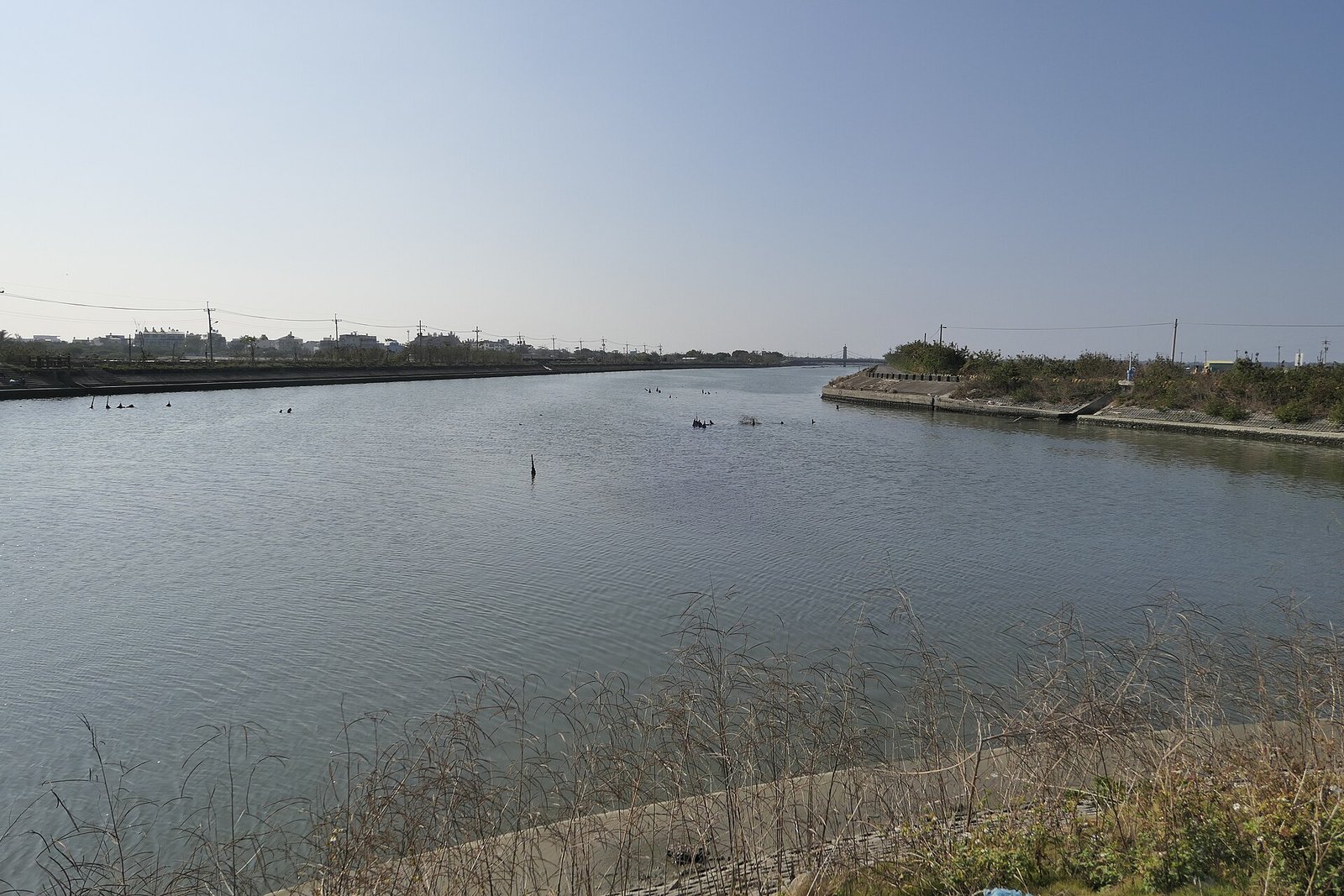
Gangzixi and the fishing spots
Official recordFishermen call the mouth of the Zengwen River "Gangzixi" (港仔西, literally "west of the harbor"); the interview text in the officially commissioned report reads: 「曾文溪出海口為熱門的磯釣景點,都稱港仔西」 ("the mouth of the Zengwen River is a popular rock-fishing spot, and everyone calls it Gangzixi") R002Source《109-110 年度曾文溪口重要濕地(國際級)生態及水質基礎調查計畫》[2020–2021 Baseline Survey of Ecology and Water Quality of the Zengwen River Estuary Wetland of Importance (International Level)], fishermen interviews in the chapter on human impacts (「曾文溪出海口為熱門的磯釣景點,都稱港仔西」 ["the mouth of the Zengwen River is a popular rock-fishing spot, and everyone calls it Gangzixi"]; target species and fishing seasons; closed fishing areas and closed seasons; long sinking traps [長沉籠]), NCKU Research and Development Foundation (成大研究發展基金會), July 2021 (ROC year 110), printed pp. 28–29, 78, 103Original URLhttps://www.tjnp.gov.tw/Retrieved2026-10-19Snapshot timestamp—. UnverifiedGangzixi is at the mouth of the Zengwen River; the mouth of the Luermen River (鹿耳門溪口) is a different stretch of coast R002Source《109-110 年度曾文溪口重要濕地(國際級)生態及水質基礎調查計畫》[2020–2021 Baseline Survey of Ecology and Water Quality of the Zengwen River Estuary Wetland of Importance (International Level)], fishermen interviews in the chapter on human impacts (「曾文溪出海口為熱門的磯釣景點,都稱港仔西」 ["the mouth of the Zengwen River is a popular rock-fishing spot, and everyone calls it Gangzixi"]; target species and fishing seasons; closed fishing areas and closed seasons; long sinking traps [長沉籠]), NCKU Research and Development Foundation (成大研究發展基金會), July 2021 (ROC year 110), printed pp. 28–29, 78, 103Original URLhttps://www.tjnp.gov.tw/Retrieved2026-10-19Snapshot timestamp—. The 2011 recreation plan inferred that the mouth of the Luermen River is a fishing hotspot because 71 percent of visitors there were men R007Source《台江國家公園整體遊憩資源調查及規劃案》[Overall Survey and Planning of Recreational Resources in Taijiang National Park], 中華民國國家公園學會 [National Park Society of the Republic of China], December 2011, printed p. 5-22 (「鹿耳門溪口是釣魚熱點,而釣客又以男生為主」 ["the mouth of the Luermen River is a fishing hotspot, and the anglers are mostly men"]; 71 percent of respondents at that site were male)Original URLhttps://www.tjnp.gov.tw/Retrieved2026-10-20Snapshot timestamp—All seven in-depth interviews in the same report were conducted in Qigu and Sicao; no anglers were interviewed..
The moon crab in the official survey series
Official recordThe 2017–2018 (ROC years 106–107) baseline survey recorded the moon crab (勝利黎明蟹) at station ZW3 on the sandbar at the Zengwen River mouth, with the microhabitat given in the original as 「沙灘、消波塊、水泥化堤防」 ("sandy beach, tetrapods, concrete embankment"); the year-by-year series is present in 2017–2018, absent in 2018–2019, absent in 2019–2020, and absent in 2020–2021 R003Source《106-107 年度曾文溪口、四草、七股鹽田及鹽水溪口重要濕地基礎調查》[2017–2018 Baseline Survey of the Zengwen River Estuary, Sicao, Qigu Salt Field, and Yanshui River Estuary Wetlands of Importance], Table 6-2-3 (the moon crab recorded at Zengwen station ZW3 = the sandbar at the Zengwen River mouth, microhabitat 「沙灘、消波塊、水泥化堤防」 ["sandy beach, tetrapods, concrete embankment"]; the mud crab recorded at Sicao SC2 and SC3), NCKU Research and Development Foundation, principal investigator Chiu Yu-wen (邱郁文), printed pp. 60–61Original URLhttps://www.tjnp.gov.tw/Retrieved2026-10-19Snapshot timestamp—R004Source《107-108 年度七股鹽田國家級重要濕地生態及水質基礎調查計畫》[Baseline Ecological and Water Quality Survey of the Qigu Salt Field National Wetland of Importance, ROC Years 107–108] and 《108-109 年度七股鹽田重要濕地(國家級)生態及水質基礎調查計畫》[Baseline Ecological and Water Quality Survey of the Qigu Salt Pan Wetland of Importance (National Level), ROC years 108–109 (2019–2020)] (individual counts by season and station; fishing-gear names 「定置網」 ["set net"] and 「長城籠」 ["Great Wall trap"]; photograph of a mud crab caught in a long sinking trap, printed pp. 114, 138)Original URLhttps://www.tjnp.gov.tw/Retrieved2026-10-19Snapshot timestamp—.
UnverifiedOn the 「無」 ("absent") results of the last three years: the sampling stations of the 2018–2019 and 2019–2020 projects were in the salt fields, and the 2020–2021 project used long sinking traps and mudflat quadrats; none had a sandy-beach sampling site R002Source《109-110 年度曾文溪口重要濕地(國際級)生態及水質基礎調查計畫》[2020–2021 Baseline Survey of Ecology and Water Quality of the Zengwen River Estuary Wetland of Importance (International Level)], fishermen interviews in the chapter on human impacts (「曾文溪出海口為熱門的磯釣景點,都稱港仔西」 ["the mouth of the Zengwen River is a popular rock-fishing spot, and everyone calls it Gangzixi"]; target species and fishing seasons; closed fishing areas and closed seasons; long sinking traps [長沉籠]), NCKU Research and Development Foundation (成大研究發展基金會), July 2021 (ROC year 110), printed pp. 28–29, 78, 103Original URLhttps://www.tjnp.gov.tw/Retrieved2026-10-19Snapshot timestamp—R004Source《107-108 年度七股鹽田國家級重要濕地生態及水質基礎調查計畫》[Baseline Ecological and Water Quality Survey of the Qigu Salt Field National Wetland of Importance, ROC Years 107–108] and 《108-109 年度七股鹽田重要濕地(國家級)生態及水質基礎調查計畫》[Baseline Ecological and Water Quality Survey of the Qigu Salt Pan Wetland of Importance (National Level), ROC years 108–109 (2019–2020)] (individual counts by season and station; fishing-gear names 「定置網」 ["set net"] and 「長城籠」 ["Great Wall trap"]; photograph of a mud crab caught in a long sinking trap, printed pp. 114, 138)Original URLhttps://www.tjnp.gov.tw/Retrieved2026-10-19Snapshot timestamp—. The 「沙灘加消波塊」 ("sandy beach plus tetrapods") of station ZW3 belongs to the same type of microhabitat as the Chengxi (城西) seashore R003Source《106-107 年度曾文溪口、四草、七股鹽田及鹽水溪口重要濕地基礎調查》[2017–2018 Baseline Survey of the Zengwen River Estuary, Sicao, Qigu Salt Field, and Yanshui River Estuary Wetlands of Importance], Table 6-2-3 (the moon crab recorded at Zengwen station ZW3 = the sandbar at the Zengwen River mouth, microhabitat 「沙灘、消波塊、水泥化堤防」 ["sandy beach, tetrapods, concrete embankment"]; the mud crab recorded at Sicao SC2 and SC3), NCKU Research and Development Foundation, principal investigator Chiu Yu-wen (邱郁文), printed pp. 60–61Original URLhttps://www.tjnp.gov.tw/Retrieved2026-10-19Snapshot timestamp—.
UnverifiedOn citizen-science platforms, the moon crab in Annan District (安南區) has 20 records on TBN and 18 on iNaturalist R009SourceTBN 臺灣生物多樣性網絡 [Taiwan Biodiversity Network]: 20 records of the moon crab in Annan District (2014–2025; 13 from river-condition surveys, 6 from iNaturalist, 1 from the national park database); iNaturalist: 18 records within a 13 km radius (2012–2025)Original URLhttps://www.tbn.org.tw/Retrieved2026-10-20Snapshot timestamp—Citizen-science data: it means "someone photographed it," not a quantitative survey.. These records are concentrated at the mouth of the Yanshui River, with 0 records on the stretch of beach along the Chengxi seashore R017SourceTBN 臺灣生物多樣性網絡 [Taiwan Biodiversity Network] open API query: the moon crab (TBN name 頑強黎明蟹, taxonUUID 754bf44c-6429-4d25-b305-d252d65553db) and the clear sundial (黑線車輪螺), range 120.00–120.20°E, 22.98–23.18°NOriginal URLhttps://www.tbn.org.tw/api/v26/occurrence?taxonUUID=754bf44c-6429-4d25-b305-d252d65553db&boundedBy=120.20%2023.18%2C120.00%2022.98&limit=1000Retrieved2026-11-01Snapshot timestamp—35 moon crab records (20 in Annan, 6 in Qigu); the iNaturalist records in Annan District are all at the mouth of the Yanshui River (22.998°N, 120.139°E), with 0 records on the Chengxi beach. There is only 1 clear sundial record (Anping, 2021, iNaturalist)..
Mud crabs, brown land crabs, and conservation
Official recordThe mud crab (鋸緣青蟳) has been recorded at both Sicao (四草) stations SC2 and SC3 R003Source《106-107 年度曾文溪口、四草、七股鹽田及鹽水溪口重要濕地基礎調查》[2017–2018 Baseline Survey of the Zengwen River Estuary, Sicao, Qigu Salt Field, and Yanshui River Estuary Wetlands of Importance], Table 6-2-3 (the moon crab recorded at Zengwen station ZW3 = the sandbar at the Zengwen River mouth, microhabitat 「沙灘、消波塊、水泥化堤防」 ["sandy beach, tetrapods, concrete embankment"]; the mud crab recorded at Sicao SC2 and SC3), NCKU Research and Development Foundation, principal investigator Chiu Yu-wen (邱郁文), printed pp. 60–61Original URLhttps://www.tjnp.gov.tw/Retrieved2026-10-19Snapshot timestamp—. Official recordBrown land crabs (兇狠圓軸蟹) have been measured at Qingcaolun (青草崙): the maximum male carapace width is 134.5 millimeters and the mean 102.7 millimeters. Today the work on the same seawall is crab protection and poaching enforcement, with a total of 7 cases over the three years 2018 to 2020 (ROC years 107 to 109) R008Source《台江國家公園陸蟹生態調查》[Land Crab Ecological Survey of Taijiang National Park] (measurements of brown land crabs at Qingcaolun: maximum male carapace width 134.5 mm, mean 102.7 mm; 7 poaching enforcement cases in 2018–2020 [ROC years 107–109]) and the 《106-107 年度基礎調查》[2017–2018 Baseline Survey] recommendation that Qingcaolun serve as an environmental-education experience site for land crab observationOriginal URLhttps://www.tjnp.gov.tw/Retrieved2026-10-19Snapshot timestamp—.
The scope of fishing-gear controls
Official recordThe closed fishing area announced by the Agriculture Bureau is 「潟湖及主要河川感潮帶下游至出海口水域」 ("the lagoons and the waters of the major rivers from the lower tidal reaches to the river mouths"), and the closed season runs from September 1 to October 31 each year, during which catching with long sinking traps (長沉籠) is prohibited R002Source《109-110 年度曾文溪口重要濕地(國際級)生態及水質基礎調查計畫》[2020–2021 Baseline Survey of Ecology and Water Quality of the Zengwen River Estuary Wetland of Importance (International Level)], fishermen interviews in the chapter on human impacts (「曾文溪出海口為熱門的磯釣景點,都稱港仔西」 ["the mouth of the Zengwen River is a popular rock-fishing spot, and everyone calls it Gangzixi"]; target species and fishing seasons; closed fishing areas and closed seasons; long sinking traps [長沉籠]), NCKU Research and Development Foundation (成大研究發展基金會), July 2021 (ROC year 110), printed pp. 28–29, 78, 103Original URLhttps://www.tjnp.gov.tw/Retrieved2026-10-19Snapshot timestamp—. UnverifiedThe only fishing gear expressly regulated is the 「長沉籠」 ("long sinking trap"); stake nets (插網) are not mentioned. The closed season overlaps with the collecting season that locals remember R002Source《109-110 年度曾文溪口重要濕地(國際級)生態及水質基礎調查計畫》[2020–2021 Baseline Survey of Ecology and Water Quality of the Zengwen River Estuary Wetland of Importance (International Level)], fishermen interviews in the chapter on human impacts (「曾文溪出海口為熱門的磯釣景點,都稱港仔西」 ["the mouth of the Zengwen River is a popular rock-fishing spot, and everyone calls it Gangzixi"]; target species and fishing seasons; closed fishing areas and closed seasons; long sinking traps [長沉籠]), NCKU Research and Development Foundation (成大研究發展基金會), July 2021 (ROC year 110), printed pp. 28–29, 78, 103Original URLhttps://www.tjnp.gov.tw/Retrieved2026-10-19Snapshot timestamp—.
Chronology: records of species collected on the coast
First items: The river-condition survey of the Zengwe…The recreation plan inferred that the mo…The anglers interviewed for the water qu…MoreLess
- 2006
The river-condition survey of the Zengwe…MoreLess
The river-condition survey of the Zengwen River system by the Water Resources Agency, Ministry of Economic Affairs, recorded 44 fish species in the lower Zengwen River R010SourcePeng Shao-hung (彭紹宏), principal investigator (with co-investigators Chiu Yu-wen (邱郁文) and Liu Ching-yu (劉靜榆)), 《109-110 年度曾文溪口重要濕地(國際級)生態及水質基礎調查計畫》[2020–2021 Baseline Survey of Ecology and Water Quality of the Zengwen River Estuary Wetland of Importance (International Level)], commissioned to 財團法人成大研究發展基金會 [NCKU Research and Development Foundation] by the 台江國家公園管理處 [Taijiang National Park Headquarters], July 2021 (ROC year 110)Original URLhttps://ws.moi.gov.tw/001/Upload/OldFile_TJNP/Result/20211110144901095556.pdfRetrieved2026-11-01Snapshot timestamp—SourceFrom 《2020–2021 Baseline Ecological and Water Quality Survey of the Zengwen River Estuary Wetland of Importance (International Level) (109-110年度曾文溪口重要濕地(國際級)生態及水質基礎調查計畫)》p. 13、28、47、78p. 13 retells the 2006 river-condition survey of the Zengwen River system by the Water Resources Agency, Ministry of Economic Affairs; p. 47, Table 9, aquatic organisms at three stations on the lower Zengwen River over four seasons; p. 78, interviews with fishermen at Gangzixi..
- 2011
The recreation plan inferred that the mo…MoreLess
The recreation plan inferred that the mouth of the Luermen River is a fishing hotspot because 71 percent of visitors there were men R007Source《台江國家公園整體遊憩資源調查及規劃案》[Overall Survey and Planning of Recreational Resources in Taijiang National Park], 中華民國國家公園學會 [National Park Society of the Republic of China], December 2011, printed p. 5-22 (「鹿耳門溪口是釣魚熱點,而釣客又以男生為主」 ["the mouth of the Luermen River is a fishing hotspot, and the anglers are mostly men"]; 71 percent of respondents at that site were male)Original URLhttps://www.tjnp.gov.tw/Retrieved2026-10-20Snapshot timestamp—All seven in-depth interviews in the same report were conducted in Qigu and Sicao; no anglers were interviewed..
- 2016
The anglers interviewed for the water qu…MoreLess
The anglers interviewed for the water quality and sediment monitoring left a set of common names: o͘-keh (烏格; Acanthopagrus berda (灰鰭棘鯛) or blackhead seabream (黑棘鯛)), jarbua terapon (花身雞魚), doua (豆仔; mullets, Mugilidae (鯔科)), and thóo-n̂g-á (土黃仔; Japanese gizzard shad (日本海鰶) or Western Pacific gizzard shad (環球海鰶)); the anglers also said that a cold wave early in the year had killed large numbers of fish in Qigu by freezing R013SourceLin Ying-feng (林瑩峯), principal investigator, 《105年度台江國家公園水質底泥監測暨指標生物評估計畫》[2016 (ROC year 105) Water Quality and Sediment Monitoring and Indicator Organism Assessment Project for Taijiang National Park], commissioned by the 台江國家公園管理處 [Taijiang National Park Headquarters]Original URLhttps://ws.moi.gov.tw/001/Upload/OldFile_TJNP/Result/20170120155143080255.pdfRetrieved2026-11-01Snapshot timestamp—SourceFrom 《2016 (ROC Year 105) Water Quality and Sediment Monitoring and Indicator Organism Assessment Plan for Taijiang National Park (105年度台江國家公園水質底泥監測暨指標生物評估計畫)》p. 4-97Interviews with anglers; the sampling areas were Qigu, the Zengwen River and the Yanshui River..In the elders' oral histories, Chen Chin…MoreLess
In the elders' oral histories, Chen Ching-piao (陳清標) said of the Dachaogou (大潮溝) of the Black-faced Spoonbill Reserve: 「釣魚的話有烏格、花鯓、豆仔、烏魚」 ("for fishing there's o͘-keh, jarbua terapon, doua and grey mullet")R014Source《台江地區人文調查及潛在性文化資源活化應用─台江耆老飲食文化口述歷史撰寫暨史普推廣》[Humanities Survey of the Taijiang Area and the Revitalization of Potential Cultural Resources: Writing the Oral History of the Food Culture of Taijiang Elders and Popular-History Outreach], commissioned by the 台江國家公園管理處 [Taijiang National Park Headquarters], interviews of 2016Original URL—Retrieved2026-11-01Snapshot timestamp—The interviewee Chen Ching-piao (陳清標) talks about the fish species caught in the Dachaogou (大潮溝) of the Black-faced Spoonbill Reserve..
- 2017
01-07In bottom trawls off Qigu, the moon crab…MoreLess
In bottom trawls off Qigu, the moon crab was the dominant species by biomass R011SourceChen Meng-hsien (陳孟仙), principal investigator, 《台江國家公園海域生態系生物資源調查與多樣性保育研究(2/4)》[Survey of Biological Resources and Biodiversity Conservation Research in the Marine Ecosystem of Taijiang National Park (2/4)], commissioned to 國立中山大學 [National Sun Yat-sen University] by the 台江國家公園管理處 [Taijiang National Park Headquarters], 2017 (ROC year 106)Original URLhttps://ws.moi.gov.tw/001/Upload/OldFile_TJNP/Result/20180109162652929405.pdfRetrieved2026-11-01Snapshot timestamp—SourceFrom 《Survey of Biological Resources and Biodiversity Conservation Research on the Marine Ecosystem of Taijiang National Park (2/4) (台江國家公園海域生態系生物資源調查與多樣性保育研究(2/4))》p. 272.2017–2018The baseline survey of four wetlands of …MoreLess
The baseline survey of four wetlands of importance recorded the moon crab at station ZW3 on the sandbar at the Zengwen River mouth, and the mud crab at Sicao SC2 and SC3 R003Source《106-107 年度曾文溪口、四草、七股鹽田及鹽水溪口重要濕地基礎調查》[2017–2018 Baseline Survey of the Zengwen River Estuary, Sicao, Qigu Salt Field, and Yanshui River Estuary Wetlands of Importance], Table 6-2-3 (the moon crab recorded at Zengwen station ZW3 = the sandbar at the Zengwen River mouth, microhabitat 「沙灘、消波塊、水泥化堤防」 ["sandy beach, tetrapods, concrete embankment"]; the mud crab recorded at Sicao SC2 and SC3), NCKU Research and Development Foundation, principal investigator Chiu Yu-wen (邱郁文), printed pp. 60–61Original URLhttps://www.tjnp.gov.tw/Retrieved2026-10-19Snapshot timestamp—.
- 2018
2018–2019The mud crab and Scylla paramamosain (擬深…MoreLess
The mud crab and Scylla paramamosain (擬深穴青蟳) were recorded season by season at each station in the Qigu salt fields R015SourceSung Hsin-yi (宋心怡), principal investigator, with Huang Ta-chun (黃大駿) as co-investigator, 《107-108 年度七股鹽田國家級重要濕地生態及水質基礎調查計畫》[Baseline Ecological and Water Quality Survey of the Qigu Salt Field National Wetland of Importance, ROC Years 107–108], commissioned to the 台灣黑面琵鷺保育學會 [Taiwan Black-faced Spoonbill Conservation Association] by the 台江國家公園管理處 [Taijiang National Park Headquarters]Original URLhttps://ws.moi.gov.tw/001/Upload/OldFile_TJNP/Result/20200224103552560592.pdfRetrieved2026-11-01Snapshot timestamp—SourceFrom 《Baseline Ecological and Water Quality Survey of the Qigu Salt Field National Wetland of Importance, ROC Years 107–108 (107-108年度七股鹽田國家級重要濕地生態及水質基礎調查計畫)》p. 53–60.
- 2019
05At station CG15 off Qigu, the moon crab …MoreLess
At station CG15 off Qigu, the moon crab was the most abundant dominant species on both May 1 and May 25; on May 1 a bottom trawl at station PC1 in the Heishuigou (黑水溝) channel brought up 3 sundial shells (車輪螺) R012SourceChen Meng-hsien (陳孟仙), principal investigator, 《台江國家公園海域生態系生物資源調查與多樣性保育研究(4/4)》[Survey of Biological Resources and Biodiversity Conservation Research in the Marine Ecosystem of Taijiang National Park (4/4)], commissioned to 國立中山大學 [National Sun Yat-sen University] by the 台江國家公園管理處 [Taijiang National Park Headquarters], 2019 (ROC year 108)Original URLhttps://ws.moi.gov.tw/001/Upload/OldFile_TJNP/Result/20200116114816137508.pdfRetrieved2026-11-01Snapshot timestamp—SourceFrom 《Survey of Biological Resources and Biodiversity Conservation Research on the Marine Ecosystem of Taijiang National Park (4/4) (台江國家公園海域生態系生物資源調查與多樣性保育研究(4/4))》p. 105、127.
- 2020
The land crab ecological survey pointed …MoreLess
The land crab ecological survey pointed out that vehicles driven onto the beach directly harm ghost crabs, and recommended setting up barriers on the beach of the Qingcaolun coast; and that driftwood be kept when clearing marine debris R016SourceLiu Hung-chang (劉烘昌), principal investigator, 《台江國家公園陸蟹生態調查》[Land Crab Ecological Survey of Taijiang National Park], commissioned to the 臺灣生態學會 [Ecological Society of Taiwan] by the 台江國家公園管理處 [Taijiang National Park Headquarters], December 2020 (ROC year 109)Original URLhttps://ws.moi.gov.tw/001/Upload/OldFile_TJNP/Result/20210507111826852905.pdfRetrieved2026-11-01Snapshot timestamp—SourceFrom 《Land Crab Ecological Survey of Taijiang National Park (台江國家公園陸蟹生態調查)》p. 54、91、107–108.2020–2021The baseline survey of the Zengwen River…MoreLess
The baseline survey of the Zengwen River Estuary Wetland of Importance interviewed fishermen and recorded the target species and fishing seasons at Gangzixi R002Source《109-110 年度曾文溪口重要濕地(國際級)生態及水質基礎調查計畫》[2020–2021 Baseline Survey of Ecology and Water Quality of the Zengwen River Estuary Wetland of Importance (International Level)], fishermen interviews in the chapter on human impacts (「曾文溪出海口為熱門的磯釣景點,都稱港仔西」 ["the mouth of the Zengwen River is a popular rock-fishing spot, and everyone calls it Gangzixi"]; target species and fishing seasons; closed fishing areas and closed seasons; long sinking traps [長沉籠]), NCKU Research and Development Foundation (成大研究發展基金會), July 2021 (ROC year 110), printed pp. 28–29, 78, 103Original URLhttps://www.tjnp.gov.tw/Retrieved2026-10-19Snapshot timestamp—R010SourcePeng Shao-hung (彭紹宏), principal investigator (with co-investigators Chiu Yu-wen (邱郁文) and Liu Ching-yu (劉靜榆)), 《109-110 年度曾文溪口重要濕地(國際級)生態及水質基礎調查計畫》[2020–2021 Baseline Survey of Ecology and Water Quality of the Zengwen River Estuary Wetland of Importance (International Level)], commissioned to 財團法人成大研究發展基金會 [NCKU Research and Development Foundation] by the 台江國家公園管理處 [Taijiang National Park Headquarters], July 2021 (ROC year 110)Original URLhttps://ws.moi.gov.tw/001/Upload/OldFile_TJNP/Result/20211110144901095556.pdfRetrieved2026-11-01Snapshot timestamp—SourceFrom 《2020–2021 Baseline Ecological and Water Quality Survey of the Zengwen River Estuary Wetland of Importance (International Level) (109-110年度曾文溪口重要濕地(國際級)生態及水質基礎調查計畫)》p. 13、28、47、78p. 13 retells the 2006 river-condition survey of the Zengwen River system by the Water Resources Agency, Ministry of Economic Affairs; p. 47, Table 9, aquatic organisms at three stations on the lower Zengwen River over four seasons; p. 78, interviews with fishermen at Gangzixi..
Species recorded in this area
First items: Crabs and shellfishFishBirds, plants and terrestrial animals: s…MoreLess
- Crabs and shellfish
- Moon crab: ZW3 on the sandbar at the Zengwen River mouth R003Source《106-107 年度曾文溪口、四草、七股鹽田及鹽水溪口重要濕地基礎調查》[2017–2018 Baseline Survey of the Zengwen River Estuary, Sicao, Qigu Salt Field, and Yanshui River Estuary Wetlands of Importance], Table 6-2-3 (the moon crab recorded at Zengwen station ZW3 = the sandbar at the Zengwen River mouth, microhabitat 「沙灘、消波塊、水泥化堤防」 ["sandy beach, tetrapods, concrete embankment"]; the mud crab recorded at Sicao SC2 and SC3), NCKU Research and Development Foundation, principal investigator Chiu Yu-wen (邱郁文), printed pp. 60–61Original URLhttps://www.tjnp.gov.tw/Retrieved2026-10-19Snapshot timestamp—; the dominant species in bottom trawls off Qigu R011SourceChen Meng-hsien (陳孟仙), principal investigator, 《台江國家公園海域生態系生物資源調查與多樣性保育研究(2/4)》[Survey of Biological Resources and Biodiversity Conservation Research in the Marine Ecosystem of Taijiang National Park (2/4)], commissioned to 國立中山大學 [National Sun Yat-sen University] by the 台江國家公園管理處 [Taijiang National Park Headquarters], 2017 (ROC year 106)Original URLhttps://ws.moi.gov.tw/001/Upload/OldFile_TJNP/Result/20180109162652929405.pdfRetrieved2026-11-01Snapshot timestamp—SourceFrom 《Survey of Biological Resources and Biodiversity Conservation Research on the Marine Ecosystem of Taijiang National Park (2/4) (台江國家公園海域生態系生物資源調查與多樣性保育研究(2/4))》p. 272R012SourceChen Meng-hsien (陳孟仙), principal investigator, 《台江國家公園海域生態系生物資源調查與多樣性保育研究(4/4)》[Survey of Biological Resources and Biodiversity Conservation Research in the Marine Ecosystem of Taijiang National Park (4/4)], commissioned to 國立中山大學 [National Sun Yat-sen University] by the 台江國家公園管理處 [Taijiang National Park Headquarters], 2019 (ROC year 108)Original URLhttps://ws.moi.gov.tw/001/Upload/OldFile_TJNP/Result/20200116114816137508.pdfRetrieved2026-11-01Snapshot timestamp—SourceFrom 《Survey of Biological Resources and Biodiversity Conservation Research on the Marine Ecosystem of Taijiang National Park (4/4) (台江國家公園海域生態系生物資源調查與多樣性保育研究(4/4))》p. 105、127.
- Mud crab: Sicao SC2 and SC3 R003Source《106-107 年度曾文溪口、四草、七股鹽田及鹽水溪口重要濕地基礎調查》[2017–2018 Baseline Survey of the Zengwen River Estuary, Sicao, Qigu Salt Field, and Yanshui River Estuary Wetlands of Importance], Table 6-2-3 (the moon crab recorded at Zengwen station ZW3 = the sandbar at the Zengwen River mouth, microhabitat 「沙灘、消波塊、水泥化堤防」 ["sandy beach, tetrapods, concrete embankment"]; the mud crab recorded at Sicao SC2 and SC3), NCKU Research and Development Foundation, principal investigator Chiu Yu-wen (邱郁文), printed pp. 60–61Original URLhttps://www.tjnp.gov.tw/Retrieved2026-10-19Snapshot timestamp—; the Qigu salt fields also have Scylla paramamosain R015SourceSung Hsin-yi (宋心怡), principal investigator, with Huang Ta-chun (黃大駿) as co-investigator, 《107-108 年度七股鹽田國家級重要濕地生態及水質基礎調查計畫》[Baseline Ecological and Water Quality Survey of the Qigu Salt Field National Wetland of Importance, ROC Years 107–108], commissioned to the 台灣黑面琵鷺保育學會 [Taiwan Black-faced Spoonbill Conservation Association] by the 台江國家公園管理處 [Taijiang National Park Headquarters]Original URLhttps://ws.moi.gov.tw/001/Upload/OldFile_TJNP/Result/20200224103552560592.pdfRetrieved2026-11-01Snapshot timestamp—SourceFrom 《Baseline Ecological and Water Quality Survey of the Qigu Salt Field National Wetland of Importance, ROC Years 107–108 (107-108年度七股鹽田國家級重要濕地生態及水質基礎調查計畫)》p. 53–60.
- Ghost crabs and land hermit crabs of the beach: horned ghost crab (角眼沙蟹), Chinese ghost crab (中華沙蟹), smooth-handed ghost crab (平掌沙蟹), and grey land hermit crab (灰白陸寄居蟹) R016SourceLiu Hung-chang (劉烘昌), principal investigator, 《台江國家公園陸蟹生態調查》[Land Crab Ecological Survey of Taijiang National Park], commissioned to the 臺灣生態學會 [Ecological Society of Taiwan] by the 台江國家公園管理處 [Taijiang National Park Headquarters], December 2020 (ROC year 109)Original URLhttps://ws.moi.gov.tw/001/Upload/OldFile_TJNP/Result/20210507111826852905.pdfRetrieved2026-11-01Snapshot timestamp—SourceFrom 《Land Crab Ecological Survey of Taijiang National Park (台江國家公園陸蟹生態調查)》p. 54、91、107–108.
- Brown land crab: around Qingcaolun; for details see 5.3b The Two Faces of the Qingcaolun Seawall.
- Sundial shells (Architectonicidae, 車輪螺科): the only actual local collection is the 3 shells at station PC1 in the Heishuigou channel in 2019 R012SourceChen Meng-hsien (陳孟仙), principal investigator, 《台江國家公園海域生態系生物資源調查與多樣性保育研究(4/4)》[Survey of Biological Resources and Biodiversity Conservation Research in the Marine Ecosystem of Taijiang National Park (4/4)], commissioned to 國立中山大學 [National Sun Yat-sen University] by the 台江國家公園管理處 [Taijiang National Park Headquarters], 2019 (ROC year 108)Original URLhttps://ws.moi.gov.tw/001/Upload/OldFile_TJNP/Result/20200116114816137508.pdfRetrieved2026-11-01Snapshot timestamp—SourceFrom 《Survey of Biological Resources and Biodiversity Conservation Research on the Marine Ecosystem of Taijiang National Park (4/4) (台江國家公園海域生態系生物資源調查與多樣性保育研究(4/4))》p. 105、127; TBN also has 1 record in this area of the clear sundial (黑線車輪螺), from Anping in 2021 R017SourceTBN 臺灣生物多樣性網絡 [Taiwan Biodiversity Network] open API query: the moon crab (TBN name 頑強黎明蟹, taxonUUID 754bf44c-6429-4d25-b305-d252d65553db) and the clear sundial (黑線車輪螺), range 120.00–120.20°E, 22.98–23.18°NOriginal URLhttps://www.tbn.org.tw/api/v26/occurrence?taxonUUID=754bf44c-6429-4d25-b305-d252d65553db&boundedBy=120.20%2023.18%2C120.00%2022.98&limit=1000Retrieved2026-11-01Snapshot timestamp—35 moon crab records (20 in Annan, 6 in Qigu); the iNaturalist records in Annan District are all at the mouth of the Yanshui River (22.998°N, 120.139°E), with 0 records on the Chengxi beach. There is only 1 clear sundial record (Anping, 2021, iNaturalist)..
- Fish
- Target species at Gangzixi (the mouth of the Zengwen River): sillago (沙鮻), mangrove red snapper (銀紋笛鯛; locally ang-tsô, 紅槽), blackhead seabream (黑棘鯛; 黑鯛), barramundi (尖吻鱸; locally golden-eyed bass, 金目鱸) and jarbua terapon (花身鯻; locally hue-sin-á, 花身仔) R010SourcePeng Shao-hung (彭紹宏), principal investigator (with co-investigators Chiu Yu-wen (邱郁文) and Liu Ching-yu (劉靜榆)), 《109-110 年度曾文溪口重要濕地(國際級)生態及水質基礎調查計畫》[2020–2021 Baseline Survey of Ecology and Water Quality of the Zengwen River Estuary Wetland of Importance (International Level)], commissioned to 財團法人成大研究發展基金會 [NCKU Research and Development Foundation] by the 台江國家公園管理處 [Taijiang National Park Headquarters], July 2021 (ROC year 110)Original URLhttps://ws.moi.gov.tw/001/Upload/OldFile_TJNP/Result/20211110144901095556.pdfRetrieved2026-11-01Snapshot timestamp—SourceFrom 《2020–2021 Baseline Ecological and Water Quality Survey of the Zengwen River Estuary Wetland of Importance (International Level) (109-110年度曾文溪口重要濕地(國際級)生態及水質基礎調查計畫)》p. 13、28、47、78p. 13 retells the 2006 river-condition survey of the Zengwen River system by the Water Resources Agency, Ministry of Economic Affairs; p. 47, Table 9, aquatic organisms at three stations on the lower Zengwen River over four seasons; p. 78, interviews with fishermen at Gangzixi..
- Fishing seasons: the 「白肚期」 ("white-belly season," for the Spanish mackerel 臺灣馬加鰆) early in the year, the 「三牙期」 ("sanya season") in spring, and huaxie (花蟹) crabs from the 6th to the 8th lunar month R010SourcePeng Shao-hung (彭紹宏), principal investigator (with co-investigators Chiu Yu-wen (邱郁文) and Liu Ching-yu (劉靜榆)), 《109-110 年度曾文溪口重要濕地(國際級)生態及水質基礎調查計畫》[2020–2021 Baseline Survey of Ecology and Water Quality of the Zengwen River Estuary Wetland of Importance (International Level)], commissioned to 財團法人成大研究發展基金會 [NCKU Research and Development Foundation] by the 台江國家公園管理處 [Taijiang National Park Headquarters], July 2021 (ROC year 110)Original URLhttps://ws.moi.gov.tw/001/Upload/OldFile_TJNP/Result/20211110144901095556.pdfRetrieved2026-11-01Snapshot timestamp—SourceFrom 《2020–2021 Baseline Ecological and Water Quality Survey of the Zengwen River Estuary Wetland of Importance (International Level) (109-110年度曾文溪口重要濕地(國際級)生態及水質基礎調查計畫)》p. 13、28、47、78p. 13 retells the 2006 river-condition survey of the Zengwen River system by the Water Resources Agency, Ministry of Economic Affairs; p. 47, Table 9, aquatic organisms at three stations on the lower Zengwen River over four seasons; p. 78, interviews with fishermen at Gangzixi..
- Three stations on the lower Zengwen River over four seasons (Table 9; figures are total numbers of individuals, 1 where not stated): Western Pacific gizzard shad (環球海鰶), striped eel catfish (線紋鰻鯰), spotted catfish (斑海鯰) 4, orange-spotted grouper (點帶石斑魚), broadbanded cardinalfish (寬條鸚天竺鯛) 11, northern whiting (多鱗沙鮻), splendid ponyfish (黑邊布氏鰏), Japanese silver-biddy (日本鑽嘴魚) 7, deep-bodied mojarra (短棘鑽嘴魚) 3, silver grunt (銀雞魚), javelin grunter (星雞魚) 20, Belanger's croaker (叫姑魚) 2, Malabar grouper (瑪拉巴石斑魚), Butis koilomatodon (花錐脊塘鱧) 6, white-spotted puffer (紋腹叉鼻魨) 3, and milkspotted puffer (凹鼻魨) 4 R010SourcePeng Shao-hung (彭紹宏), principal investigator (with co-investigators Chiu Yu-wen (邱郁文) and Liu Ching-yu (劉靜榆)), 《109-110 年度曾文溪口重要濕地(國際級)生態及水質基礎調查計畫》[2020–2021 Baseline Survey of Ecology and Water Quality of the Zengwen River Estuary Wetland of Importance (International Level)], commissioned to 財團法人成大研究發展基金會 [NCKU Research and Development Foundation] by the 台江國家公園管理處 [Taijiang National Park Headquarters], July 2021 (ROC year 110)Original URLhttps://ws.moi.gov.tw/001/Upload/OldFile_TJNP/Result/20211110144901095556.pdfRetrieved2026-11-01Snapshot timestamp—SourceFrom 《2020–2021 Baseline Ecological and Water Quality Survey of the Zengwen River Estuary Wetland of Importance (International Level) (109-110年度曾文溪口重要濕地(國際級)生態及水質基礎調查計畫)》p. 13、28、47、78p. 13 retells the 2006 river-condition survey of the Zengwen River system by the Water Resources Agency, Ministry of Economic Affairs; p. 47, Table 9, aquatic organisms at three stations on the lower Zengwen River over four seasons; p. 78, interviews with fishermen at Gangzixi..
- Birds, plants and terrestrial animals: see 5.3 The Chengxi Windbreak Forest and 5.3b The Two Faces of the Qingcaolun Seawall.
Long-term changes in numbers
Presence or absence of the moon crab in each survey
The sampling stations and methods differ from survey to survey (sandy beach, salt fields, mudflat quadrats, offshore bottom trawls), so 「無」 ("absent") does not mean the crab is not there.
| Year | Survey | Result | Source |
|---|---|---|---|
| 2017-01-07 | Bottom trawl off Qigu | Dominant species by biomass | R011SourceChen Meng-hsien (陳孟仙), principal investigator, 《台江國家公園海域生態系生物資源調查與多樣性保育研究(2/4)》[Survey of Biological Resources and Biodiversity Conservation Research in the Marine Ecosystem of Taijiang National Park (2/4)], commissioned to 國立中山大學 [National Sun Yat-sen University] by the 台江國家公園管理處 [Taijiang National Park Headquarters], 2017 (ROC year 106)Original URLhttps://ws.moi.gov.tw/001/Upload/OldFile_TJNP/Result/20180109162652929405.pdfRetrieved2026-11-01Snapshot timestamp—SourceFrom 《Survey of Biological Resources and Biodiversity Conservation Research on the Marine Ecosystem of Taijiang National Park (2/4) (台江國家公園海域生態系生物資源調查與多樣性保育研究(2/4))》p. 272 |
| 2017–2018 (ROC 106–107) | Baseline survey of four wetlands of importance | Present at ZW3 (sandbar at the Zengwen River mouth) | R003Source《106-107 年度曾文溪口、四草、七股鹽田及鹽水溪口重要濕地基礎調查》[2017–2018 Baseline Survey of the Zengwen River Estuary, Sicao, Qigu Salt Field, and Yanshui River Estuary Wetlands of Importance], Table 6-2-3 (the moon crab recorded at Zengwen station ZW3 = the sandbar at the Zengwen River mouth, microhabitat 「沙灘、消波塊、水泥化堤防」 ["sandy beach, tetrapods, concrete embankment"]; the mud crab recorded at Sicao SC2 and SC3), NCKU Research and Development Foundation, principal investigator Chiu Yu-wen (邱郁文), printed pp. 60–61Original URLhttps://www.tjnp.gov.tw/Retrieved2026-10-19Snapshot timestamp— |
| 2018–2019, 2019–2020 (ROC 107–108, 108–109) | Qigu salt field baseline surveys | Absent (stations in the salt fields) | R004Source《107-108 年度七股鹽田國家級重要濕地生態及水質基礎調查計畫》[Baseline Ecological and Water Quality Survey of the Qigu Salt Field National Wetland of Importance, ROC Years 107–108] and 《108-109 年度七股鹽田重要濕地(國家級)生態及水質基礎調查計畫》[Baseline Ecological and Water Quality Survey of the Qigu Salt Pan Wetland of Importance (National Level), ROC years 108–109 (2019–2020)] (individual counts by season and station; fishing-gear names 「定置網」 ["set net"] and 「長城籠」 ["Great Wall trap"]; photograph of a mud crab caught in a long sinking trap, printed pp. 114, 138)Original URLhttps://www.tjnp.gov.tw/Retrieved2026-10-19Snapshot timestamp— |
| 2019-05 | Bottom trawl off Qigu, CG15 | Most abundant dominant species | R012SourceChen Meng-hsien (陳孟仙), principal investigator, 《台江國家公園海域生態系生物資源調查與多樣性保育研究(4/4)》[Survey of Biological Resources and Biodiversity Conservation Research in the Marine Ecosystem of Taijiang National Park (4/4)], commissioned to 國立中山大學 [National Sun Yat-sen University] by the 台江國家公園管理處 [Taijiang National Park Headquarters], 2019 (ROC year 108)Original URLhttps://ws.moi.gov.tw/001/Upload/OldFile_TJNP/Result/20200116114816137508.pdfRetrieved2026-11-01Snapshot timestamp—SourceFrom 《Survey of Biological Resources and Biodiversity Conservation Research on the Marine Ecosystem of Taijiang National Park (4/4) (台江國家公園海域生態系生物資源調查與多樣性保育研究(4/4))》p. 105、127 |
| 2020–2021 (ROC 109–110) | Zengwen River Estuary baseline survey | Absent (long sinking traps and mudflat quadrats) | R002Source《109-110 年度曾文溪口重要濕地(國際級)生態及水質基礎調查計畫》[2020–2021 Baseline Survey of Ecology and Water Quality of the Zengwen River Estuary Wetland of Importance (International Level)], fishermen interviews in the chapter on human impacts (「曾文溪出海口為熱門的磯釣景點,都稱港仔西」 ["the mouth of the Zengwen River is a popular rock-fishing spot, and everyone calls it Gangzixi"]; target species and fishing seasons; closed fishing areas and closed seasons; long sinking traps [長沉籠]), NCKU Research and Development Foundation (成大研究發展基金會), July 2021 (ROC year 110), printed pp. 28–29, 78, 103Original URLhttps://www.tjnp.gov.tw/Retrieved2026-10-19Snapshot timestamp— |
| 2014–2025 | TBN, Annan District | 20 records | R009SourceTBN 臺灣生物多樣性網絡 [Taiwan Biodiversity Network]: 20 records of the moon crab in Annan District (2014–2025; 13 from river-condition surveys, 6 from iNaturalist, 1 from the national park database); iNaturalist: 18 records within a 13 km radius (2012–2025)Original URLhttps://www.tbn.org.tw/Retrieved2026-10-20Snapshot timestamp—Citizen-science data: it means "someone photographed it," not a quantitative survey. |
Behind this door is the internal site, with profiles of people and local comments. The internal site is deployed separately.