The cicada curriculum: Chang'an and Haidong
MoreLess
Official recordIn the current curriculum plans for the 2026–2027 school year (ROC school year 115), the Taiwan dark cicada (臺灣暗蟬) curriculum is taught at Chang-an Elementary School (長安國小): unit C2-1 in the second semester of third grade, 「護台江暗蟬」 ("Protecting the Taijiang Taiwan Dark Cicada"), which covers learning about the Taiwan dark cicada together with the incinerator R001SourceSchool-by-school check of the 2026–2027 school year (ROC school year 115) curriculum plans (Chang-an Elementary School C2-1, third grade, second semester, 「護台江暗蟬」 ["Protecting the Taijiang Taiwan Dark Cicada"]: learning about the Taiwan dark cicada and the incinerator; the full texts of Haidong Elementary School C1-1/C2-1 do not contain 「暗蟬」 ["Taiwan dark cicada"])Original URLhttps://course.tn.edu.tw/Retrieved2026-10-19Snapshot timestamp—.
Official recordHaidong Elementary School (海東國小) won the Gold Award of the Ministry of Education (教育部) Teaching Excellence Award for Taiwan Dark Cicada AI: Haidong Sings to the World (《暗蟬 AI 海東鳴天下》); the curriculum has students use mobile devices to explore the ecology of Taijiang (台江) and protect the Taiwan dark cicada, and it went on to develop "When the Taiwan Dark Cicada Meets Robots" (「當臺灣暗蟬遇見機器人」) for habitat surveys R002SourceHaidong Elementary School's "Hand of the Sun" (「太陽之手」) team won the Gold Award of the Ministry of Education (教育部) Teaching Excellence Award for 《暗蟬 AI 海東鳴天下》[Taiwan Dark Cicada AI: Haidong Sings to the World], and developed the curriculum unit 「當臺灣暗蟬遇見機器人」 ["When the Taiwan Dark Cicada Meets Robots"] for habitat surveysOriginal URLhttps://www.htps.tn.edu.tw/Retrieved2026-10-18Snapshot timestamp—. UnverifiedIn the full text of the 2026–2027 school-year curriculum plans, however, the word 「暗蟬」 ("Taiwan dark cicada") does not appear in Haidong Elementary School's C1-1 or C2-1 R001SourceSchool-by-school check of the 2026–2027 school year (ROC school year 115) curriculum plans (Chang-an Elementary School C2-1, third grade, second semester, 「護台江暗蟬」 ["Protecting the Taijiang Taiwan Dark Cicada"]: learning about the Taiwan dark cicada and the incinerator; the full texts of Haidong Elementary School C1-1/C2-1 do not contain 「暗蟬」 ["Taiwan dark cicada"])Original URLhttps://course.tn.edu.tw/Retrieved2026-10-19Snapshot timestamp—R002SourceHaidong Elementary School's "Hand of the Sun" (「太陽之手」) team won the Gold Award of the Ministry of Education (教育部) Teaching Excellence Award for 《暗蟬 AI 海東鳴天下》[Taiwan Dark Cicada AI: Haidong Sings to the World], and developed the curriculum unit 「當臺灣暗蟬遇見機器人」 ["When the Taiwan Dark Cicada Meets Robots"] for habitat surveysOriginal URLhttps://www.htps.tn.edu.tw/Retrieved2026-10-18Snapshot timestamp—.
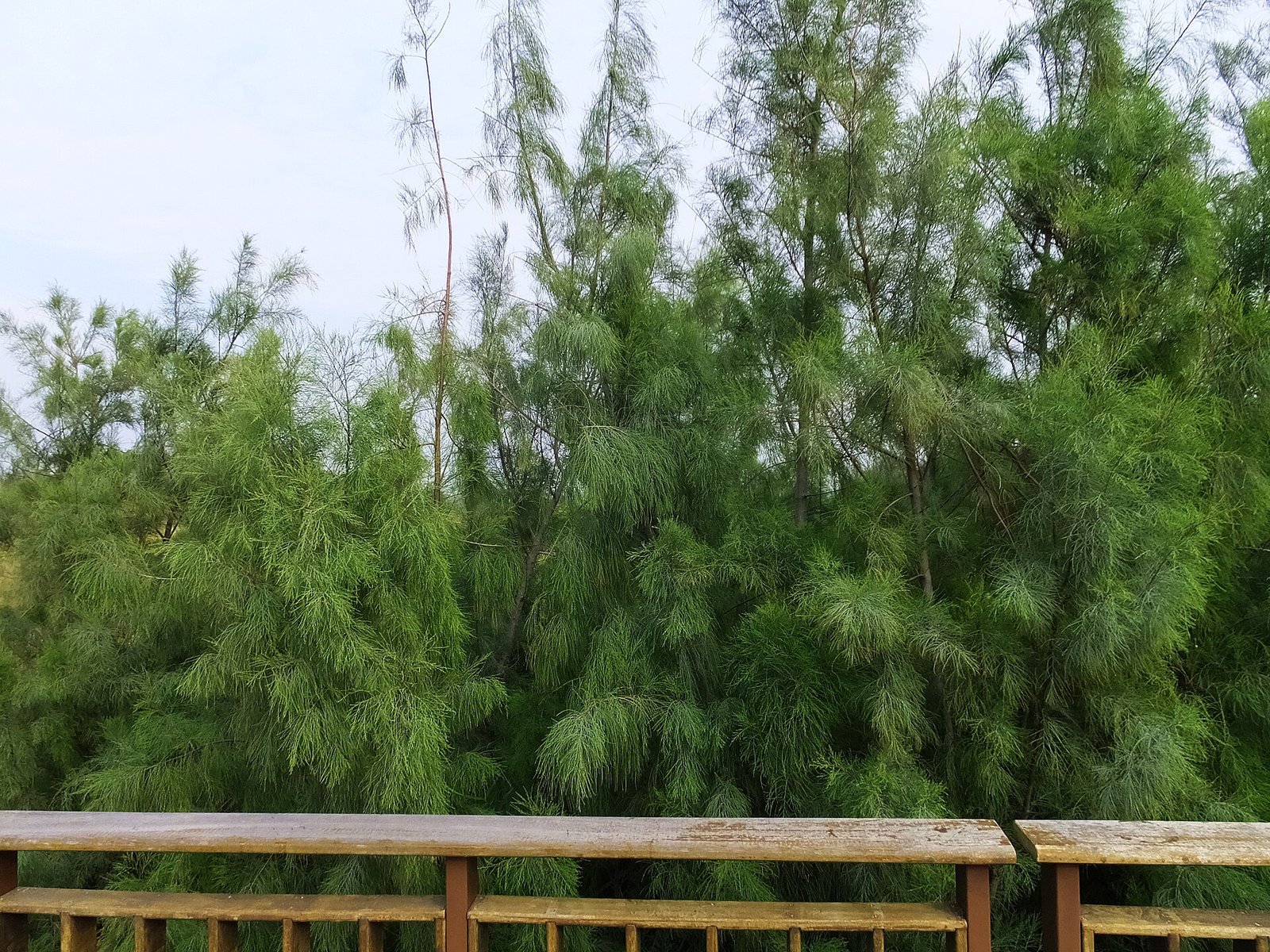
Official recordOn the habitat that the curriculum is about, the official plant resources survey writes: 「防風林區內還是臺灣暗蟬主要的棲地,還有眾多的凶狠圓軸蟹生存其間,實值得加以監測保護」 ("the windbreak forest area is also the main habitat of the Taiwan dark cicada, and large numbers of brown land crabs live there too; it truly merits monitoring and protection") R006Source《台江國家公園植物資源調查》[Taijiang National Park Plant Resources Survey], commissioned by the Taijiang National Park Headquarters from National University of Tainan, principal investigator Hsieh Tsung-hsin (謝宗欣), December 2019 (ROC year 108), p. 82 (「防風林區內還是臺灣暗蟬主要的棲地,還有眾多的凶狠圓軸蟹生存其間,實值得加以監測保護」 ["the windbreak forest area is also the main habitat of the Taiwan dark cicada, and large numbers of brown land crabs live there too; it truly merits monitoring and protection"])Original URLhttps://www.tjnp.gov.tw/Retrieved2026-10-19Snapshot timestamp—. For details of the Taiwan dark cicada's population and habitat, see 5.3 Chengxi Windbreak Forest.
Official recordIf a lesson takes up the question "Should beach she-oak (木麻黃) be planted for the cicadas?", it must also present the authorities' own objection. The main text of the 2014 (ROC year 103) report recommends in three places using beach she-oak stands for habitat creation, but a member of the final review committee for the same report rejected this on the spot: 「蟬類較無特定寄主植物,國家公園規劃生態旅遊賞蟬地點時,尚無需刻意種植木麻黃等外來種;構樹、桑樹等植物附近亦有發現北埔蟬蹤跡」 ("cicadas have no particular host plants, so when the national park plans cicada-watching sites for ecotourism, there is no need to deliberately plant beach she-oak or other non-native species; traces of the Beipu cicada (北埔蟬) have also been found near paper mulberry, mulberry, and other plants") R007Source《台江國家公園昆蟲相及北埔蟬先期調查》[Preliminary Survey of the Insect Fauna and the Hoppo Cicada of Taijiang National Park], 2014 (ROC year 103) (the final review committee members' objection to 「種木麻黃做棲地營造」 ("planting beach she-oak for habitat creation") and their recommendation to adopt the name 「臺灣暗蟬」; printed p. 42)Original URLhttps://www.tjnp.gov.tw/Retrieved2026-10-19Snapshot timestamp—. Another member added: 「光線對北埔蟬影響很大,處理不當恐有光害」 ("light has a great effect on the Beipu cicada; if handled improperly there may be light pollution") R007Source《台江國家公園昆蟲相及北埔蟬先期調查》[Preliminary Survey of the Insect Fauna and the Hoppo Cicada of Taijiang National Park], 2014 (ROC year 103) (the final review committee members' objection to 「種木麻黃做棲地營造」 ("planting beach she-oak for habitat creation") and their recommendation to adopt the name 「臺灣暗蟬」; printed p. 42)Original URLhttps://www.tjnp.gov.tw/Retrieved2026-10-19Snapshot timestamp—. The adoption of the name 「臺灣暗蟬」 ("Taiwan dark cicada," in place of 「北埔蟬」) was also formally recommended at that very final review meeting.
Crab protection: a citizen-science site that actually works
MoreLess
Official recordThe most mature setting in this area for "doing science" is crab protection. Wetlands Taiwan's (濕盟) figures are: 8,604 brown land crabs (兇狠圓軸蟹) recorded in 2023 (ROC year 112) and 5,000 female crabs helped to the sea to release their larvae in 2024; in April 2026 it brought crab-protection outreach into the Tucheng Library (土城圖書館) R003SourceCrab-protection results of 社團法人台灣濕地保護聯盟 [Wetlands Taiwan] (8,604 brown land crabs recorded in 2023 [ROC year 112]; 5,000 female crabs helped to the sea in 2024; crab-protection outreach brought to the Tucheng Library in April 2026)Original URLhttps://www.wetland.org.tw/Retrieved2026-10-19Snapshot timestamp—.
Official recordThe cumulative results of the National University of Tainan (臺南大學) strand of Chengxi (城西) crab protection are 10,221 crabs, of which 9,297 were egg-bearing females, with 7,419 escorted R005SourceCumulative results of the National University of Tainan (國立臺南大學) Chengxi crab-protection campaign (10,221 crabs, 9,297 egg-bearing females, 7,419 escorted)Original URLhttps://www.nutn.edu.tw/Retrieved2026-10-18Snapshot timestamp—.
Official recordThe institutional layer can be traced in primary official documents as early as 2018 (ROC year 107): the land crab conservation outreach program of the Taijiang National Park Headquarters (台江處) had Qingcaolun (青草崙) in Chengxi as its patrol location, and its co-organizers included the Chengxi Community Development Association (城西社區發展協會) and the Seventh Special Police Corps; the official invited speakers were Liu Hung-chang (劉烘昌) and Hsu Chia-hsuan (許嘉軒) R004SourcePrimary official documents of the Taijiang National Park Headquarters' (台江處) 2018 (ROC year 107) land crab conservation outreach program (patrol location Qingcaolun, Chengxi; co-organizers including the Chengxi Community Development Association and the Seventh Special Police Corps, National Police Agency, Ministry of the Interior [內政部警政署保安警察第七總隊]; official invited speakers Liu Hung-chang [劉烘昌] and Hsu Chia-hsuan [許嘉軒])Original URLhttps://www.tjnp.gov.tw/Retrieved2026-10-19Snapshot timestamp—. Official recordAmong all the curricula in this hall, the "Chengxi Community Development Association" is one of the few local bodies to appear in an official co-organizer column R004SourcePrimary official documents of the Taijiang National Park Headquarters' (台江處) 2018 (ROC year 107) land crab conservation outreach program (patrol location Qingcaolun, Chengxi; co-organizers including the Chengxi Community Development Association and the Seventh Special Police Corps, National Police Agency, Ministry of the Interior [內政部警政署保安警察第七總隊]; official invited speakers Liu Hung-chang [劉烘昌] and Hsu Chia-hsuan [許嘉軒])Original URLhttps://www.tjnp.gov.tw/Retrieved2026-10-19Snapshot timestamp—.
UnverifiedThe three sets of crab-protection figures cannot be added to or subtracted from one another: the population series from the officially commissioned surveys, the record counts of the crab-protection campaigns, and the crab-by-crab sighting records on TBN — they measure three different things. For details, see 5.3b The Two Faces of the Qingcaolun Seawall R003SourceCrab-protection results of 社團法人台灣濕地保護聯盟 [Wetlands Taiwan] (8,604 brown land crabs recorded in 2023 [ROC year 112]; 5,000 female crabs helped to the sea in 2024; crab-protection outreach brought to the Tucheng Library in April 2026)Original URLhttps://www.wetland.org.tw/Retrieved2026-10-19Snapshot timestamp—R005SourceCumulative results of the National University of Tainan (國立臺南大學) Chengxi crab-protection campaign (10,221 crabs, 9,297 egg-bearing females, 7,419 escorted)Original URLhttps://www.nutn.edu.tw/Retrieved2026-10-18Snapshot timestamp—.
Three questions the authorities themselves left behind
- Official record"The same road." The section where the banded bullfrog (亞洲錦蛙) removal was most efficient (the bicycle-path section) is at the same time the officially recognized land crab hotspot section and the one visitors walk — three things are layered on a single road: removal of an alien species, conservation traffic control, and recreation R001SourceSchool-by-school check of the 2026–2027 school year (ROC school year 115) curriculum plans (Chang-an Elementary School C2-1, third grade, second semester, 「護台江暗蟬」 ["Protecting the Taijiang Taiwan Dark Cicada"]: learning about the Taiwan dark cicada and the incinerator; the full texts of Haidong Elementary School C1-1/C2-1 do not contain 「暗蟬」 ["Taiwan dark cicada"])Original URLhttps://course.tn.edu.tw/Retrieved2026-10-19Snapshot timestamp—R004SourcePrimary official documents of the Taijiang National Park Headquarters' (台江處) 2018 (ROC year 107) land crab conservation outreach program (patrol location Qingcaolun, Chengxi; co-organizers including the Chengxi Community Development Association and the Seventh Special Police Corps, National Police Agency, Ministry of the Interior [內政部警政署保安警察第七總隊]; official invited speakers Liu Hung-chang [劉烘昌] and Hsu Chia-hsuan [許嘉軒])Original URLhttps://www.tjnp.gov.tw/Retrieved2026-10-19Snapshot timestamp—.
- Official recordThe difference between "not surveyed" and "surveyed and not found." The insect records for Chengxi contain no fireflies (Lampyridae, 螢科), but that survey was conducted entirely by daytime visual observation, one to two times a month; no night survey has ever been carried out in Chengxi R007Source《台江國家公園昆蟲相及北埔蟬先期調查》[Preliminary Survey of the Insect Fauna and the Hoppo Cicada of Taijiang National Park], 2014 (ROC year 103) (the final review committee members' objection to 「種木麻黃做棲地營造」 ("planting beach she-oak for habitat creation") and their recommendation to adopt the name 「臺灣暗蟬」; printed p. 42)Original URLhttps://www.tjnp.gov.tw/Retrieved2026-10-19Snapshot timestamp—.
- Official record"Removal means euthanasia." The official method for handling removed banded bullfrogs is to take them back to the laboratory and freeze them in a freezer. If a lesson takes up the issue of alien species, this site holds that the handling method should be stated truthfully R001SourceSchool-by-school check of the 2026–2027 school year (ROC school year 115) curriculum plans (Chang-an Elementary School C2-1, third grade, second semester, 「護台江暗蟬」 ["Protecting the Taijiang Taiwan Dark Cicada"]: learning about the Taiwan dark cicada and the incinerator; the full texts of Haidong Elementary School C1-1/C2-1 do not contain 「暗蟬」 ["Taiwan dark cicada"])Original URLhttps://course.tn.edu.tw/Retrieved2026-10-19Snapshot timestamp—.
Differing accounts
- UnverifiedWhether Haidong Elementary School's Taiwan dark cicada unit is still in the current timetable:
- The record of the Teaching Excellence Award Gold Award includes the Taiwan dark cicada unit R002SourceHaidong Elementary School's "Hand of the Sun" (「太陽之手」) team won the Gold Award of the Ministry of Education (教育部) Teaching Excellence Award for 《暗蟬 AI 海東鳴天下》[Taiwan Dark Cicada AI: Haidong Sings to the World], and developed the curriculum unit 「當臺灣暗蟬遇見機器人」 ["When the Taiwan Dark Cicada Meets Robots"] for habitat surveysOriginal URLhttps://www.htps.tn.edu.tw/Retrieved2026-10-18Snapshot timestamp—.
- The word 「暗蟬」 does not appear in C1-1 or C2-1 of the 2026–2027 school-year curriculum plans R001SourceSchool-by-school check of the 2026–2027 school year (ROC school year 115) curriculum plans (Chang-an Elementary School C2-1, third grade, second semester, 「護台江暗蟬」 ["Protecting the Taijiang Taiwan Dark Cicada"]: learning about the Taiwan dark cicada and the incinerator; the full texts of Haidong Elementary School C1-1/C2-1 do not contain 「暗蟬」 ["Taiwan dark cicada"])Original URLhttps://course.tn.edu.tw/Retrieved2026-10-19Snapshot timestamp—.
- UnverifiedThe number of Taiwan dark cicadas: oral accounts cited by the media put it at 「約 20 萬隻」 ("about 200,000"); the officially commissioned reports do not give this figure R006Source《台江國家公園植物資源調查》[Taijiang National Park Plant Resources Survey], commissioned by the Taijiang National Park Headquarters from National University of Tainan, principal investigator Hsieh Tsung-hsin (謝宗欣), December 2019 (ROC year 108), p. 82 (「防風林區內還是臺灣暗蟬主要的棲地,還有眾多的凶狠圓軸蟹生存其間,實值得加以監測保護」 ["the windbreak forest area is also the main habitat of the Taiwan dark cicada, and large numbers of brown land crabs live there too; it truly merits monitoring and protection"])Original URLhttps://www.tjnp.gov.tw/Retrieved2026-10-19Snapshot timestamp—.
Behind this door is the internal site, with profiles of people and local comments. The internal site is deployed separately.