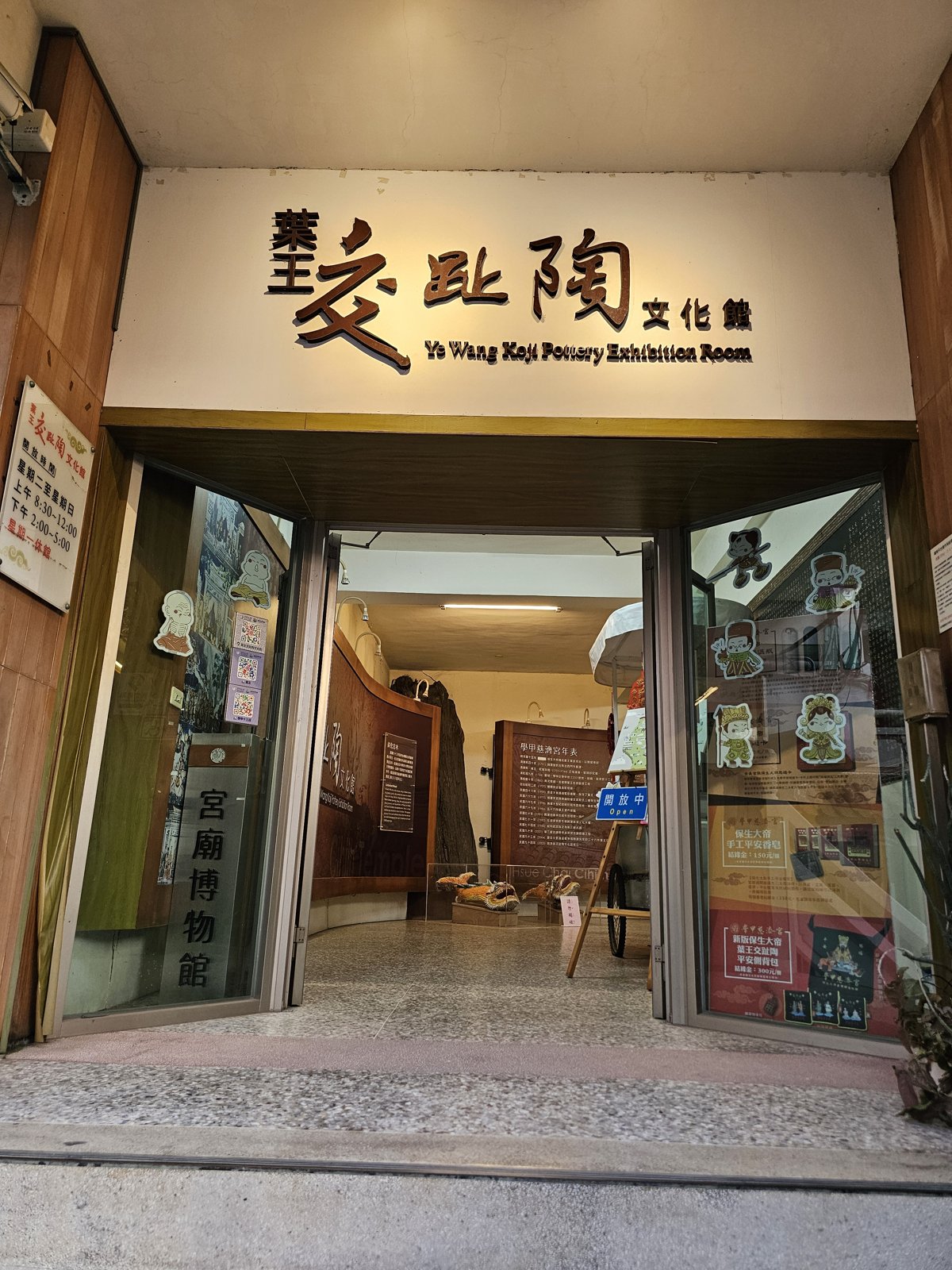
The Ye Wang Koji Pottery Exhibition Room is the museum attached to Xuejia Tzu-chi Temple, founded in 2005 (R002); across several floors it shows Yeh Wang's koji pottery, his life, how koji pottery is made and the temple's history, and it is open Tuesday to Sunday (R001).
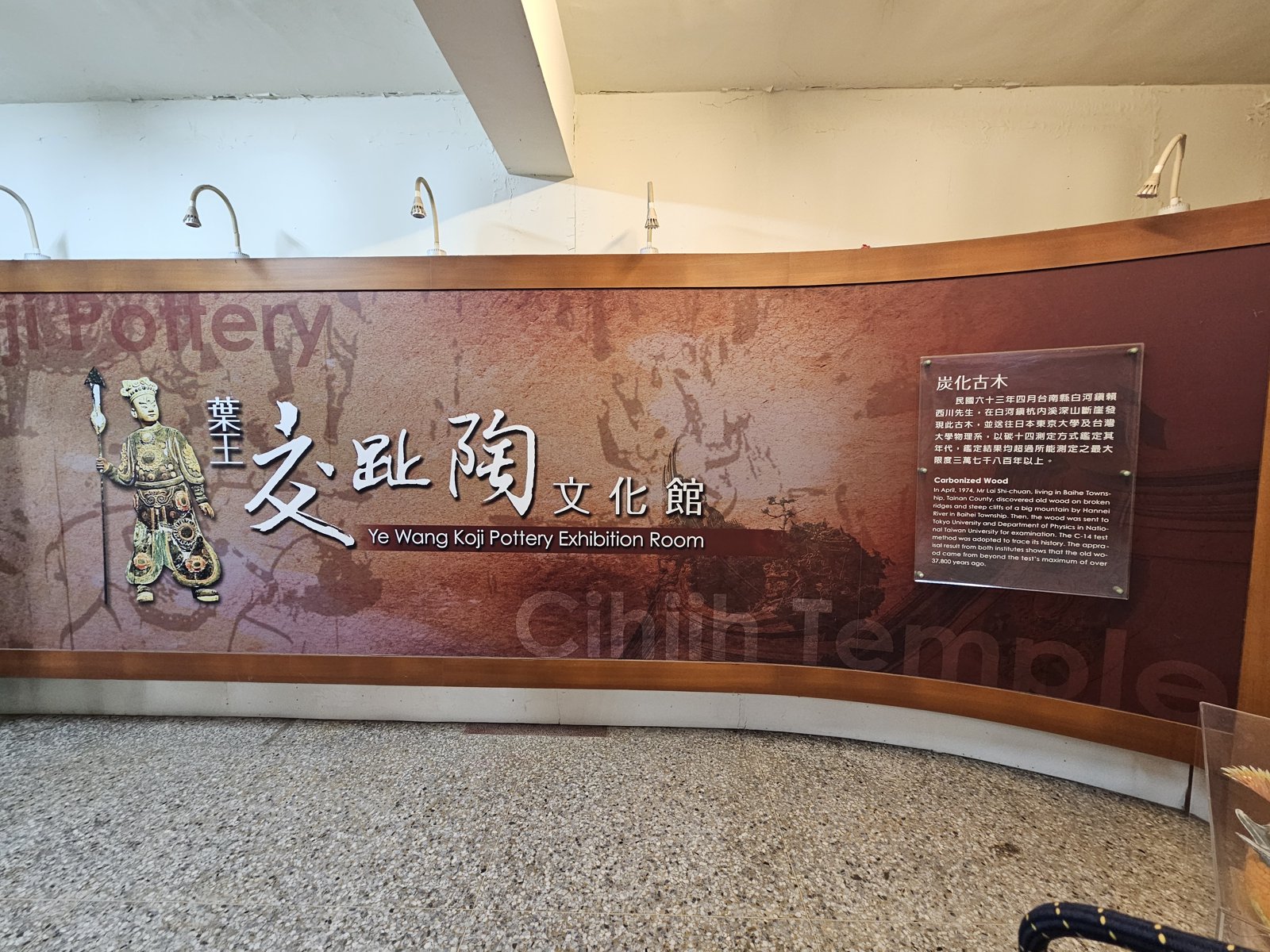
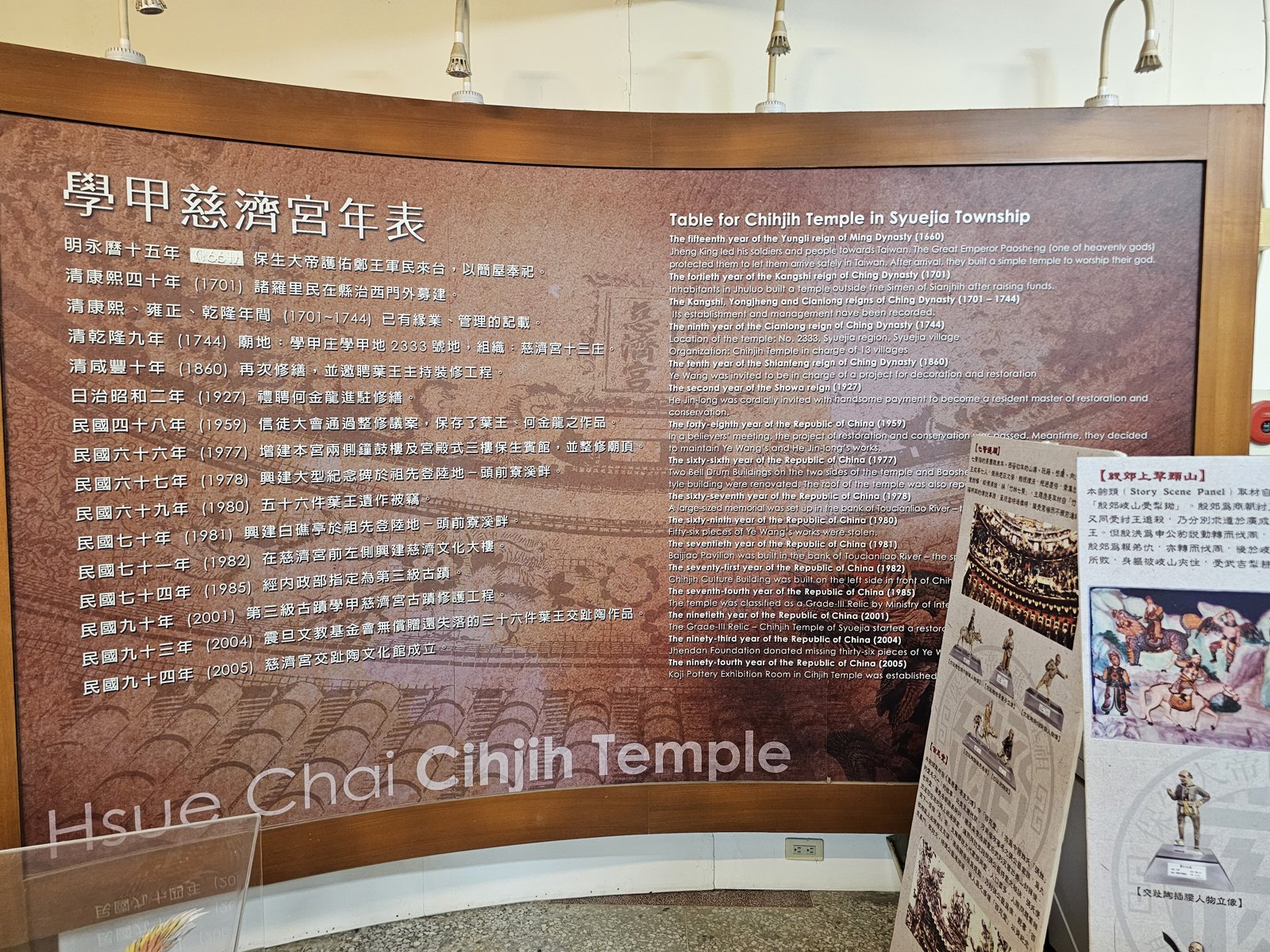
The Ye Wang Koji Pottery Exhibition Room (葉王交趾陶文化館) is the museum attached to Xuejia Tzu-chi Temple in Xuejia District, Tainan, displaying the koji pottery made for the temple by the Qing-dynasty master Yeh Wang. The museum's chronology records 「民國九十四年(2005)慈濟宮交趾陶文化館成立」 ("the Tzu-chi Temple Koji Pottery Exhibition Room was founded in ROC 94 (2005)") Account by an involved partyR002Source〈學甲慈濟宮年表〉[Chronology of Xuejia Tzu-chi Temple] panel, ground floor of the Ye Wang Koji Pottery Exhibition Room, made by the museum; photographed on site by the author on 2026-11-21Original URL—Retrieved2026-11-22Snapshot timestamp—Interpretive board set up by the temple itself (primary source).; the temple's leaflet says that after the Chen Tan (震旦) Cultural and Educational Foundation bought the 36 stolen Yeh Wang pieces back from overseas in 2004 and returned them unconditionally, Tzu-chi Temple 「乃設置『葉王交趾陶文化館』展出葉王作品」 ("then set up the Ye Wang Koji Pottery Exhibition Room to show Yeh Wang's works") R007SourceTzu-chi Temple leaflet on Ye Wang's koji pottery (displayed in a case in the exhibition room), printed by Xuejia Tzu-chi Temple; photographed on site by the author on 2026-11-21Original URL—Retrieved2026-11-22Snapshot timestamp—Leaflet printed by the temple itself (primary source)..
Opening hours
- Open Tuesday to Sunday, closed on Mondays and national holidays; 8:30–12:00 and 14:00–17:00 (standing sign on site, November 2026; the notice on site prevails). R001SourceEntrance sign, opening-hours sign and outdoor standing sign of the Ye Wang Koji Pottery Exhibition Room, set up by the museum; photographed on site by the author on 2026-11-21Original URL—Retrieved2026-11-22Snapshot timestamp—Notice set up by the temple itself (primary source).
- The service desk offers the temple's blessing items; a poster on site lists a handmade Baosheng Dadi peace soap (donation NT$150) and a Yeh Wang koji pottery peace shoulder bag (NT$300). R001SourceEntrance sign, opening-hours sign and outdoor standing sign of the Ye Wang Koji Pottery Exhibition Room, set up by the museum; photographed on site by the author on 2026-11-21Original URL—Retrieved2026-11-22Snapshot timestamp—Notice set up by the temple itself (primary source).
Floors and displays
First items: Ground floor: the main wall with the mus…Second floor: the trilingual board "Brie…Third floor: the floor sign lists "The H…MoreLess
The following is what the floor signs and displays showed in November 2026.Account by an involved partyR009SourceFloor signs, stairwell plaques, stone-tool labels on the fourth floor and the 〈臺南縣舊地名對照表〉[Table of Old Place Names of Tainan County] in the exhibition room; photographed on site by the author on 2026-11-21Original URL—Retrieved2026-11-22Snapshot timestamp—Notices and labels in the museum (primary source).
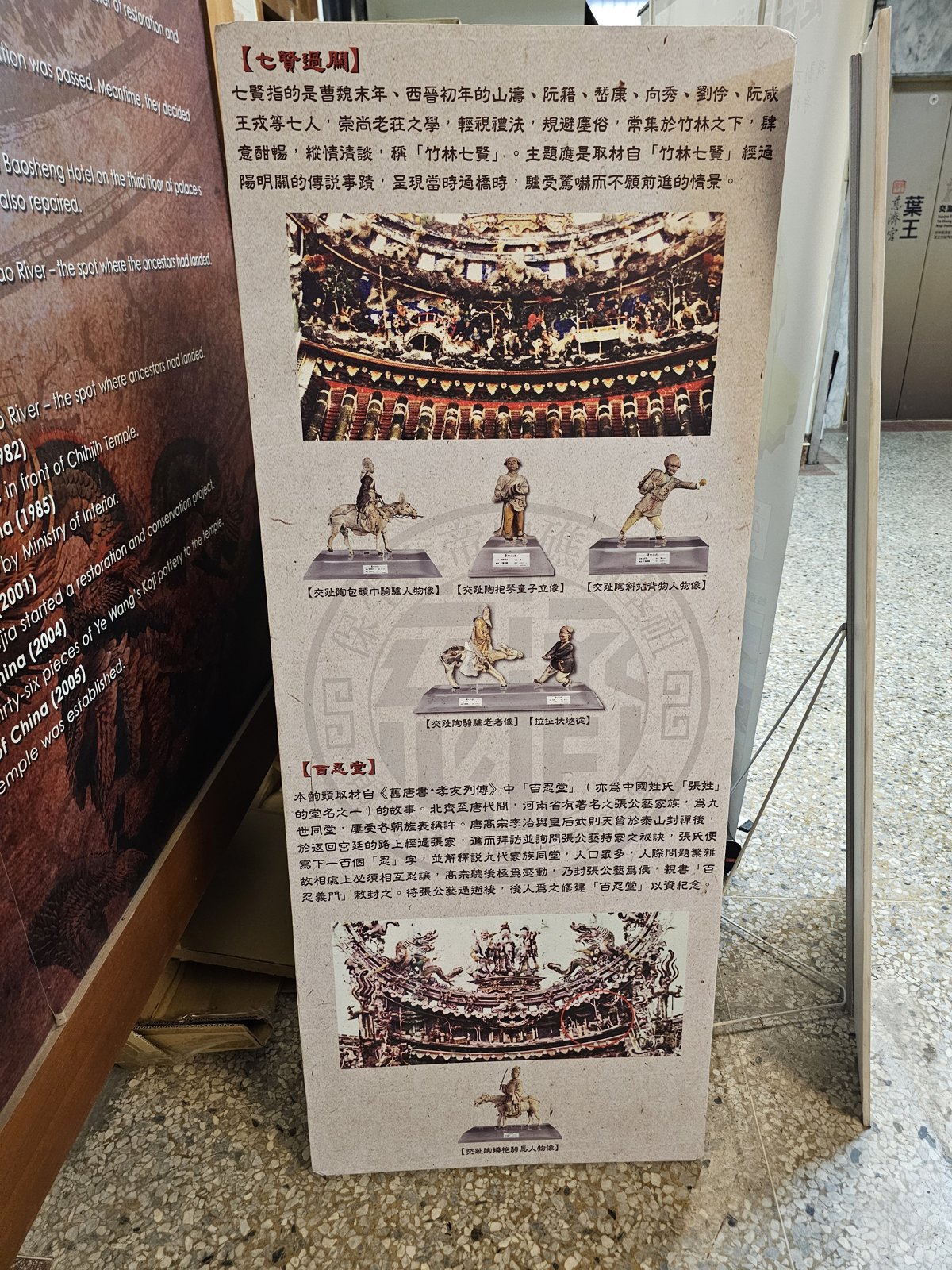
- Ground floor: the main wall with the museum's name, the bilingual "Chronology of Xuejia Tzu-chi Temple" panel, a piece of carbonized wood, and standing boards and koji pieces for the scenes "The Seven Sages Passing the Gate" (七賢過關), "The Hall of Patience" (百忍堂) and "Yin Jiao Climbs Litou Mountain" (殷郊上犂頭山). R002Source〈學甲慈濟宮年表〉[Chronology of Xuejia Tzu-chi Temple] panel, ground floor of the Ye Wang Koji Pottery Exhibition Room, made by the museum; photographed on site by the author on 2026-11-21Original URL—Retrieved2026-11-22Snapshot timestamp—Interpretive board set up by the temple itself (primary source).R006Source〈七賢過關〉〈百忍堂〉〈殷郊上犂頭山〉 standing boards and the 〈炭化古木〉[Carbonized Wood] label, Ye Wang Koji Pottery Exhibition Room, made by the museum; photographed on site by the author on 2026-11-21Original URL—Retrieved2026-11-22Snapshot timestamp—Interpretive board set up by the temple itself (primary source).
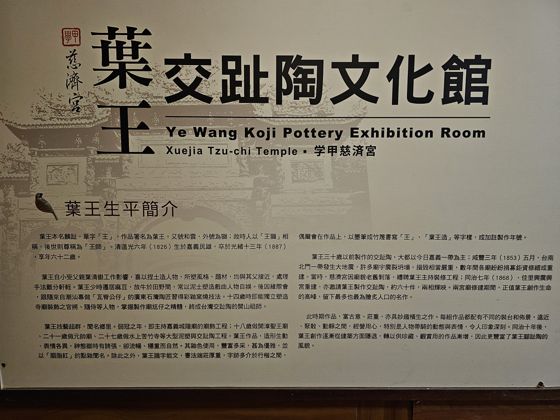
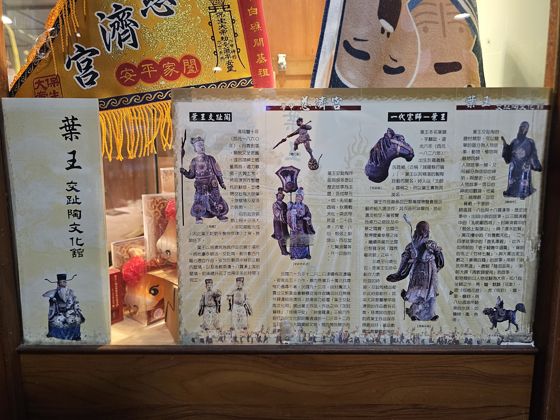
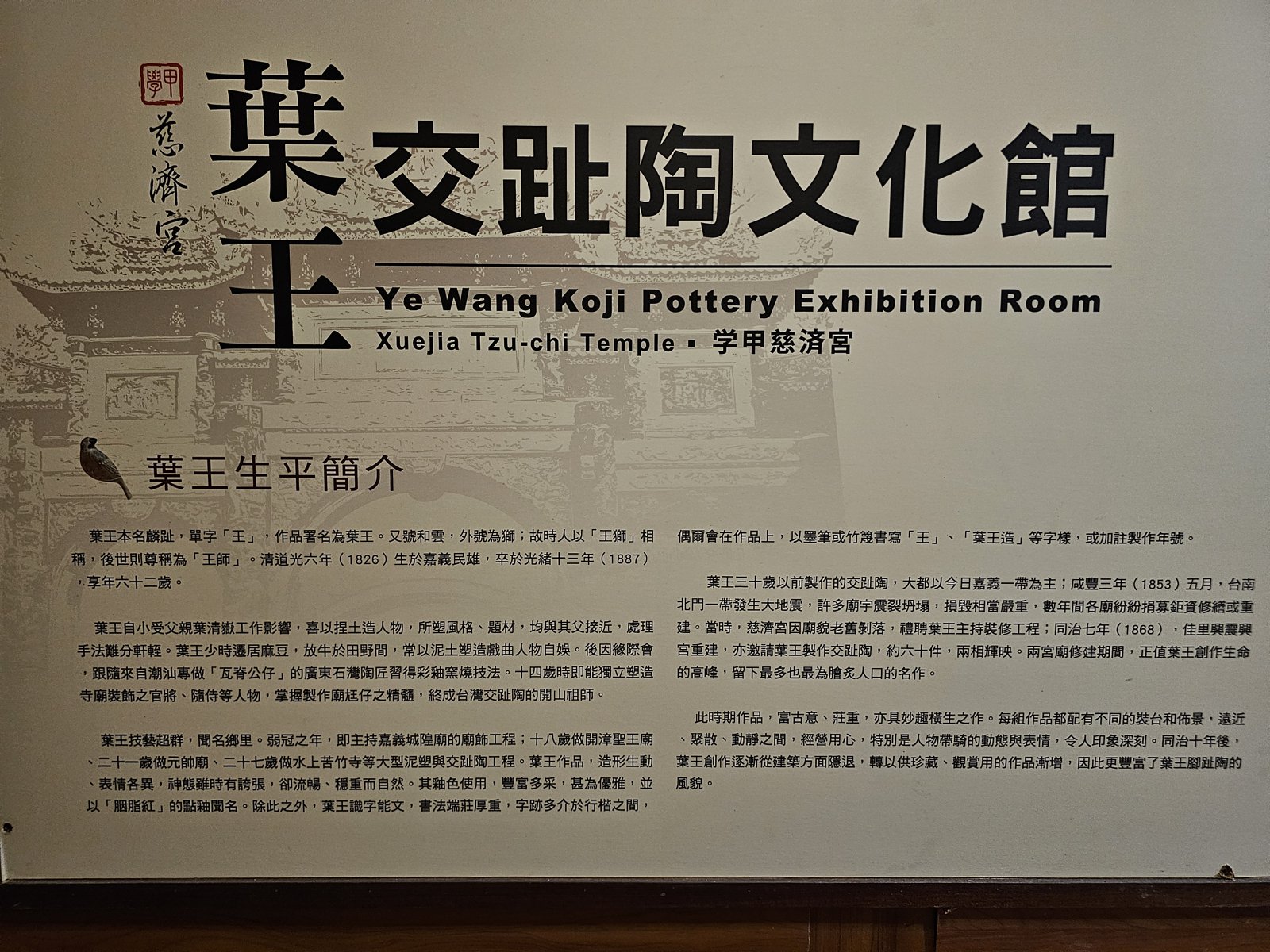
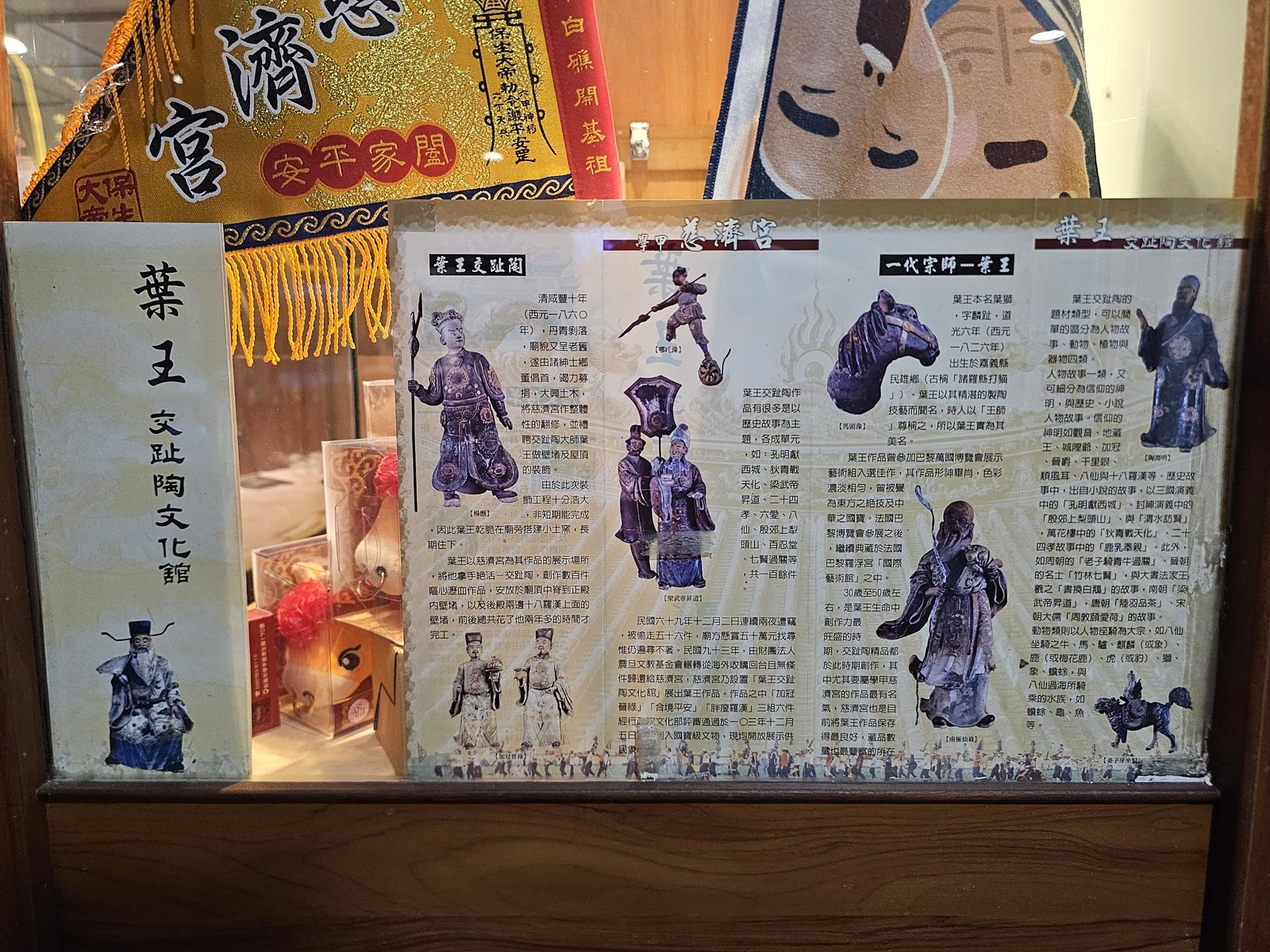
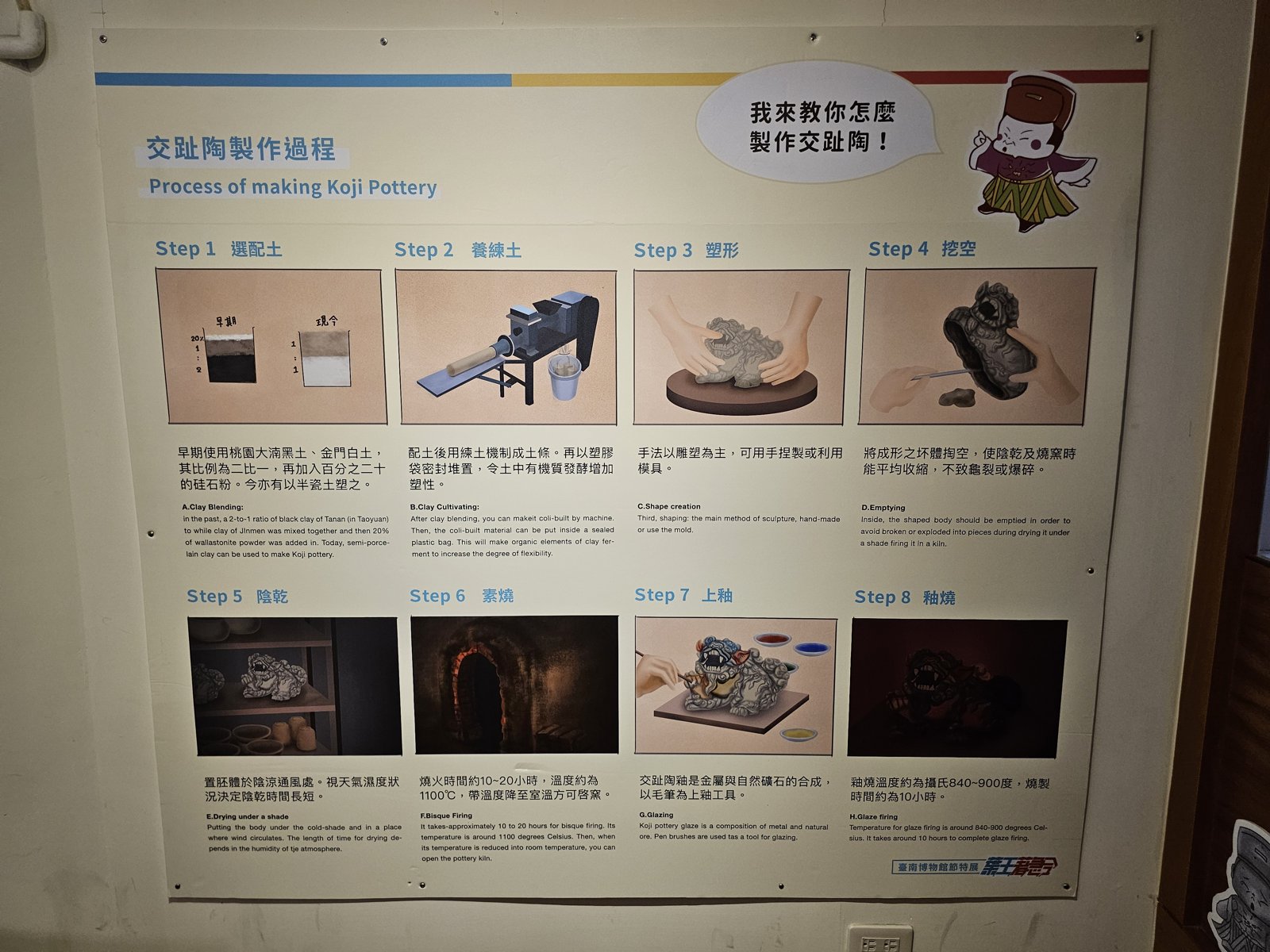
- Second floor: the trilingual board "Brief Summary of Ye Wang's Life", the panels "The Prime of Yeh Wang's Life" and "Process of Making Koji Pottery" left from a Tainan Museum Festival special exhibition, and a case with the temple's leaflet and a Baosheng Dadi command flag. R003Source〈葉王生平簡介〉[Brief Summary of Ye Wang's Life] trilingual board, second floor of the Ye Wang Koji Pottery Exhibition Room, made by the museum; photographed on site by the author on 2026-11-21Original URL—Retrieved2026-11-22Snapshot timestamp—Interpretive board set up by the temple itself (primary source).R007SourceTzu-chi Temple leaflet on Ye Wang's koji pottery (displayed in a case in the exhibition room), printed by Xuejia Tzu-chi Temple; photographed on site by the author on 2026-11-21Original URL—Retrieved2026-11-22Snapshot timestamp—Leaflet printed by the temple itself (primary source).R008Source〈葉王的壯年時期〉[The Prime of Yeh Wang's Life] and 〈交趾陶製作過程〉[Process of Making Koji Pottery] panels, made for the Tainan Museum Festival special exhibition and displayed on the second floor of the exhibition room; photographed on site by the author on 2026-11-21Original URL—Retrieved2026-11-22Snapshot timestamp—Special-exhibition panels displayed in the museum.
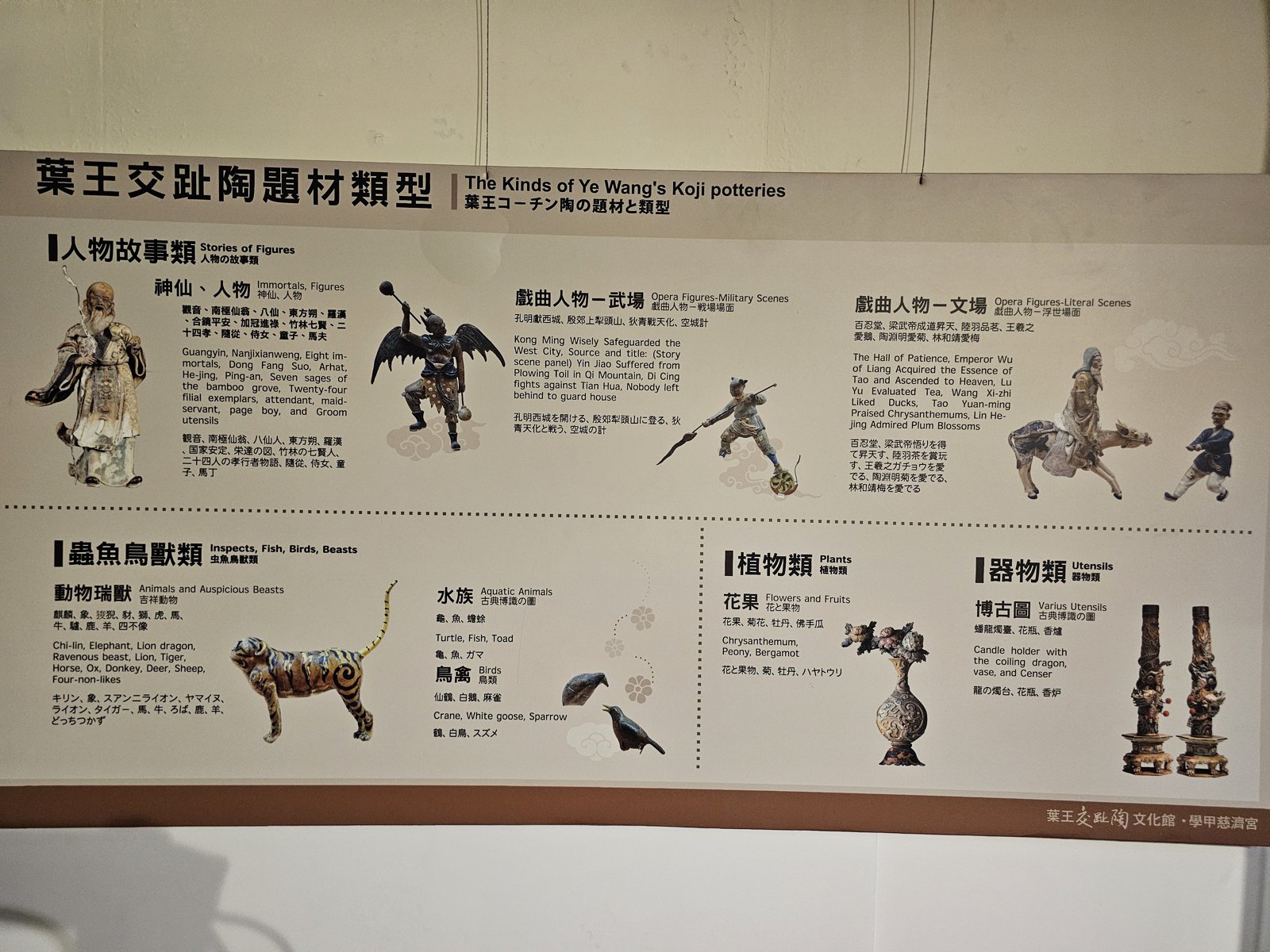
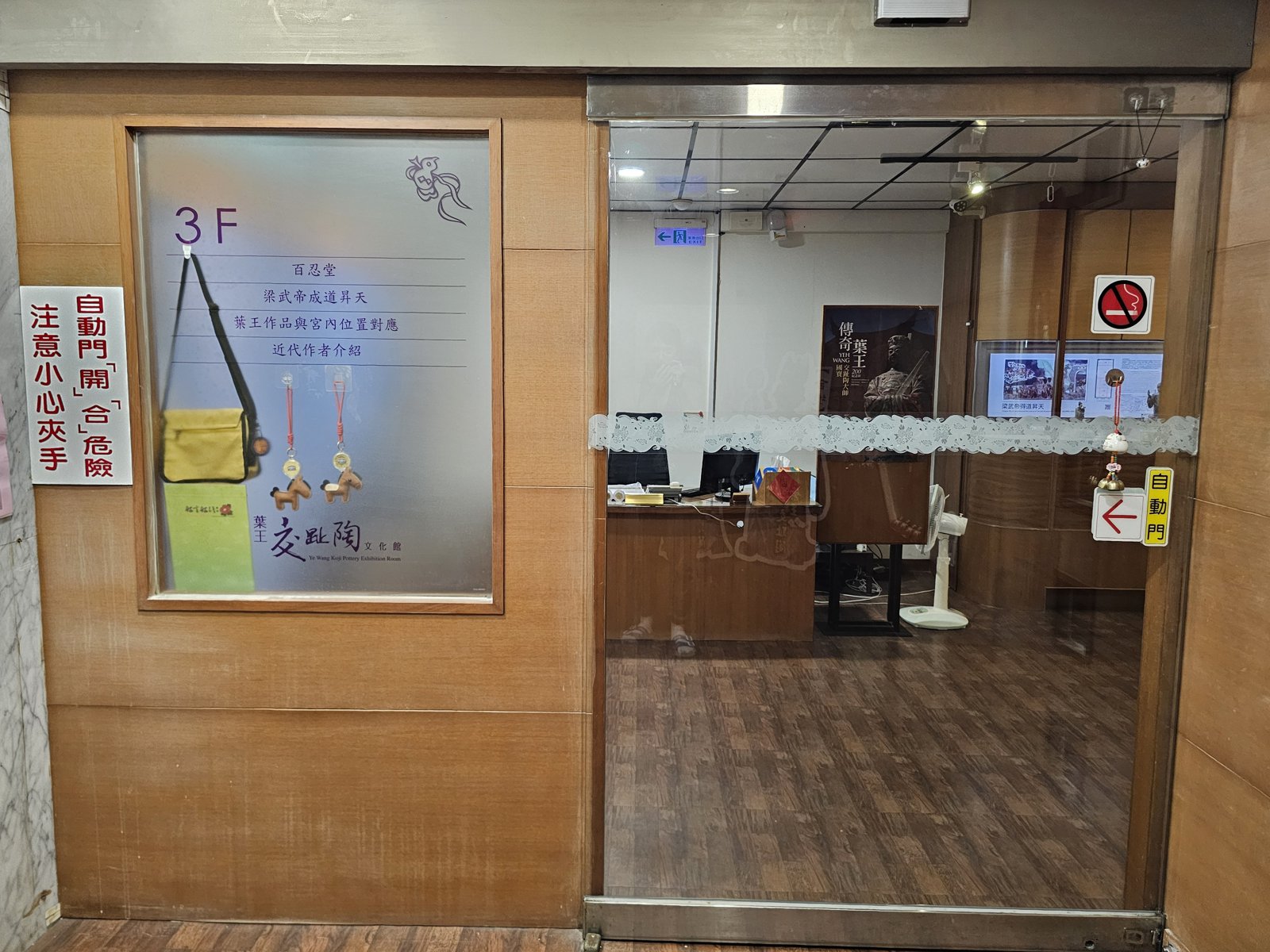
- Third floor: the floor sign lists "The Hall of Patience", "Emperor Wu of Liang Attains the Way and Ascends to Heaven", "Yeh Wang's works and their positions in the temple" and "Introduction to modern artists". At the entrance stand the boards "Ye Wang and Tzu-chi Temple" and "Introduction to Koji Pottery", with the panel "The Kinds of Ye Wang's Koji Potteries" and photo cut-outs of the National Treasure figures Jiaguan, Jinlu, the Fat Arhat, the Thin Arhat and Hejing Ping'an. R004Source〈葉王與慈濟宮〉[Ye Wang and Tzu-chi Temple] board and 〈交趾陶簡介〉[Introduction to Koji Pottery] board, third floor of the Ye Wang Koji Pottery Exhibition Room, made by the museum; photographed on site by the author on 2026-11-21Original URL—Retrieved2026-11-22Snapshot timestamp—Interpretive board set up by the temple itself (primary source).R005Source〈葉王交趾陶題材類型〉[The Kinds of Ye Wang's Koji Potteries] panel and 〈葉王作品與宮內位置對應〉[Ye Wang's Works and Their Positions inside the Temple] display wall, third floor of the Ye Wang Koji Pottery Exhibition Room, made by the museum; photographed on site by the author on 2026-11-21Original URL—Retrieved2026-11-22Snapshot timestamp—Interpretive board set up by the temple itself (primary source).
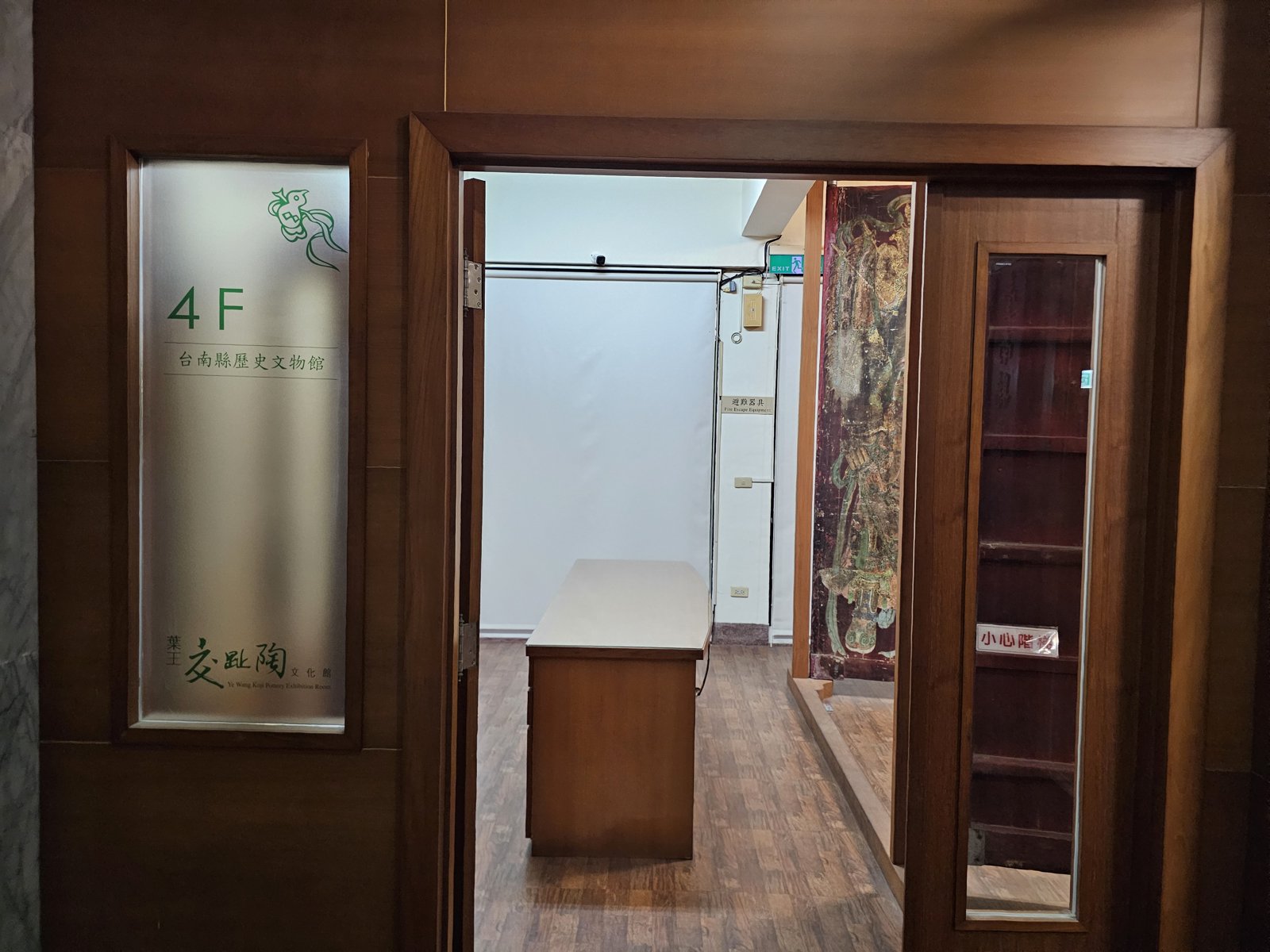
- Fourth floor: the floor sign reads 「台南縣歷史文物館」 (Tainan County Historical Relics Museum); on show are stone axes, hoes and knives excavated at the Niuchouzi site in Rende Township (labels printed 「慈濟文化大樓」, Tzu-chi Culture Building), a handwritten "Table of Old Place Names of Tainan County" and a "Map of Historic Sites of Tainan County", and an old painted door-god panel is stored here. R009SourceFloor signs, stairwell plaques, stone-tool labels on the fourth floor and the 〈臺南縣舊地名對照表〉[Table of Old Place Names of Tainan County] in the exhibition room; photographed on site by the author on 2026-11-21Original URL—Retrieved2026-11-22Snapshot timestamp—Notices and labels in the museum (primary source).
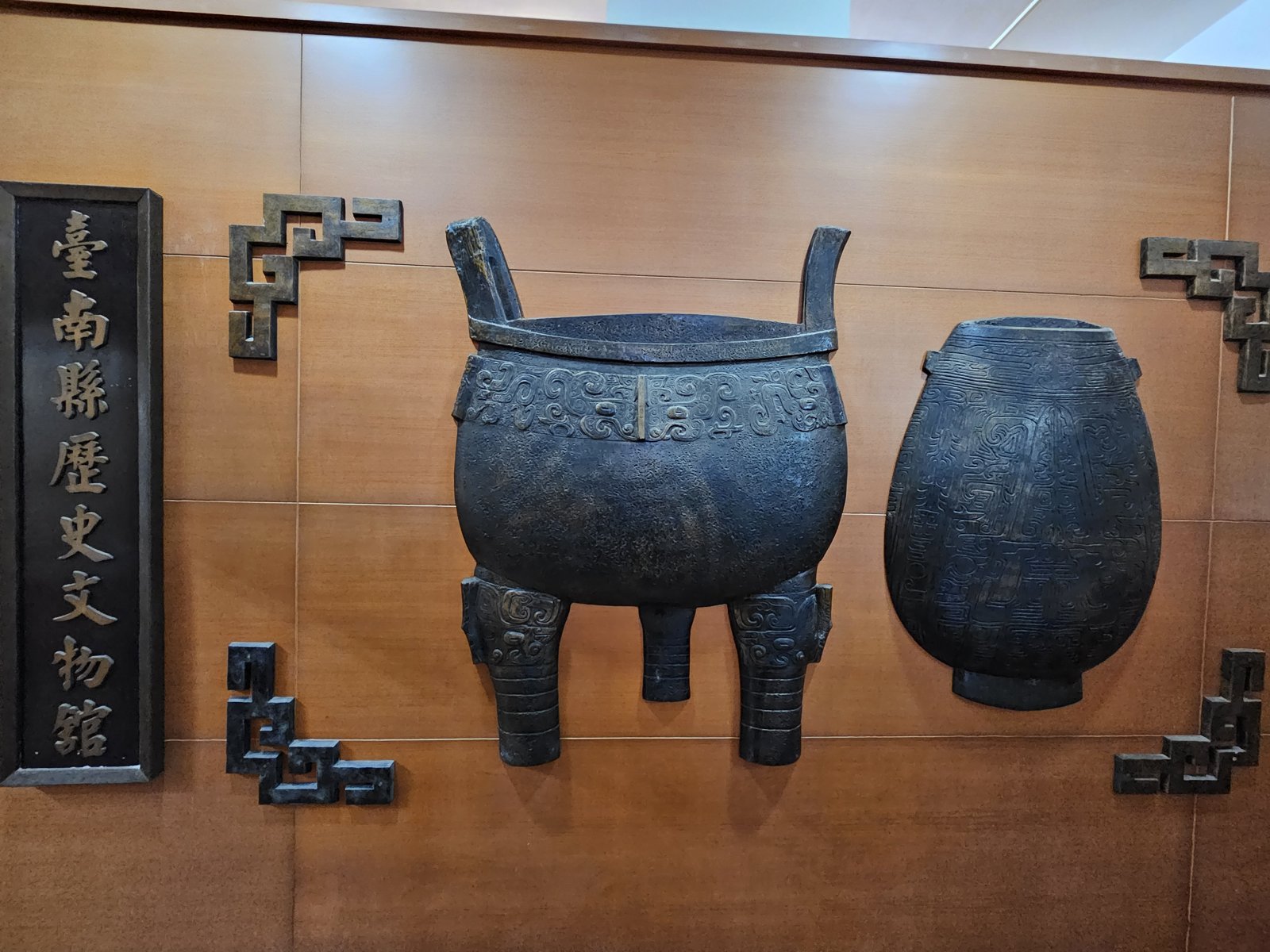
- In the stairwells hang three wooden plaques reading 「行得館」, 「文物館」 and 「桂記館」 and an upright plaque reading 「臺南縣歷史文物館」; nothing on site explains them. R009SourceFloor signs, stairwell plaques, stone-tool labels on the fourth floor and the 〈臺南縣舊地名對照表〉[Table of Old Place Names of Tainan County] in the exhibition room; photographed on site by the author on 2026-11-21Original URL—Retrieved2026-11-22Snapshot timestamp—Notices and labels in the museum (primary source).
Highlights of the museum's interpretation
First items: Yeh Wang and Tzu-chi TempleOriginal positionsSubject classesMoreLess
Yeh Wang and Tzu-chi Temple
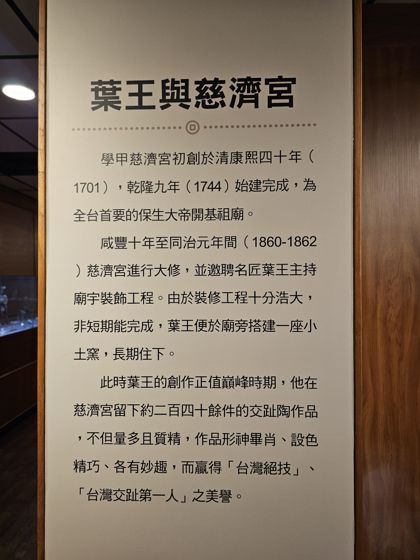
- "Ye Wang and Tzu-chi Temple": from Xianfeng 10 to Tongzhi 1 (1860–1862) Tzu-chi Temple underwent major repairs and invited the master Yeh Wang to lead the decoration; the work was so vast that he built a small kiln beside the temple and lived there. He left 「約二百四十餘件」 ("some 240 or more") koji pieces at Tzu-chi Temple, earning the titles 「台灣絕技」 ("Taiwan's unique art") and 「台灣交趾第一人」 ("the foremost koji master of Taiwan"). Account by an involved partyR004Source〈葉王與慈濟宮〉[Ye Wang and Tzu-chi Temple] board and 〈交趾陶簡介〉[Introduction to Koji Pottery] board, third floor of the Ye Wang Koji Pottery Exhibition Room, made by the museum; photographed on site by the author on 2026-11-21Original URL—Retrieved2026-11-22Snapshot timestamp—Interpretive board set up by the temple itself (primary source).
- The temple's leaflet: Yeh Wang's works were placed 「廟頂中脊到正殿內壁堵,以及後殿兩邊十八羅漢上面的壁堵」 ("from the central ridge of the roof to the wall panels inside the main hall, and the panels above the Eighteen Arhats on both sides of the rear hall"), taking him over two years; they take historical stories as subjects, such as Kong Ming Presents the West City, Di Qing Fights Tianhua, Emperor Wu of Liang Ascends to the Way, the Twenty-Four Filial Exemplars, the Six Loves, the Eight Immortals, Yin Jiao Climbs Litou Mountain, the Hall of Patience and the Seven Sages Passing the Gate, 「共一百餘件」 ("over a hundred pieces in all"). R007SourceTzu-chi Temple leaflet on Ye Wang's koji pottery (displayed in a case in the exhibition room), printed by Xuejia Tzu-chi Temple; photographed on site by the author on 2026-11-21Original URL—Retrieved2026-11-22Snapshot timestamp—Leaflet printed by the temple itself (primary source).
- Theft and return (leaflet): from 2 December 1980 (ROC 69) the temple was burgled on two successive nights and 56 pieces were taken; a reward of NT$500,000 failed to recover them. In 2004 the Chen Tan Cultural and Educational Foundation bought them back from overseas and returned them unconditionally. The three sets (six pieces) 「加冠晉祿」, 「合境平安」 and 「胖瘦羅漢」 were approved by the Ministry of Culture and listed as National Treasures on 5 December 2014 (ROC 103). R007SourceTzu-chi Temple leaflet on Ye Wang's koji pottery (displayed in a case in the exhibition room), printed by Xuejia Tzu-chi Temple; photographed on site by the author on 2026-11-21Original URL—Retrieved2026-11-22Snapshot timestamp—Leaflet printed by the temple itself (primary source).
Original positions
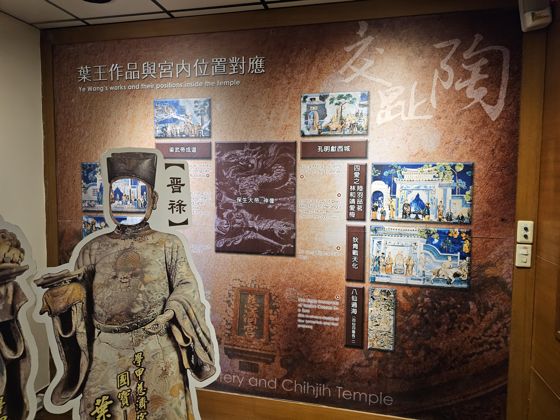
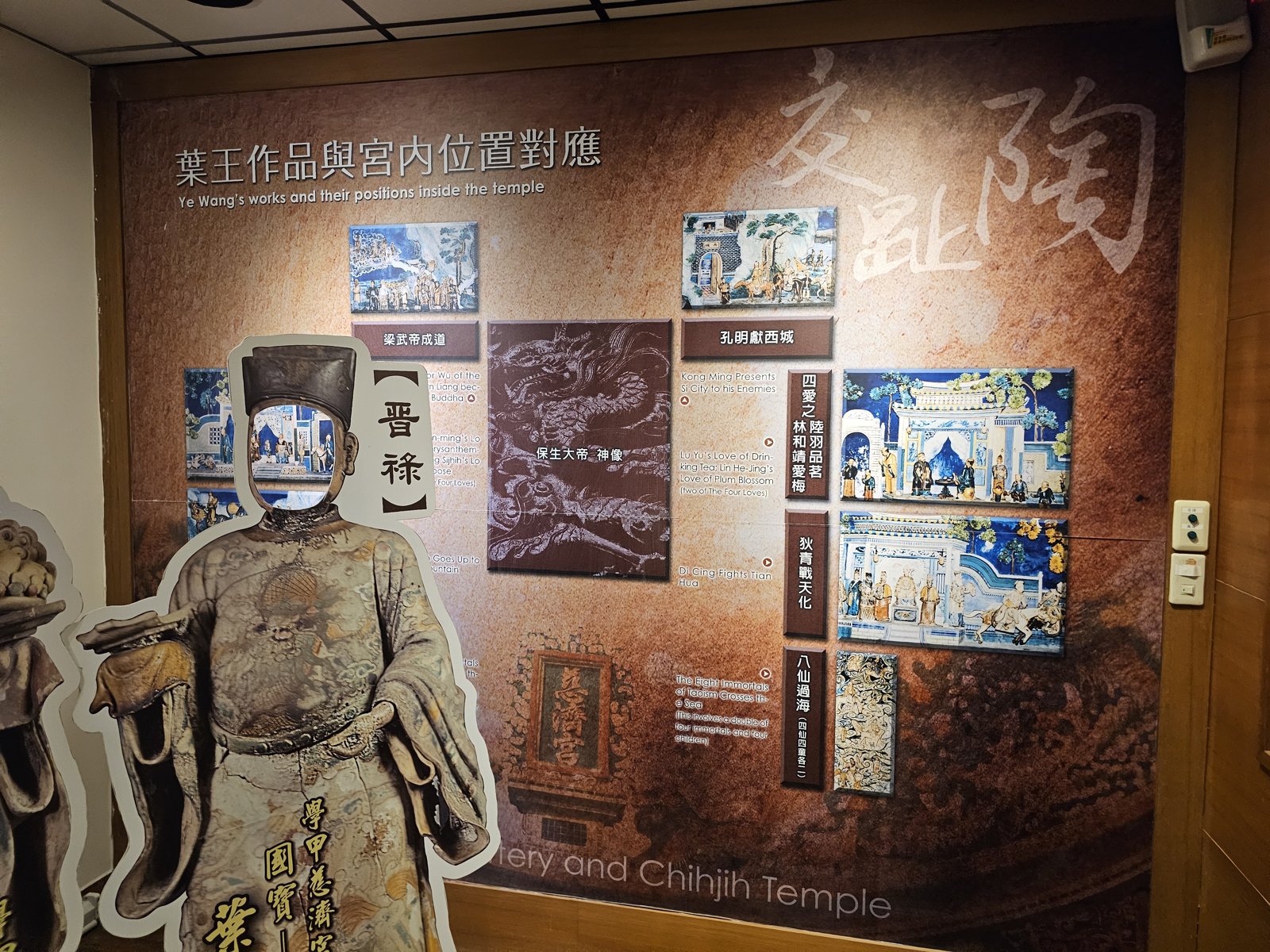
The display wall "Ye Wang's works and their positions inside the temple" centres on the image of Baosheng Dadi in the main hall and marks the original positions of the sets: Emperor Wu of Liang Attains the Way, Kong Ming Presents the West City, Lu Yu Savouring Tea and Lin Hejing Loving Plum Blossoms (two of the Four Loves), Di Qing Fights Tianhua, and the Eight Immortals Crossing the Sea (two sets of four immortals and four children). R005Source〈葉王交趾陶題材類型〉[The Kinds of Ye Wang's Koji Potteries] panel and 〈葉王作品與宮內位置對應〉[Ye Wang's Works and Their Positions inside the Temple] display wall, third floor of the Ye Wang Koji Pottery Exhibition Room, made by the museum; photographed on site by the author on 2026-11-21Original URL—Retrieved2026-11-22Snapshot timestamp—Interpretive board set up by the temple itself (primary source).
Subject classes
The panel "The Kinds of Ye Wang's Koji Potteries" divides the collection into four classes: R005Source〈葉王交趾陶題材類型〉[The Kinds of Ye Wang's Koji Potteries] panel and 〈葉王作品與宮內位置對應〉[Ye Wang's Works and Their Positions inside the Temple] display wall, third floor of the Ye Wang Koji Pottery Exhibition Room, made by the museum; photographed on site by the author on 2026-11-21Original URL—Retrieved2026-11-22Snapshot timestamp—Interpretive board set up by the temple itself (primary source).
- Figure stories:
- Immortals and figures: Guanyin, the Old Man of the South Pole, the Eight Immortals, Dongfang Shuo, arhats, Hejing Ping'an (合鏡平安), Jiaguan Jinlu (加冠進祿), the Seven Sages of the Bamboo Grove, the Twenty-Four Filial Exemplars, attendants, maids, page boys and grooms.
- Opera figures, military scenes: Kong Ming Presents the West City, Yin Jiao Climbs Litou Mountain, Di Qing Fights Tianhua, the Empty City Stratagem.
- Opera figures, civil scenes: the Hall of Patience, Emperor Wu of Liang Attains the Way and Ascends to Heaven, Lu Yu Savouring Tea, Wang Xizhi Loving Geese, Tao Yuanming Loving Chrysanthemums, Lin Hejing Loving Plum Blossoms.
- Insects, fish, birds and beasts: qilin, elephant, suanni, jackal, lion, tiger, horse, ox, donkey, deer, sheep, sibuxiang; aquatic creatures (turtle, fish, toad); birds (crane, white goose, sparrow).
- Plants: flowers and fruit, chrysanthemum, peony, Buddha's-hand.
- Utensils (bogu tu): coiled-dragon candlesticks, vases, censers.
Scene boards
- The Seven Sages Passing the Gate: based on the legend of the Seven Sages of the Bamboo Grove passing Yangming Gate, showing a donkey that takes fright on a bridge and refuses to go on; the pieces include a turbaned rider on a donkey, a boy holding a qin, an old man on a donkey and a tugging attendant. R006Source〈七賢過關〉〈百忍堂〉〈殷郊上犂頭山〉 standing boards and the 〈炭化古木〉[Carbonized Wood] label, Ye Wang Koji Pottery Exhibition Room, made by the museum; photographed on site by the author on 2026-11-21Original URL—Retrieved2026-11-22Snapshot timestamp—Interpretive board set up by the temple itself (primary source).
- The Hall of Patience: from the story in the Old Book of Tang of Zhang Gongyi, whose family lived together for nine generations and who answered Emperor Gaozong of Tang by writing the character 「忍」 (patience) a hundred times; the piece is a mounted figure in a python robe. R006Source〈七賢過關〉〈百忍堂〉〈殷郊上犂頭山〉 standing boards and the 〈炭化古木〉[Carbonized Wood] label, Ye Wang Koji Pottery Exhibition Room, made by the museum; photographed on site by the author on 2026-11-21Original URL—Retrieved2026-11-22Snapshot timestamp—Interpretive board set up by the temple itself (primary source).
- Yin Jiao Climbs Litou Mountain: from chapter 65 of Investiture of the Gods, 「殷郊岐山受犁鋤」; the pieces include Yang Jian, Jiang Ziya, Leizhenzi and standing figures with a sword, in a yellow robe and with arms akimbo. R006Source〈七賢過關〉〈百忍堂〉〈殷郊上犂頭山〉 standing boards and the 〈炭化古木〉[Carbonized Wood] label, Ye Wang Koji Pottery Exhibition Room, made by the museum; photographed on site by the author on 2026-11-21Original URL—Retrieved2026-11-22Snapshot timestamp—Interpretive board set up by the temple itself (primary source).
How koji pottery is made
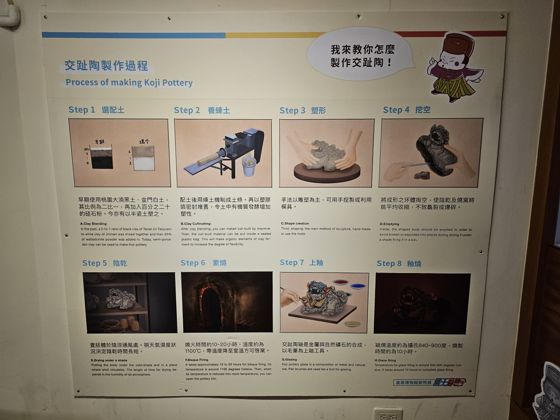
The panel "Process of Making Koji Pottery" gives eight steps: blending clay (formerly black clay of Danan, Taoyuan, and white clay of Kinmen in a two-to-one ratio, with 20 percent wollastonite powder added), cultivating the clay, shaping, hollowing, drying in the shade, bisque firing (10–20 hours at about 1,100°C), glazing (glazes compounded of metals and natural minerals, applied with a brush) and glaze firing (840–900°C, about 10 hours). R008Source〈葉王的壯年時期〉[The Prime of Yeh Wang's Life] and 〈交趾陶製作過程〉[Process of Making Koji Pottery] panels, made for the Tainan Museum Festival special exhibition and displayed on the second floor of the exhibition room; photographed on site by the author on 2026-11-21Original URL—Retrieved2026-11-22Snapshot timestamp—Special-exhibition panels displayed in the museum. The board "Introduction to Koji Pottery" adds that koji pottery's transparent glazes are mostly named after natural phenomena or precious stones, such as rouge red, sapphire blue, emerald green and sea blue. R004Source〈葉王與慈濟宮〉[Ye Wang and Tzu-chi Temple] board and 〈交趾陶簡介〉[Introduction to Koji Pottery] board, third floor of the Ye Wang Koji Pottery Exhibition Room, made by the museum; photographed on site by the author on 2026-11-21Original URL—Retrieved2026-11-22Snapshot timestamp—Interpretive board set up by the temple itself (primary source).
Other exhibits
Carbonized wood: found in April 1974 by 賴西川 of Baihe Township on a cliff deep in the mountains by the Hangnei River; carbon-14 tests at the University of Tokyo and the Department of Physics of National Taiwan University both gave ages beyond the measurable limit, over 37,800 years. R006Source〈七賢過關〉〈百忍堂〉〈殷郊上犂頭山〉 standing boards and the 〈炭化古木〉[Carbonized Wood] label, Ye Wang Koji Pottery Exhibition Room, made by the museum; photographed on site by the author on 2026-11-21Original URL—Retrieved2026-11-22Snapshot timestamp—Interpretive board set up by the temple itself (primary source).
Related exhibition
From 24 October 2026 to 25 April 2027 the Chiayi Municipal Museum is holding "Bicentennial Exhibition on YEH WANG: Master of Koji Pottery", co-organized by the Xuejia Tzu-chi Temple Foundation and the Kuzhu Temple at Liuzailin, Shuishang Township; its poster hangs in the museum. Official recordR010SourcePoster for 〈傳奇葉王:國寶交趾陶大師 200 紀念展〉[Bicentennial Exhibition on YEH WANG: Master of Koji Pottery] (organized by the Chiayi Municipal Museum, co-organized by the Xuejia Tzu-chi Temple Foundation), posted on the third floor of the exhibition room; photographed on site by the author on 2026-11-21Original URL—Retrieved2026-11-22Snapshot timestamp—Official exhibition poster.
See also
- Xuejia Tzu-chi Temple⚖︎Host temple of the Xuejia Shang BaijiaoContains 18 items
- Koji pottery by Yeh Wang at Xuejia Tzu-chi Temple (學甲慈濟宮葉王交趾陶)Yeh Wang's koji pottery at Xuejia Tzu-chi Temple
- Qing era・Artisans and craftsYeh WangThe Qing-dynasty koji pottery master from Chiayi
Photos on site
Taken on site by the author of this website (13 photos). Click a thumbnail to enlarge; use the arrow keys to browse.
The museum
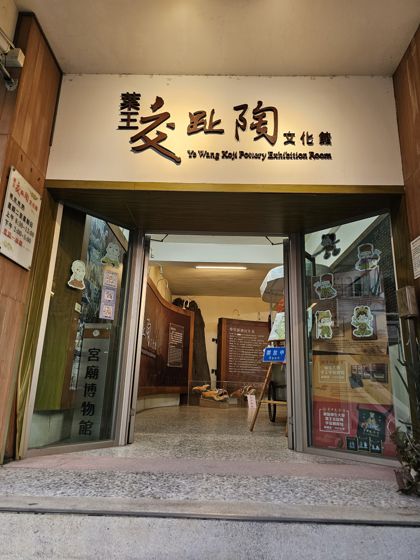
Entrance of the Ye Wang Koji Pottery Exhibition Room
Ground floor
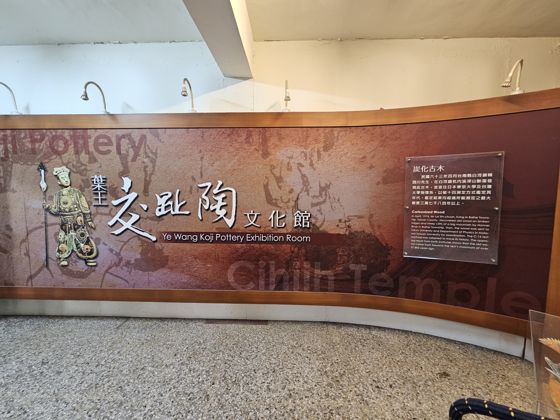
Main wall of the ground floor with the label for the carbonized wood
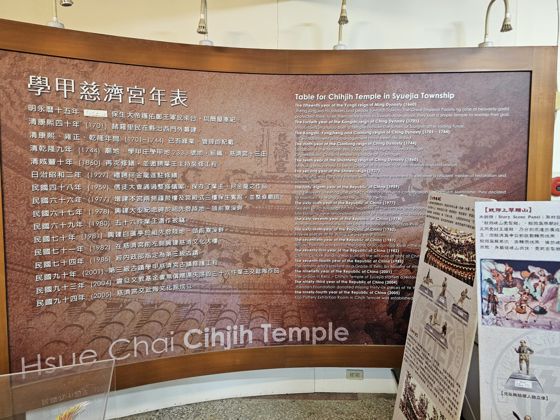
Panel: Chronology of Xuejia Tzu-chi Temple
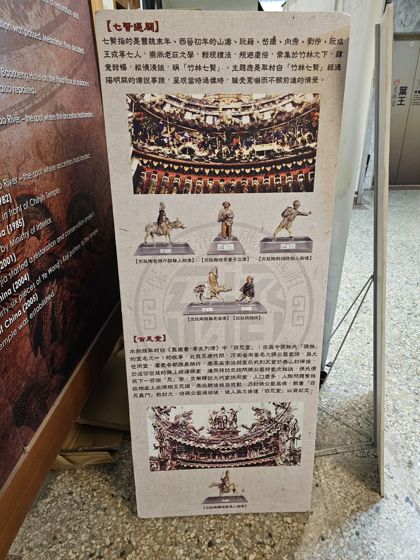
Standing board on the scenes The Seven Sages Passing the Gate and The Hall of Patience
Second floor
Board: Brief Summary of Ye Wang's Life
The temple's leaflet on Yeh Wang's koji pottery in a display case
Panel: Process of Making Koji Pottery
Third floor
Board: Ye Wang and Tzu-chi Temple
Display wall: Ye Wang's works and their positions inside the temple
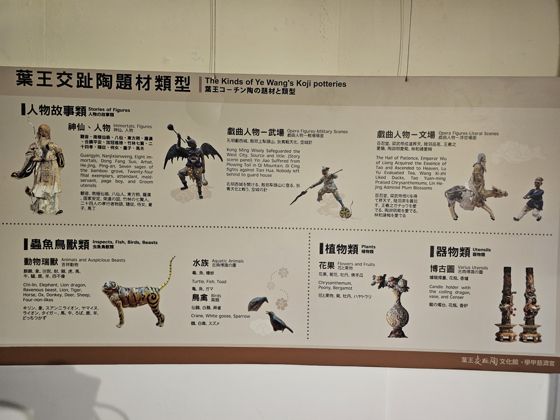
Panel: The Kinds of Ye Wang's Koji Potteries
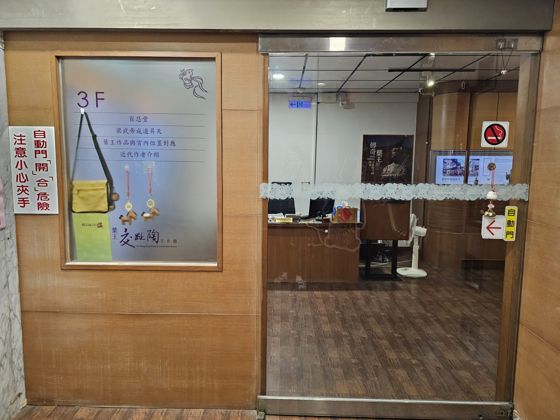
Third-floor entrance and floor sign
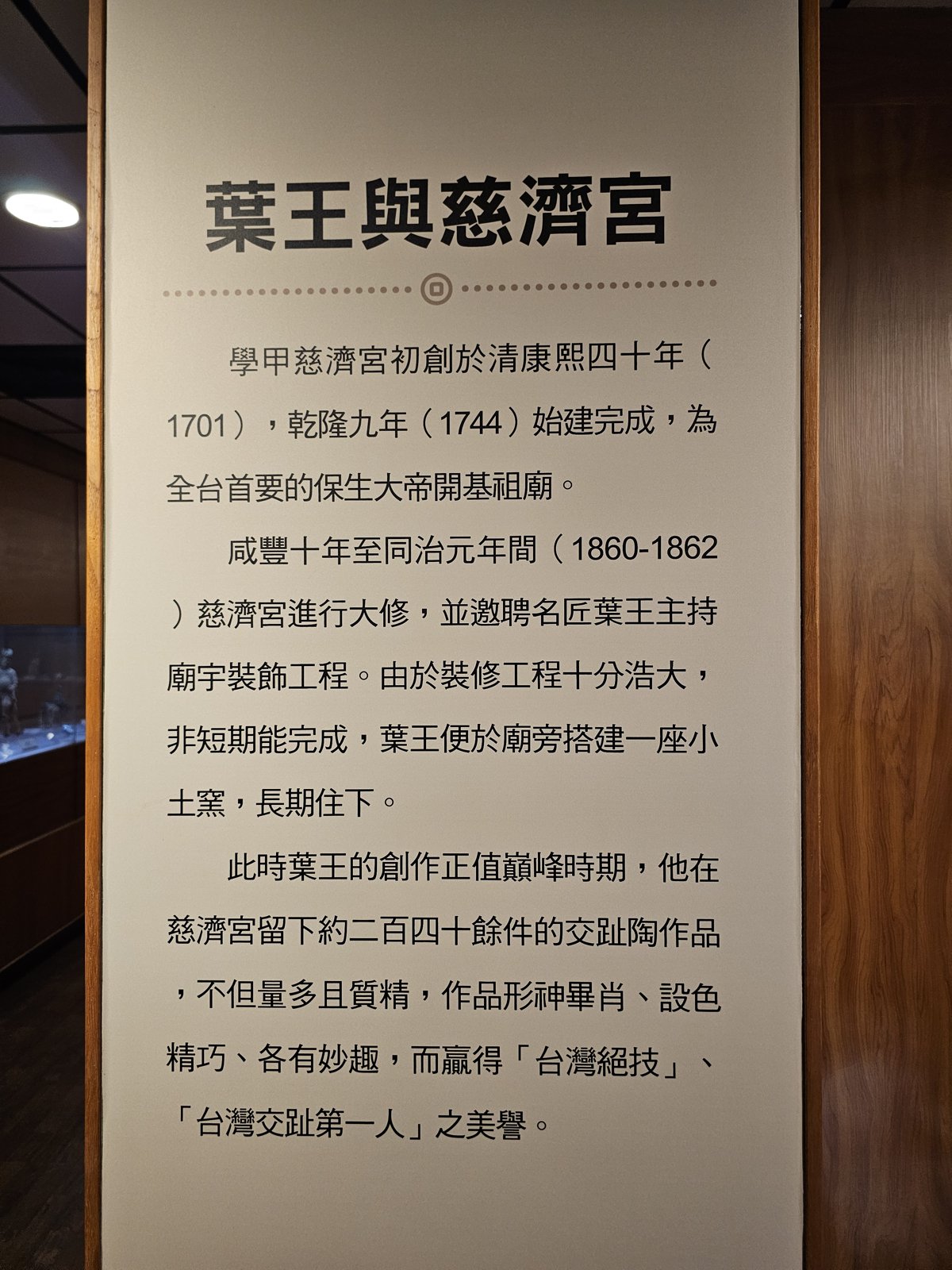
Fourth floor
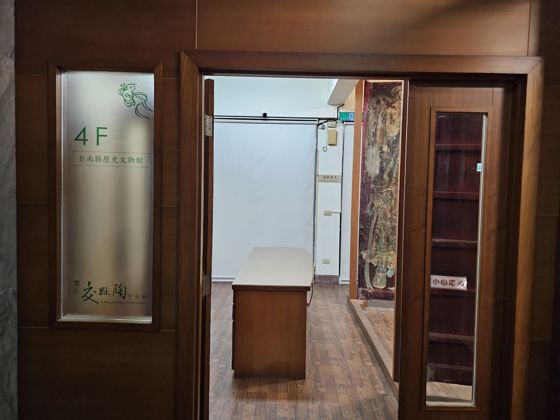
Fourth-floor entrance, Tainan County Historical Relics Museum
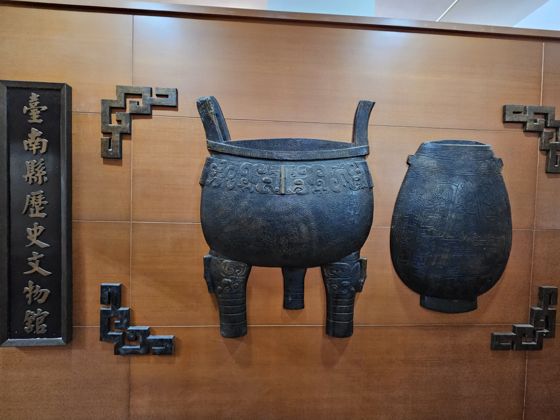
Upright plaque of the Tainan County Historical Relics Museum with bronze-style wall decorations
Continue from here
- Xuejia: other Institutions and SchoolsJhaigang Elementary School⚖︎An elementary school in Zhaigang Village, Xuejia
- Related entriesXuejia Tzu-chi Temple⚖︎Host temple of the Xuejia Shang BaijiaoContains 18 items
- Entries in the same hallXigang Incense Procession (Xigang Xiang)⚖︎The triennial guaxiang of the Xigang Qing'an TempleContains 85 items